Ganj Nameh Inscriptions: Achaemenid Royal Inscriptions on Mount Alvand
Site at a Glance
- Rating
- 4.6
- Popularity
- Low
- Country
- Iran
- Primary era
- Classical
- External website
- Open
- Eras represented
- Classical
- Civilizations
- Achaemenid
- Site type
- Civic
- Remains
- Monument
On this page8 sections
History
Ganj Nameh inscriptions are two Achaemenid royal inscriptions on Mount Alvand near Hamadan, Iran, dating to approximately 500 BC. Created under the Persian Achaemenid dynasty, they were placed beside an important route from Ecbatana, the ancient city corresponding to Hamadan and an Achaemenid royal residence, toward western Iran and Mesopotamia.
The Royal Route and Achaemenid Kings
The inscriptions stood along an ancient road connecting Ecbatana with Babylon and other western and southern royal centers. This route formed part of the ancient Royal Road and was used by Achaemenid kings and their retinues. Because the road led toward Babylon and was traditionally regarded as sacred, the location allowed the texts to address travelers while presenting the authority of the ruling house.
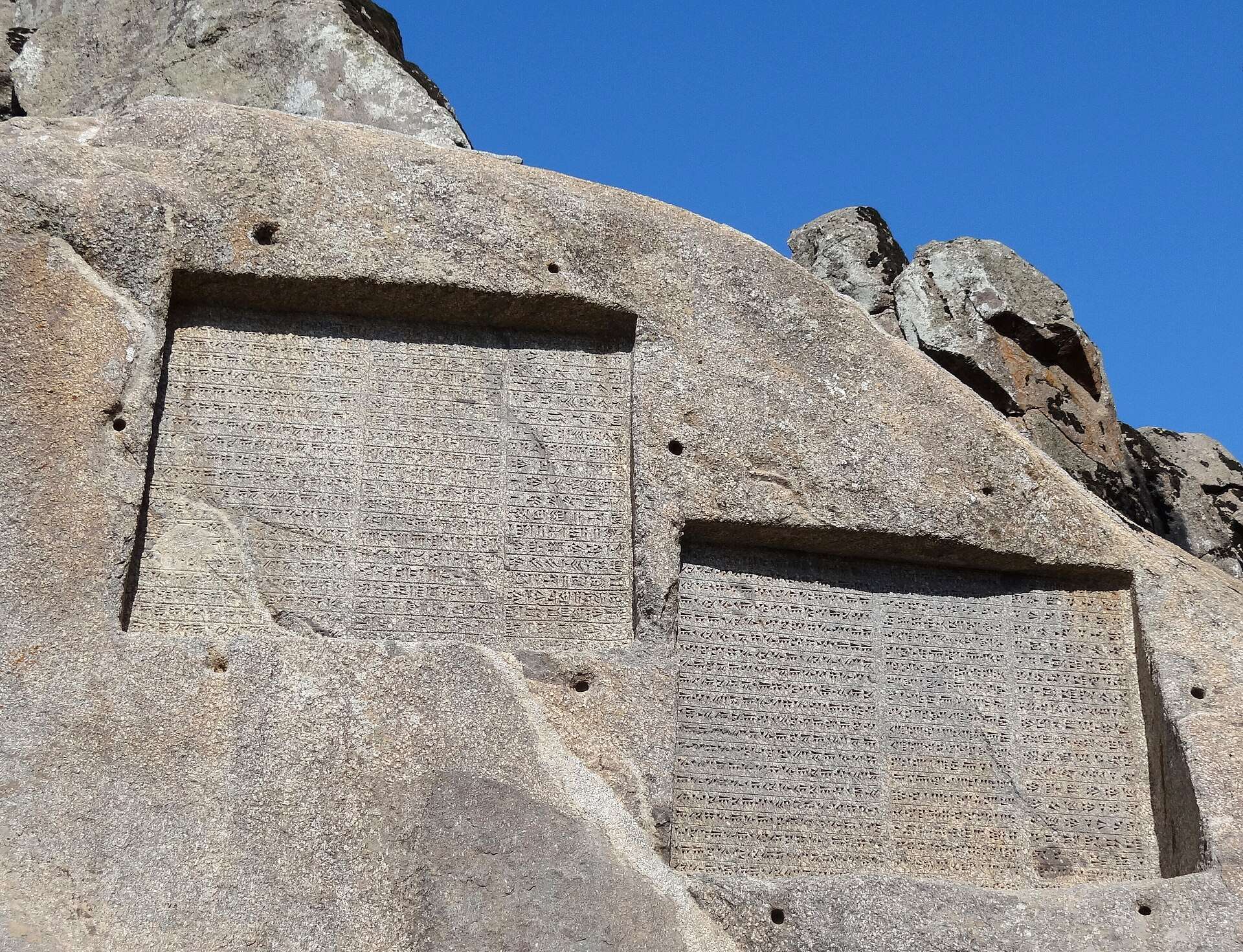
The higher panel on the left bears the name of Darius I, while the panel on the right, placed slightly lower, bears the name of his son Xerxes I. The texts proclaim the kings’ beliefs, ancestry, legitimacy, and greatness. They invoke Ahura Mazda, the supreme deity of Zoroastrian religious tradition, as the creator of the earth, sky, humanity, and human happiness, and connect royal authority with divine order.
The Darius inscription is traditionally understood to have been commissioned after the completion of the Behistun inscriptions. Xerxes later placed his own text beside and below that of his father. A modern interpretation of the lettering proposes that the panel usually attributed to Darius may instead have been carved under Xerxes in his father’s name. The question of attribution remains unresolved.
Names, Decipherment, and Later History
The name Ganj Nameh means “Book of Treasure.” A second name, Jang Nameh, means “Book of War.” Both arose after the cuneiform texts became unreadable and local traditions imagined that they concealed treasure or described royal warfare. Earlier names included Sang Nebeshte, Nebesht-e Khodayan, Dahmehan, Tabanar, and the Inscriptions of Alvand.
During the first half of the nineteenth century, Eugène Flandin and Pascal Coste examined and sketched the inscriptions. Henry Creswicke Rawlinson later used them in his work on deciphering Old Persian cuneiform. Along with the Behistun inscription, the texts helped provide a key to reading the wedge-shaped writing system used for Achaemenid royal inscriptions.
The inscriptions are nationally registered as a protected cultural monument. In the Iranian calendar year 1397, the Xerxes inscription was damaged when a handmade firecracker struck it during the Chaharshanbe Suri festivities.
Remains
The site consists of two carved panels set into a granite rock face on Mount Alvand, at approximately 2,000 metres above a creek and near the Ganj Nameh waterfall. Each recess is about 3 metres high, 2 metres wide, and 30 centimetres deep. The panels are arranged vertically, with the Darius text higher on the rock and the Xerxes text slightly below it.
Inscription Panels
Darius Panel
The left-hand panel is associated with Darius and contains three vertical text blocks, each comprising 20 lines. The Old Persian version occupies the left side and is about 115 centimetres wide. The narrower central and right-hand sections contain Neo-Elamite and Neo-Babylonian versions. Cuneiform, a writing system formed from wedge-shaped signs, allowed the royal message to appear in the three languages used for Achaemenid monumental texts.
The inscription identifies Darius as the son of Hystaspes and presents the king as ruler of many peoples and lands. Its religious passage praises Ahura Mazda as creator of the world, humanity, and human happiness. Regular holes around the recess suggest that a door or metal covering may once have shielded the carving from wind, rain, and sunlight.
Xerxes Panel
The right-hand panel belongs to Xerxes and follows essentially the same arrangement and message as the Darius text. Its three 20-line blocks place Old Persian on the left, Neo-Elamite in the middle, and Neo-Babylonian on the right. The text names Xerxes as the son of Darius and preserves the same emphasis on divine creation, royal rule, and Achaemenid ancestry.
The panel occupies a recess of approximately the same dimensions as its companion and lies slightly lower on the rock face. The holes surrounding it indicate a former protective covering. Modern copies of the inscriptions, with explanations in Persian and English, have been installed below the original panels.
Waterfall and Mountain Setting
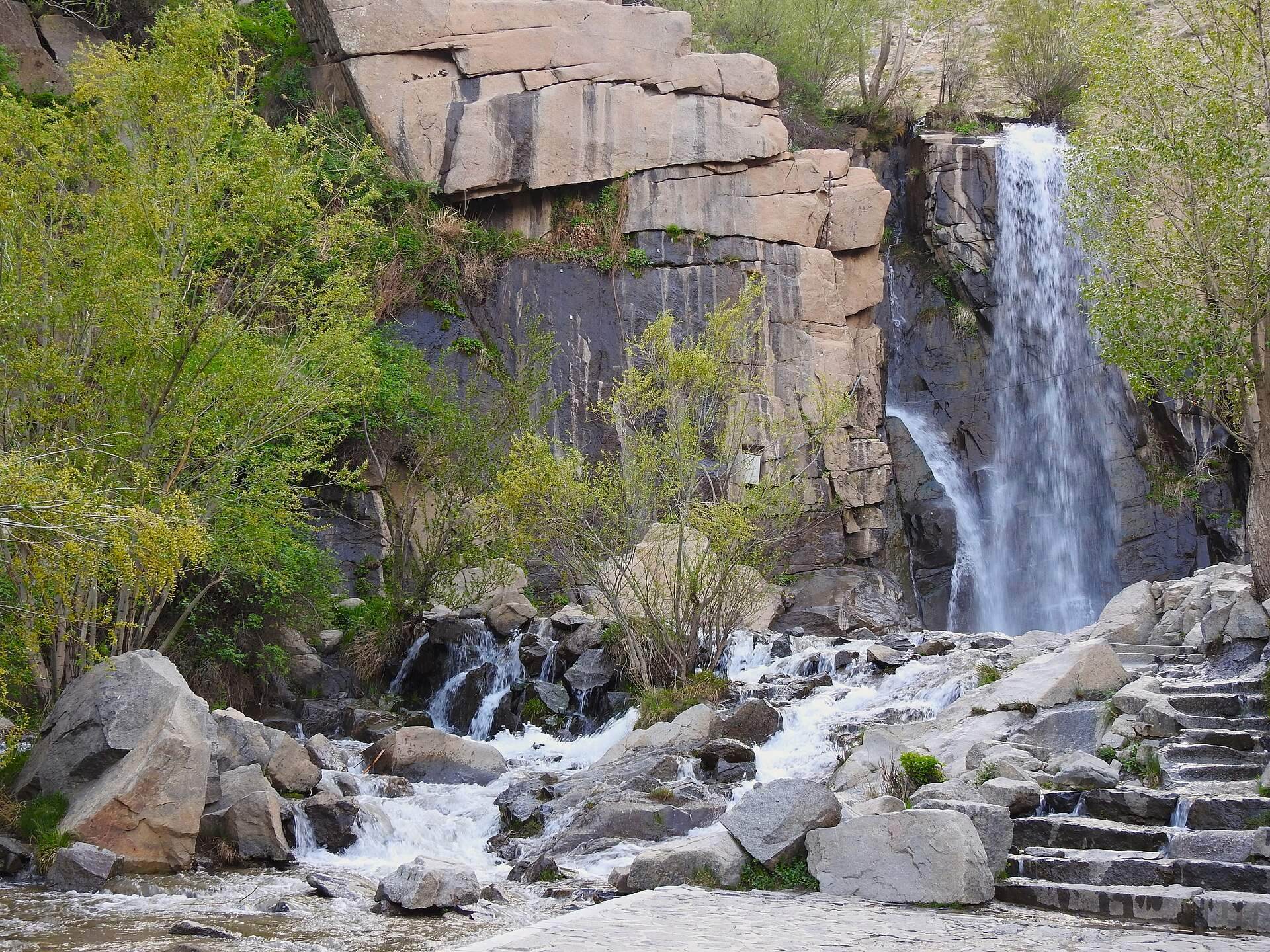
The nearby Ganj Nameh waterfall is fed by springs and streams descending from Mount Alvand. It falls approximately 12 metres before flowing into the river below, and it sometimes freezes in cold weather. Its water was regarded as sacred during the Achaemenid period, adding a religious dimension to the choice of this setting. The waterfall is also listed as a national natural heritage site.