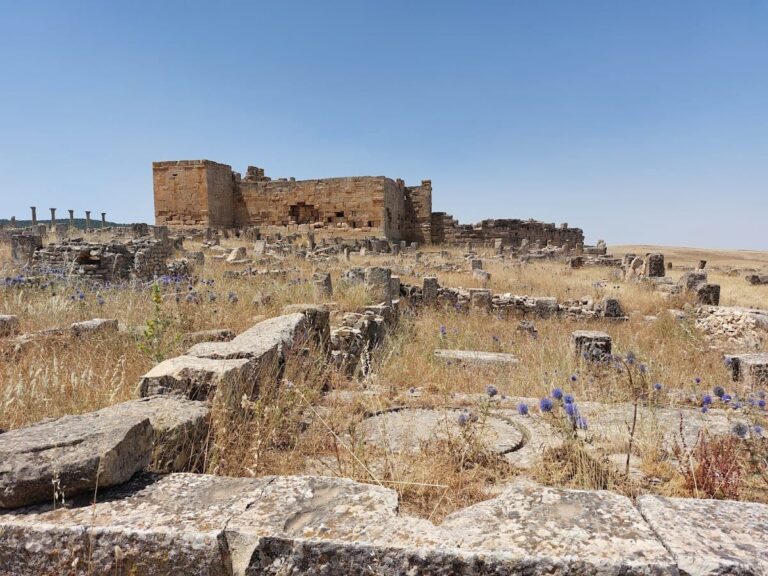
Roman Theatre of Guelma: A Roman Entertainment Complex in Algeria
Site at a Glance
- Rating
- 4.5
- Popularity
- Low
- Country
- Algeria
- Primary era
- Classical
- Eras represented
- Classical
- Civilizations
- Roman
- Site type
- Entertainment
- Remains
- Theatre
On this page11 sections
History
The Roman Theatre of Guelma is an early third-century Roman theatre in Guelma, Algeria, the modern city corresponding to ancient Calama. Built around AD 201, it belonged to a prosperous agricultural and commercial centre that first formed part of Africa Proconsularis, a Roman province in North Africa, and later of Numidia. Calama reached particular economic and cultural prominence during the second and third centuries, especially under the Severan dynasty, which ruled the Roman Empire in the late second and early third centuries.
Construction and civic patronage
The theatre’s date is associated with two inscriptions naming Annia Elia Restituta as flaminica Augustorum perpetua, a lifelong priestess of the imperial cult devoted to the emperors. The inscriptions have also prompted alternative dating to the reigns of Marcus Aurelius and Lucius Verus, or to those of Septimius Severus and Caracalla. Annia Elia Restituta financed the building with a private contribution of 400,000 sesterces for the entertainment of Calama’s citizens.
In gratitude, the citizens erected five statues in her honour within the theatre precinct. The building formed part of the city’s public facilities for entertainment and social gatherings, alongside baths and a forum. Its construction therefore combined private benefaction with the civic life of Roman Calama.
Destruction, reuse, and reconstruction
After its destruction, the theatre became a source of building stone. Its materials were reused in buildings, walls, and fortifications elsewhere in the city. The monument gradually lost its importance after the decline of Roman rule and was later abandoned during the Arab and Ottoman periods.
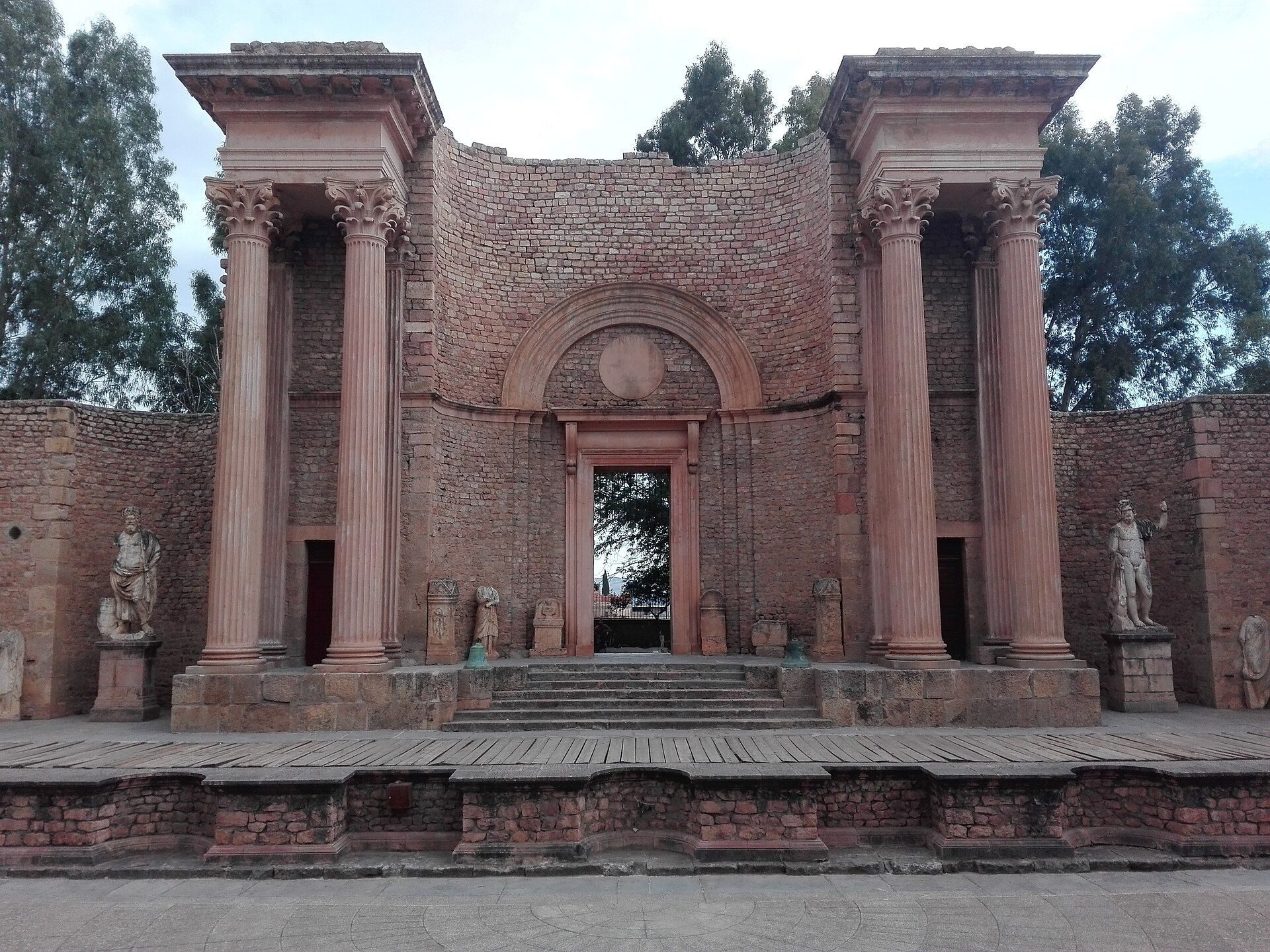
Between 1902 and 1918, the archaeologist and architect Charles Albert Joly excavated and extensively reconstructed the theatre. The work included repositioning collapsed stones from the cavea, the semicircular auditorium. This intervention created the building’s present form, although modern historians have questioned its effect on the monument’s ancient authenticity. The reconstructed theatre now houses the Roman and Archaeological Museum of Guelma.
Remains
Auditorium and access
Cavea and seating sectors
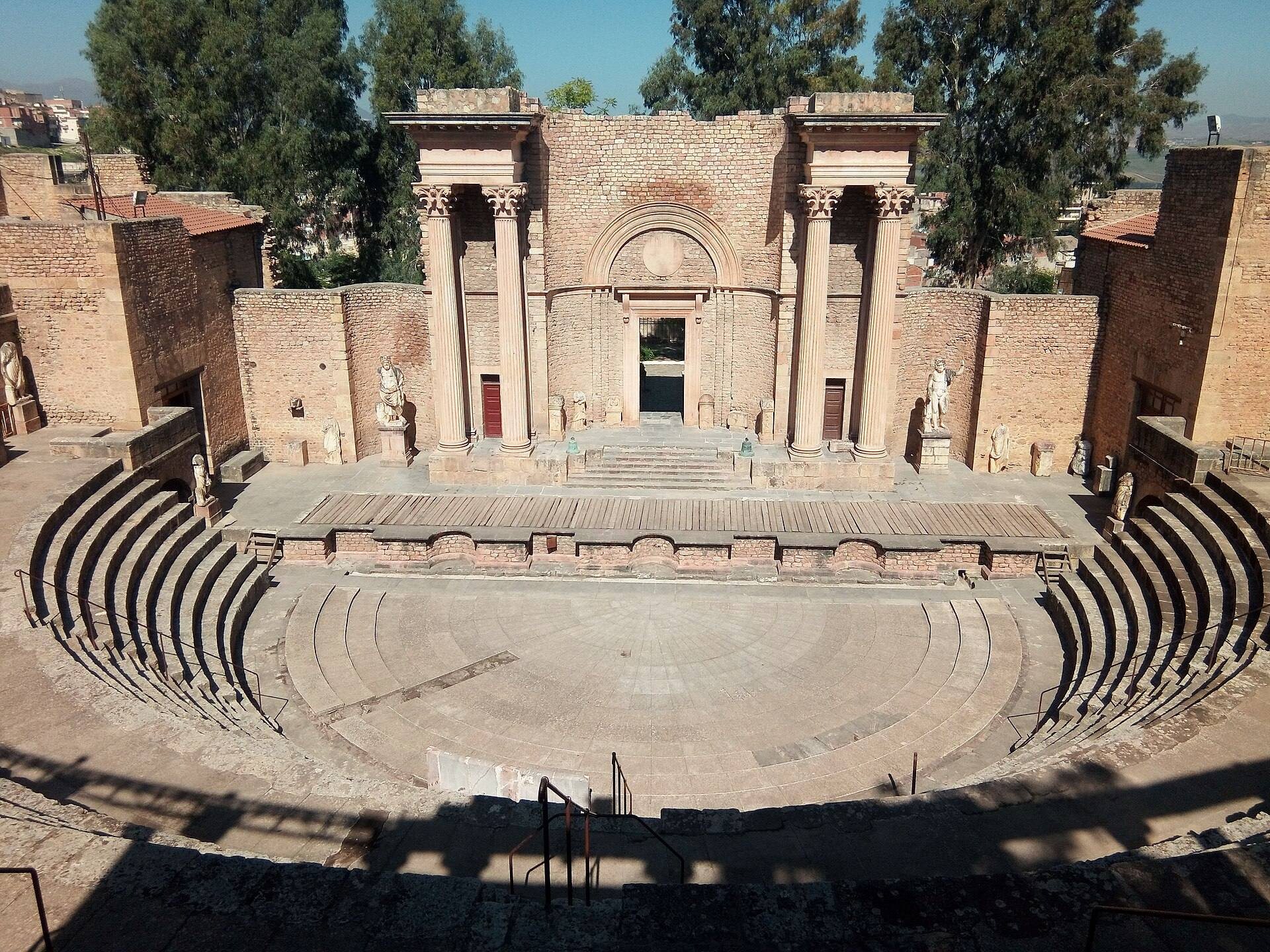
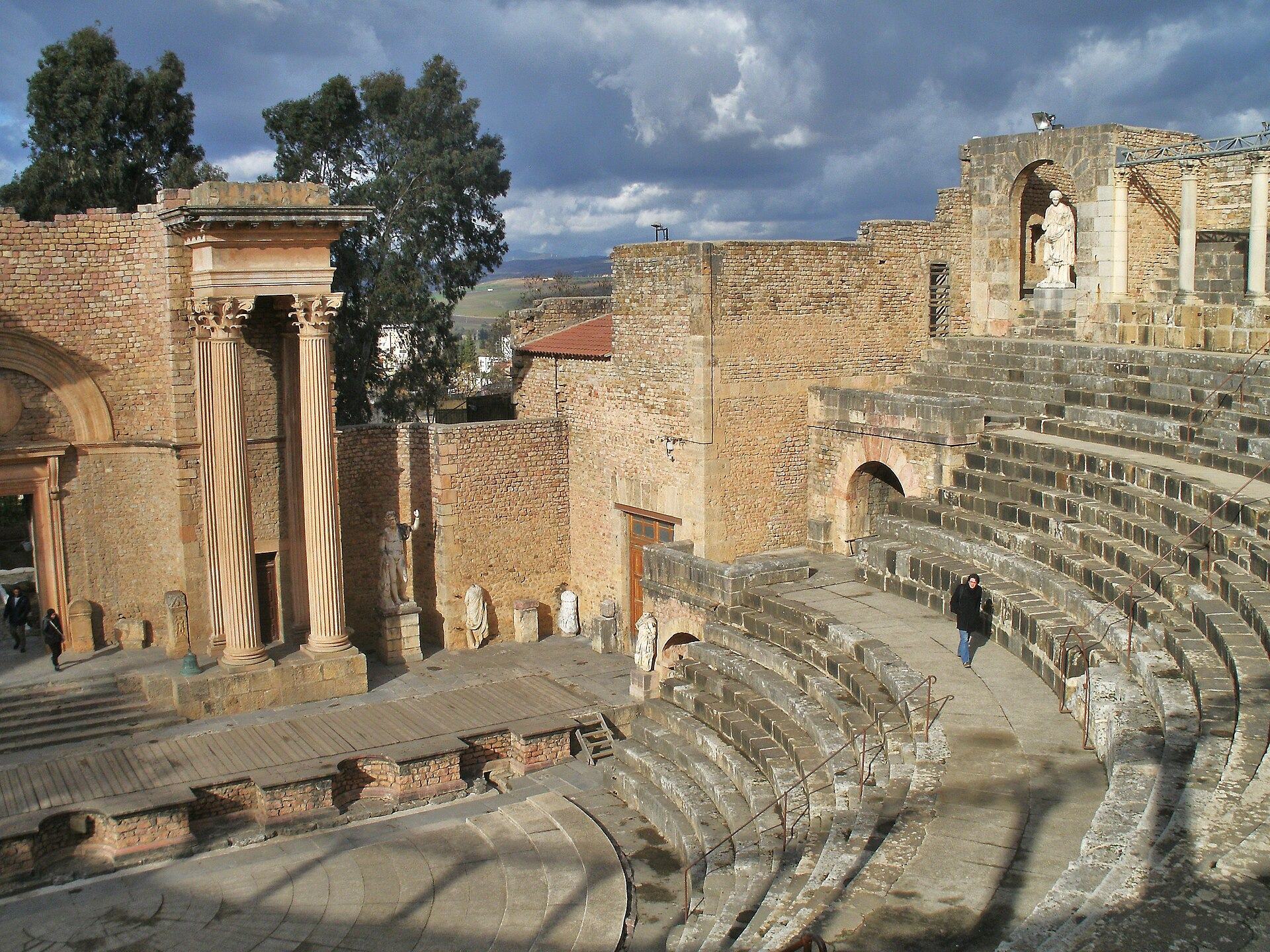
The theatre is oriented toward the northwest. Its seating area rests against a natural slope and a substantial wall surrounding the cavea. The structure is approximately 58.65 metres wide and could accommodate about 3,600 spectators. Twenty-seven rows of steps were arranged in three sections. The lower ima cavea contained nine rows divided into four wedge-shaped sectors, or cunei. The middle media cavea comprised two groups of six rows, divided respectively into four sectors and five irregular sectors. The upper summa cavea contained six rows.
Portico and entrances
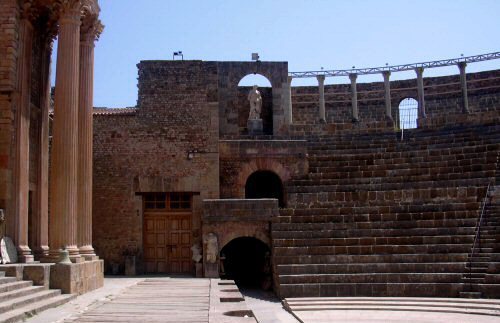
A portico with Corinthian columns stood above the seating area. At its centre was a small temple with an apsidal cella, an enclosed temple chamber with a rounded end, possibly dedicated to the imperial cult. Two superimposed lateral vomitoria, or access passages leading into the seating area, provided entry to the cavea.
Stage and orchestra
Stage front
The stage measures approximately 37 metres in width and 7.15 metres in depth. Its raised front, the pulpitum, contains seven small niches, with four rectangular and three semicircular niches arranged alternately. Sculptures once decorated them but have disappeared. Three larger semicircular niches further articulated the stage front. The central niche was framed by pairs of columns and contained a doorway, while the lateral niches had no side doors and were decorated with statues.
Portico and orchestra
Behind the stage front stood a colonnaded portico that served as a façade and was flanked by two rectangular rooms. The semicircular orchestra, the area between the audience and the stage, was paved with white marble. Three low steps provided bisellia, special seats reserved for prominent persons.
Archaeological museum
The museum within the reconstructed theatre preserves and displays archaeological material from Calama and neighbouring ancient cities. Its collections include large marble statues of Hercules, Jupiter, and Asclepius, a sculpture of the empress Agrippina, mosaics dating from the third and fourth centuries, coins, inscriptions, and pottery.