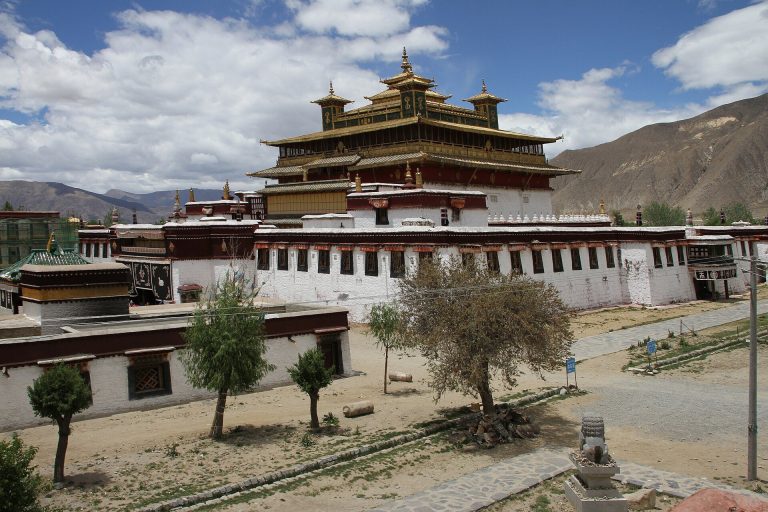
Tradruk Temple: A Tibetan Buddhist Royal Monastery in the Yarlung Valley
Site at a Glance
- Rating
- 4.6
- Popularity
- Very Low
- Country
- China
- Primary era
- Medieval
- Eras represented
- Classical, Medieval, Early Modern
- Civilizations
- Tibetan
- Site type
- Religious
- Remains
- Monastery
On this page8 sections
History
Tradruk Temple is a Tibetan Buddhist monastery in the Yarlung Valley of China, about seven kilometres south of Tsetang in Nêdong County, Tibet. Traditionally founded around 650 under the seventh-century Tibetan king Songtsen Gampo, it is regarded as one of Tibet’s earliest major geomantic temples, meaning a religious foundation placed within a sacred geographical scheme. Tradruk is described as the largest and most important surviving royal foundation in the Yarlung Valley.
Royal Foundation and Early Traditions
Tradruk’s foundation is associated with Songtsen Gampo, a king traditionally linked with the early establishment of Buddhism and major Buddhist foundations in Tibet. The monastery was one of twelve geomantic temples said to have been built to subdue a huge supine ogress. Tradruk was placed on her left shoulder, while other foundations were associated with her right shoulder and heart. Some traditions place Tradruk’s foundation earlier than the Jokhang, although it is generally described as following that temple among Tibet’s earliest major Buddhist foundations.
A second foundation story presents the site as a lake inhabited by a five-headed dragon. Songtsen Gampo is said to have summoned a giant falcon through meditation, and the falcon defeated the dragon and drank the lake’s water, allowing construction to begin. This legend is traditionally understood to explain the temple’s name.
During the reigns of Trisong Detsen and Muné Tsenpo, Tradruk became one of Tibet’s principal royal monasteries. Trisong Detsen was a later Tibetan emperor associated with the consolidation of Buddhism and the enlargement of royal religious institutions. The monastery was heavily damaged during the ninth-century persecution of Buddhism under Langdarma and again during the Mongol invasion from Dzungaria in the sixteenth century.
Restoration and Later Religious Use
Tradruk was restored and enlarged in 1351. Under the Fifth Dalai Lama, the principal hierarch of the Gelug school of Tibetan Buddhism, the monastery received a golden roof. It was expanded again during the rule of the Seventh Dalai Lama, and by the late eighteenth century the complex was said to contain 21 temples or sanctuaries.
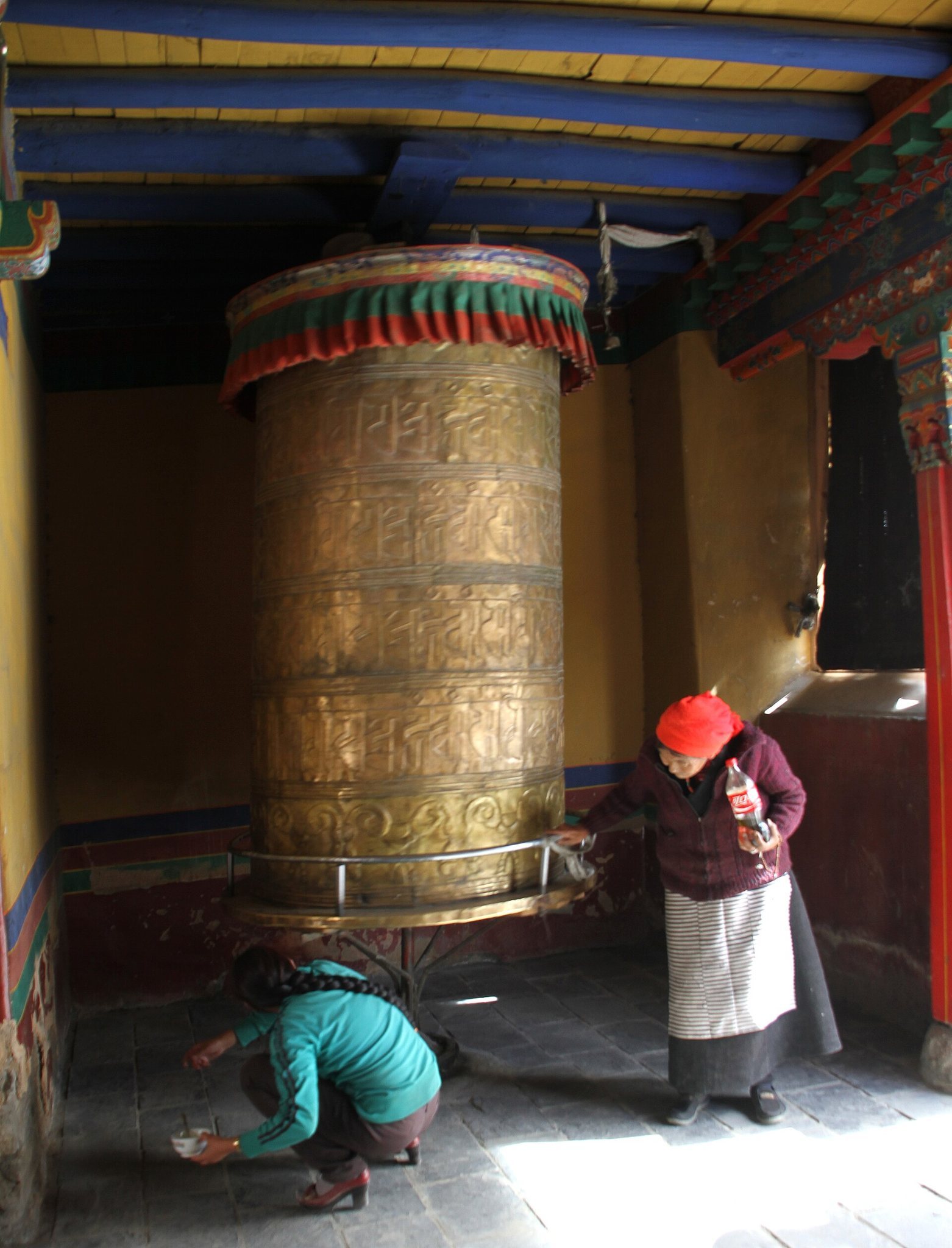
Tradruk is part of the Yarlung pilgrimage route known as the “three sanctuaries, three chortens.” A chorten is a Tibetan Buddhist reliquary monument or stupa. The monastery also hosts the annual Métok Chöpa, or Flower Offering, in June, when ritual dances are performed.
Modern Damage and Protection
Several buildings were destroyed during the Cultural Revolution, a period of intense political upheaval in China. The monastery was renovated during the 1980s and reconsecrated in 1988. Tradruk received national protection in 1961, when it was included in the first group of major nationally protected historical and cultural sites for the Tibet Autonomous Region.
Remains
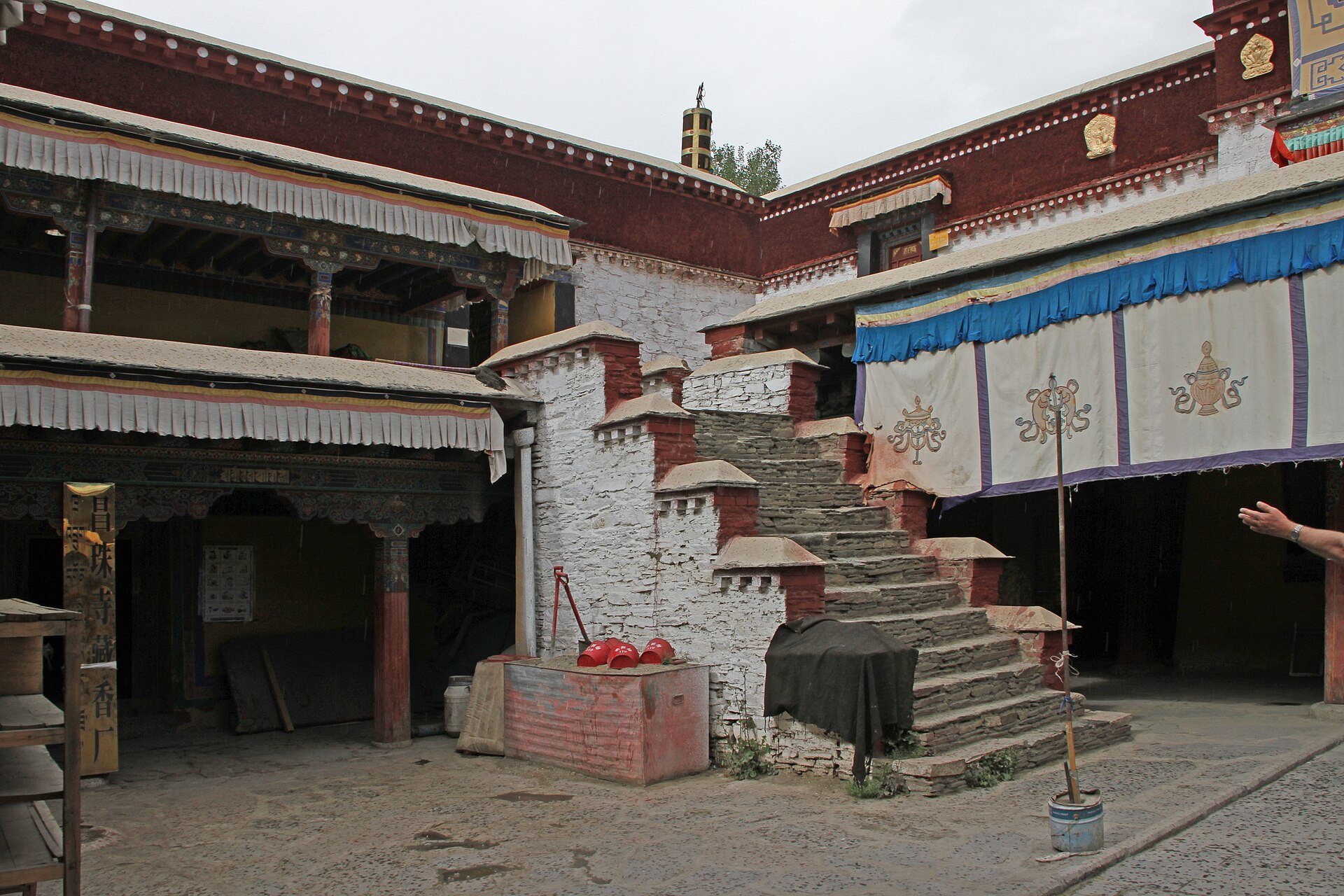
The complex covers approximately 4,667 square metres. Its main building forms the centre of a group of smaller surrounding shrines, while the innermost chapel preserves the traditional core of the monastery. The surviving buildings and sacred objects connect the present complex with its royal foundation and later periods of restoration.
Central Chapel
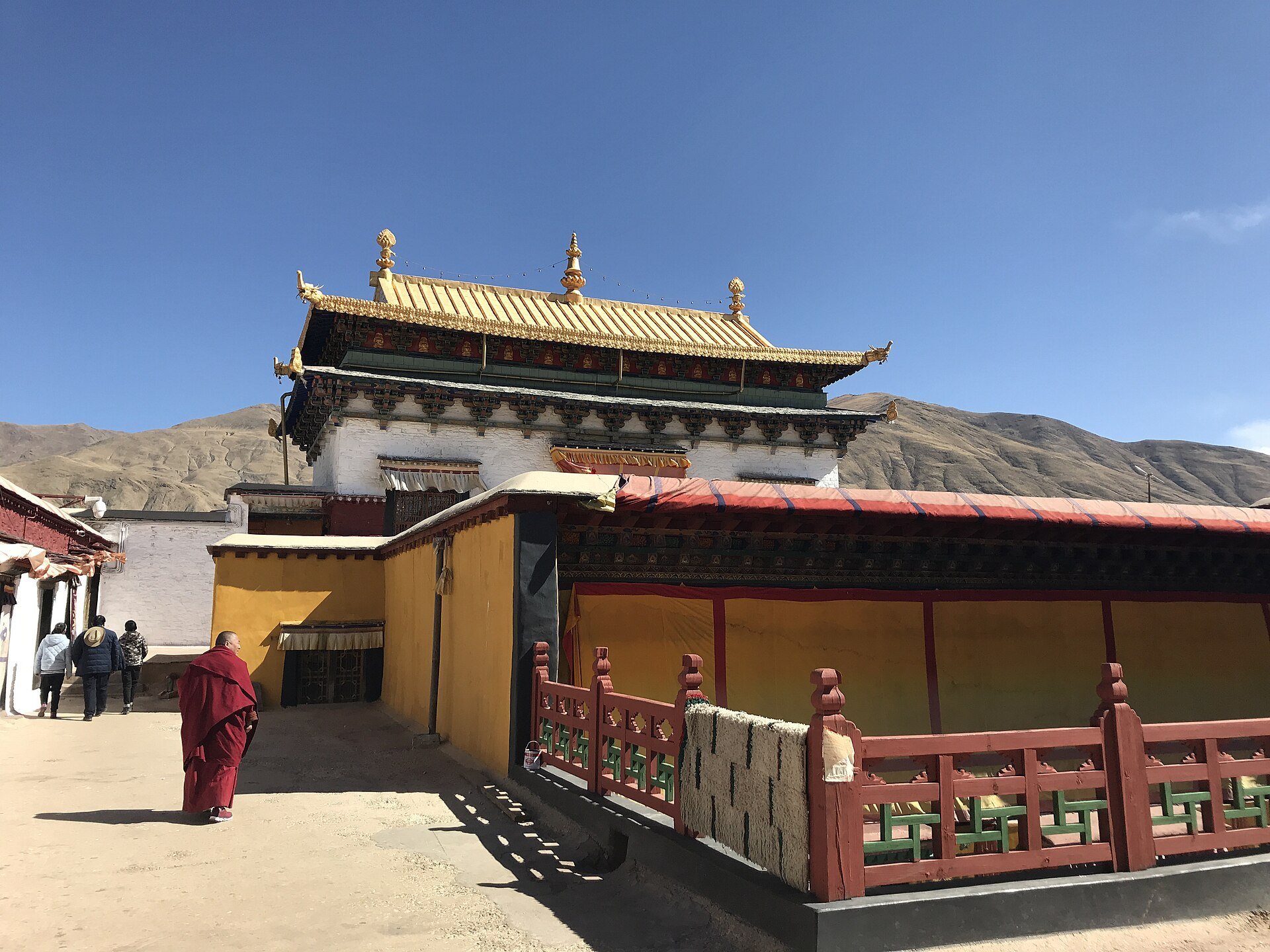
The innermost chapel occupies the centre of the temple and is traditionally identified with the original foundation attributed to Songtsen Gampo. It is said to have contained stone statues of the Buddha and Tara, a Buddhist female deity associated especially with compassion, healing, and long life. The clay figures now associated with the chapel are believed to contain fragments of those earlier statues.
Upper-Floor Sacred Images
The central chapel on the upper floor contains a pearl-embroidered thangka, a Tibetan Buddhist painted or embroidered devotional image, depicting Princess Wencheng as White Tara. Wencheng was a Chinese princess traditionally associated with Songtsen Gampo through marriage and with the transmission of Buddhist culture to Tibet. The embroidery is traditionally attributed to Wencheng and is described as one of only three thangkas made by her. The same room also contains a renowned statue of Padmasambhava shown at the age of eight. Padmasambhava, also known as Guru Rinpoche, was an eighth-century Buddhist tantric master traditionally credited with helping establish Buddhism in Tibet.
Surrounding Shrines and Former Bell
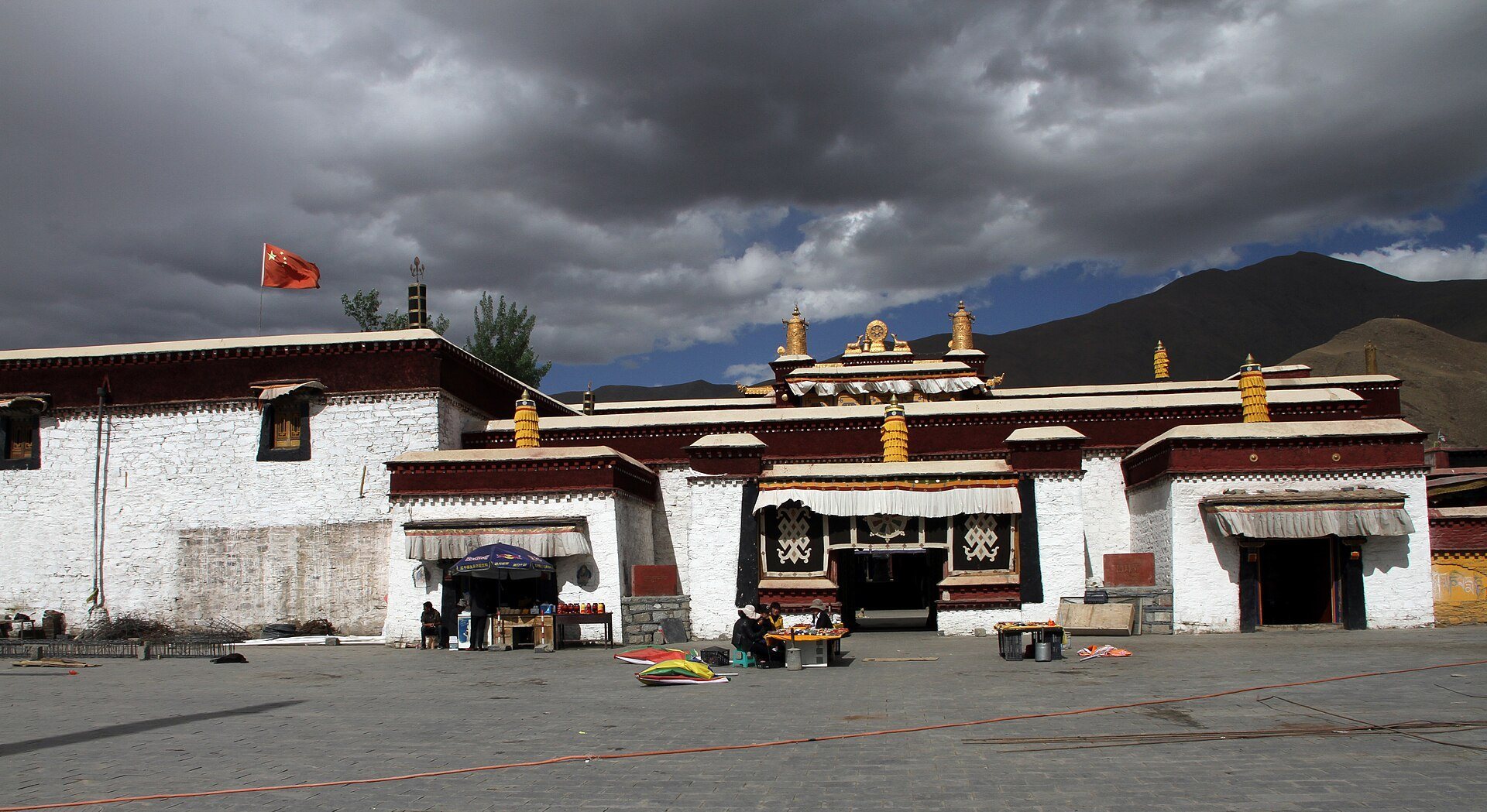
Several smaller shrines surround the main building and form the wider architectural setting of the central chapel. Tradruk also formerly possessed a famous bell on its verandah. Its inscription invoked the long life of Trisong Detsen, named Queen Byangchub as its donor, and stated that the bell had been cast by the Chinese monk and abbot Rin-cen as a religious offering and as a summons for living beings to virtue. The bell is now outside the monastery, while its inscription preserves an association between the royal institution, its patrons, and Buddhist religious practice.