Yungbulakang Palace: A Tibetan Royal Palace and Buddhist Monastery
Site at a Glance
- Country
- China
- Primary era
- Medieval
- Eras represented
- Medieval
- Civilizations
- Tibetan
- Site type
- Domestic
- Remains
- Palace
On this page13 sections
History
Yungbulakang Palace is a historic palace and Buddhist monastery on a ridge in the Yarlung Valley of Tibet, China. Its origins are generally placed in the seventh century, during the Tibetan Empire, Tibet’s imperial kingdom conventionally dated from the seventh to ninth centuries. The palace is associated with the monumental dzong tradition, a fortified architectural form linked especially with Tibet and Bhutan. It is regarded as Tibet’s oldest surviving building and the earliest palace in the monumental dzong style, and holds an important place in Tibetan foundation mythology and Buddhist pilgrimage.
Foundation traditions and early history
Also called Yumbulagang and Yumbu Lakhar, the palace’s name is interpreted as palace of mother and son. Another explanation connects its elements with female deer and sacred palace, with the deer referring to the shape of the mountain. Tradition attributes the foundation to Nyatri Tsenpo, the legendary first Tibetan king, around 127 BCE. In the story, he descended from the sky into a field of yaks and nomadic herders made him their chief. His reign was said to have begun in 127 BCE, marking the start of the Tibetan Royal Era. Another tradition says Bön followers, adherents of an indigenous Tibetan religion, built the palace for him in the second century. Historians instead place its beginnings much later, probably in the seventh century under Songtsen Gampo.
A separate legend is set during the fifth-century reign of Thothori Nyantsen, traditionally counted as Tibet’s 28th king. A golden stupa, a Buddhist religious monument, a tsa-tsa, a small molded religious object, and a Mahayana Buddhist scripture were said to have fallen onto the palace roof. In another version, an Indian Buddhist monk brought them as gifts and told the king to keep them until their meaning became clear five generations later. A later telling has a voice from the sky make the prediction. The stories say Songtsen Gampo’s scholars understood the texts after learning an Indian language, and connect the episode with the creation of Tibetan writing.
Royal residence and Buddhist shrine
Songtsen Gampo (604-650), traditionally counted as Tibet’s 33rd king, used the palace as a summer residence after moving his seat of government to Lhasa. Songtsen Gampo, Thrisong Detsen, and Tri Ralpachen used it as a royal palace and were crowned there. Songtsen Gampo introduced Mahayana Buddhism at his court; his Nepali queen Bhrikuti and Chinese queen Wencheng were already Buddhists. After the transfer of government to Lhasa, the palace became a shrine. It is associated with Bön and with Tibetan Buddhist traditions, including Mahayana and Vajrayana, two major forms of Buddhism.
Monastery, destruction, and reconstruction
During the rule of the fifth Dalai Lama (1617-1682), Yungbulakang became a monastery of the Gelug school of Tibetan Buddhism. The palace and shrine were destroyed during the Cultural Revolution, a Chinese political campaign that lasted from 1966 to 1976, leaving only part of the original building’s base. The palace was partly reconstructed in 1983 and blessed the following year by Thrinle Lhündrub Chökyi Gyeltshen, the 10th Panchen Lama. From November 2017 to April 2018, restoration work addressed deteriorating wooden foundations and cracked walls, and rebuilt the lost fourth storey. The site continues to function as a Buddhist monastery.
Remains
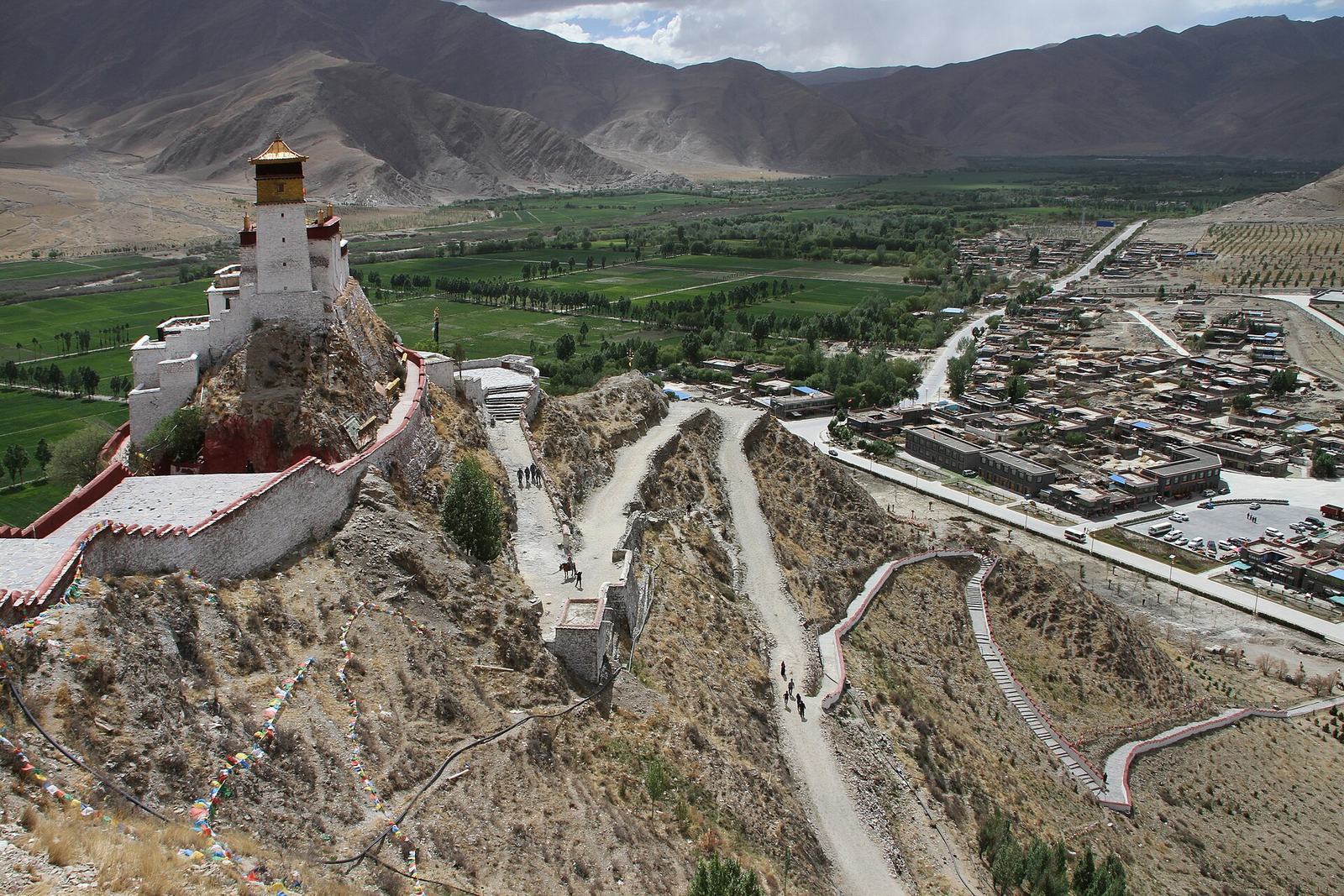
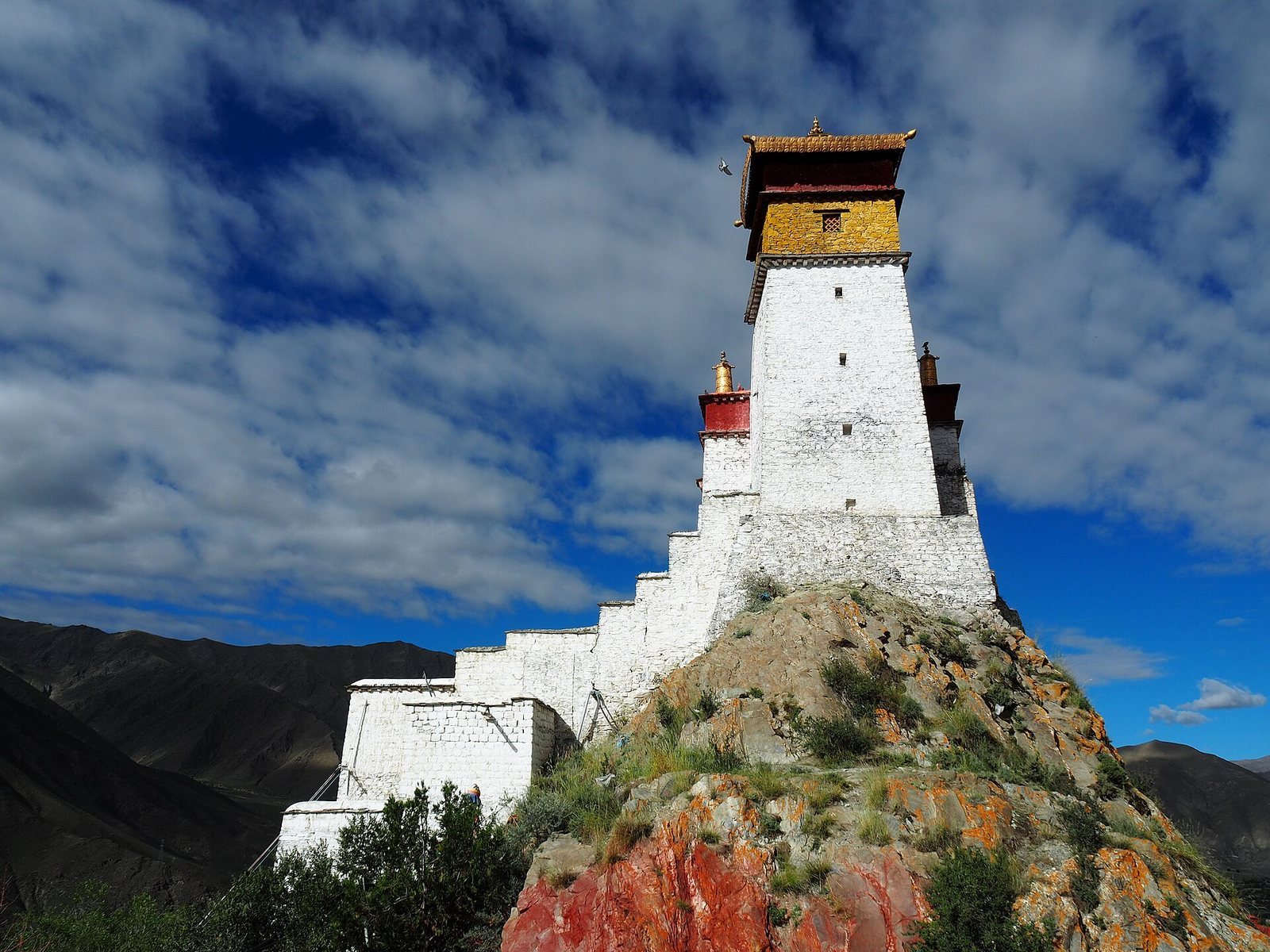
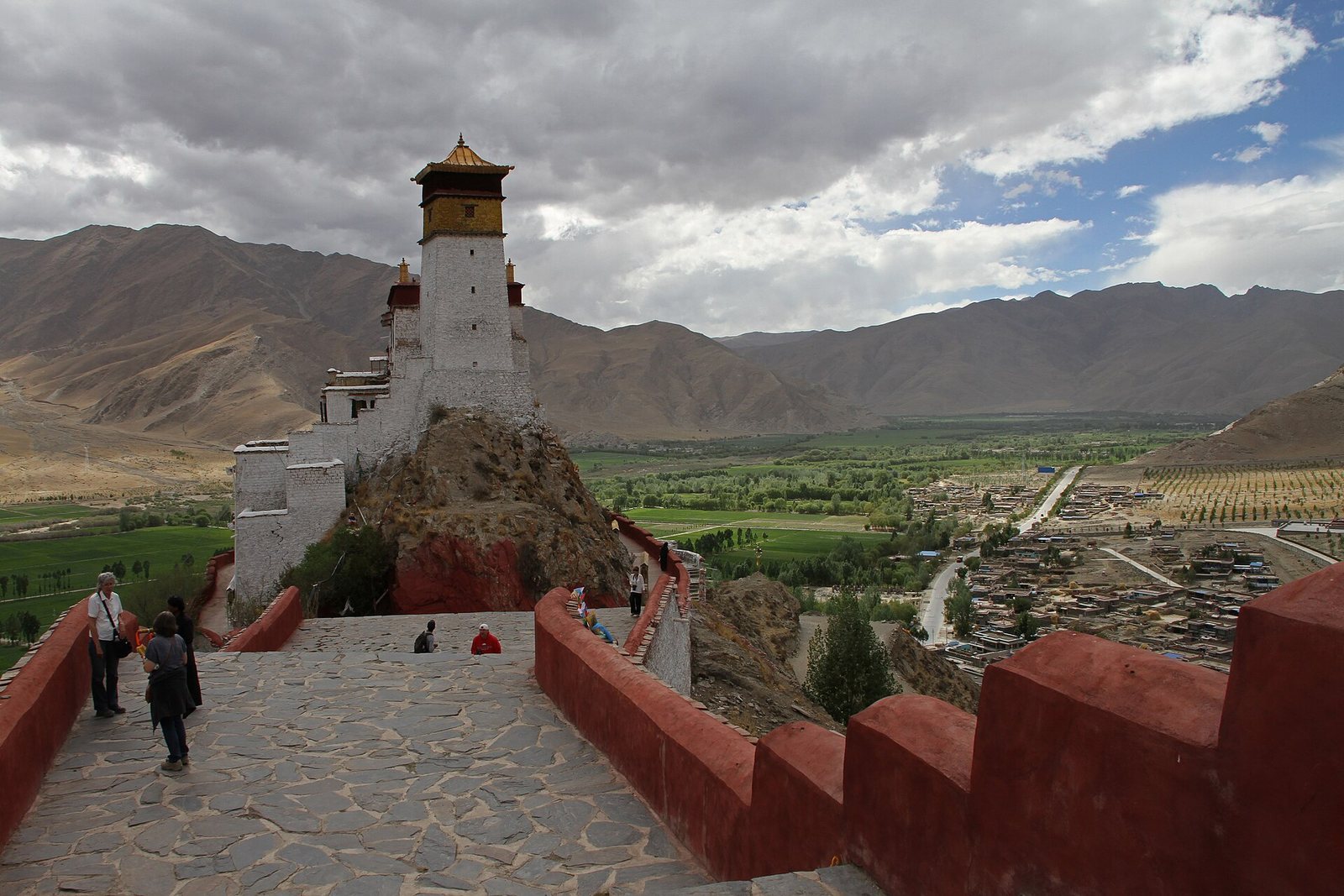
The surviving complex has a compact plan, with a front block joined to a rear section dominated by a tall, castle-like tower. Its monumental, fortified form belongs to the dzong tradition.
Setting and surroundings
Ridge and cultivated landscape
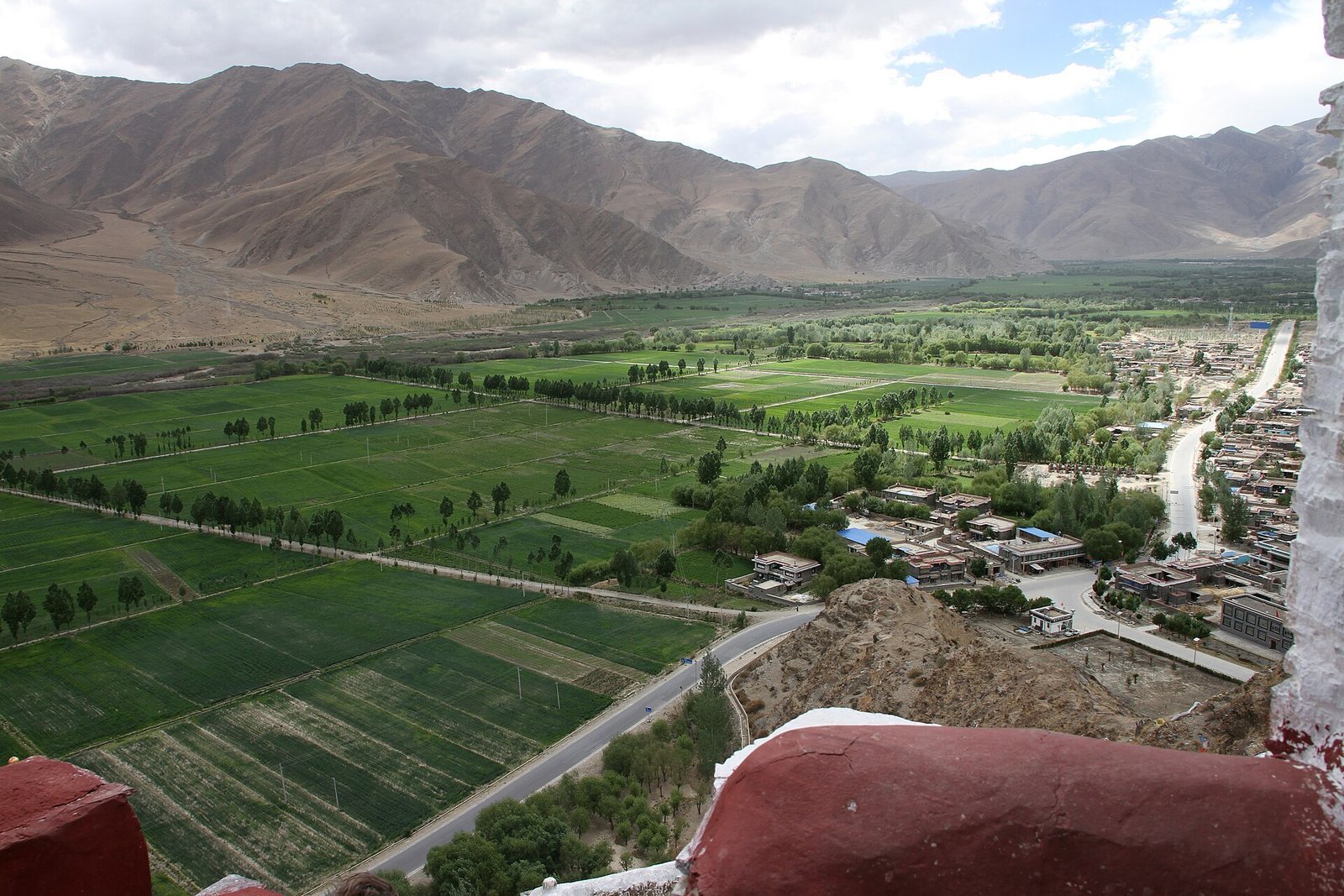
The palace stands on a ridge in the Zhangsiri range, on the eastern side of the Yarlung Valley at a bend in the Yarlung Tsangpo. It lies about 9 kilometres south of Zêtang and 192 kilometres southeast of Lhasa. Zorthang, northwest of the palace, is traditionally described as Tibet’s largest cultivated area. Farmers have traditionally scattered soil from there over their own fields in the hope of encouraging a good harvest.
Lharu Menlha temple
A temple called Lharu Menlha formerly stood nearby and contained images of the Eight Medicine Buddhas.
Spring
A spring lies about 400 metres northeast of the palace. According to local mythology, anyone who drinks its water will be cured of all illnesses.
Palace structure and interiors
Building form
The front block is described as three storeys high, while the palace as a whole has four storeys. The building measures about 11 metres high, 4.6 metres wide, and 3.5 metres deep. Its connected rear section is dominated by the tall tower.
Chapel, hall, and murals
The ground floor contains a chapel dedicated to ancient kings of the Tibetan Empire. A hall on the first floor is used for chanting and houses Buddhist texts, including the Kanjur, a collection of Buddhist canonical writings. Murals depicting ancient Tibetan myths cover walls on the first and second floors.
Annex and statues
An annex contains a room used by earlier Dalai Lamas during their stays at the palace. Statues include the Buddha Thiesung Sangjie, Nyatri Tsenpo, Songtsen Gampo, and other kings of the Tibetan Empire period.