Khirbat Umm Burj: An Archaeological Ruin and Former Village in Israel
Site at a Glance
- Rating
- 4.6
- Popularity
- Low
- Country
- Israel
- Primary era
- Medieval
- Eras represented
- Classical, Medieval, Early Modern
- Civilizations
- Byzantine, Ottoman
- Site type
- City
On this page12 sections
History
Khirbat Umm Burj is an archaeological ruin and former village near Nehusha in Israel. Occupied from the Iron Age, the site preserves remains from Jewish, Byzantine, Ottoman, and modern phases of settlement. The name, also rendered Burgin on some modern maps, has been interpreted as “the mother of the tower,” perhaps referring to a central tower once associated with the settlement.
Ancient and Byzantine phases
The site was occupied during the Iron Age and later during the Second Temple period, the era of the Jewish Temple in Jerusalem from its rebuilding in the late sixth century BCE until its destruction by the Romans in AD 70. Amir Ganor and Boaz Zissu have proposed that Umm Burj may preserve a changed form of Kefar Bish, a Jewish village mentioned for the first century CE. Samuel Klein rejected this identification and connected Kefar Bish instead with the nearby ruin Khirbet al-Bis.
Further activity took place during the Bar Kokhba revolt, the Jewish uprising against Roman rule in Judaea from AD 132 to 135. The settlement later developed important Christian buildings during the Byzantine period, when the eastern Roman Empire ruled much of the eastern Mediterranean. In the late nineteenth century, extensive Christian remains were identified around the site, and Aapeli Saarisalo later described the ruins as Byzantine and Arab in origin.
Ottoman village and depopulation
Umm Burj was recorded as a village under the jurisdiction of Hebron in 1838. An Ottoman village list from about 1870 counted 150 male inhabitants living in 25 houses. The settlement had been established in the nineteenth century by the Al-Husayni family, which purchased the land after it had initially been offered for purchase by Jews.
The 1931 census recorded 119 Muslim inhabitants and 26 houses in Umm Burj and nearby Sanabra together. In 1945, Umm Burj had 140 Muslim inhabitants and controlled 13,083 dunams of land. Of this area, 28 dunams were irrigated or planted, 3,546 were used for cereals, and 15 were built up. Three wells north of the village supplied drinking water.
During the 1948 Arab-Israeli War, the village was depopulated, although the exact date and circumstances remain uncertain. A 2026 investigation by Haaretz stated that the village was captured in July 1948 and described the killing of three elderly Arabs, two women and one man, after soldiers discussed the fate of four people who had remained there. One man was spared because he worked in the soldiers’ kitchen. The other three were killed in a building attacked with a PIAT, a British-designed infantry anti-tank projectile launcher, grenades, and fire.
Later history and archaeological investigation
After the war, the ruins came under Israeli control through the 1949 Armistice Agreements between Israel and Jordan. The moshav of Nehusha, a cooperative rural community based on individually operated farms with shared services, was established west of the village site in 1955 on land that had belonged to Umm Burj. It ceased operating in 1968 and was re-established in 1981. The ruins are now within Adullam-France Park.
Fieldwork for the Israel Antiquities Authority took place from 1995 to 2012, followed by further work in 2013 and 2014. These investigations revealed two Byzantine churches, a Jewish inscription, and remains associated with the site’s Second Temple, Bar Kokhba revolt, Byzantine, and Ottoman-period activity.
Remains
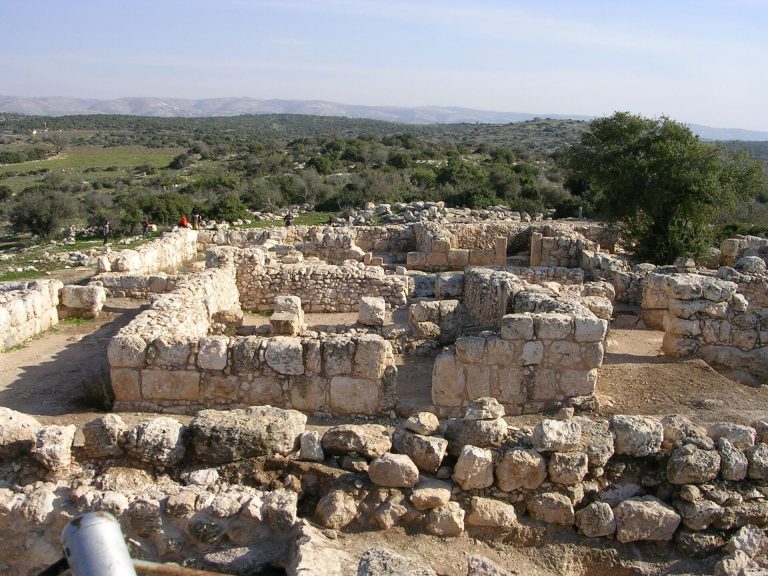
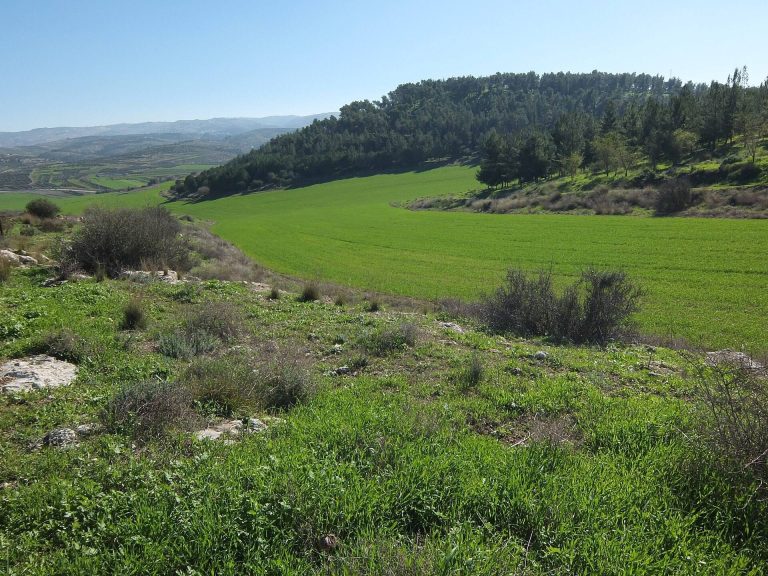
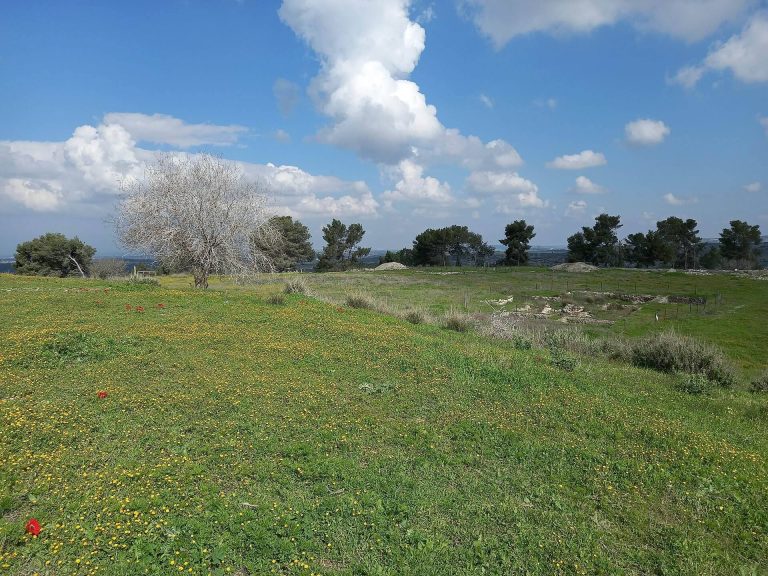
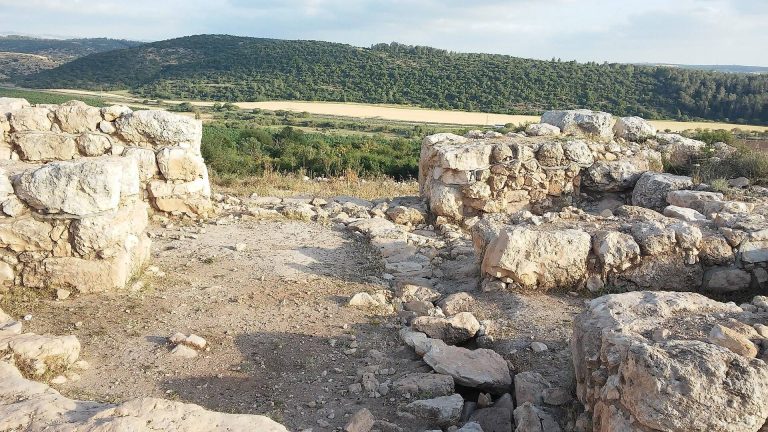
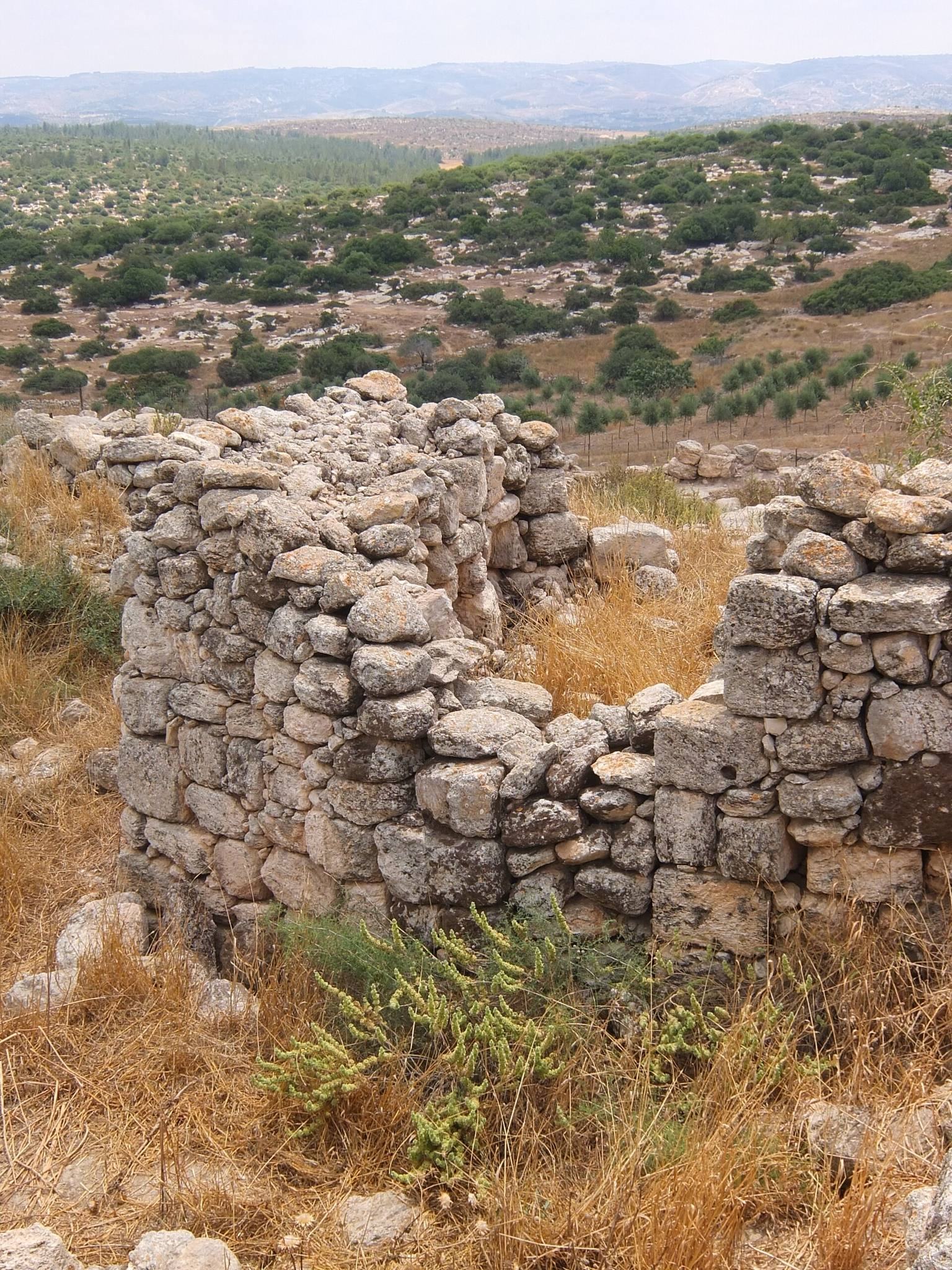
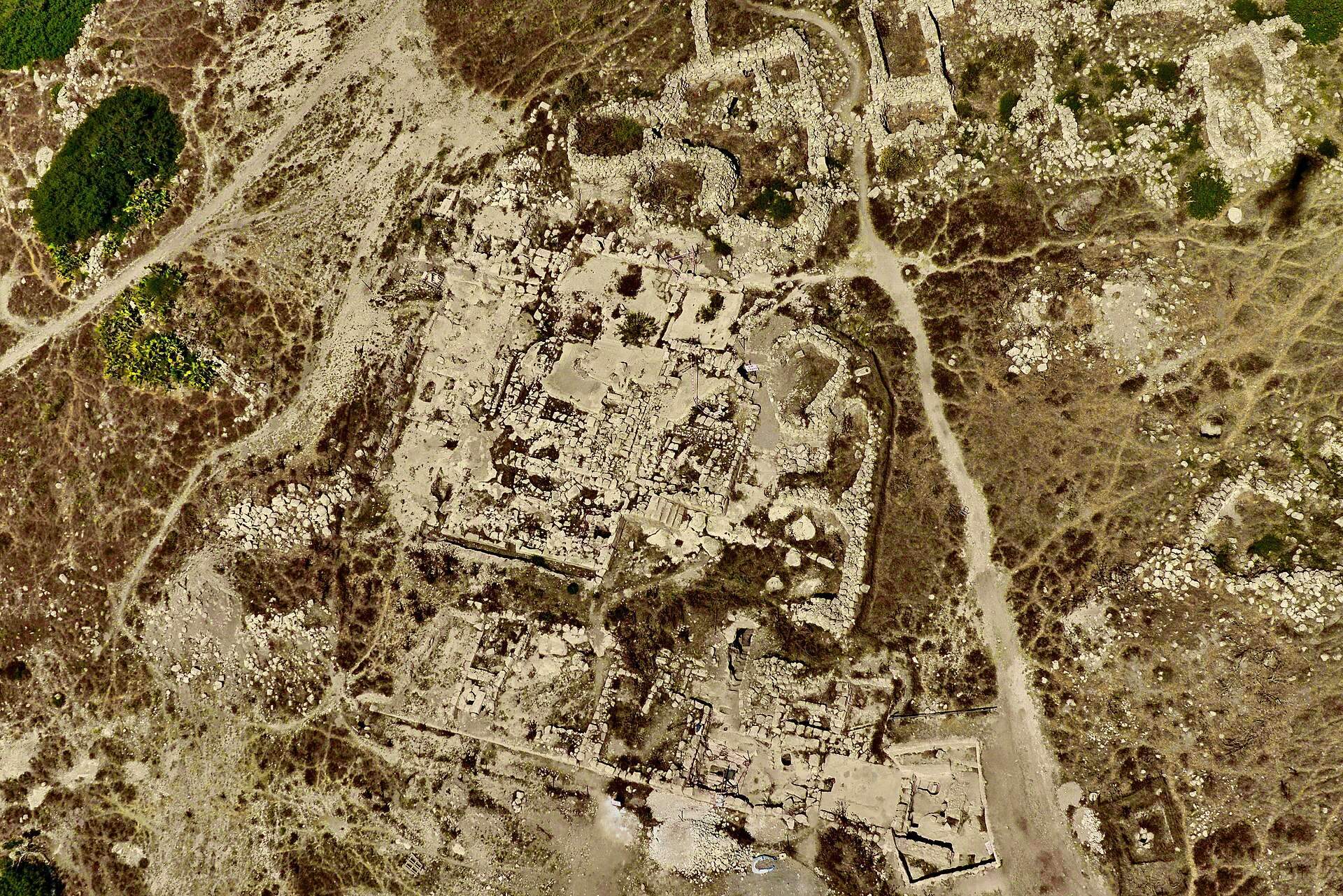
The ruins cover about 30 dunams on the crest of a hill approximately 430 metres above sea level. The site includes a large ancient cemetery, religious buildings, residential structures, fortifications, underground spaces, and agricultural installations. Its surviving remains include two Byzantine churches, cisterns, storerooms, oil presses, and a columbarium, a chamber or installation containing niches that may have served agricultural purposes in some ancient contexts.
Religious and settlement remains
Byzantine churches
Two Byzantine churches form part of the surviving religious architecture. Wall remains and mosaics survive in a ruined Byzantine church, linking the buildings with the Christian phase of the settlement. Another religious structure has been identified as either a church or a synagogue, leaving its precise function unresolved.
Central tower and water installations
Historical descriptions refer to a central tower, caves, cisterns, and a well. The 1883 Survey of Western Palestine considered the tower apparently non-ancient, while its antiquity has otherwise remained uncertain. A nearby well called Bir Harun was described in 1874 as having a rough structure above it and stone troughs carved into large blocks.
Domestic and agricultural features
Residential buildings, storerooms, cisterns, underground oil presses, and other agricultural installations show the range of activity once carried out at the site. A columbarium is also among the remains. An Ottoman-period plastered pool provides physical evidence of a later phase of use.
Underground spaces and burials
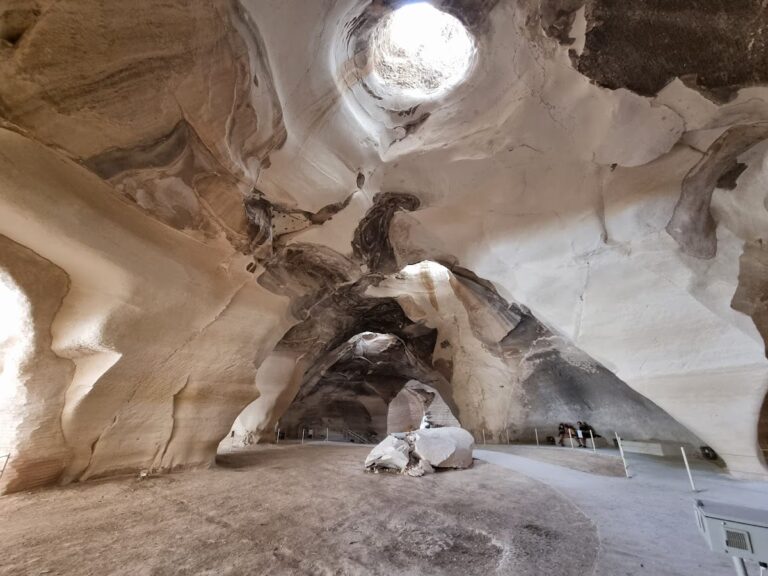
Bar Kokhba hiding complexes
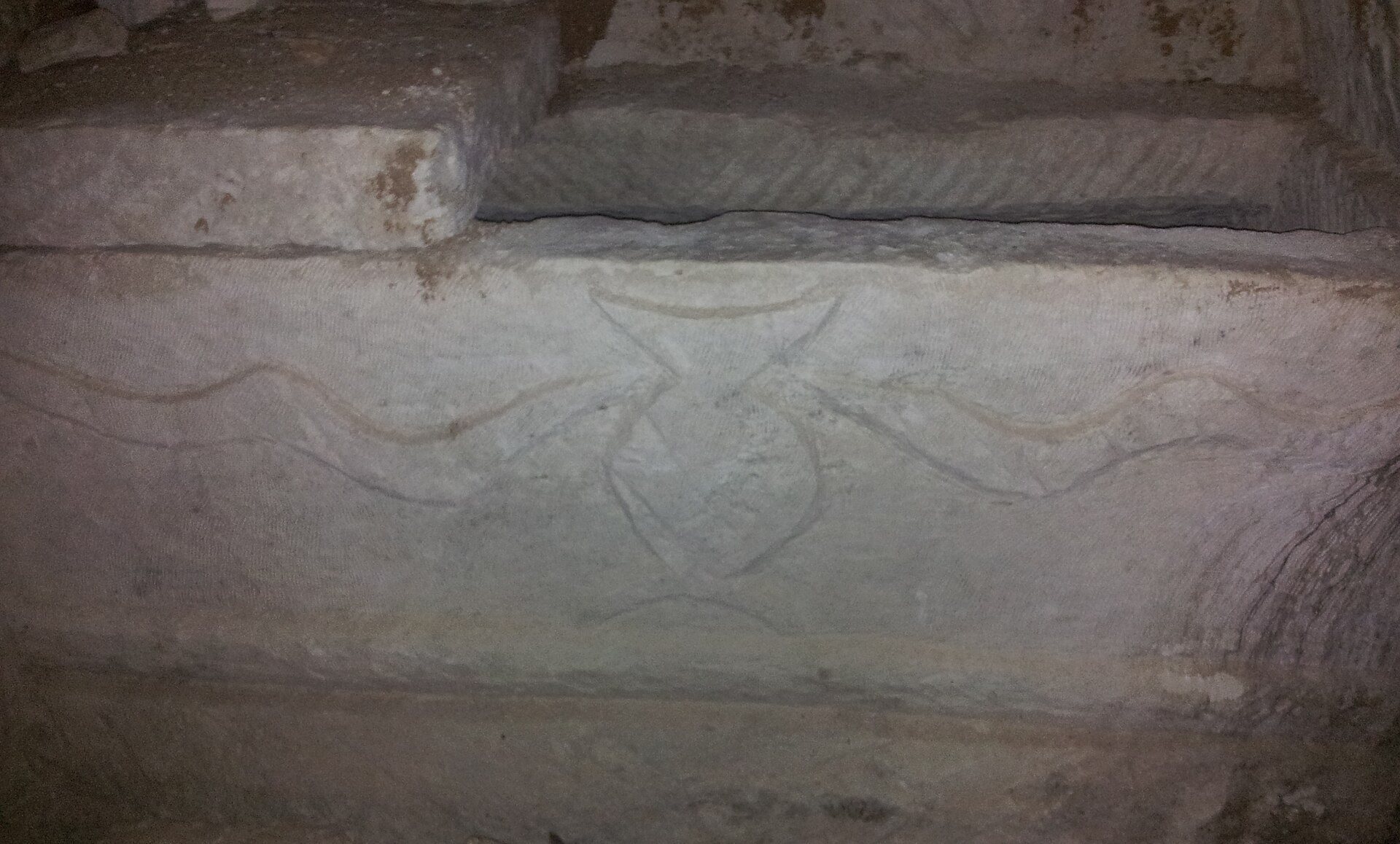
Underground hiding complexes are associated with the Bar Kokhba revolt. These subterranean systems could provide concealment, movement, storage, or refuge during conflict. A Jewish inscription, probably dating from the revolt, was cut into the doorjamb of an underground room. It mentions “Shelamzion daughter of …”.
Burial caves
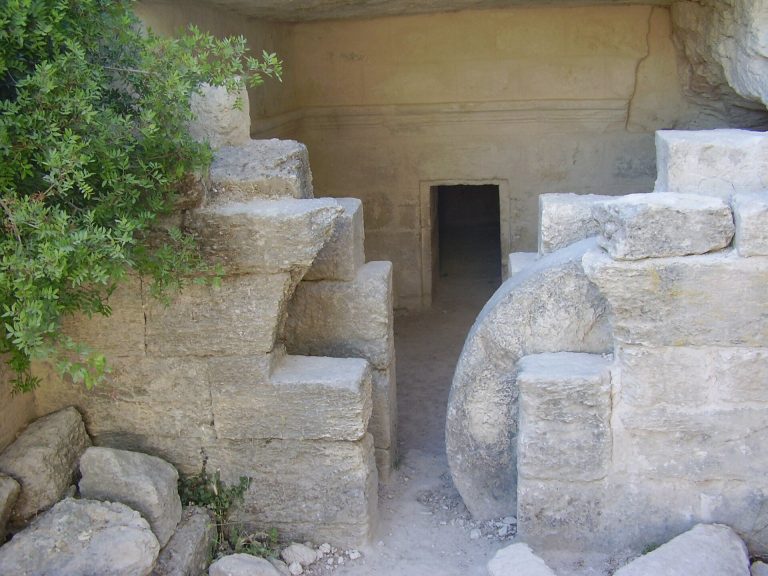
Several kinds of burial cave have been identified, including a Jewish kokhim cave from the Second Temple period. A kokhim cave is a tomb whose walls contain narrow, shaft-like burial niches. Fragments of ossuaries, containers used to store human bones after burial, were found inside this cave. Other surviving features include cemetery caves, underground cavities, stairs leading toward subterranean spaces, and a cave known as the Cave of Columns.