Maha Saman Devalaya: A Buddhist Shrine Dedicated to Saman in Sri Lanka
Site at a Glance
- Rating
- 4.7
- Popularity
- Medium
- Country
- Sri Lanka
- Primary era
- Early Modern
- Eras represented
- Medieval, Early Modern
- Civilizations
- Unclassified
- Site type
- Religious
- Remains
- Sanctuary
On this page8 sections
History
Maha Saman Devalaya is a Buddhist shrine dedicated to Saman in Ratnapura, Sri Lanka. The present shrine was built in 1270 during the Dambadeniya period, under the patronage of King Parakramabahu II, and remains an important center of devotion to the deity traditionally associated with Sri Pada.
Saman and the early shrine tradition
Saman is regarded in Sri Lankan Buddhist tradition as a guardian deity of Sri Pada and the Sabaragamuwa region. Tradition describes him as a regional administrator who lived during the Buddha’s time and met the Buddha during his visit to Sri Lanka. The Mahavamsa, a major chronicle of Sri Lankan Buddhist history, states that Saman attained stream-entry, the first stage of Buddhist enlightenment, after hearing the Buddha preach. Following his death, he came to be venerated as a deity.
Tradition attributes the first shrine to Saman’s Deva clan. The same premises are associated with Saparagama Viharaya, an earlier temple institution believed to have existed during the Anuradhapura era. The Mahavamsa states that monks from this temple attended the opening ceremony of Ruwanwelisaya under King Dutugamunu.
The Saman Siritha tells how the monk Ven. Seelawansa dreamed of a statue lying in the wilderness while he was on pilgrimage to Sri Pada. With the assistance of the minister Pathirajadeva, he later brought the statue to the temple. Sri Pada, also called Samanthakuta, is the sacred mountain traditionally associated with Saman and with the belief that the Buddha left his footprint there.
Foundation and royal patronage
The present shrine was established in 1270 by the court minister Aryakamadeva. He is said to have vowed to build a shrine to Saman if an attempt to find gems succeeded. King Parakramabahu II supported the foundation during the Dambadeniya period. Later, King Parakramabahu IV of the Kotte period provided additional patronage and resources.
Destruction and rebuilding
During Portuguese colonial rule, the shrine was seized in 1618, destroyed, and replaced with a Portuguese church. After King Rajasinghe II of Sitawaka acquired the area, he demolished the church and rebuilt the shrine during the seventeenth century. The new building was made with much simpler architecture because Rajasinghe II did not possess the financial resources available to the earlier royal patrons.
The Esala procession
During the wartime transfer of the Buddha’s Tooth Relic to Delgamuwa Raja Maha Vihara in the period of King Parakramabahu VI, Maha Saman Devalaya hosted the relic’s Esala procession for 11 years. Under King Rajasinghe, the Saman procession was joined to the Esala procession, creating a tradition that continues through the annual Esala Perahara in August or September.
The 13-day sequence begins with Pirith, the chanting of Buddhist protective texts, and Kap Situveema, the planting of a symbolic wooden tower. Smaller Kumbal and Dewele processions follow before the main procession concludes with Diya Kapeema, a symbolic water-cutting ceremony. The ceremonies take place under the supervision of the shrine’s chief incumbent, the Basnayake Nilame. Regional dances, cultural performances, and decorated elephants form part of the procession.
Remains
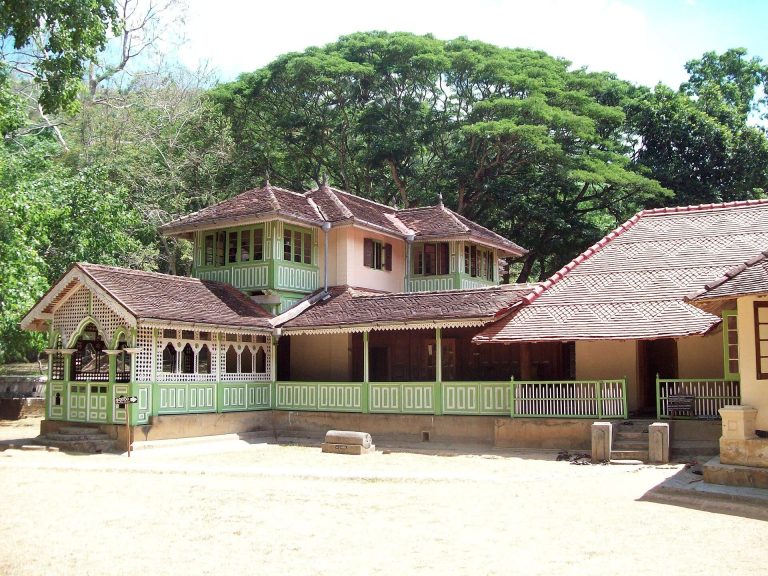
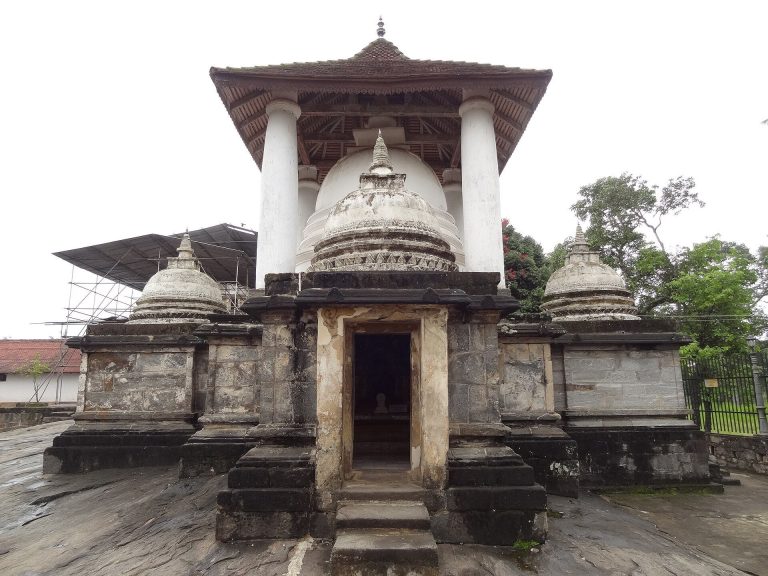
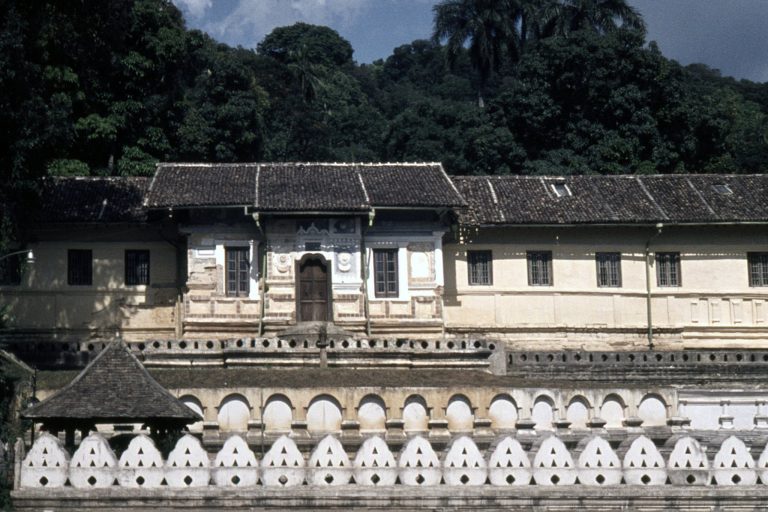
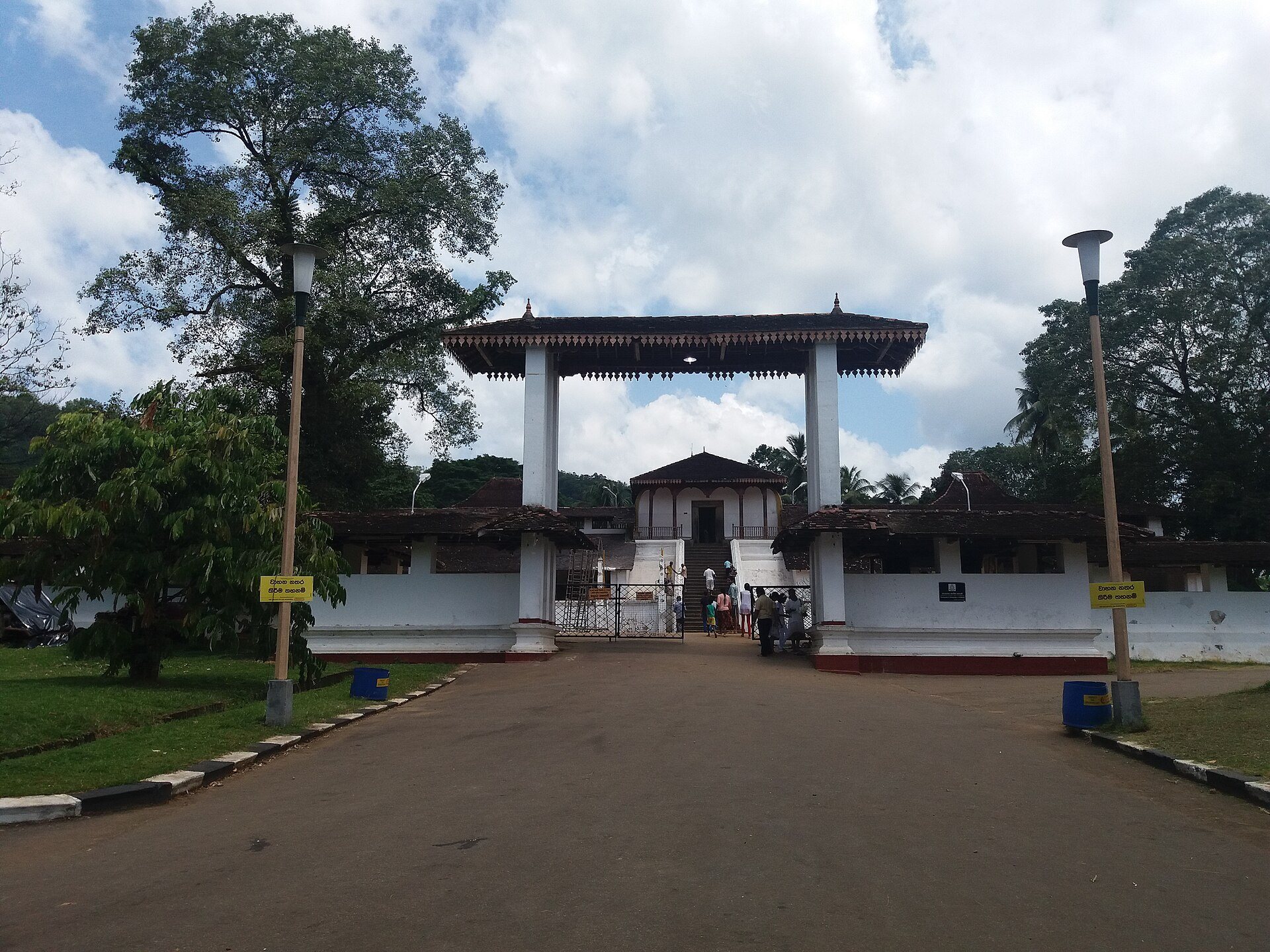
Maha Saman Devalaya is a devalaya, or shrine dedicated to a deity, whose present form reflects its seventeenth-century rebuilding. The structure is made of clay and has a comparatively simple architectural character, linked to the reduced resources available when it was reconstructed under King Rajasinghe II.
The shrine compound
The present clay shrine occupies the site associated with the earlier Saparagama Viharaya and with the shrine founded under Aryakamadeva. Its architectural form belongs to the later rebuilding rather than to the more elaborate shrine associated with the patronage of King Parakramabahu II. The premises also carry the historical memory of the Portuguese church that stood there between the destruction of the earlier shrine in 1618 and the seventeenth-century reconstruction.
Ritual space and procession
The shrine’s physical and ceremonial identity is expressed through the annual Esala Perahara. The sequence incorporates the shrine’s processions, the planting of the symbolic wooden tower, the smaller Kumbal and Dewele events, and the concluding Diya Kapeema water-cutting rite. These observances, together with regional performances and decorated elephants, continue the connection between the shrine and Saman’s local religious tradition.