Brandywine Battlefield: Site of the 1777 Battle of Brandywine
Site at a Glance
- Rating
- 4.5
- Popularity
- Low
- Country
- United States
- Primary era
- Early Modern
- External website
- Open
- Eras represented
- Early Modern
- Civilizations
- British
- Site type
- Military
On this page11 sections
History
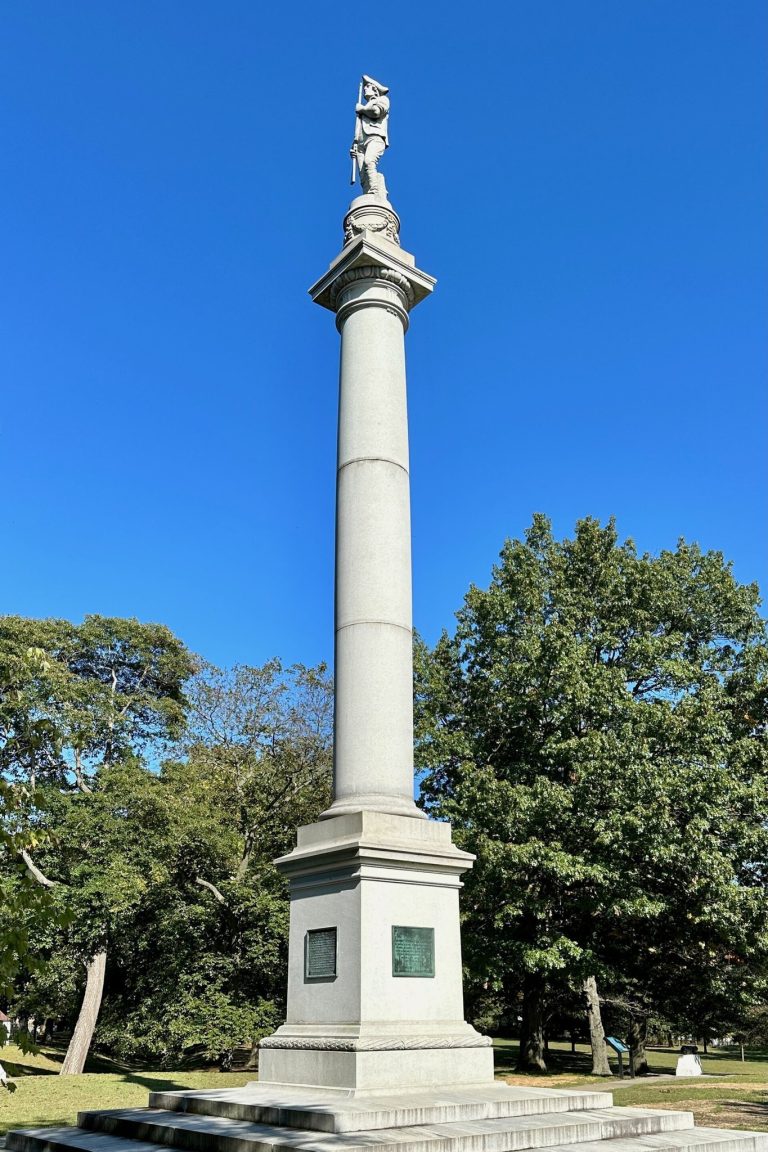
Brandywine Battlefield is a preserved American Revolution battlefield near Chadds Ford, Pennsylvania, in the United States. It preserves part of the site of the Battle of Brandywine, fought on September 11, 1777, during the late-eighteenth-century war in which the thirteen British North American colonies sought independence from Great Britain. The British victory opened the road to Philadelphia, the capital of the revolutionary government.
The approach to battle
The battlefield occupied a strategically important position near Philadelphia, at the meeting point of colonial roads and beside Brandywine Creek. The creek obstructed a British advance toward the Schuylkill River and Philadelphia, while control of the roads affected the supply lines of both armies. George Washington, commander in chief of the Continental Army, moved his forces to the Chadds Ford area to hold the high ground, block the British advance, and avoid being trapped between the British Army and the Royal Navy on the Delaware River.
British forces had landed near the head of Maryland’s Elk River and marched north toward Philadelphia. General William Howe divided the advance. About 5,000 troops under Wilhelm von Knyphausen moved toward Chadds Ford, while troops commanded by Lord Charles Cornwallis marched north to Jefferis’ Ford before turning south against the American right flank.
The battle on September 11, 1777
Heavy fog concealed British movements on the morning of the battle. Contradictory reports led Washington to believe that the principal British attack would come at Chadds Ford. At about 2 p.m., British troops appeared on the American right flank, and fighting around Birmingham Meeting House and Meeting House Hill forced the American position to give way.
General John Sullivan tried to reposition his troops against the unexpected attack. His forces later held back the British pursuit for nearly an hour, giving much of the Continental Army time to withdraw. Most American artillery on Meeting House Hill was abandoned after artillery horses were killed.
At Chadds Ford, Knyphausen’s troops attacked from the eastern bank of Brandywine Creek. They broke through the weakened American center and forced Anthony Wayne’s division to retreat, leaving most of its cannon behind. Armstrong’s militia also withdrew without engaging the British. Colonel Weedon’s troops covered the road outside Dilworthtown while the rest of the Continental Army retreated. Darkness ended the British pursuit. Most American troops reached Chester around midnight, and others arrived the following morning.
Consequences of the campaign
British losses were approximately 89 killed and 487 wounded. British reports gave American losses as about 200 dead, 750 wounded, more than 400 captured, and 11 artillery pieces destroyed or taken. Although the British defeated Washington’s army, the resistance prevented its complete destruction. The Continental Army retained enough morale to continue the war, and the delayed British attack allowed many American soldiers to escape.
British and American forces maneuvered in the area for several days afterward, with only minor encounters, including the Paoli Massacre on the night of September 20–21. The Continental Congress, the representative body that coordinated the colonies’ revolutionary government and war effort, left Philadelphia and moved first to Lancaster and then to York. Military supplies were taken to Van Leer Furnace in Reading for storage and musket repairs. British forces entered Philadelphia unopposed on September 26, 1777.
Before the battle, the area was a prosperous farming community occupied by Quaker farmers. Quakers, members of the Religious Society of Friends, were known for pacifist principles, but their farms and houses became part of the military campaign. Fighting damaged farmland, crops, and livestock. American officers occupied farmhouses before the battle, and victorious British officers later occupied Quaker homes.
Preservation and interpretation
Brandywine Battlefield Park became a Pennsylvania state park in 1949 and received a Pennsylvania state historical designation in 1952. The battlefield became a National Historic Landmark in 1961 and was added to the National Register of Historic Places in 1966. The National Register is the federal list of significant historic properties. In 1997, Congress designated the wider battlefield a National Historic Landmark District, a historic area containing related properties recognized for exceptional importance in American history.
The park closed on August 14, 2009, during a funding crisis involving the Pennsylvania Historical and Museum Commission, the state agency responsible for Pennsylvania’s museums and historic sites. It reopened 11 days later under an interim agreement involving the Commission, Chadds Ford Township, and Brandywine Battlefield Associates, also known as the Friends of Brandywine Battlefield. That organization operates the site with staff and volunteers. By mid-2023, the American Battlefield Trust and its partners had acquired and preserved more than 187 acres of battlefield land. Encroaching suburban development remains a threat to the preserved battlefield.
Remains
Battlefield landscape
The historic park occupies 52 acres near Chadds Ford in Delaware County, Pennsylvania, about half a mile east of Brandywine Creek and approximately 30 miles from Philadelphia. The wider battlefield extended across more than ten square miles, while the modern park principally preserves the area used as the Continental encampment during the two days before the battle. Its landscape includes former farmland and the encampment area, with surviving battlefield features distributed across the park and separately preserved northern areas.
Brandywine Creek formed a major natural military obstacle during the battle. Chadds Ford provided a crossing used in the fighting, and high ground near Birmingham Meeting House and Meeting House Hill formed an important defensive position. A separate northern portion is maintained by Birmingham Township in Chester County as Battlefield of the Brandywine Park, also called Sandy Hollow Heritage Park. Much of the afternoon fighting took place between Birmingham Friends Meetinghouse and the William Brinton 1704 House near Dilworthtown.
Historic houses
Benjamin Ring House
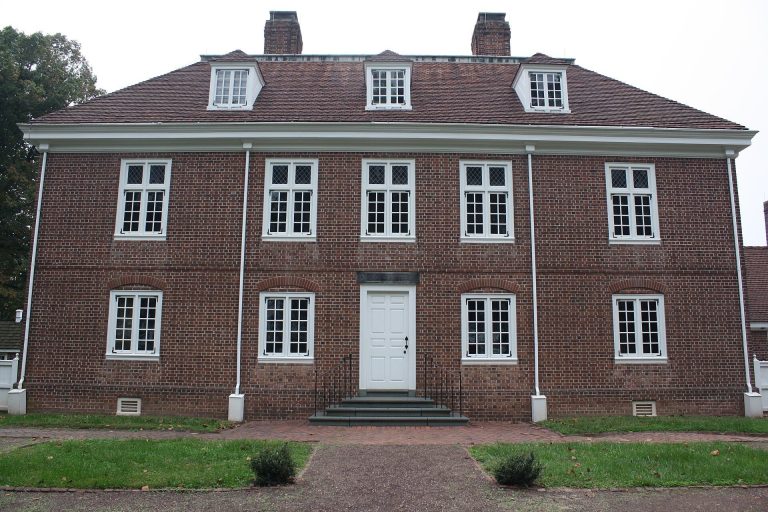
The Benjamin Ring House is believed to have served as George Washington’s headquarters before the battle. The earlier house was used intermittently until the 1930s, when a fire caused by a bomb accidentally set off by local youths destroyed it. A replacement built during the 1950s reflects the appearance of the 1770s and contains Quaker-style furniture and historical interpretation concerning the battle and Washington’s stay.
Gideon Gilpin House
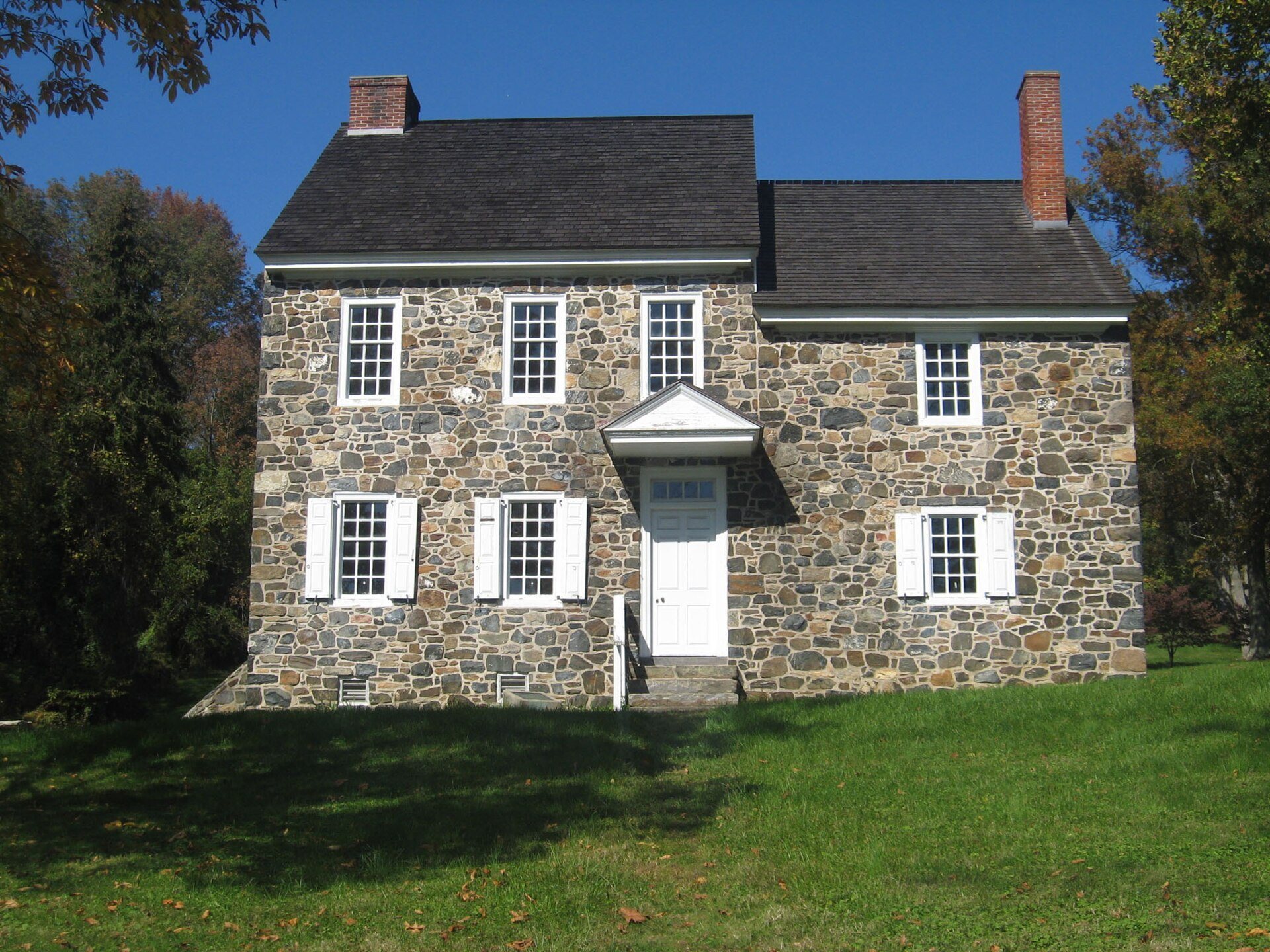
The Gideon Gilpin House was originally the home of a prosperous Quaker farmer and his family. It served as quarters for the Marquis de Lafayette before the battle and as the place to which Lafayette was returned after he was wounded. Lafayette was a French aristocrat and military officer who volunteered for the American revolutionary cause and served as a Continental general. British forces pillaged the house after the battle. The building has been restored and preserved to represent its appearance in 1777.
Interpretive features
The preserved site includes historical displays and period-representative interiors. The Benjamin Ring House contains Quaker-style furniture, while programs and educational activities interpret the battlefield, its surviving buildings, and the people who took part in the campaign. Special programs have included portrayals of Hessian troops, German soldiers hired by the British government, as well as Quaker, British, and Continental participants.