Buyeo Gwanbuk-ri Site: Presumed Palace of Baekje’s Sabi Capital
Site at a Glance
- Rating
- 4.3
- Popularity
- Low
- Country
- South Korea
- Primary era
- Medieval
- External website
- Open
- Eras represented
- Medieval
- Civilizations
- Baekje
- Site type
- Domestic
- Remains
- Palace
On this page6 sections
History
Buyeo Gwanbuk-ri Site is the presumed royal palace of Baekje’s final capital, Sabi, in Buyeo, Chungcheongnam-do, South Korea. Baekje was one of the Three Kingdoms of Korea, and the palace was established in the sixth century during the reign of King Seong, who moved the capital from Ungjin to Sabi in 538.
The Move to Sabi
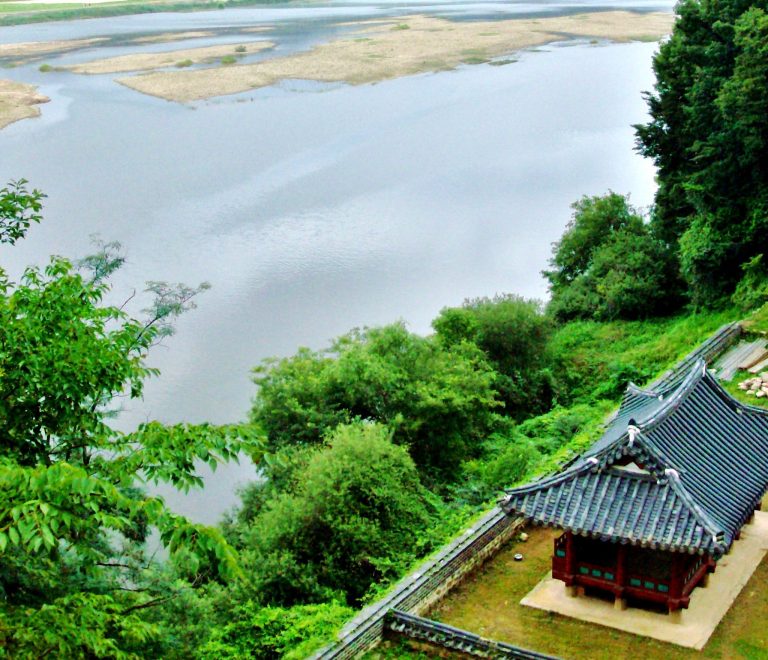
Repeated attacks and pressure from Goguryeo, one of Baekje’s major northern rivals, made the former capital at Gongsanseong Fortress increasingly difficult to defend. King Seong therefore selected Sabi, placing the palace at the foot of Busosan. The mountain, its fortress, and the Geumgang River formed a protective setting to the north. During peaceful periods, Busosan served as a park for the palace, while in emergencies it could function as a defensive position.
The palace and fortress remained in use for 122 years. Baekje fell in 660 after its defeat by Silla, another Korean kingdom, and the Tang dynasty of China, which had formed an alliance against Baekje.
Archaeological Investigation and Protection
The discovery of the Gwanbuk-ri remains provided important evidence for Sabi’s urban area. Before the site was identified, the palace of Goguryeo at Anhakkung was the only palace of the Three Kingdoms period whose location was known with certainty. Archaeological work at Gwanbuk-ri began in 1980. Chungnam National University carried out five excavation campaigns between 1982 and 1992, followed by investigations by the Buyeo National Research Institute of Cultural Heritage from 2001 to 2008. Fourteen excavations in the former palace area took place between 1980 and 2012.
Busosanseong Fortress was investigated in 1993 and 1994 as part of a wider programme that conducted 15 excavations in the fortress area between 1980 and 2002. More than three decades of fieldwork exposed most of the royal-palace area. The site became a Monument of South Chungcheong Province in September 1983, then received national Historic Site status on February 5, 2001, as designation number 428. It was first registered as the Buyeo Gwanbuk-ri Baekje Site and received the name Buyeo Gwanbuk-ri Site in 2011. Together with Busosanseong Fortress, it was inscribed on the UNESCO World Heritage List in 2015 as part of the Baekje Historic Areas, under criteria (ii) and (iii).
Remains
Palace Area and Urban Features
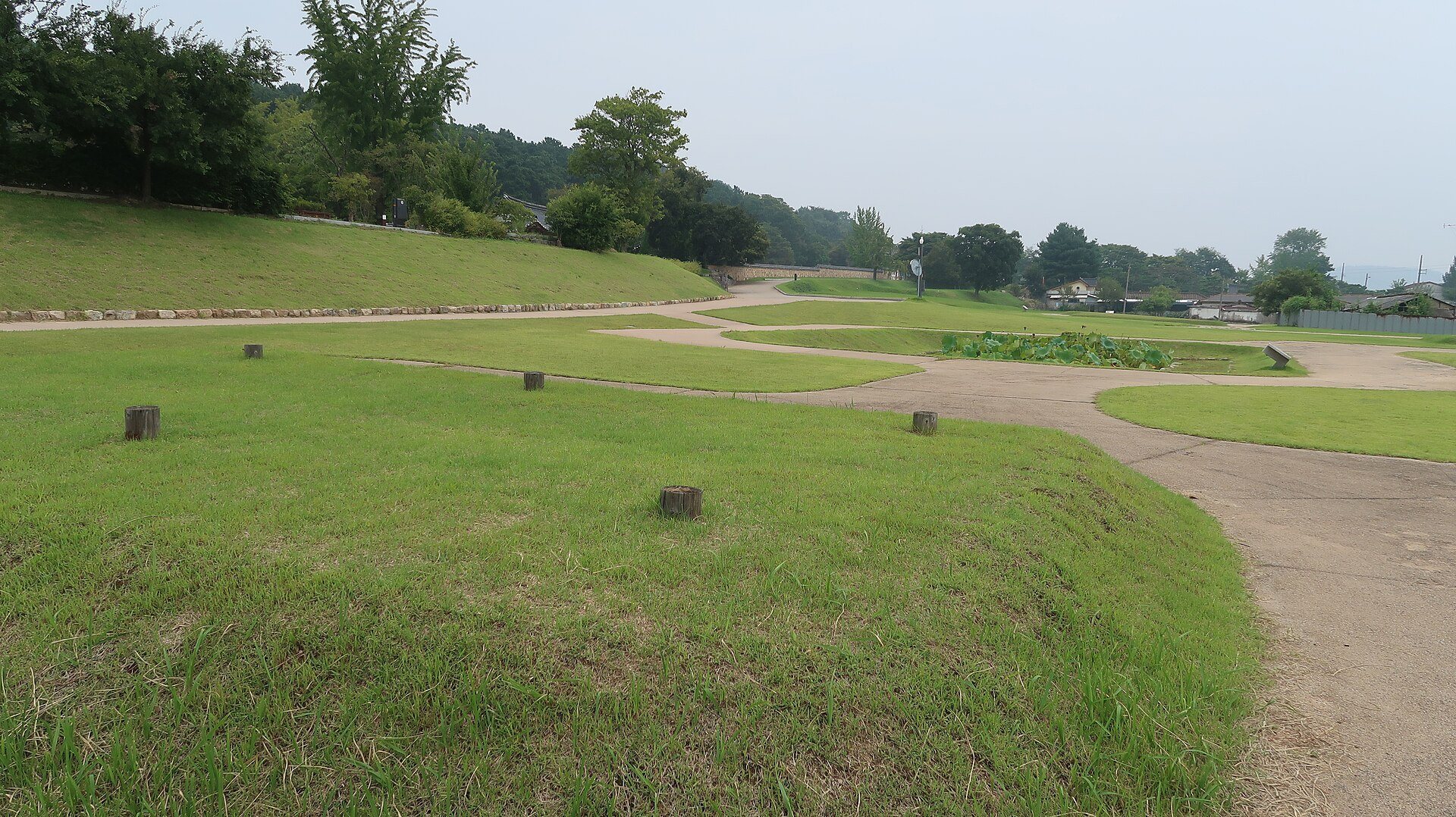
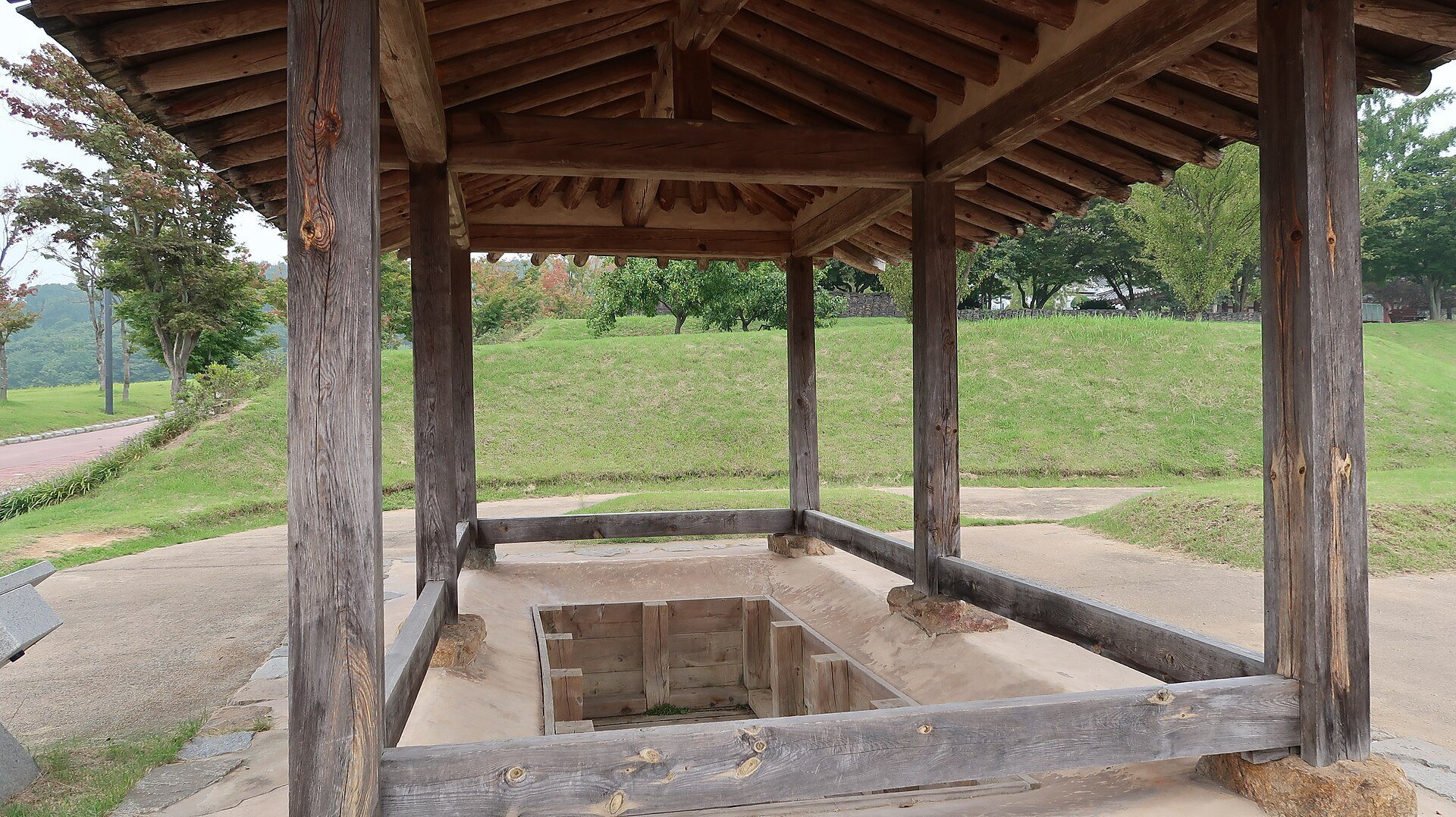
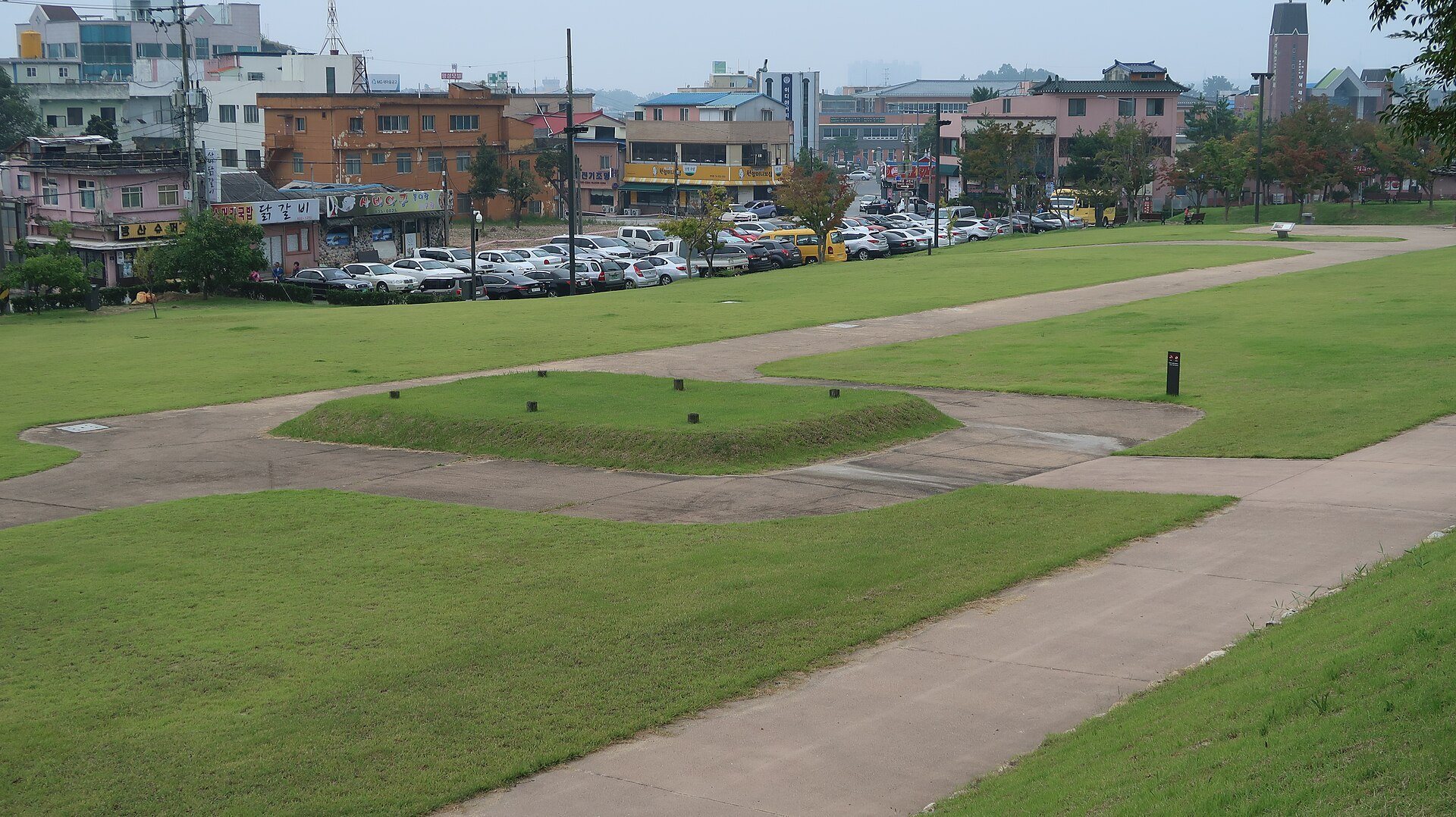
The site occupies the northern edge of central Buyeo, at the southwestern foot of the 106-metre-high Busosan. The Geumgang River runs north of the mountain, curves westward around the town, and then turns south. The palace stood on the mountain’s southern side, facing the city, with Busosan and its fortress forming its northern protective setting. Excavations have revealed palace buildings, lotus ponds, wells, workshops, roads, and drainage facilities. A square, stone-built lotus pond was uncovered in 1983. A pottery rim found in 1988 carries an inscription translated as “North House.” In 1992, archaeologists exposed a Baekje-period road and drainage installation about 50 metres south of the present Buyeo National Research Institute of Cultural Heritage. The archaeological site covers 95,484 square metres.
Busosanseong Fortress
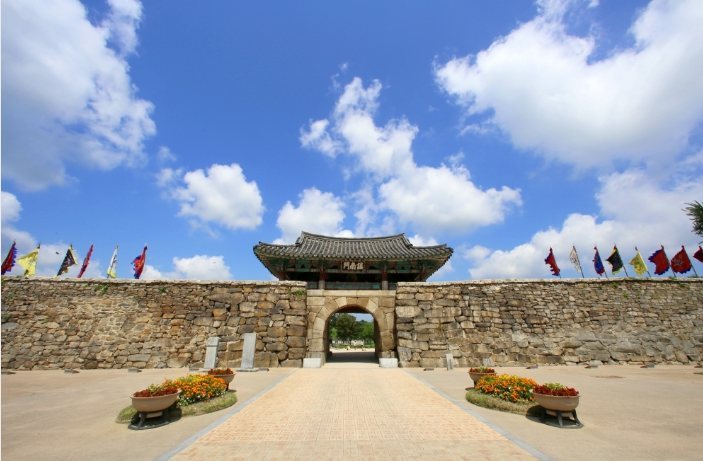
Busosanseong Fortress formed the defensive element associated with the palace. Its walls extended for approximately 2,495 metres, measured about 5 to 6 metres wide at the base, and survived to heights of up to 3 metres. Investigations of the fortress took place alongside the excavations of the palace area and help define the defensive setting of Sabi’s royal complex.