Daci’en Temple: A Tang Buddhist Temple and Sutra-Translation Center in Xi’an
Site at a Glance
- Rating
- 4.4
- Popularity
- Very Low
- Country
- China
- Primary era
- Classical
- External website
- Open
- Eras represented
- Classical, Medieval, Modern
- Civilizations
- Chinese, Tang
- Site type
- Religious
- Remains
- Monastery
On this page23 sections
History
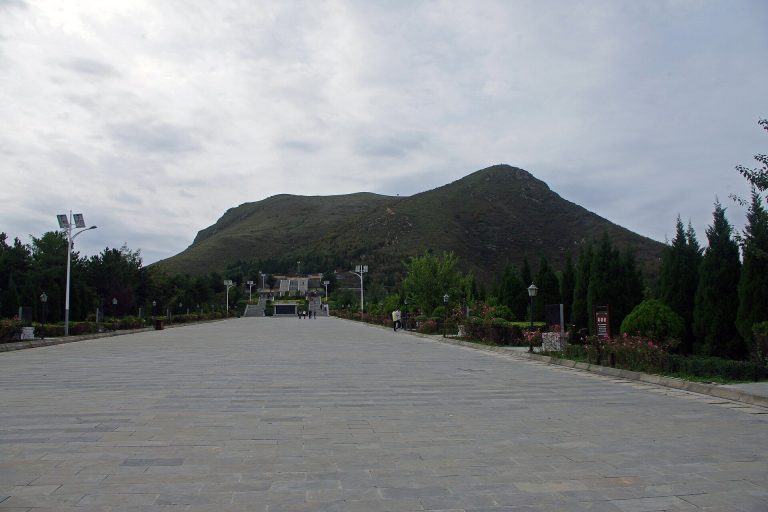
Daci’en Temple is a Han Chinese Buddhist temple in Yanta District, Xi’an, China, established in 648 during the Tang dynasty. Crown Prince Li Zhi expanded a Sui-period religious site to commemorate his mother, Empress Wende, and gave the temple a name referring to maternal benevolence. The temple became an imperial Buddhist institution and a major center of East Asian Yogacara, a Mahayana school concerned with consciousness and perception that was transmitted in China through the monk and translator Xuanzang and his disciple Kuiji.
Early Foundations and Tang Expansion
The site had earlier religious associations. One tradition connects it with Jingjue Temple, attributed to the Northern Wei period, although that identification remains an alternative tradition. A temple called Wulou was built there during the Sui dynasty. In 648, Li Zhi enlarged the Sui site and established Daci’en Temple while he was still crown prince. He later ruled as Emperor Gaozong of Tang.
Under the Tang, Daci’en became one of the dynasty’s principal sutra-translation centers, alongside Daxingshan Temple and Jianfu Temple. A sutra-translation center was an institution where Buddhist scriptures were translated into Chinese, edited, interpreted, and distributed. The complex reportedly contained more than ten subsidiary courtyards, about 1,897 architectural bays, and accommodation for 300 officially recognized monks.
Xuanzang became the temple’s senior monk and directed translation work from an institute in its northwestern area. His activity there continued for 11 years, until 658, and produced Chinese translations of more than 40 Buddhist works. In 652, he promoted construction of the Giant Wild Goose Pagoda to house Buddhist images and scriptures brought from India and the Western Regions. His disciple Kuiji later developed the school associated with the temple and was honored as the “Cien Master.”
An International Buddhist Center
Daci’en functioned as an international center of Buddhist learning during the Tang period. Indian monks, a monk from Silla, and numerous Japanese monks studied there, helping connect Buddhist and cultural exchange among China, India, Korea, and Japan. From the middle Tang period, the grounds also included a large performance space for popular Buddhist lectures and entertainments.
The temple was known for its peonies, while gardens and ponds to the south were associated with apricot blossoms, lotus flowers, persimmons, autumn foliage, and planted wisteria. Daci’en survived the anti-Buddhist suppression ordered by Emperor Wuzong in 845, a campaign that restricted Buddhist institutions and religious activity across the Tang empire.
Destruction, Repair, and Later Continuity
In 904, Zhu Wen forced Emperor Zhaozong of Tang to move the capital to Luoyang. Warfare that devastated Chang’an also damaged Daci’en, and the temple became a ruin. Repeated destruction during the late Tang and Five Dynasties left it intermittently abandoned. Between about 930 and 933, during the Later Tang Changxing period, the Western Capital administrator An Zhongba directed repairs. The judge Wang Renyu composed an inscription for the campaign.
A fire during the Song dynasty’s Xining period, approximately 1068 to 1077, severely damaged the temple and caused the outer modeling of the Giant Wild Goose Pagoda to fall away. By the Jin dynasty’s Zhengda period, most of the temple had nearly disappeared, while the pagoda remained standing. The temple continued to influence Buddhist culture despite these disruptions. Six Western Xia images of Xuanzang’s pilgrimage preserved at Yulin Cave in Anxi are associated with this continuing influence, and a scripture pillar from the Yuan reign of Emperor Dingzong indicates activity at the temple during the Yuan period.
Between 1458 and 1466, Zhang Yonghan, a Shaanxi provincial administrative official, directed a major Ming restoration. The work restored the front hall, gate, covered corridors, monks’ hall, and other parts of the layout. A separate tradition dates the establishment of the present temple to 1550. Repairs continued during the Qing reigns of Kangxi, Daoguang, Tongzhi, and Guangxu.
From 1930 to 1937, the military commander Zhu Qinglan organized repairs to the upper hall and the pagoda’s internal stairs and added another hall. Military encampments and trench digging before the establishment of the People’s Republic of China severely damaged the halls and left the temple neglected again. Comprehensive reconstruction began in 1953. In 1964, the pagoda platform and brick ornamental walls were rebuilt, its wooden stairs and railings were replaced, and its interior walls were whitewashed.
Modern Religious and Heritage History
Management passed to the Xi’an Buddhist Association in 1985, after which religious activities and public access resumed. Another large repair campaign followed in late 1997. In 2000, the Xuanzang Sanzang complex was completed during commemorations associated with the 1,400th anniversary of Xuanzang. The ceremonies also enshrined a cranial relic attributed to Xuanzang and marked the installation of the abbot Zengqin.
The Giant Wild Goose Pagoda became a national-level protected cultural monument in 1961. Daci’en Temple was authorized as a national key Buddhist temple in the Han Chinese area in 1983, and the pagoda became part of the UNESCO World Heritage property “Silk Roads: the Routes Network of Chang’an-Tianshan Corridor” in 2014. A former western pagoda-courtyard area was incorporated into Chunxiao Garden in 1988 through cooperation between Xi’an and Funabashi. Xi’an expanded the garden into Daci’en Temple Heritage Park in 2008, followed by comprehensive improvement in 2020.
The temple continues to serve religious purposes. In 1964, it hosted a ceremony marking 1,300 years since Xuanzang’s death, attended by Buddhist representatives from 12 countries and regions. The ceremonies held in 2000 combined religious observances with the opening of the Xuanzang Sanzang complex.
Remains
The present complex follows a south-to-north arrangement known as “front temple, central pagoda, rear courtyard.” It faces south and occupies the former western pagoda courtyard of the Tang temple. Smaller than the Tang complex, it retains a continuous layout comprising the Shanmen, the principal Buddhist gate, bell and drum towers, Mahavira Hall, subsidiary halls, the Tusita or Dharma Hall, the Giant Wild Goose Pagoda, and the Xuanzang Sanzang complex.
First Courtyard and Buddhist Halls
Gate and Courtyard Buildings
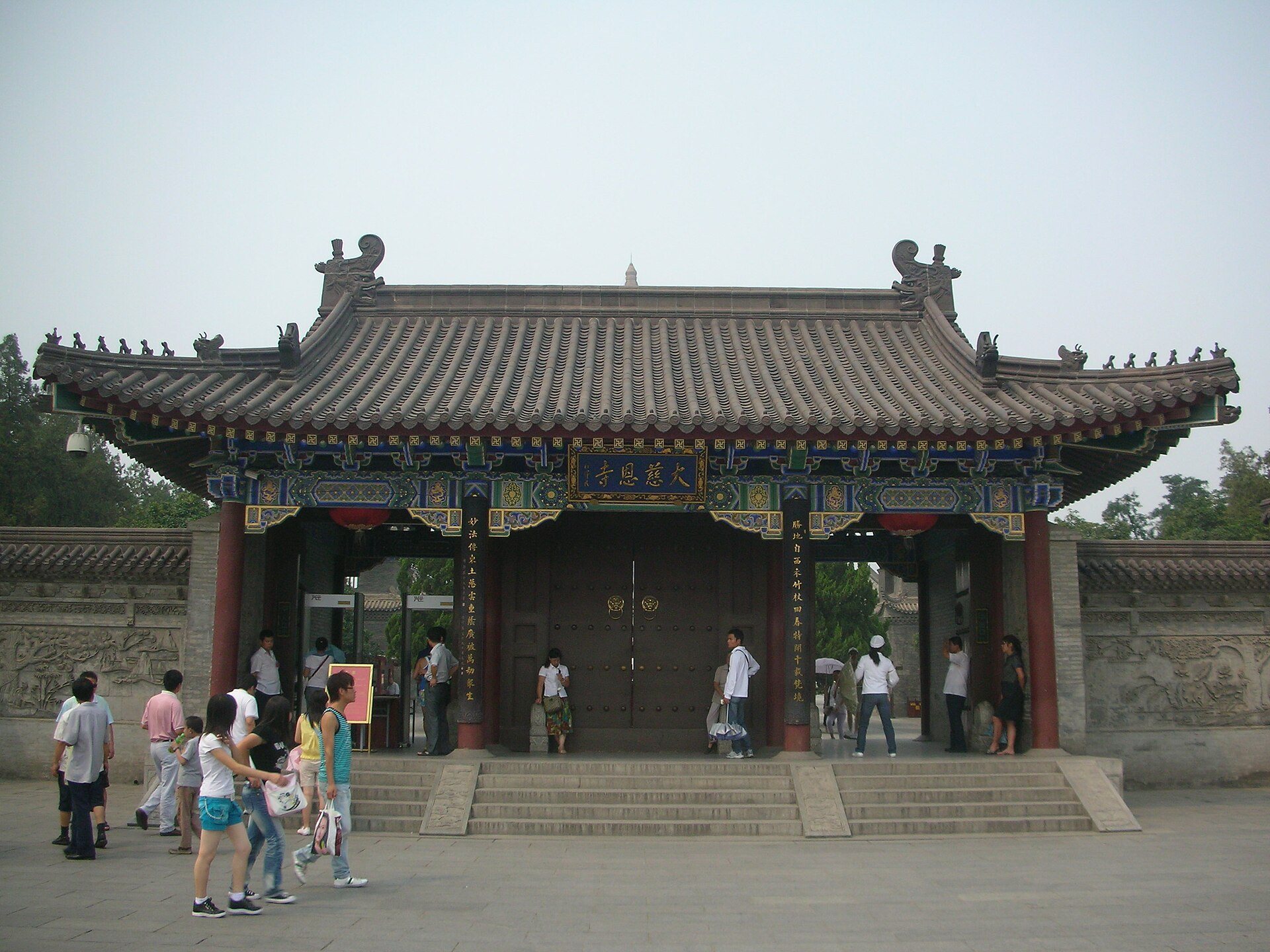
The first courtyard contains the Shanmen, bell tower, drum tower, Mahavira Hall, and eastern and western subsidiary halls. A plaque above the gate carries the temple’s name. The bell tower holds a cast-iron bell recast in 1548 that weighs approximately one tonne, while the drum tower contains a large drum. East of the courtyard are a tower, pavilion, studio, and offices connected with administration of the Giant Wild Goose Pagoda. The Cloud-Water Hall stands to the west.
Mahavira Hall
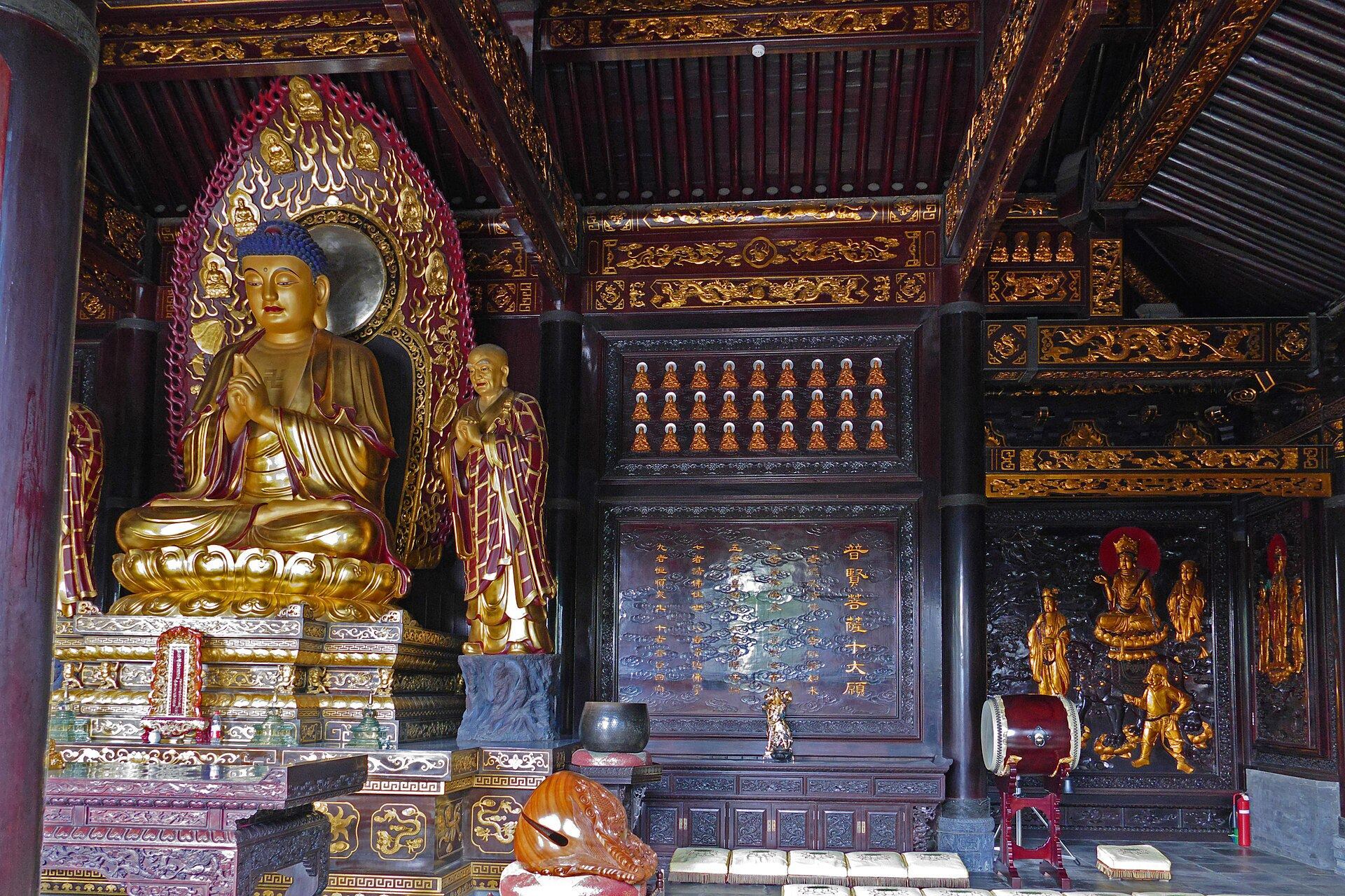
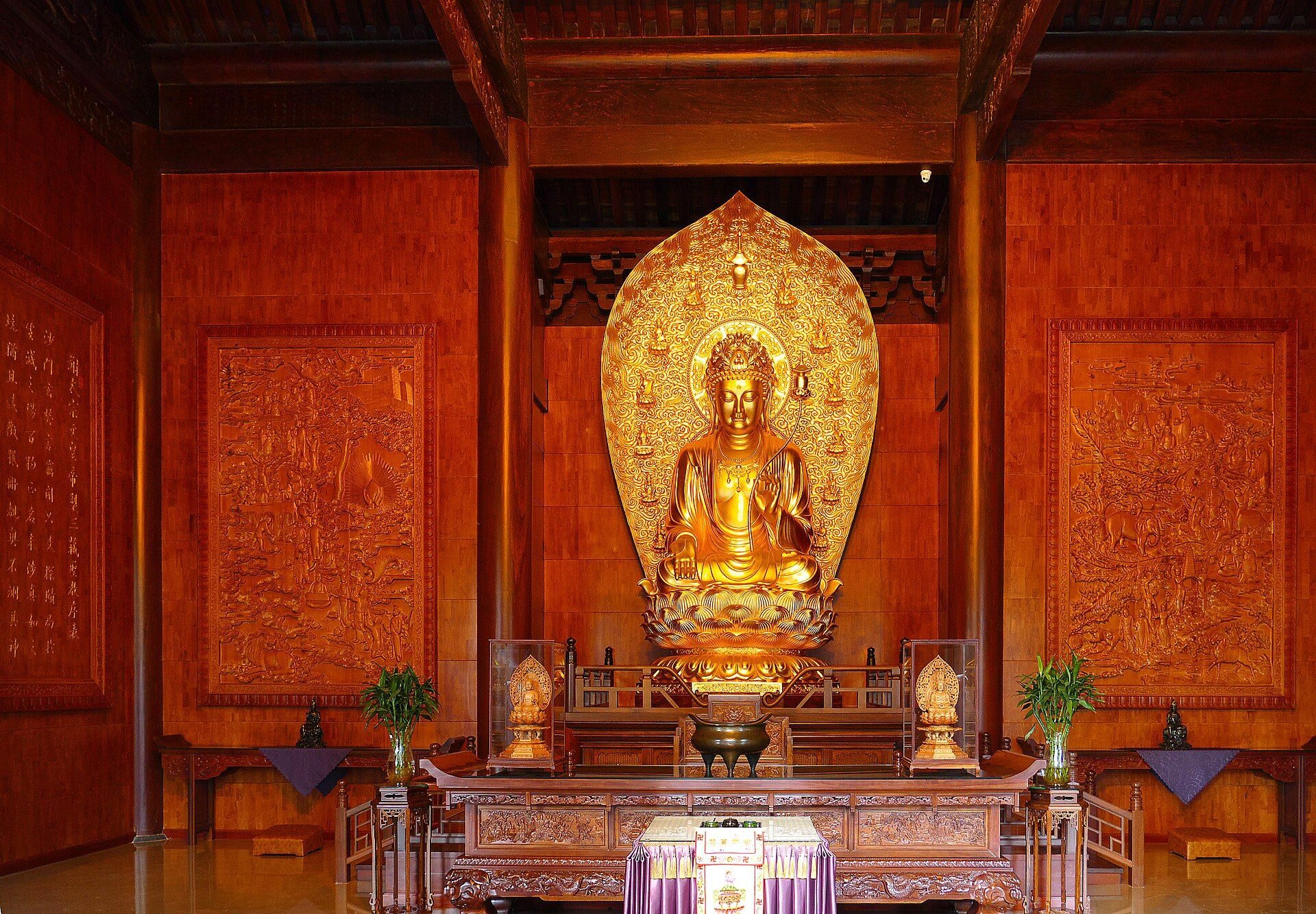
Mahavira Hall contains a seated image of Shakyamuni Buddha, standing images of Ananda and Mahakashyapa, and images of the Eighteen Arhats. Paintings on the rear wall represent the Ten Great Vows of Samantabhadra and include verses from the Lotus Sutra.
Pagoda Forest and Inscriptions
The southeastern corner contains a pagoda forest with nine relic pagodas associated with successive Daci’en abbots. The names and birth dates of the abbots are carved on the individual pagodas. The same area contains eight Ming- and Qing-period steles, including the “Record of Names Inscribed at the Wild Goose Pagoda.”
Second Courtyard and Ritual Buildings
Tusita Hall
The second courtyard is the principal ritual and religious area. Its Tusita Hall, also called the Dharma Hall, bears the inscription “Joy of Humans and Gods” and contains a cast-bronze image of Maitreya. The hall is an important place of worship for devotees of Maitreya. A Dharma Hall is used for teaching, preaching, or religious rites.
Eastern Halls
On the eastern side are the Sangharama Hall, Ganlu Hall, and a Wealth Deity Hall. The Sangharama Hall is dedicated to a temple-protecting Buddhist figure, King Prasenajit, Prince Jeta, and the lay donor Sudatta. Ganlu Hall is used by lay patrons for scripture recitation, prayers, and rites for the dead.
Western Halls
The western side contains the Patriarchs’ Hall, which preserves memorial tablets for former abbots, and the Manifestation Hall. The latter displays a jade-and-stone inlaid group sculpture representing eight aspects of Shakyamuni’s life. The courtyard also includes a Guanyin Hall and a center for distributing religious items.
Giant Wild Goose Pagoda
Structure and Inscriptions
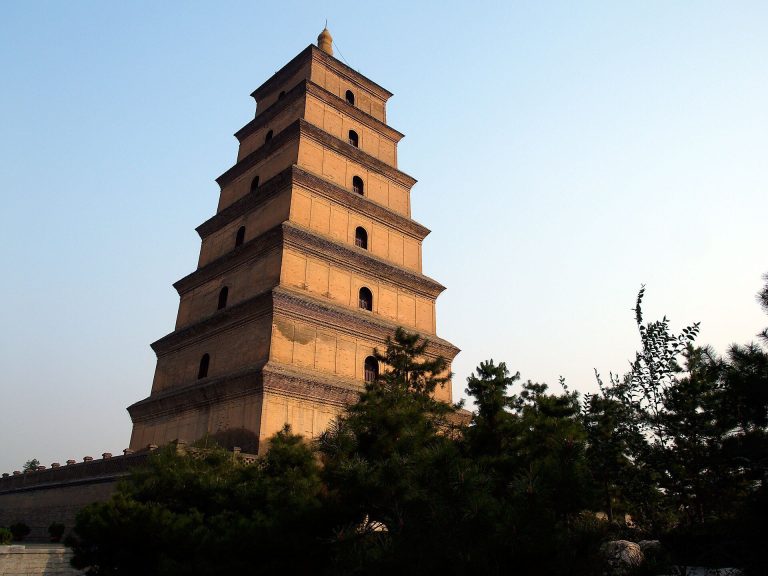
The third courtyard is centered on the Giant Wild Goose Pagoda, also called the Ci’en Temple Pagoda. It is a square, seven-story brick tower in the tower-pavilion style, approximately 64 metres high. Above the ground story, each level has recessed brick columns and horizontal lintels with simple bracket structures.
Inscriptions on the eastern and western sides of the base reproduce the “Record of the Sacred Teachings of the Great Tang’s Tripitaka,” written by Emperor Gaozong, and a related stele written by Emperor Taizong. The base and surrounding area also contain steles recording later repairs.
Interior Contents
The ground story contains Ming- and Qing-period name inscriptions and a stele depicting Xuanzang carrying his pilgrim’s satchel. A Ming-period gilded Buddhist image occupies the second story. The third and fourth stories contain palm-leaf scriptures and a replica of a relic pagoda. The fifth preserves Ming- and Qing-period wind bells together with Tang-period bricks and stones, while the sixth contains an instrument for monitoring structural vibration.
Xuanzang Sanzang Complex
Great Universal Awakening Hall
The fourth courtyard is formed by the Xuanzang Sanzang complex, built in 2000. Its gate bears an inscription, and its screen wall carries the phrases “Leader of the Dharma” and “Pillar of the Nation.” The central Great Universal Awakening Hall contains a bronze statue of Xuanzang and wall paintings showing Maitreya’s birth in Tusita Heaven and related preaching scenes.
Prajna and Radiance Halls
Xuanzang’s cranial relic is preserved in an underground chamber of the complex. The eastern Prajna Hall contains a large wooden relief depicting episodes from his life. The western Radiance Hall is responsible for routine religious maintenance and repairs to associated buildings.
Images, Scriptures, and Stone Records
Stone Buddhist Works
The temple contains stone images of bodhisattvas from the Six Dynasties period, a four-sided stone Buddha image dated to the second year of the Sui Kaihuang period, and several Tang-period Buddhist pedestals. A Tang bluestone lotus-pattern pedestal bears an inscription stating that Xuanzang respectfully made and dedicated a Shakyamuni image in 662. It originated at Yuhua Temple and is now held by the National Museum of China.
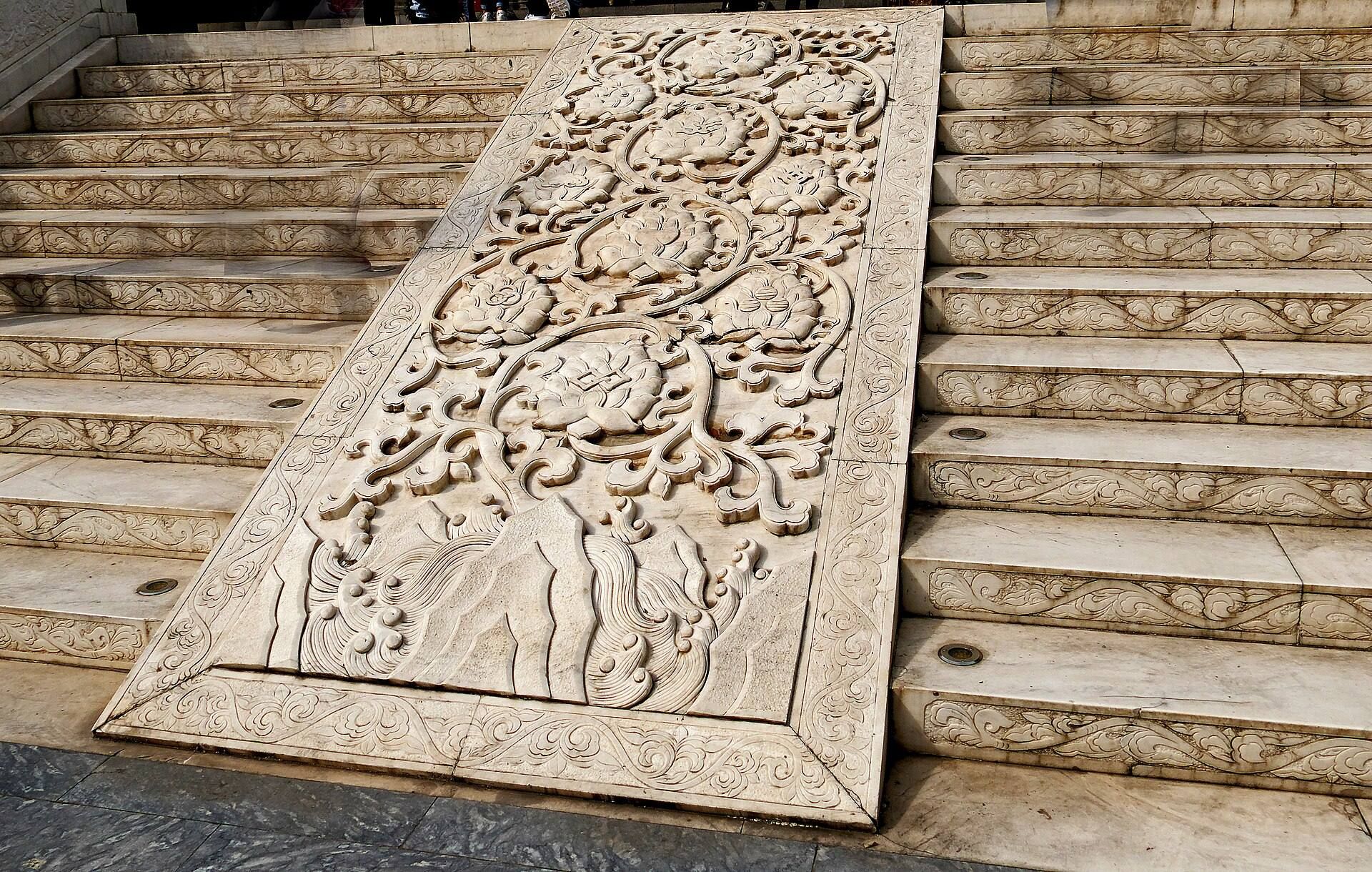
Other Buddhist furnishings include a Tang-period pedestal associated with the Four Heavenly Kings, a white-marble pedestal decorated with cloud designs, and Dharani scripture pillars dating from the Tang and Yuan periods. An inscribed Tang-period image stone excavated inside the temple in 1973 is a rectangular fragment showing two bodhisattvas seated cross-legged on lotus bases. Honeysuckle designs surround the figures, who wear halos, scarves, necklaces, and bracelets.
Inscriptions and Manuscripts
The temple preserves 102 stone inscriptions, including 15 from the Tang period, 13 recording Yuan, Ming, and Qing repairs, and 73 name inscriptions. Its Buddhist scriptures and books include palm-leaf scriptures traditionally associated with material brought back by Xuanzang. Another inventory describes 20 palm-leaf manuscript leaves housed at the temple.