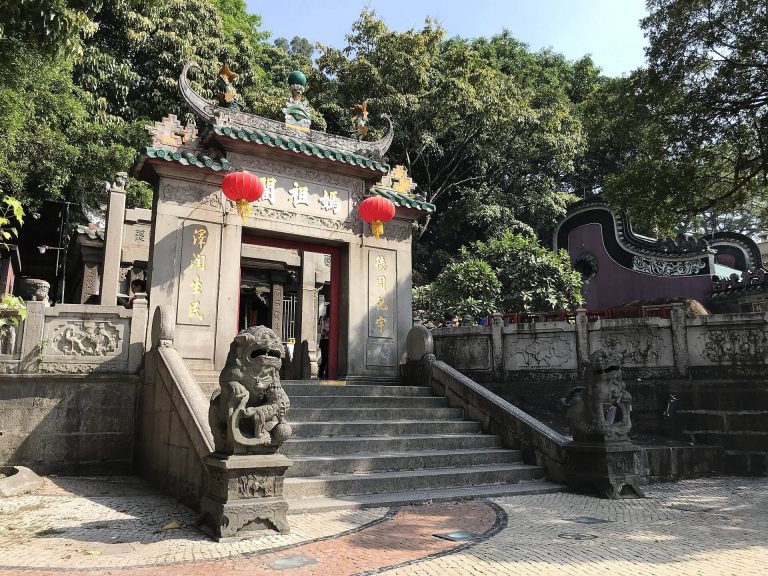
Lei Cheng Uk Han Tomb Museum: A Preserved Eastern Han Burial Site in Hong Kong
Site at a Glance
- Rating
- 3.8
- Popularity
- Low
- Country
- China
- Primary era
- Classical
- External website
- Open
- Eras represented
- Classical, Modern
- Civilizations
- Han
- Site type
- Burial
- Remains
- Tomb
On this page9 sections
History
Lei Cheng Uk Han Tomb Museum preserves a brick-built Eastern Han burial site in Sham Shui Po, Kowloon, Hong Kong, People’s Republic of China. The tomb is generally dated to approximately AD 25–220, the period of the Eastern Han, the later phase of China’s Han dynasty, and is commonly understood as the burial place of a Chinese officer attached to the local garrison. Its structure, brick inscriptions, calligraphy, and excavated objects have also led to consideration of a Southern Dynasties date.
Han-period origins
An inscription containing the name “Panyu” places the Hong Kong region within Panyu County of Nanhai Commandery during the Han period. Panyu was associated with the area of present-day Guangzhou and Hong Kong, while a commandery was a major administrative division of the Han empire. The tomb is regarded as the only Han brick tomb excavated in Hong Kong and provides evidence for the early presence and activities of Han people in the region.
The identity of the person buried there is unknown. Proposed interpretations have included a local salt official, another official or member of the aristocracy, and an aristocrat who sought refuge in the region during the late Eastern Han period. The tomb’s original position beside the seashore also reflects the changing landscape of the area, which is now about 2 kilometres from the sea after successive land-reclamation works.
Discovery and preservation
The tomb was found by chance on 9 August 1955, when a hillside at Lei Cheng Uk Village was being levelled for resettlement housing. Looting took place during the discovery, and some objects were lost, including a vase that was sold by a street hawker. Excavation and investigation were carried out by University of Hong Kong students and Public Works Department workers under Professor Frederick S. Drake, a former head of the university’s Chinese Department. Professor Lin Yangshan led university students during the investigation, and Dong Zuobin of National Taiwan University was invited to study the objects.
The government initially planned to demolish the tomb after excavation, but public interest encouraged its preservation. Following archaeological assessment, the Urban Council placed a reinforced-concrete protective shell over it. The tomb and an adjoining exhibition hall opened to the public on 21 June 1957. It first operated as the Lei Cheng Uk branch of the Hong Kong Museum. Responsibility passed to the former Urban Council in 1969, and the museum became a branch of the Hong Kong Museum of History in 1975. The branch took its present name in 1998 to emphasize the site’s historical importance.
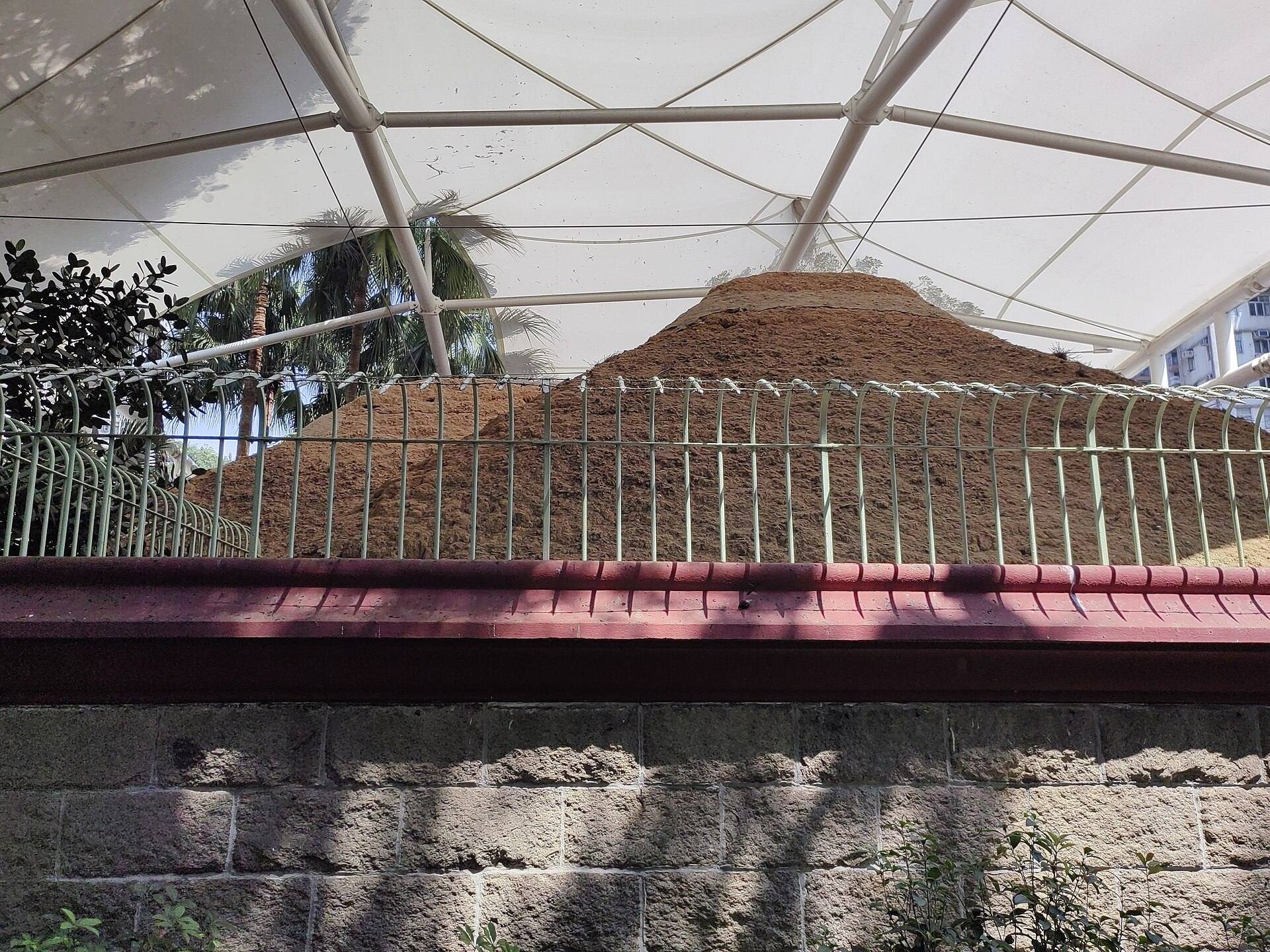
The tomb was declared a Hong Kong monument in November 1988 and is protected under the Antiquities and Monuments Ordinance, the legal framework for safeguarding declared monuments and other historic remains. A new exhibition hall opened that year and was refurbished in 2005. Rainwater leakage led to a conservation and restoration programme beginning in January 2005. The work included a polytetrafluoroethylene canopy, a chemically resistant synthetic protective material, over the tomb, while the exhibition hall was also refurbished. Earlier protection had included concrete, waterproofing layers, topsoil, and turf.
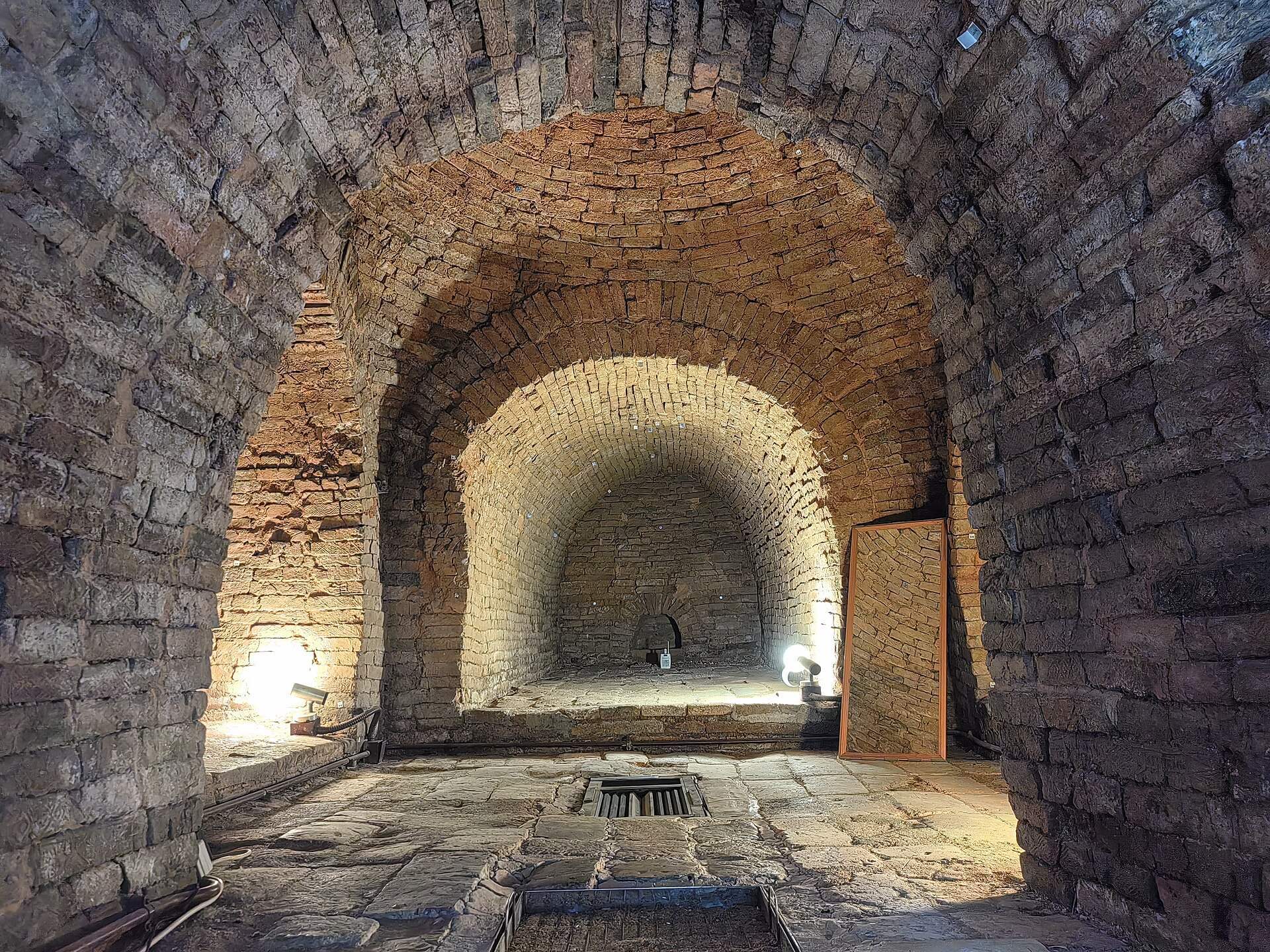
Since the mid-1980s, conservation concerns have prevented entry into the tomb itself. Its environment is controlled for temperature and humidity, and the chambers can be viewed through glass at the entrance passage. Three-dimensional laser scanning has created a digital record of the tomb. The exhibition hall presents a three-dimensional animation of its interior, while a full-scale replica is displayed at the Hong Kong Museum of History.
Remains
Brick tomb structure
The tomb is a brick-built burial chamber arranged in a cross-shaped plan. Four spaces make up the layout: a front chamber, a rear chamber, and left and right side chambers known as ear chambers. The entrance passage had already been damaged before formal excavation. The central section has a domed roof formed by bricks laid in a spiral pattern, while the other chambers have barrel-vaulted roofs. The rear chamber is thought to have held the coffin, the side chambers may have been used for storage, and ritual ceremonies may have taken place in the domed front chamber.
The bricks average about 40 centimetres in length, 20 centimetres in width, and 5 centimetres in thickness. Most are plain, but some exposed faces carry more than ten types of stamped or carved motifs and inscriptions. These include “Panyu,” “Panyu Great Governance Calendar,” and “Xue Shi.” The last may be the name of the craftsman who made the bricks. The lettering is associated with an angular form of clerical script, a formal Chinese writing style widely used for official writing and inscriptions during the Han period.
Excavated objects
Fifty-eight objects were recovered from the tomb, including at least 33 complete examples. The group contains 50 pottery objects, among them cooking utensils, food containers, storage jars, and models of a house, granary, well, and stove. Eight bronze objects include bowls, basins, mirrors, and bells. No human skeletal remains were found. The pottery and bronze objects are displayed in the adjoining exhibition hall, where they accompany explanations of the tomb’s discovery, excavation, structure, geographical setting, and dating.
Museum grounds and interpretation
Exhibition hall
The exhibition hall uses texts, photographs, maps, models, plans, and archaeological images to explain the tomb. Its food-and-drink display includes a food-distribution map, a rice-distribution pictogram, a table of major food groups, and replicas of two cooks and a farmer. The entrance bears the inscription “Lei Cheng Uk Han Tomb,” with lettering written by the sinologist Rao Zongyi.
Han Garden
The Han Garden beside the museum was completed in December 1993. It follows Han-period garden styles and contains pavilions, terraces, towers, fishponds, and rock sculptures.