Tabasqueño: A Maya Civic-Ceremonial Center in Campeche
Site at a Glance
- Rating
- 4.5
- Popularity
- Very Low
- Country
- Mexico
- Primary era
- Classical
- Eras represented
- Classical
- Civilizations
- Maya
- Site type
- City
On this page6 sections
History
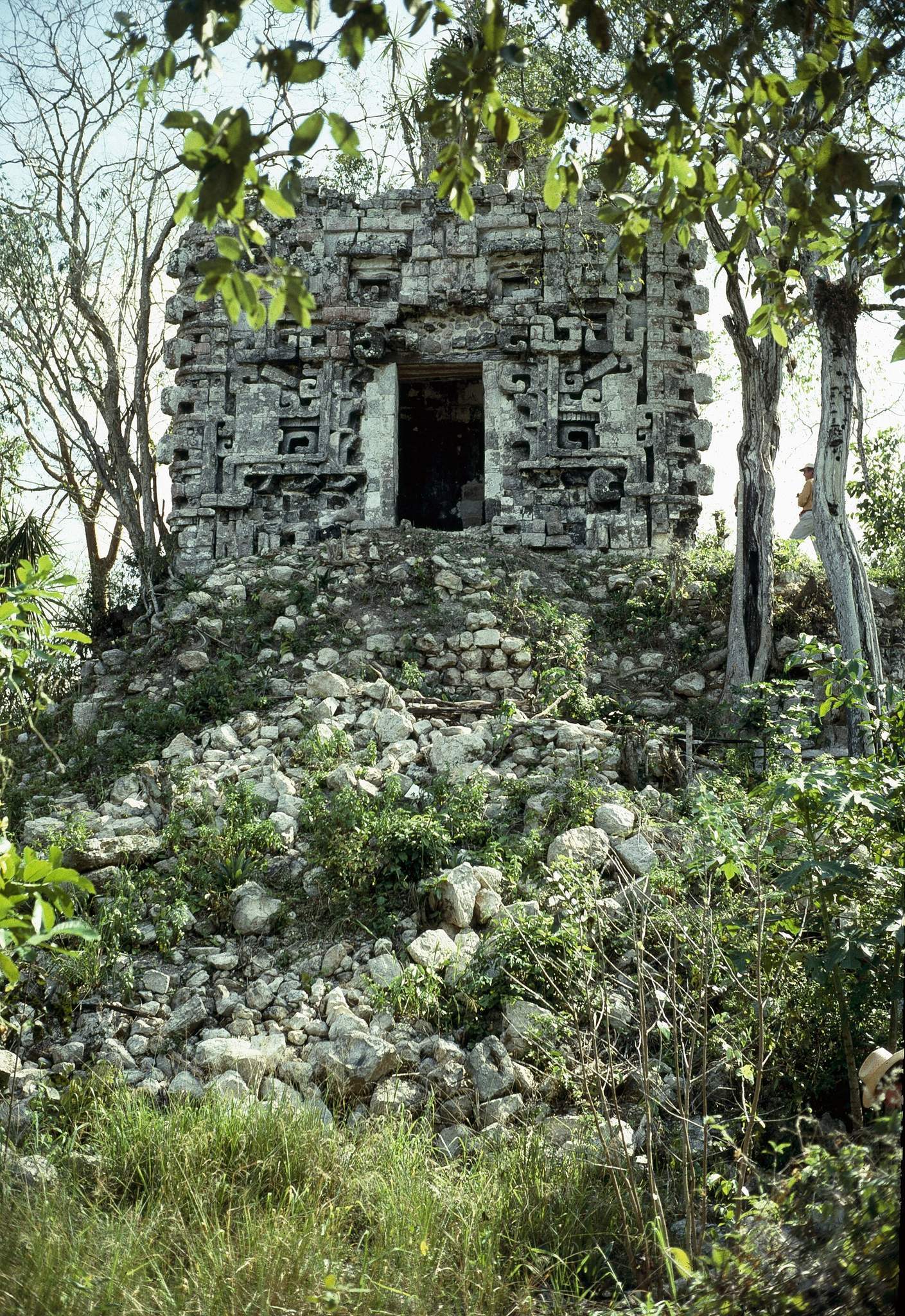
Tabasqueño is a Maya archaeological site in the municipality of Hopelchén, Campeche, Mexico. It developed as an important civic-ceremonial center and city during the Maya Classic period, with construction dating from AD 650 to 950 and architecture belonging to the Chenes tradition, known for elaborate façades that turn entrances and building fronts into religious imagery. The settlement reached its peak between AD 750 and 900 and remained occupied into the Early Postclassic period.
Classic-period development
Tabasqueño served as a regional center in the Chenes area, whose buildings were arranged according to complex astronomical orientations. These alignments were intended to support observations of shadows and astronomical events. The site’s monumental architecture reflects the role of civic and ceremonial buildings in the settlement, while its refined façades incorporated representations of Maya deities and supernatural beings.
Occupation continued after the Classic period, but the settlement was abandoned around AD 1250. Its original pre-Hispanic name is unknown. The name Tabasqueño was assigned after the site was discovered and referred to the nickname of a person from the state of Tabasco who administered the land. It was also associated with a small ranch that once stood on the property and later disappeared.
Exploration and conservation
Teobert Maler, an archaeologist and explorer whose photographs and descriptions provided early documentation of Maya sites, visited Tabasqueño during a late-nineteenth-century expedition. His first documentation is associated with 1887 and 1895, with 1895 also recorded as the site’s discovery date. The German archaeologist Eduard Seler relied exclusively on Maler’s documentation for his study of serpent-mouth portals, while the American archaeologist Harry E. D. Pollock made comparatively brief observations in 1936.
Hurricane Gilbert severely damaged Tabasqueño on September 14, 1988. The archaeologist Antonio Benavides Castillo repaired the damage, and extensive excavation and restoration work has taken place since 2004. The site is administered by Mexico’s National Institute of Anthropology and History.
Remains
The Palace-Temple
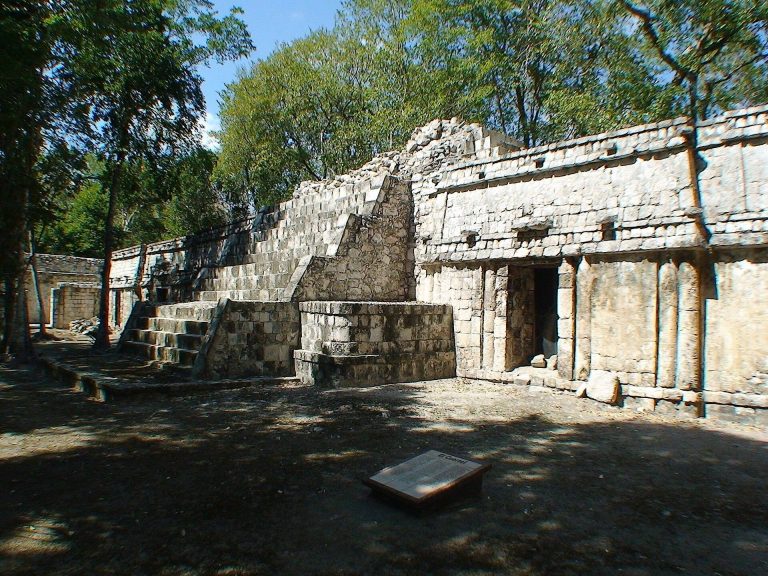
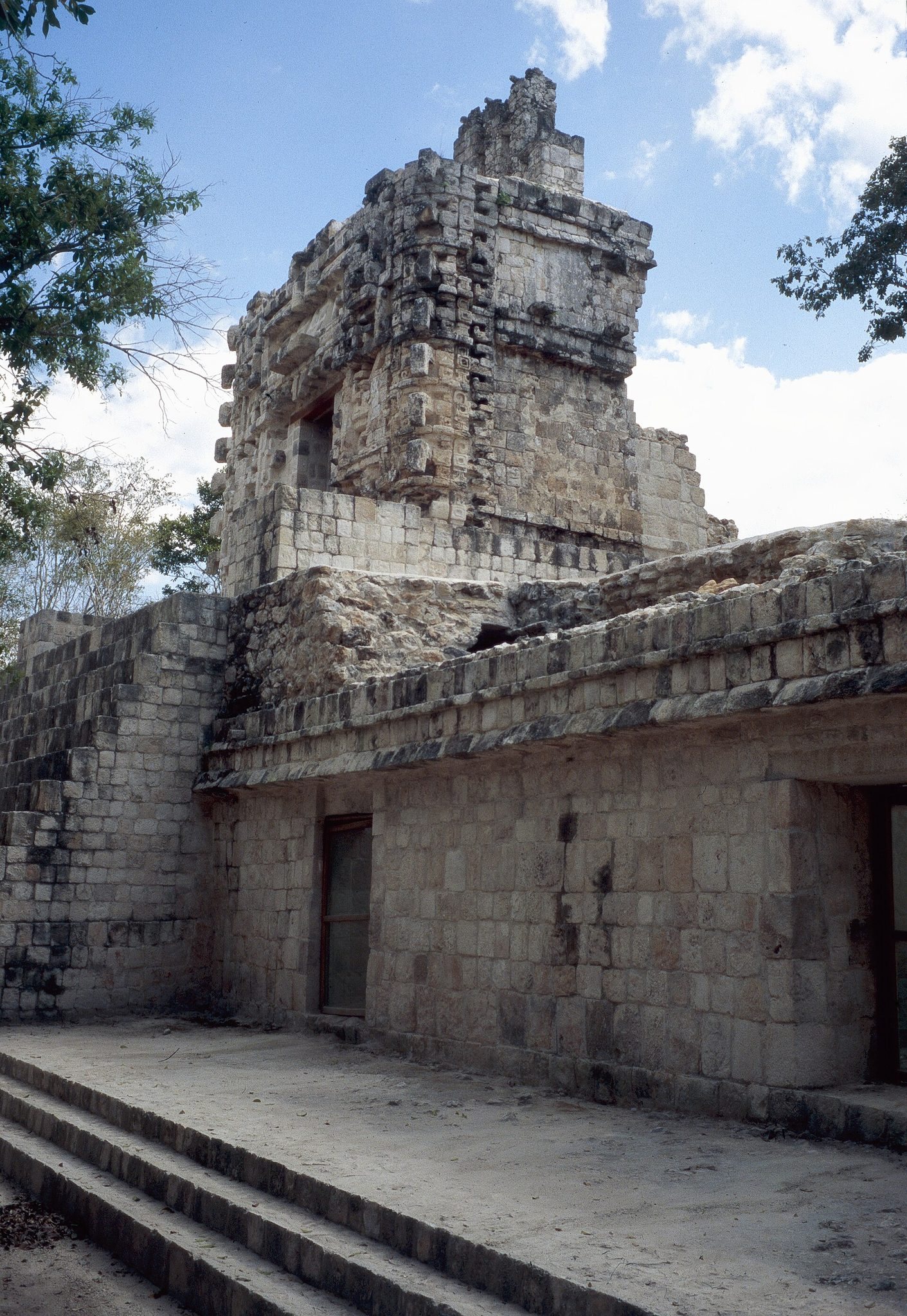
Tabasqueño is divided into three principal groups of monumental architecture, with the Palace-Temple forming its central building. The structure consists of adjoining rooms arranged along a lower level, with a temple rising on a pyramidal substructure at the center. The lower level comprises eight spaces, including six rooms and two chambers, while the upper temple contains two rooms. Two small chambers lie beneath the temple, partly under the small platform before its entrance, and are reached from adjacent rooms. Another room stood behind the central part of the lower structure.
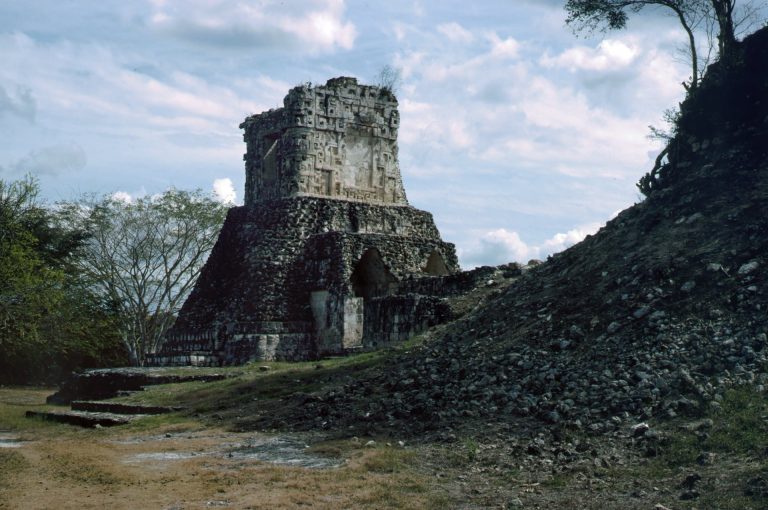
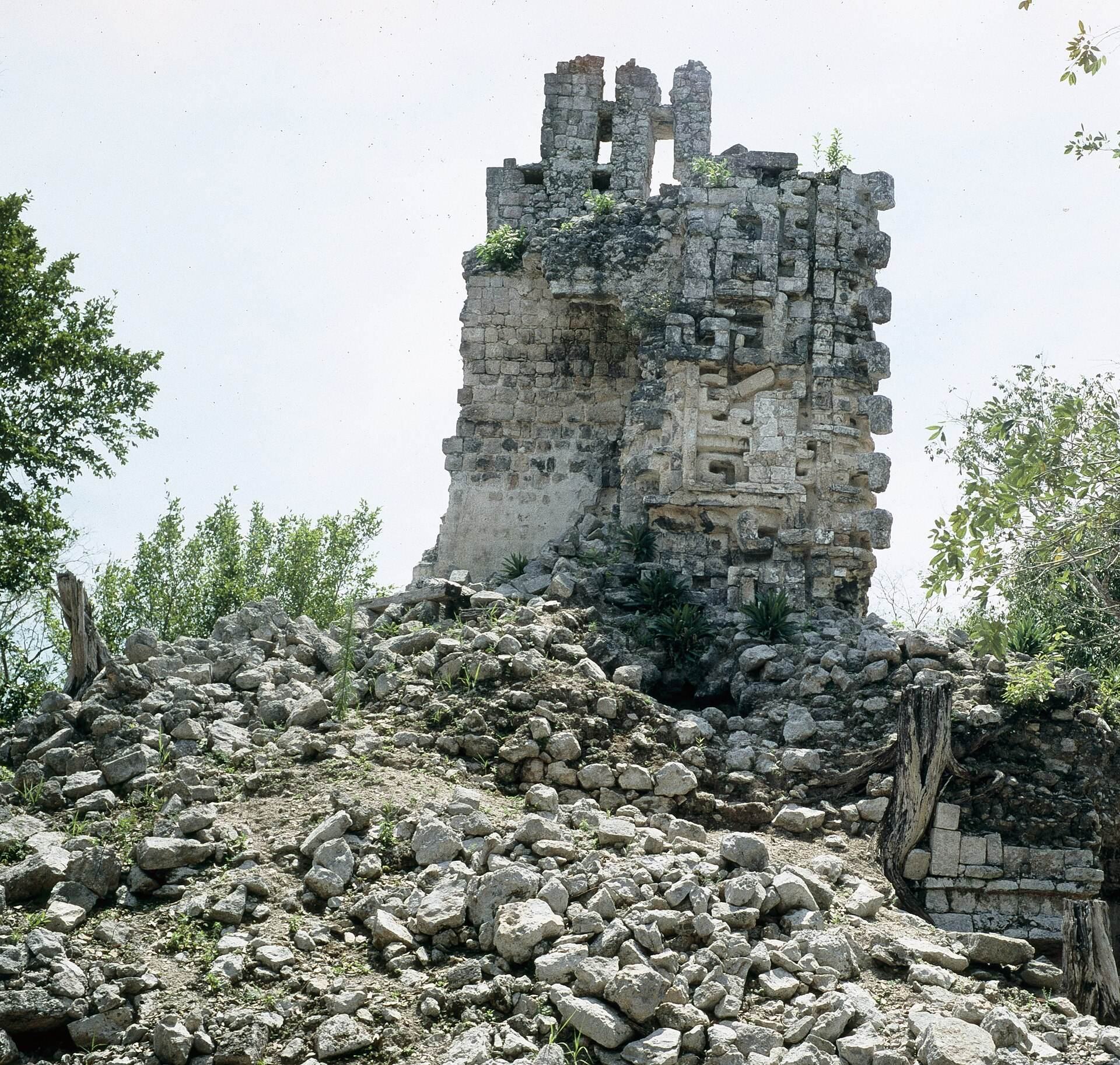
The surviving northern façade faces the large plaza and contains a serpent-mouth portal, an entrance shaped as the open jaws of a supernatural serpent. A large stucco mask depicts Itzamná, a major Maya deity associated with creation, knowledge, writing, and the ordering of the cosmos. Groups of masks identified as Chaak, the Maya rain deity linked with storms, fertility, and agricultural productivity, decorate the building’s corners, with eight masks at each corner. The façade of the rooms on the right bears a stucco relief of two reclining figures apparently grasping hands extended from a small house-like structure, although the scene’s meaning remains unknown.
A partly preserved roof comb, a raised structure above a Maya building’s roof, survives over the dividing wall between the temple’s two rooms. The Palace-Temple was originally painted bright red, traces of which remain in some areas. Its precise astronomical orientation produces a light-and-shadow effect on the walls at sunrise and sunset during the summer solstice.
Southeastern monumental buildings
Several buildings southeast of the Palace-Temple have been reconstructed. This area includes a steep, high ramp with a massive square-section masonry pillar standing at its center. Together with the central building and the other monumental groups, these remains form the principal architectural framework of the ancient settlement.