Tell Hadar: A Bronze and Iron Age Port and Fortified Settlement in Israel
Site at a Glance
- Rating
- 4.3
- Popularity
- Low
- Country
- Israel
- Primary era
- Iron Age
- Eras represented
- Bronze Age, Iron Age
- Civilizations
- Canaanite
- Site type
- City
On this page20 sections
History
Tell Hadar is a Canaanite archaeological settlement and port on the northeastern shore of the Sea of Galilee in Israel, about 7 km north of Ein Gev at the foot of the Golan Heights. Established during Late Bronze Age I, probably in the fifteenth century BC, it began as a short-lived fortified settlement and probably served as a harbor fortress connected with one of the Canaanite city-states of Ashtaroth, Kinneret, or Hazor.
Late Bronze Age foundation and abandonment
The first settlement was abandoned around 1500 BC. One proposed explanation links this change with the consolidation of Egyptian control in the Levant during the reign of Thutmose III, an Egyptian pharaoh whose military expansion reached into the region. Another connects it with conflict between Ashtaroth and Hazor. Neither interpretation is certain, and the abandonment remains part of a broader period of political change.
Iron Age city of Geshur
Tell Hadar was occupied again in the twelfth century BC, at the beginning of the Iron Age, when granaries were constructed over the earlier settlement. During the eleventh century BC, it grew into a fortified city with substantial public buildings and probably became an administrative center of Geshur, an Iron Age kingdom east of the Sea of Galilee known from the Hebrew Bible.
A violent fire destroyed the city in the late eleventh or early tenth century BC. The event is sometimes dated to around 975 BC and has tentatively been associated with the revolt of Absalom against David. In the biblical account, Absalom, David’s son, rebelled against the king of Israel, but the connection between that episode and Tell Hadar’s destruction is not certain. The site was then abandoned for approximately two centuries.
Rural reoccupation and final destruction
A more rural settlement appeared in the ninth century BC. Its inhabitants fished and farmed, while the political center of the area shifted southward to Tell Ein Gev. The settlement belonged to Aram-Damascus, an Aramean kingdom centered on Damascus that controlled parts of the southern Levant, and it underwent further changes during the eighth century BC.
The final destruction is associated with the Assyrian conquest under Tiglath-Pileser III around 732 BC. His campaigns destroyed or absorbed several Levantine states, including Aram-Damascus and the northern kingdom of Israel. Early Arabic pottery found at Tell Hadar also indicates activity at a later period, although the settlement’s main historical importance lies in its Bronze and Iron Age occupations.
Excavation and historical importance
Six excavation seasons between 1987 and 1998 exposed six settlement layers. The work was conducted under Esther Yadin as part of Tel Aviv University’s Land of Geshur Regional Project, directed by Moshe Kochavi and Pirhiya Beck. Tell Hadar is important for understanding interaction between Syria and the southern Levant during the Bronze and Iron Ages, and for establishing the chronology of the eastern Mediterranean in the early first millennium BC.
The Iron Age I destruction layer has been dated by radiocarbon analysis. A rare imported Euboean vessel found in the same destruction context provides an additional chronological marker for the Early Iron Age. Tell Hadar is regarded as a town of Geshur. Christian tradition also associates the site with the Gospel story of Jesus feeding the 4,000, but that identification is traditional rather than an established archaeological conclusion.
Remains
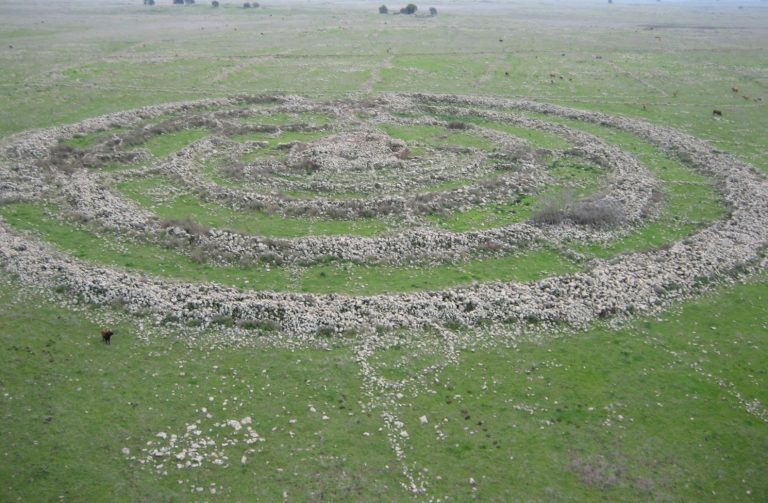
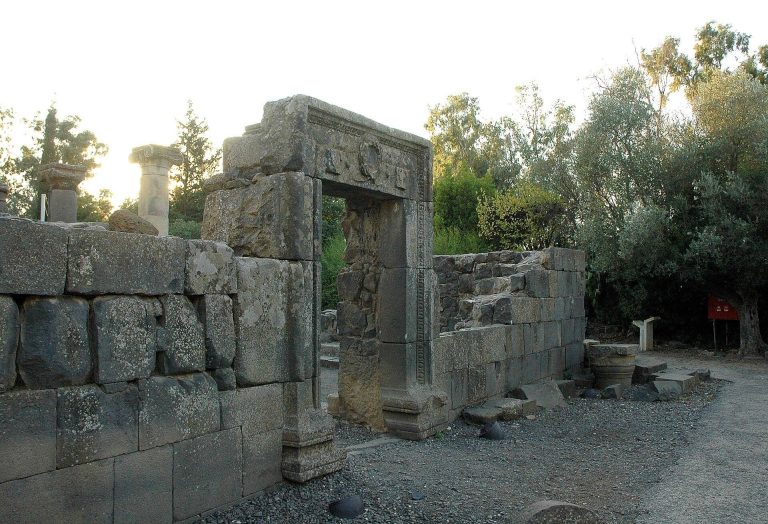
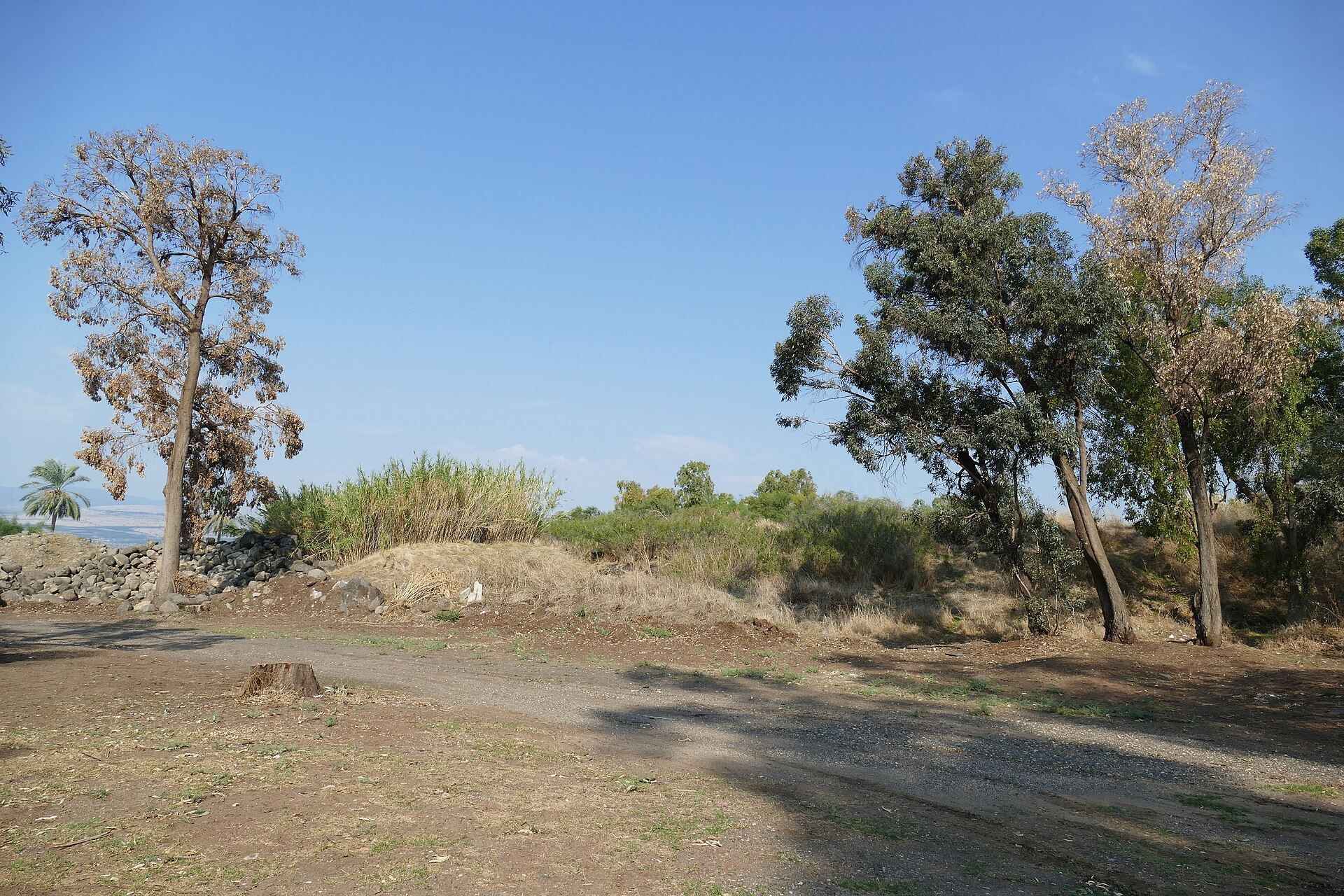
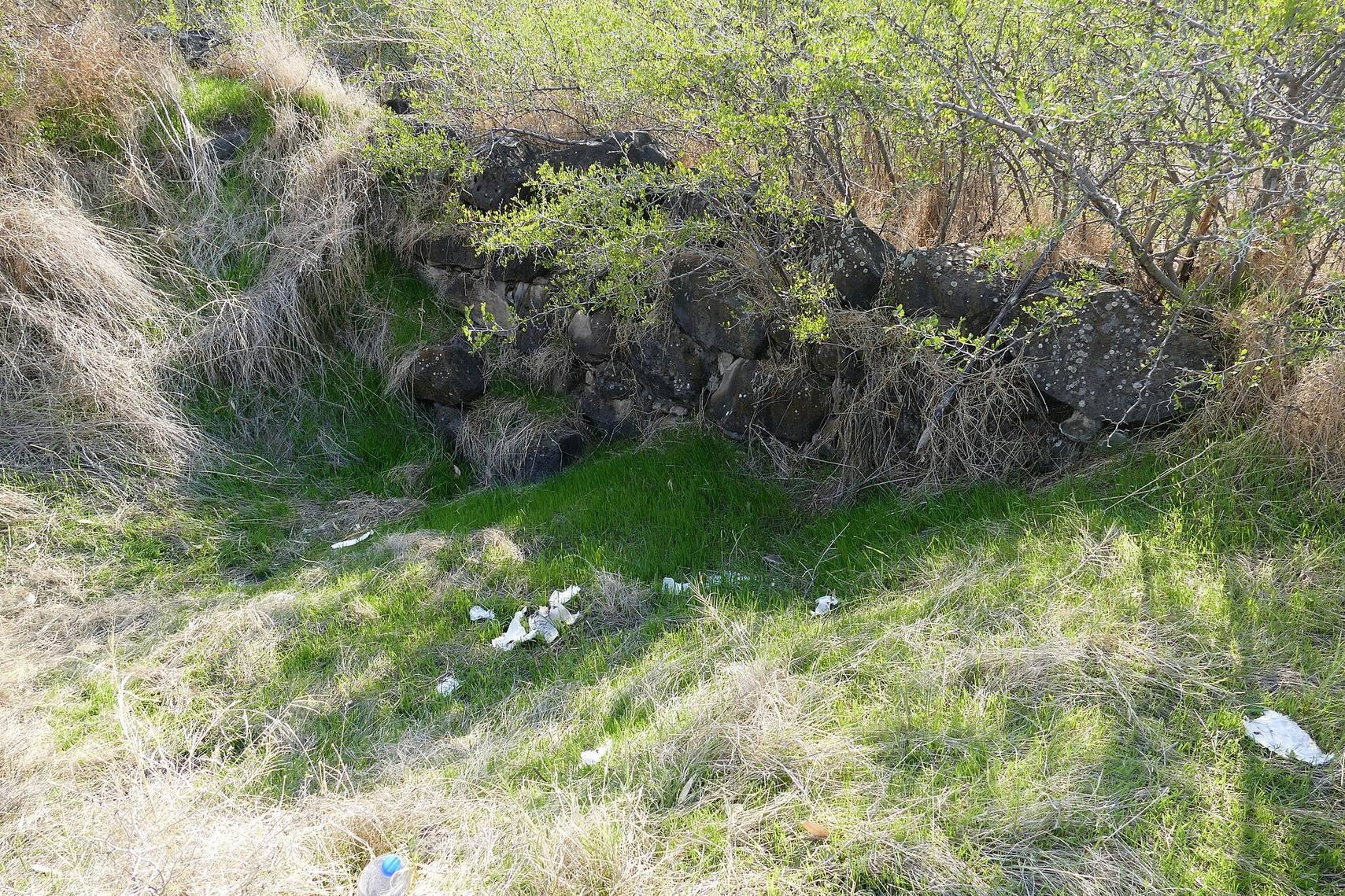
Tell Hadar forms a roughly circular mound of about 10 dunams, an ancient settlement mound built up through successive occupation, destruction, and rebuilding. Two defensive walls enclosed the site, with an outer wall approximately 4 m thick and an inner wall approximately 2.5 m thick. A separate wall or enclosure about 70 m across has been assigned either to Late Bronze Age I or to Iron Age I. The excavated sequence extends from the end of the Middle Bronze Age to the early Iron Age IIB, with intervals of limited or absent occupation.
Fortifications and summit tower
Summit tower
A round tower stood at the summit and formed part of the fortifications. It measured about 20 m across externally, had walls approximately 3 m thick, and survives to a height of about 2.5 m. Straight internal walls divided its interior into a central courtyard and rooms arranged around the perimeter. During the ninth-century settlement, parts of the earlier defenses remained in use, although the wall was later discarded during that century. The later settlement did not retain the earlier tower.
Eleventh-century public buildings
Granary building
The eleventh-century city included large public buildings beside the inner wall. One structure had walls about 1 m thick and approximately 2 m high and was divided into two wings. One wing contained six square compartments arranged in two rows. These rooms functioned as granaries and held thousands of wheat grains together with beer jars. This arrangement is described as unique in Iron Age Palestine, with parallels only in Egypt.
Columned storeroom
The building’s second wing was a columned storeroom resembling a hall. Two rows of columns created three narrow rectangular spaces. Its pottery included cooking and storage vessels as well as ritual vessels, revealing a varied pattern of storage and activity within the public complex.
Commercial storage building
Another incompletely excavated public building contained three long storage units. Its arrangement suggests a connection with commercial activity. Together with the larger public complex, it reflects the administrative and economic functions of the fortified city.
Pottery and regional connections
The pottery from the public buildings included locally characteristic forms alongside vessels with foreign features. Luxury imports came from the Phoenician coast in the area of modern Lebanon, the Gilead, and the Jordan Valley. One bowl came from Euboea, a Greek island in the Aegean Sea, providing evidence for the beginning of contact with Greece during the Iron Age.
Euboean vessel
A rare Euboean Protogeometric vessel was recovered from the destruction layer. Protogeometric pottery is an early Greek painted ware marked by geometric decoration and associated with the period preceding and beginning the Geometric style. Its association with the radiocarbon-dated destruction event makes the vessel especially valuable for dating the site’s Iron Age sequence.
Ninth- and eighth-century settlement
Residential quarter
The ninth-century settlement included a planned, densely built residential quarter with paved streets. Underground granaries lined with stones were also constructed. The settlement was more rural in character than the earlier fortified city, and the earlier public buildings and summit tower were not retained in their former roles.
Later houses between the walls
By the eighth century BC, buildings extended through the area between the two defensive walls. Houses stood very close together, and most excavated walls served rooms on both sides. These walls were generally no more than about 40 cm thick, while the doorjambs were made from large stones. The remains of two buildings sharing a wall and two carefully planned domestic quarters provide evidence for daily life in a small urban settlement on the southern margin of the Syro-Anatolian cultural sphere.
Objects and religious association
Iron Age finds
Excavated finds include a basalt ship’s anchor with wear marks from the rope that held it, indicating prolonged use. Other objects include a female figurine holding a tambourine and an Aramaic inscription on pottery. These finds add evidence for maritime activity, domestic practices, and the cultural setting of the settlement.
Christian monument
Near the archaeological site stands a monument made from a raw local basalt boulder. Christian inscriptions and images decorate the stone, reflecting the traditional association of Tell Hadar with the Gospel narrative of Jesus feeding the 4,000, a miracle story recorded in Matthew and Mark.