Bab Qinnasrin: A Medieval City Gate of Aleppo
Site at a Glance
- Rating
- 4.8
- Popularity
- Very Low
- Country
- Syria
- Primary era
- Medieval
- Eras represented
- Medieval
- Civilizations
- Ayyubid
- Site type
- Military
- Remains
- Gate
On this page7 sections
History
Hamdanid foundation
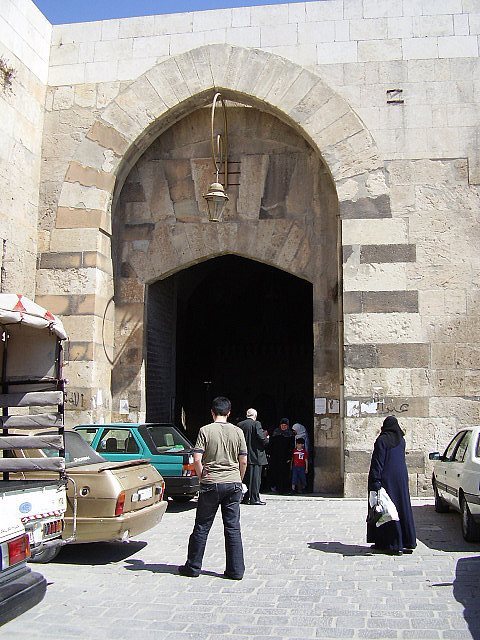
Bab Qinnasrin is a medieval city gate in Aleppo, Syria, built in 964 under the Hamdanid ruler Sayf al-Dawla as an example of medieval Syrian Islamic military architecture. Its name means “Gate of Qinnasrin,” referring to the city south of Aleppo toward which the road led. Qinnasrin, known in antiquity as Chalcis, later became an important regional center and the capital of a military district, an administrative territory organized partly for defense and military command.
The gate’s doors had a long earlier history. They were taken from Amorium after the Abbasid caliph al-Mu’tasim sacked the city in 838. A caliph was the head of a major Islamic political and religious institution. The doors were first installed at the entrance to al-Mu’tasim’s palace in Samarra, probably moved to Raqqa toward the end of the ninth century, and then brought to Aleppo by Sayf al-Dawla.
Ayyubid rebuilding
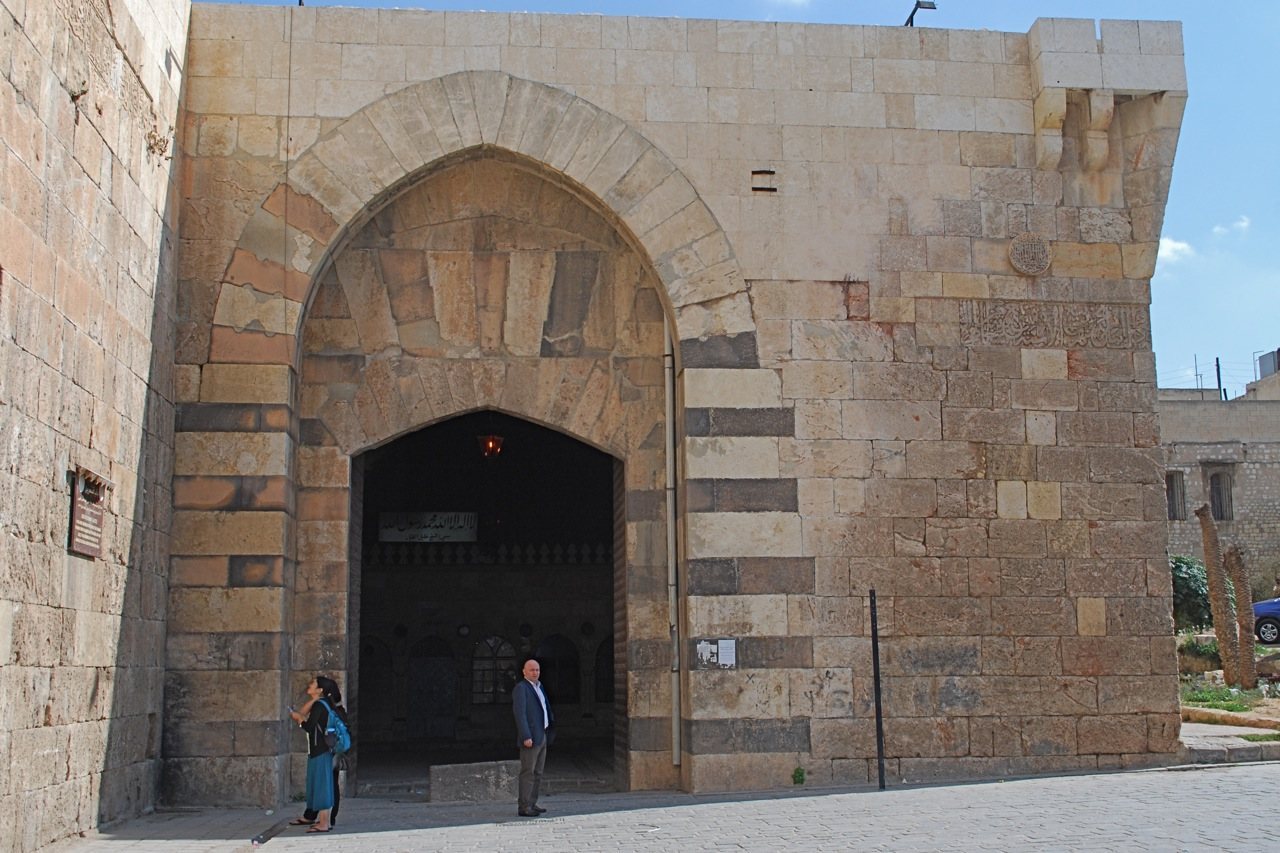
Bab Qinnasrin was completely rebuilt in 1256 under the Ayyubid ruler al-Nasir Yusuf II, and its present form dates from this reconstruction. The Ayyubids were a medieval Muslim dynasty founded by Saladin. Through the gate, the medieval walls controlled entry into Aleppo, whose position made it an important commercial, defensive, and urban center. Bab Qinnasrin is identified as one of the nine main gates of the ancient city walls.
Damage and heritage work
The gate suffered serious damage during fighting in Aleppo during the Syrian civil war. Later heritage work around Bab Qinnasrin included the rediscovery and documentation of abandoned historic buildings, with the aim of preserving Aleppo’s architectural heritage. The Aga Khan Trust for Culture also developed Bab Qinnasrin Park beside the historic gate as part of these preservation efforts.
Remains
The gate structure
Bab Qinnasrin consists of four successive gates. One faces toward the city, another toward the desert, and two intermediate gates stand between them. The surviving structure is described as restored and retains an Islamic architectural style associated with Aleppo’s medieval defenses. Its form belongs to the Ayyubid rebuilding of 1256, while its position within the city walls preserves the function of a controlled entrance between the urban center and the road toward Qinnasrin.
The surrounding historic fabric
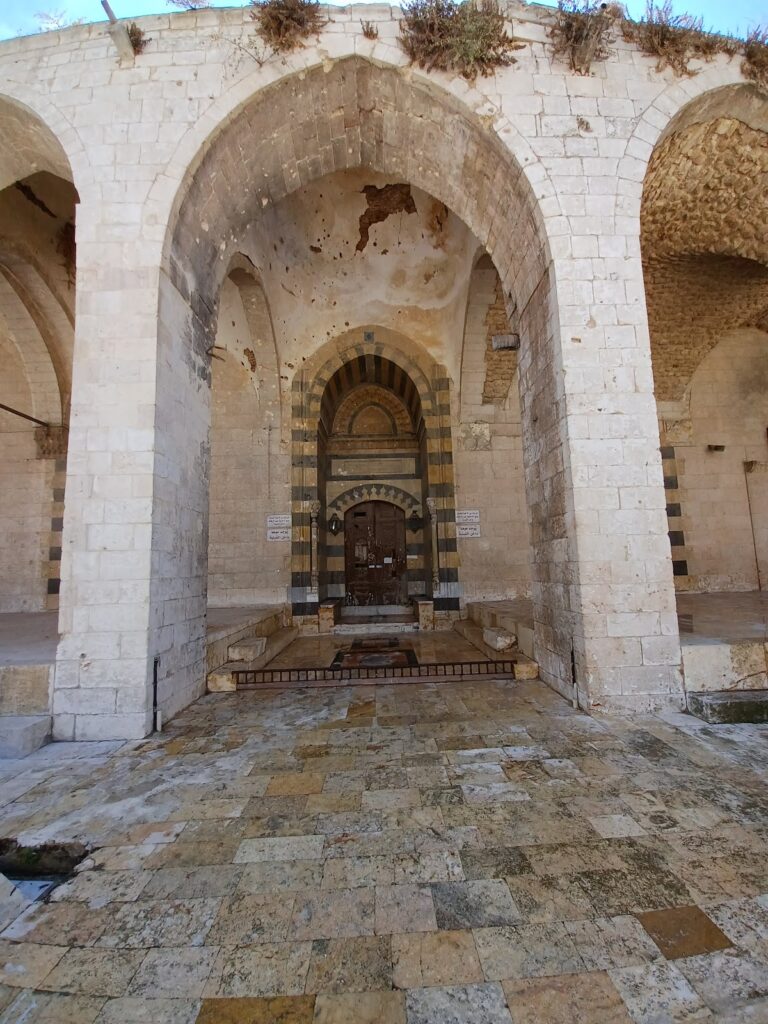
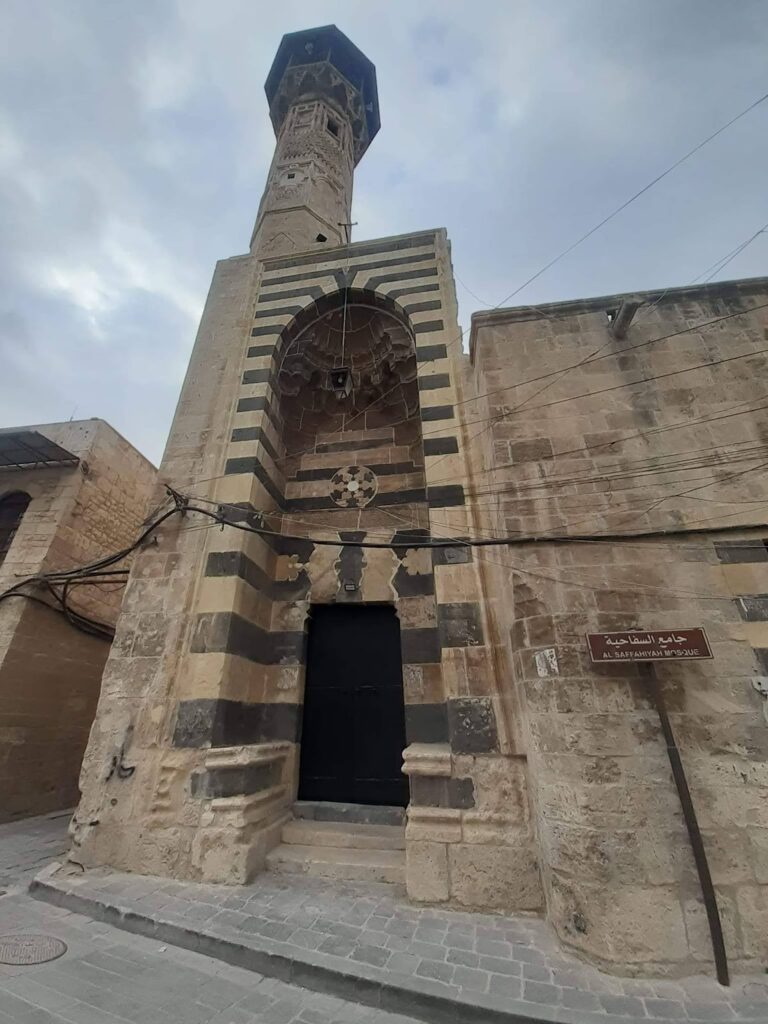
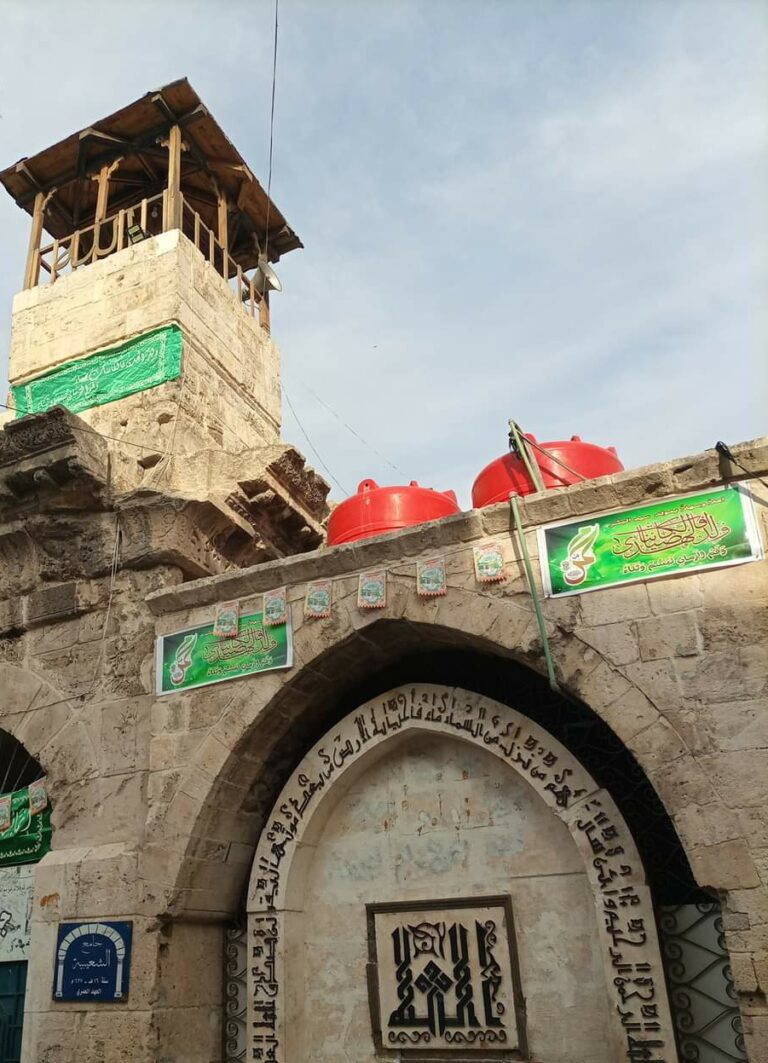
The gate stands within the historic urban fabric of old Aleppo, near the al-Sharif fortress, the al-Jallum area, and a square. Buildings and features described near the entrance include a wheat-flour mill, a shrine, a historic hospital, two bathhouses, several mosques, and schools. One of the nearby schools was built by Asad al-Din Shirkuh, while another was founded by an emir named Sayf. Together, these structures form part of the architectural and archaeological setting associated with the gate.