Samanar Hills: A Jain Heritage Site in Tamil Nadu
Site at a Glance
- Rating
- 4.6
- Popularity
- Medium
- Country
- India
- Primary era
- Medieval
- External website
- Open
- Eras represented
- Classical, Medieval
- Civilizations
- Unclassified
- Site type
- Religious
- Remains
- Sanctuary
On this page9 sections
History
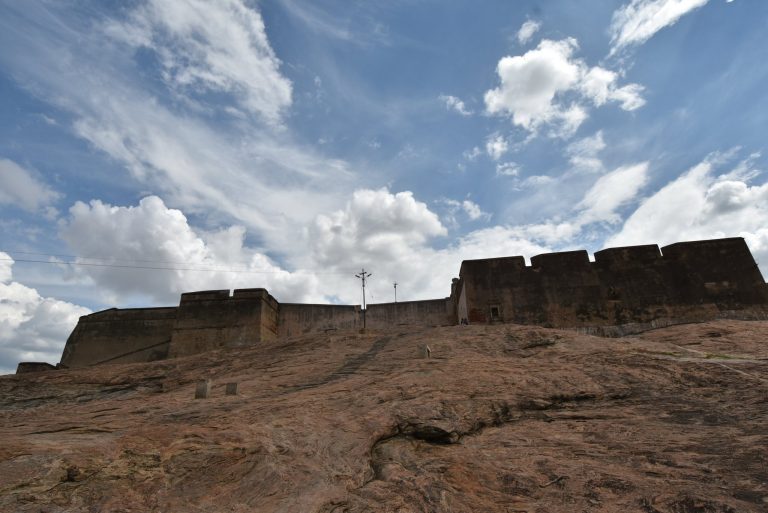
Samanar Hills, also known as Samanar Malai, Amanarmalai, or Melmalai, is a rocky Jain and Hindu monument complex near Kilakuyilkudi and Vadivelkarai in Tamil Nadu, India. The hill group extends for about 3 kilometres toward Muthupatti, roughly 10 to 12.5 kilometres west of Madurai, and preserves religious remains dating from approximately the 2nd century BCE to the 12th century CE. Jain communities developed the site as a centre of ascetic practice, teaching, patronage, and artistic production.
Early Jain activity
The earliest known evidence is a Tamil-Brahmi inscription beneath a rock on the northern side of the hills. Its 13 characters date to the 2nd century BCE and refer to a stone bed made by people from Perunterur. Twelve stone beds associated with Jain monks survive among the caves and rock shelters. Their setting was later affected when quarrying and rainfall caused the rock covering a cavern to collapse.
Jain activity continued for many centuries and became especially vigorous between the 9th and 12th centuries. Inscriptions refer to a monastery, Jain ascetics, teachers, disciples, donors, and the commissioning or maintenance of sacred images. The records also indicate connections between the Jain establishments of Tamil Nadu and Digambara centres in Karnataka. Digambara is a major Jain tradition associated with an especially rigorous form of ascetic renunciation.
A later tradition attributes the foundation of Samanar Hills and nearby Jain settlements to the 8th-century Jain scholar Akalanka, after his reported victory over Buddhist scholars at Kanchipuram. This remains a traditional attribution rather than a confirmed historical event. Some Tamil records identify the site with Thiruvuruvakam, a name appearing in an inscription connected with the Maadevi Perumpalli monastery.
The Maadevi Perumpalli monastery
The Maadevi Perumpalli operated during the 10th century. An inscription dated to 889, the 29th regnal year of the Pandyan king Parantaka Viranarayana, states that the monastery was established in the name of his wife, Vanavan Maadevi. Two veli of land at Pulingunrur, within the Madakkulakkil territorial division, were assigned for its maintenance. Pulingunrur may correspond to the later village of Kongar Puliyankulam.
After the monastery fell into ruin, images of Jain female deities associated with it were placed in the Ayyanar temple below the hill. Local people continued to worship these images, preserving a connection between the older Jain centre and later religious practice.
Later inscriptions and religious change
Inscriptions at Settipodavu and Pechchipallam name Gunasena Deva, described as the head of the local Jain monastery, together with his disciples and other patrons. These records show that members of the monastic community and associated teachers commissioned and cared for images. A Kannada inscription near the summit, probably dating to the 11th or more likely the 12th century, points to continuing links with Jain monks from the Shravanabelagola region. Its damaged text may refer to the death of a Jain monk, possibly in connection with sallekhana, a disciplined Jain practice of gradually relinquishing food and bodily attachments at the end of life. That interpretation remains uncertain.
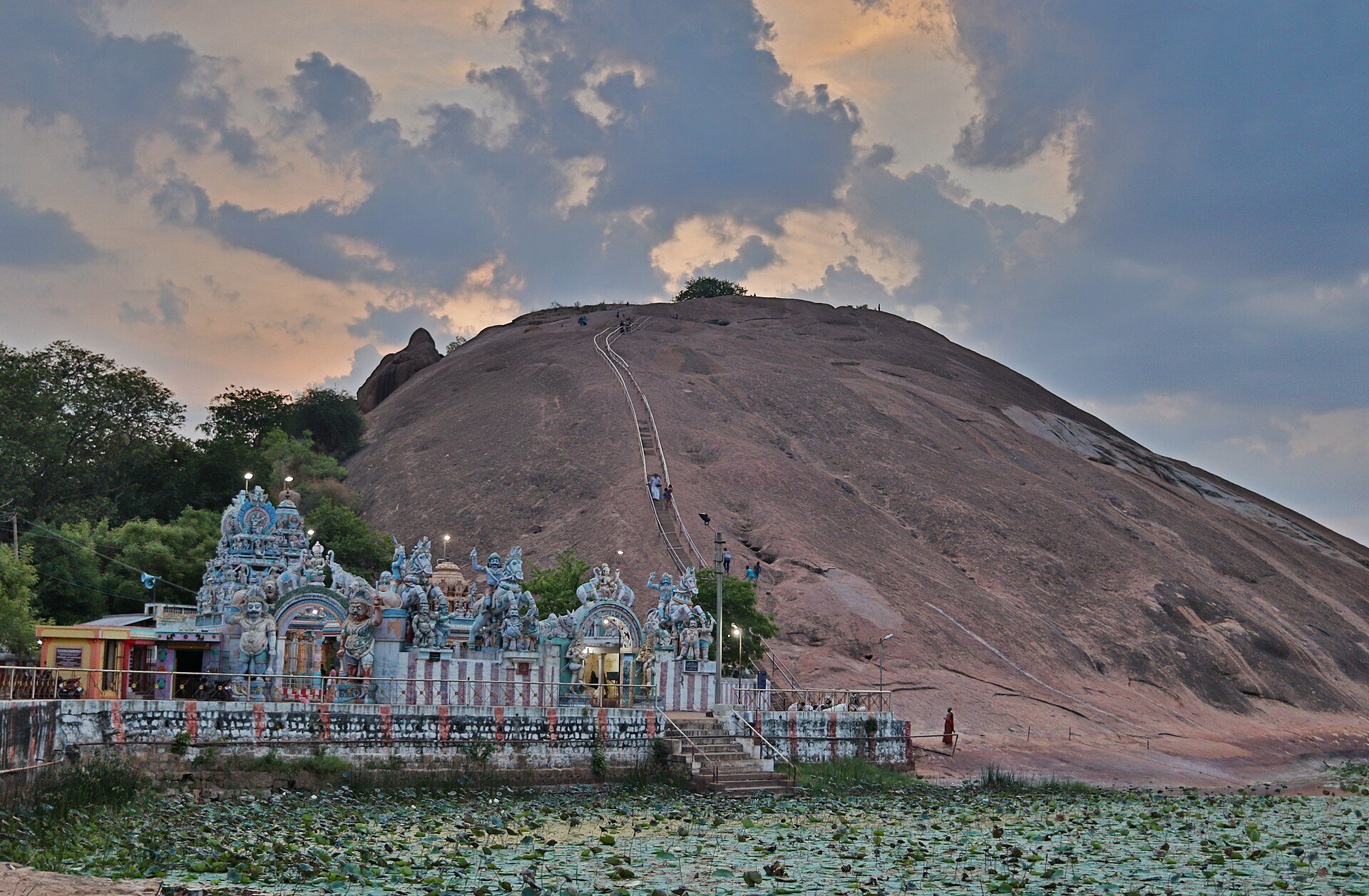
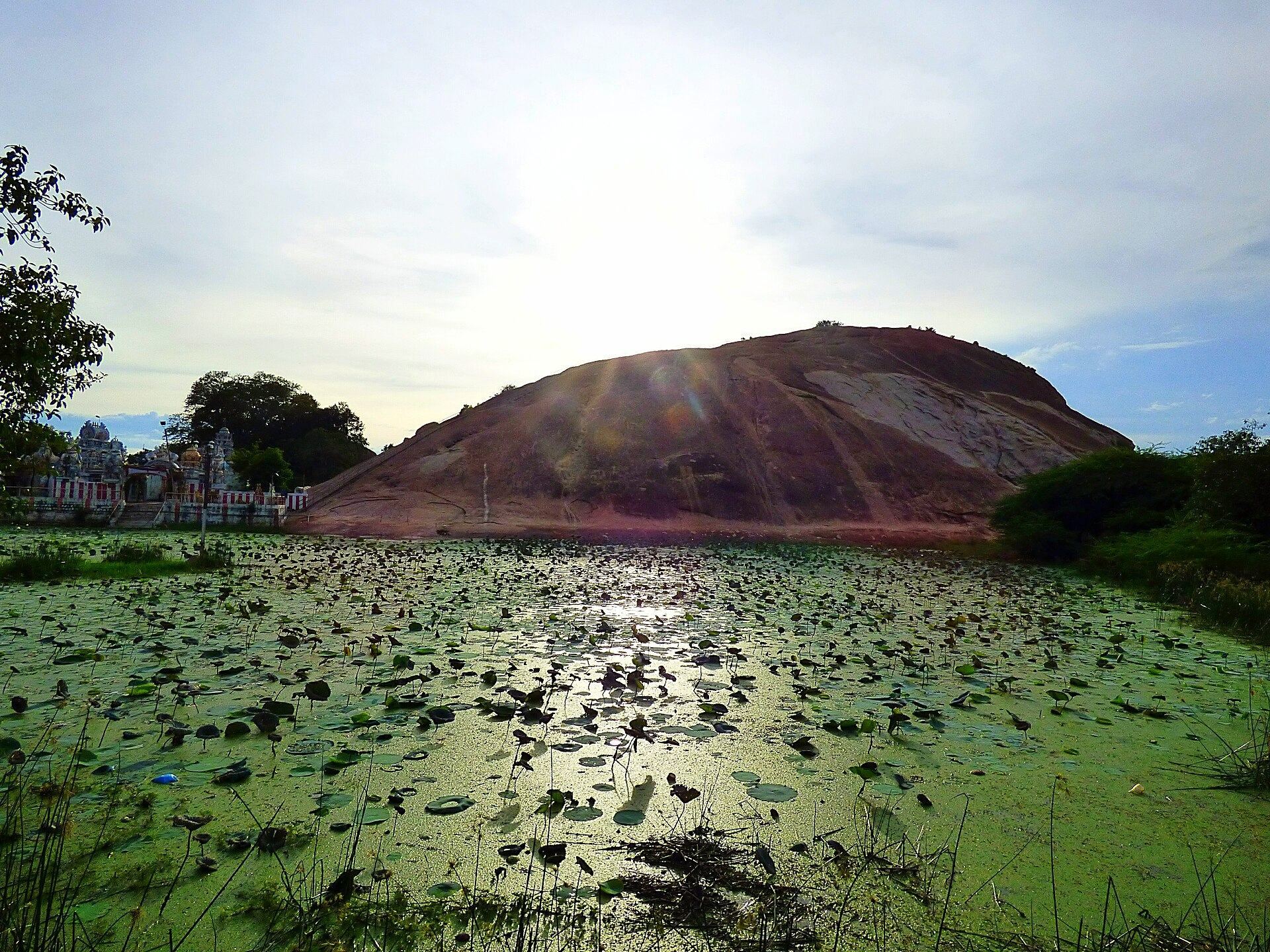
The hills also retain Hindu religious associations. A Karuppu Sami or Ayyanar shrine and a lotus pond stand at the foot of the hills. The Karuppu Sami temple was later restored, while a separate Vishnu shrine is represented by a ruined base platform. These remains may have been affected by the destruction and warfare accompanying 14th-century raids and political upheavals in the Thiruparankundram and Madurai area.
The Archaeological Survey of India protects Samanar Hills as a protected monument. Its surviving Jain and Hindu features reflect the site’s long religious history and the changes that followed the decline of its medieval Jain institutions.
Remains
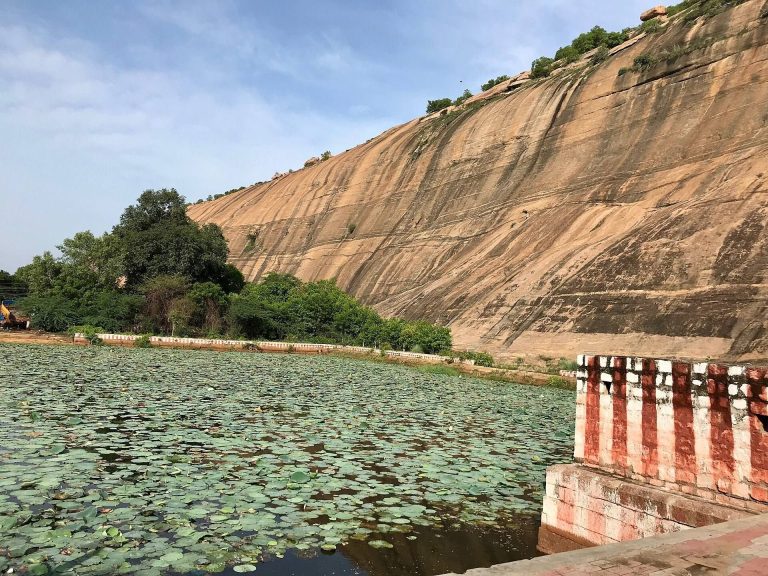
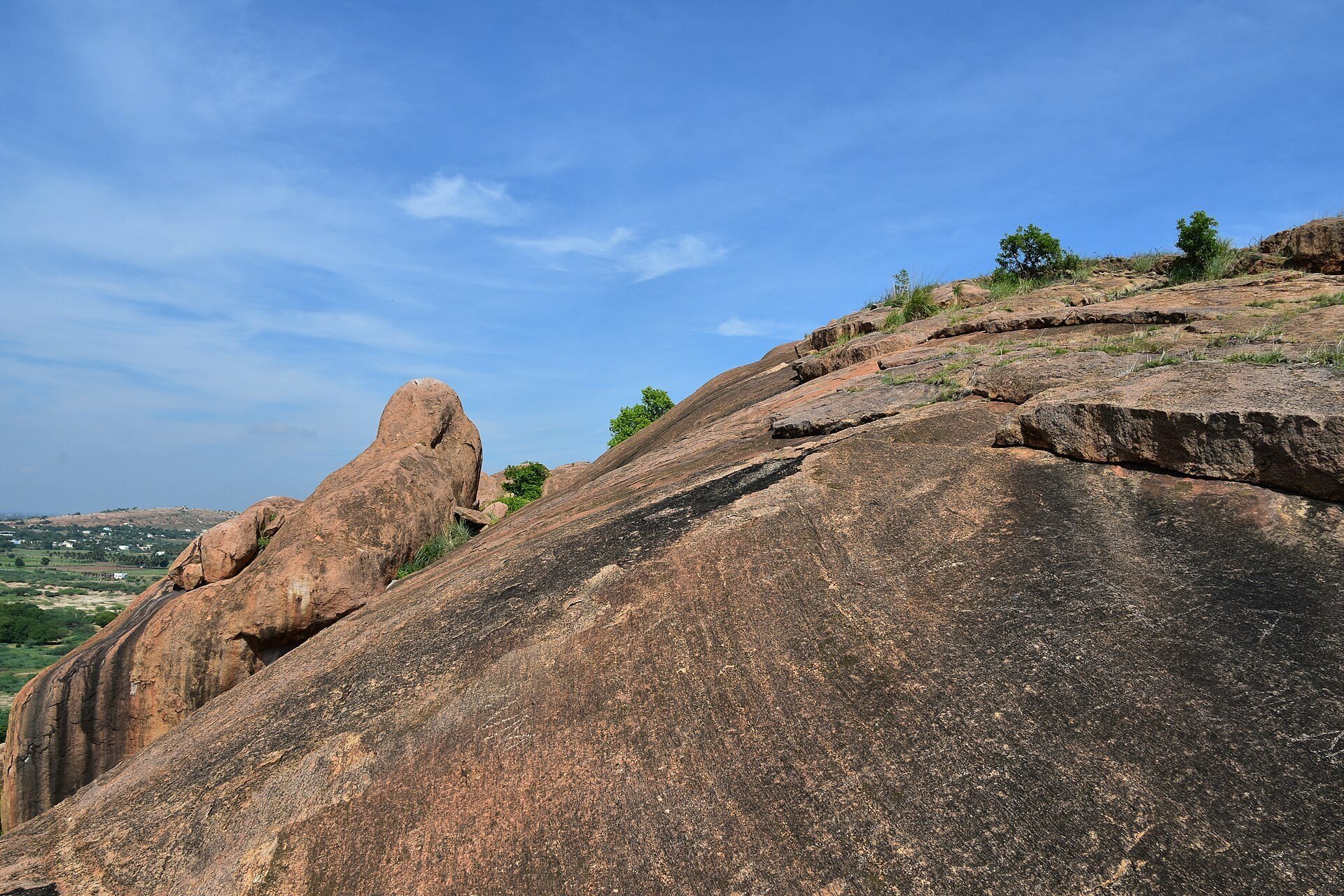
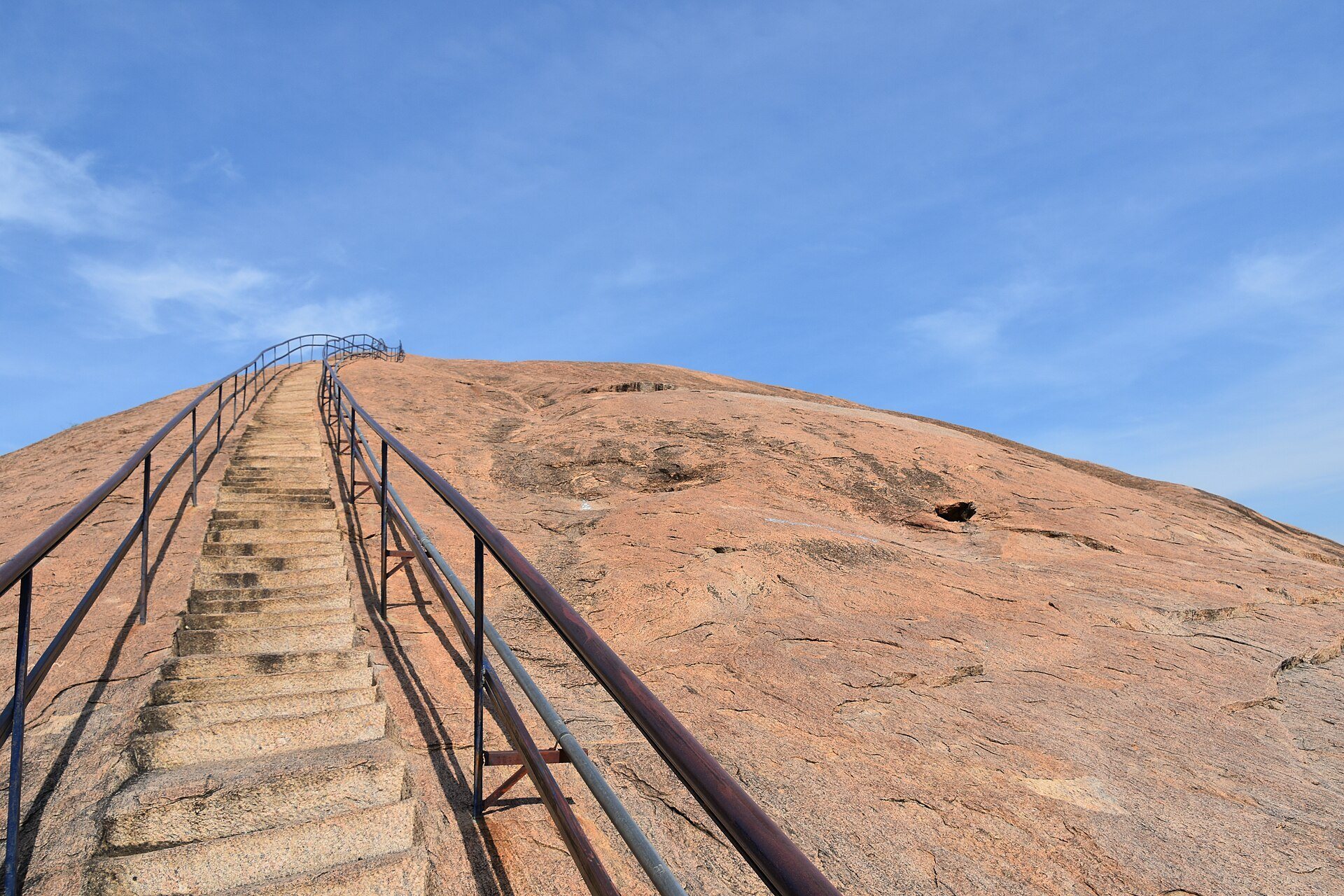
Samanar Hills is a rocky formation about 50 metres high, rising at approximately 170 to 220 metres above sea level. Jain remains occupy several levels, including natural caves, rock shelters, slopes, the summit, and the foothills. The main monument areas lie on different sides of the hill, while an inclined ascent connects the monastery foundation with the summit.
Settipodavu cave
Settipodavu is a natural cave on the southwestern slope, reached by a short climb from the base. Its outer rock face carries a large seated relief of Mahavira beneath a sacred fig tree. Mahavira, the 24th and most recent Tirthankara of the current Jain cosmic cycle, sits on a throne supported by three lions. Attendants hold fly-whisks on either side, and celestial figures appear above him. A lion emblem beneath the seat identifies the figure. A Vatteluttu inscription, written in the rounded script historically used for Tamil in southern India, names people involved in commissioning the relief, including disciples linked with the Jain centre at Kurandi Tirukkattampalli.
Five further reliefs are carved on the upper interior surface of the cave. Three central figures represent Tirthankaras, Jain spiritual teachers who have attained liberation and show others the path to it. Female Jain deities occupy the two ends. The left figure, identified as Kotrakiriya, sits on a lion and confronts a demon mounted on an elephant in a warrior posture resembling the Mahishasuramardini image at Mamallapuram. The right figure, identified as Ambika, sits with one leg folded and the other extended, accompanied by two female attendants.
Three 10th-century Tamil inscriptions in Vatteluttu accompany these reliefs. They mention Gunasena Deva, his disciples, Deyvabaladeva, Vardhamana Panditar, and Andalaiyan as people who caused the sacred images to be made.
Pechchipallam and the monastery foundation
Pechchipallam is a natural spring and Jain monument area on the southeastern or eastern slope, at a higher level and on the opposite side of the hill from Settipodavu. Eight Jain reliefs are carved there. Four show Parshvanatha beneath serpent hoods. Parshvanatha is traditionally regarded as the 23rd Tirthankara. Other images represent Bahubali, also called Gomateshvara, and three additional Tirthankaras.
One relief includes the Jain attendant deity Dharanendra, whose partly human and partly serpentine body holds fly-whisks above Parshvanatha. Other carvings are identified with Gomateshvara and with a Tirthankara beneath three umbrellas. Donor inscriptions beneath the reliefs name Gunasena Deva, members of his monastery, people associated with Kurandi Tirukkattampalli, and the mother of the Jain ascetic Achchanandi. Most of these Vatteluttu inscriptions date from the 9th and 10th centuries, while two may belong to the late 8th century.
Above the Pechchipallam reliefs is the surviving foundation platform, or jagati, of the Maadevi Perumpalli monastery. A jagati is a raised platform or plinth supporting a temple or other structure. The monastery building is represented at the site by this foundation level, together with its partly damaged inscription.
Summit and northern inscriptions
A long inclined ascent runs from the monastery foundation toward the summit. A solitary stone lamp post stands at the top, with partly eroded Kannada inscriptions carved below it. One of these inscriptions includes a line in Tamil. The records preserve evidence of the hill’s links with Jain communities connected to the Shravanabelagola region.
On the northern side, away from the ascent between the monastery foundation and the summit lamp post, a Tamil-Brahmi inscription lies beneath a rock. Its 13 characters refer to the stone bed made by people from Perunterur, providing early evidence for Jain activity at the hills.
Foothill remains
At the foot of the hills, the Karuppu Sami or Ayyanar shrine stands near the lotus pond locally called Thamarai Kulam. The restored temple and the pond form part of the site’s later Hindu religious landscape, while the ruined base platform of a separate Vishnu shrine preserves another element of the foothill remains. Local tradition attributes the pond to Jain monks and holds that it does not dry out.