Yanaimalai: A Jain and Hindu Sacred Hill in Tamil Nadu
Site at a Glance
- Rating
- 4.4
- Popularity
- Low
- Country
- India
- Primary era
- Medieval
- Eras represented
- Classical, Medieval
- Civilizations
- Unclassified
- Site type
- Religious
- Remains
- Sanctuary
On this page9 sections
History
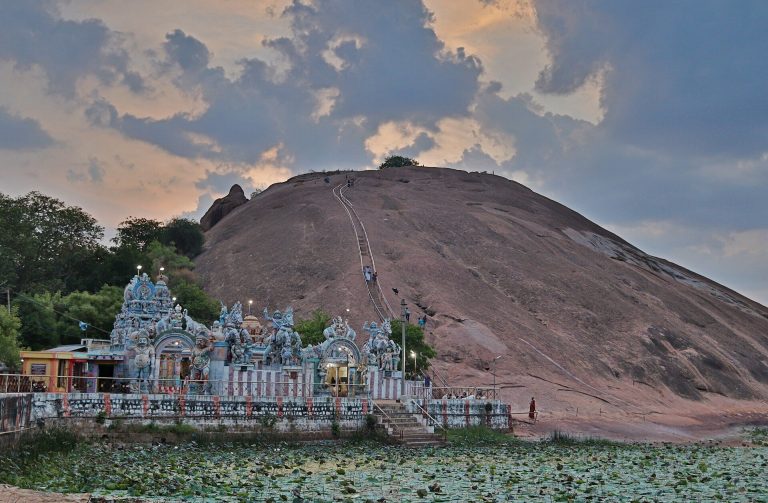
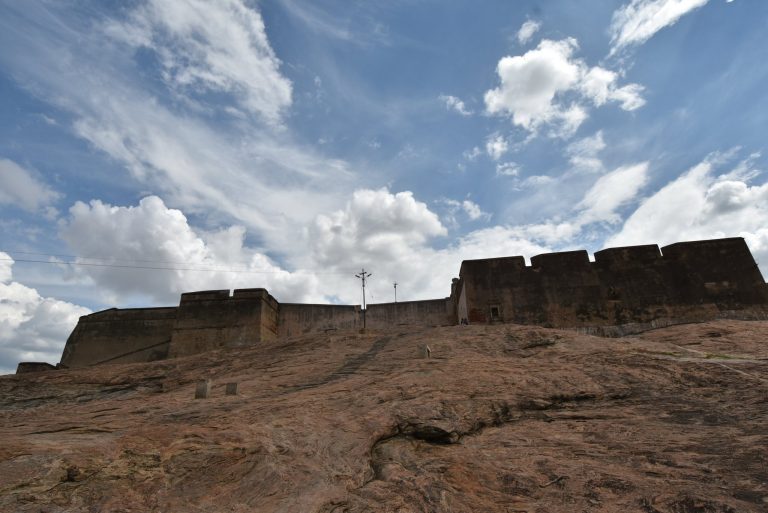
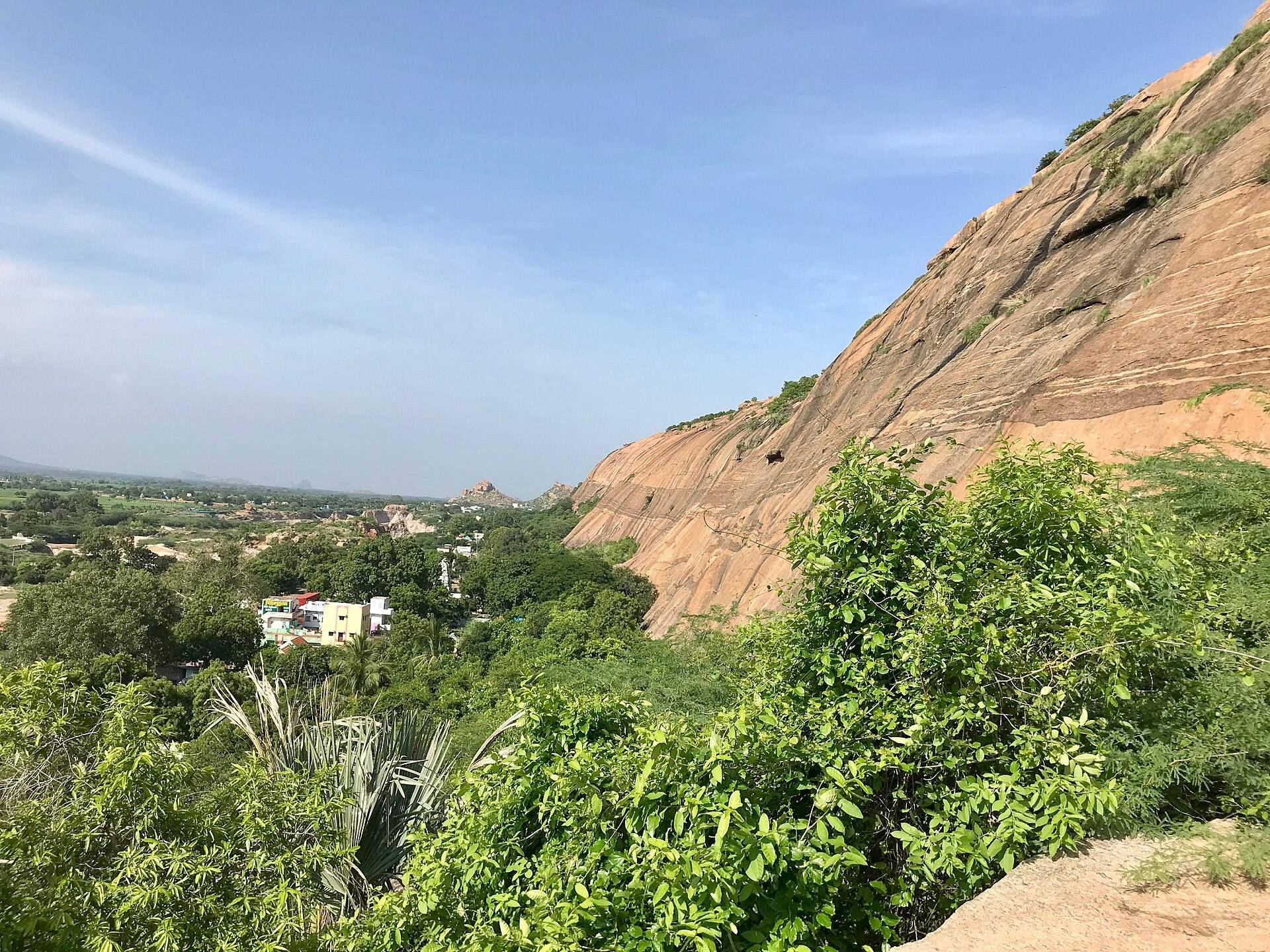
Yanaimalai is a granite hill near Narasingam in Tamil Nadu, India, about 7 km north of Madurai. Its elephant-like profile gave it a name formed from the Tamil words for “elephant” and “hill,” a usage said to reach back more than 2,000 years. The hill is also known as Narasingamangalam and preserves evidence of Jain religious activity from the first century AD, followed by rock-cut Hindu temples established during the Pandyan period.
Jain Ascetic Use
Jain ascetics used the summit by the first century AD for residence, rest, and meditation. Tamil-Brahmi inscriptions, an early form of Brahmi adapted for writing Tamil, name the monks Eriyaritan and Attuvayi Arittakayipan. The hill had become the site of a Jain monastic establishment by the seventh century, according to a reference attributed to the Shaiva saint Tirugnanasambandar in the Madurai Patikam. Tamil Jains continue to regard Yanaimalai as a sacred place.
During the ninth or tenth century, the Jain monk Acchanandi caused images of Mahavira, Parshvanatha, and Bahubali to be carved at the hill. Mahavira and Parshvanatha are revered Jain spiritual teachers, while Bahubali is associated with renunciation and meditation. These sculptures remain under the protection of the Tamil Nadu Department of Archaeology.
Pandyan and Later Temple History
Rock-cut Hindu temples were established at the foothills during the Pandyan period, when the Pandyas ruled from their political center at Madurai. Around AD 770, the Pandyan ruler Maran Sadaiyan Parantaka Nedunjadayan’s minister Marankari Kalikkudai Vaidyan began a cave temple dedicated to Narasimha, the man-lion incarnation of Vishnu. After his death, his younger brother Maran Eynan completed the work and carried out its consecration.
Inscriptions at the Narasimha temple preserve evidence of later repairs and renovations under the Early Pandyas, Cholas, Chola-Pandyas, Later Pandyas, and Vijayanagara rulers. Vijayanagara-period inscriptions call the hill Gajagiri, while the area around the Ugra Narasimha temple became known as Narasingam. An eighth-century Tamil-Vatteluttu inscription, written in a rounded southern Indian script, records the renovation of the Ladan cave temple by Nambiran Pattasomasi Parivrajaka, a religious figure from Vatakkurichi.
Protection, Damage, and Tradition
The Archaeological Survey of India has declared the Jain temple area a protected monument. Illegal granite quarrying has damaged the hill. In 2010, the Tamil Nadu government proposed creating a sculpture park at Yanaimalai, but abandoned the plan after opposition from local residents and activists.
A legend in Paranjothi Munivar’s Tiruvilaiyadal Puranam, a Tamil religious work, connects the hill with a story in which Sokkesar-Narasimha restrained an elephant that was attacking Madurai.
Remains
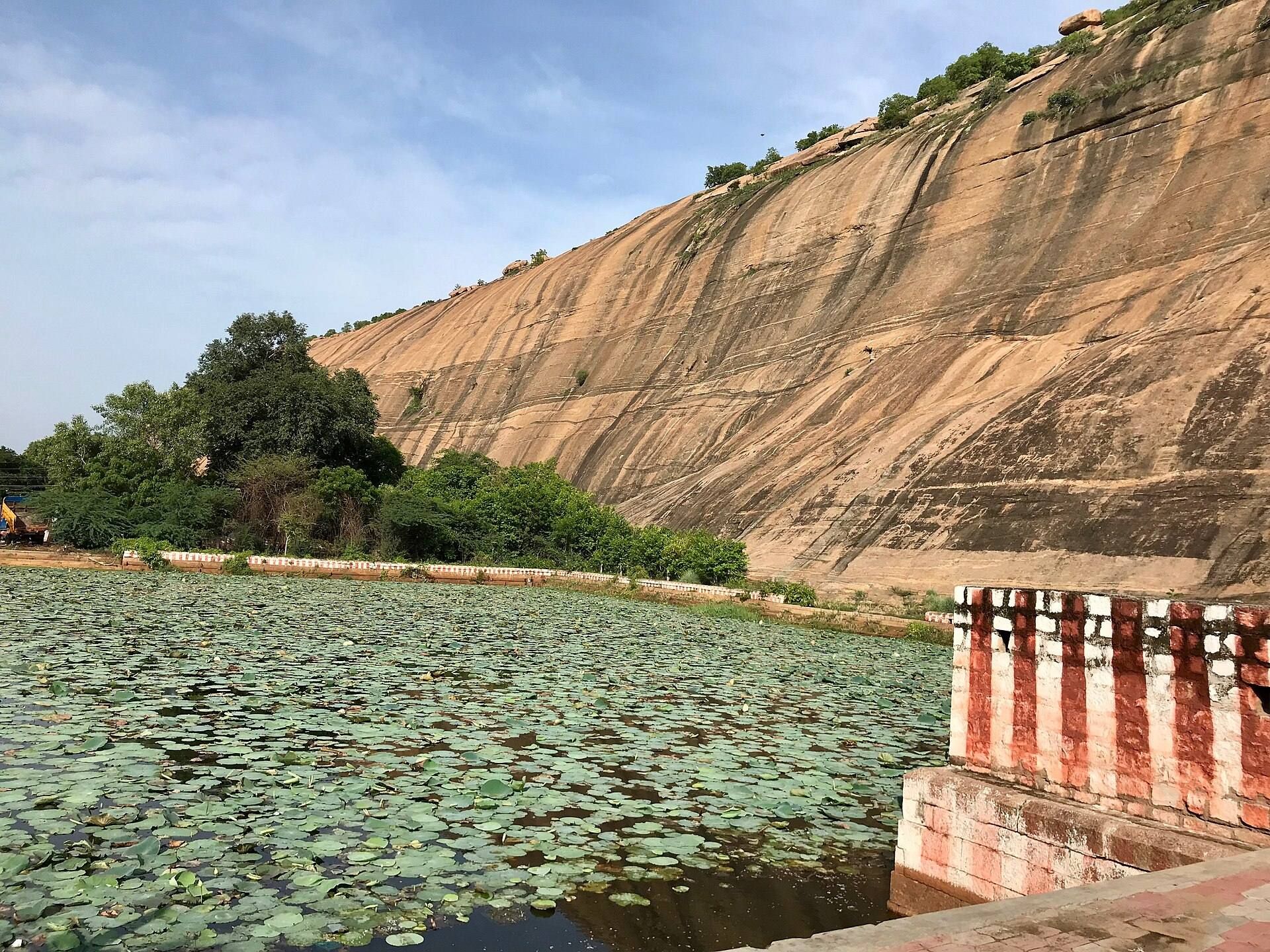
Yanaimalai is an approximately 3 km long granite hill rising about 90 m. Its physical outline resembles a reclining or seated elephant. The summit caves and foothill shrines preserve evidence of distinct Jain and Hindu religious traditions, while Tamil-Brahmi, Vatteluttu, and Grantha inscriptions provide written evidence for the hill’s occupation, temple construction, and later repairs.
Summit Jain Caves
A cave area at the summit contains stone beds cut for Jain monks. A two-line Tamil-Brahmi inscription describes the cave as a dwelling with stone beds and names Eriyaritan and Attuvayi Arittakayipan. The summit caves also contain Jain bas-reliefs of the Tirthankaras Mahavira and Parshvanatha, together with a figure of Bahubali and other Jain images. These carvings are attributed to the ninth or tenth century and to the activity of Acchanandi.
Foothill Rock-Cut Temples
Ladan Cave Temple
The Ladan cave temple is dedicated to Muruga, a major Tamil Hindu deity associated with war, youth, and victory. Excavated directly into the granite rather than assembled from separate masonry, the shrine contains an eighth-century Tamil-Vatteluttu inscription recording its renovation by Nambiran Pattasomasi Parivrajaka.
Yoga Narasimha Temple
The Yoga Narasimha, also called Narasingam Yoga Narasimha Perumal, temple is dedicated to Vishnu. Its rock-cut complex contains Tamil, Vatteluttu, and Grantha inscriptions. Together with the temple’s excavated architecture, these records preserve evidence of its construction under Pandyan ministerial patronage around the eighth century and of later repairs by successive ruling dynasties.
Granite is abundant across the hill and forms the material of its caves and rock-cut shrines. Quarrying has physically damaged parts of this geological and archaeological landscape.