Maresha: An Iron Age and Hellenistic City in Israel
Site at a Glance
- Rating
- 4.7
- Popularity
- Low
- Country
- Israel
- Primary era
- Classical
- Eras represented
- Iron Age, Classical
- Civilizations
- Ancient Greek, Israelite, Phoenician, Ptolemaic, Seleucid
- Site type
- City
On this page20 sections
History
Maresha is an ancient city in Israel that developed from a Judahite Iron Age settlement into a prosperous Hellenistic center in Idumea. The city stood on and around Tel Maresha, also called Tel Sandahanna, and later became an administrative and civic center under the Ptolemies and Seleucids.
Judahite city and Babylonian conquest
Maresha was part of the inheritance of the tribe of Judah and is mentioned in the Book of Joshua. King Rehoboam included it among fifteen fortified cities, and the city was associated with a battle against an invading Ethiopian army. Its position within the kingdom of Judah was affected by the Assyrian campaign that followed King Hezekiah’s revolt in 701 BCE.
In the sixth century BCE, Zedekiah’s rebellion against Babylon was followed by Nebuchadnezzar II’s conquest and the deportation of Judah’s inhabitants. Maresha then ceased to function as a Judahite city. After the Babylonian conquest, Edomites moved into the region from areas east and south of the Dead Sea, and Maresha became a major Idumean city. Idumea was the Hellenistic name for the region associated with Edom.
Hellenistic expansion and prosperity
During the Persian period, Phoenician communities expanded inland from the coast and settled in the area. Finds from Maresha indicate commercial links with the coastal region. After Alexander the Great conquered the region in 332 BCE, retired Greek soldiers and other Greek settlers established a substantial community at the city.
Maresha became a bilingual and culturally mixed center involving Idumeans, Greeks, Sidonians, and Nabataeans. Greek and Aramaic were used in the city. It reached its greatest prosperity during the Hellenistic period, when it formed the center of an administrative district under the Ptolemies and, from about 200 BCE, under the Seleucids. It also became the capital of Idumea and received the status of a polis, a self-governing Greek-style city community.
Maccabean, Hasmonean, and Roman rule
During the Maccabean Revolt in the second century BCE, Maresha served as a base for attacks against the rebels. Judas Maccabeus and his forces passed through the city around 163–162 BCE, when it was burned during the campaign in Idumea.
The Hasmonean ruler John Hyrcanus captured Maresha around 113–112 BCE, or about 111 BCE, and forcibly converted its inhabitants to Judaism. The Hasmoneans were a Jewish ruling dynasty that emerged from the Maccabean Revolt against the Seleucid Empire. John Hyrcanus apparently prohibited residence in the upper city, where a garrison was stationed. The conquest ended Maresha’s role as a major Hellenistic center, and the city subsequently declined.
In 63 BCE, Pompey separated Maresha and Idumea from the Jewish kingdom and returned them to Idumea. Julius Caesar annexed the city to the province of Judea in 47 BCE. The Parthians, an Iranian imperial power, finally destroyed Maresha in 40 BCE during the struggle between Antigonus II Mattathias, the Hasmonean claimant who sought Parthian support, and Herod, who was supported by Rome. The city may have remained sparsely occupied until the second century CE, but it lost its regional importance.
Bet Guvrin, also known as Beth Gabra, succeeded Maresha as the principal settlement of the region. It later recovered from the Jewish revolts against Rome and was re-established in the early third century CE as the Roman city of Eleutheropolis. By the time of Eusebius of Caesarea, who died in 340 CE, Maresha was described as deserted and located about two milestones from Eleutheropolis.
The possibility that the name Maresha was transferred to nearby Bet Guvrin after the Hasmonean conquest remains an important interpretation. A first-century BCE coin found at Bet Guvrin, thought to have been minted by Maresha’s citizens, has been cited in support of this view.
Identification and archaeological investigation
Earlier attempts identified Maresha with Khurbet Mar’ash because of the similarity between the names. In 1902, J. P. Peters and Hermann Thiersch investigated Khurbet Sandahannah and found a Greek funerary inscription in an adjacent burial cave that explicitly named Maresha. This established the identification with the site now known as Tel Maresha.
Frederick J. Bliss and Robert Macalister first excavated the mound in the late nineteenth century, particularly from 1898 to 1900, on behalf of the Palestine Exploration Fund. Most of the artifacts from those excavations are now in the Istanbul Archaeology Museums. Amos Kloner conducted surveys and limited investigations in 1972, 1980, and 1984–1985. Large-scale excavations began in 1989 and continued into 2002, followed by excavations directed by Bernie Alpert and Ian Stern from 2002 to 2014. From 2014, excavation and publication continued through the Nelson Glueck School of Biblical Archaeology of Hebrew Union College–Jewish Institute of Religion.
Less than ten percent of the caves around Tel Maresha have been excavated. The work has revealed unusually extensive evidence for daily life and cultural interaction in Hellenistic Idumea, including Idumean, Phoenician, Sidonian, and Greek communities. Maresha is protected within Beit Guvrin–Maresha National Park, and the caves of Maresha and Bet Guvrin were inscribed in 2014 as a UNESCO World Heritage Site under cultural criterion (v).
Remains
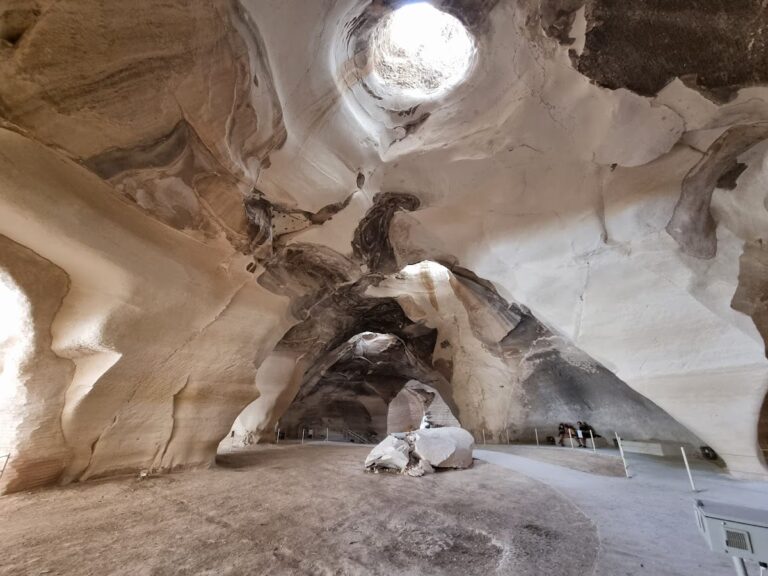
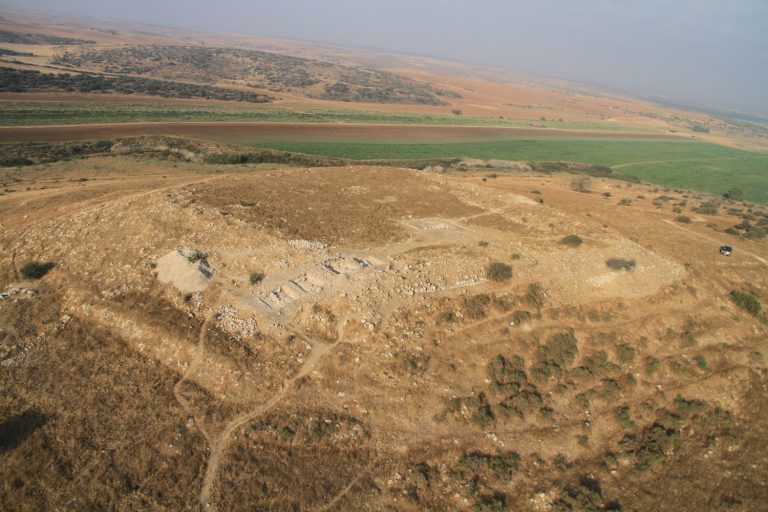
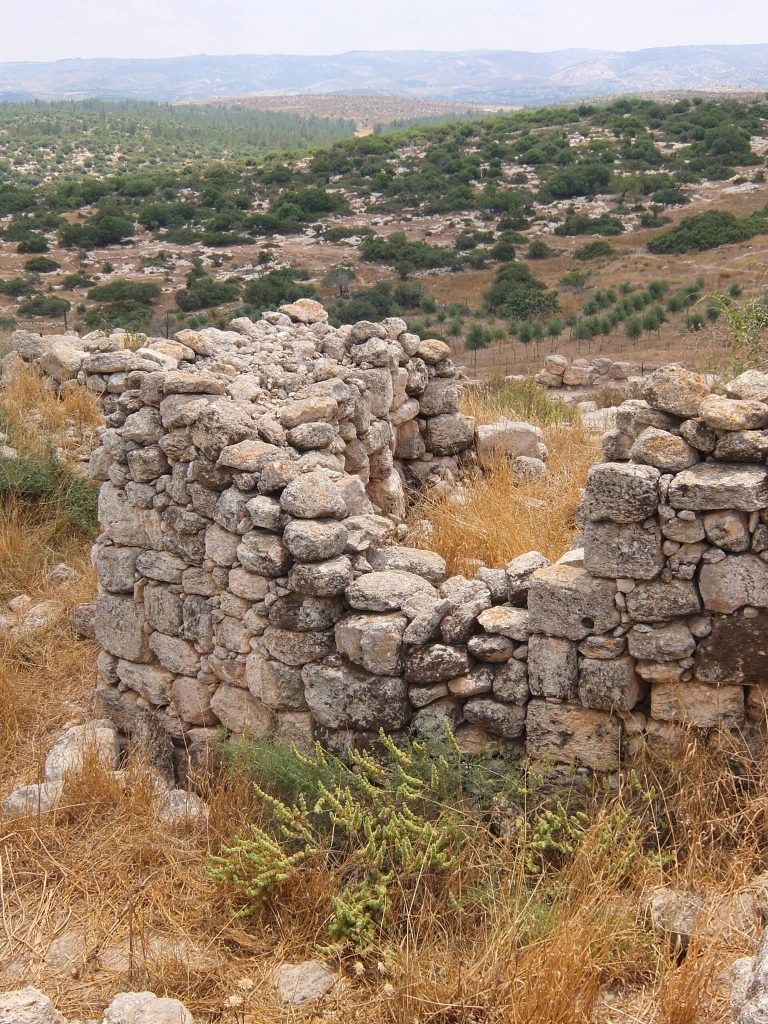
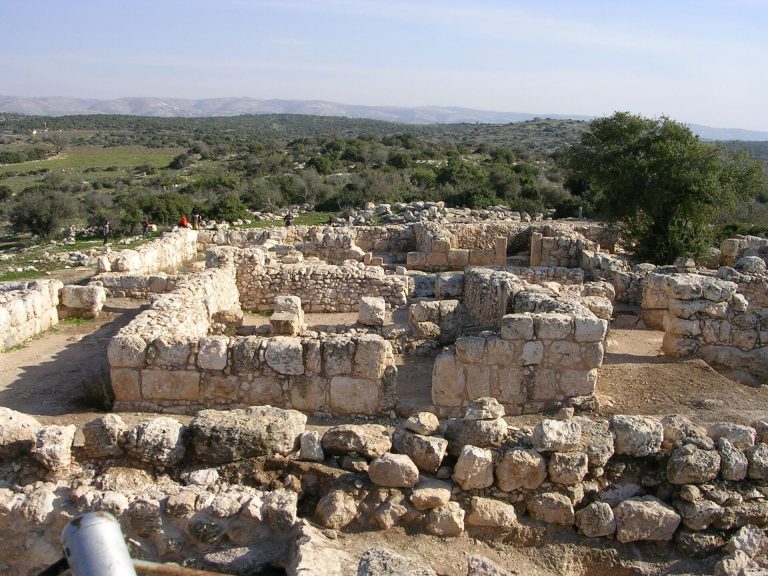
The remains are centered on Tel Sandahanna, or Tel Maresha, an archaeological mound of about 24 dunams. The Iron Age settlement occupied the elevated tell, while the Hellenistic city spread into a lower city covering several hundred dunams, with estimates of about 320 to 400 dunams. The site stands at approximately 400 metres above sea level on soft chalk bedrock. This geology allowed people to excavate extensive underground spaces and use the quarried stone to build structures above them.
Mound and urban settlement
Iron Age and Hellenistic city
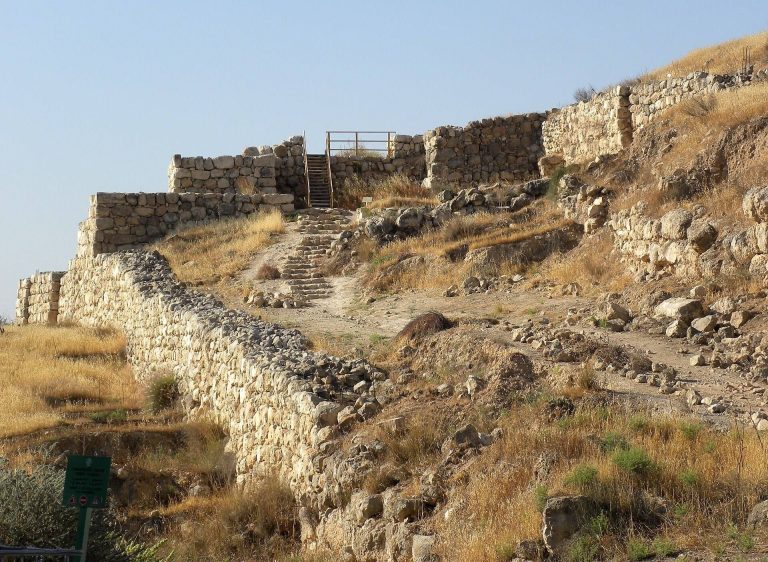
A section of Iron Age wall was found outside the northwestern tower of the later Hellenistic-Idumean city. First-Temple-period finds from the mound include pottery associated with inland regions and seal impressions bearing the words “belonging to the king.” Residential buildings in the lower city date mainly to the third and second centuries BCE, when Maresha expanded beyond the earlier settlement on the tell.
Idumean temple
An Idumean temple stood within a courtyard on the summit of the tell, near the cardo, the principal central street of the city. Its position places a religious building within the upper urban area of Hellenistic Maresha.
Underground complexes and production
Quarries, cisterns, and domestic spaces
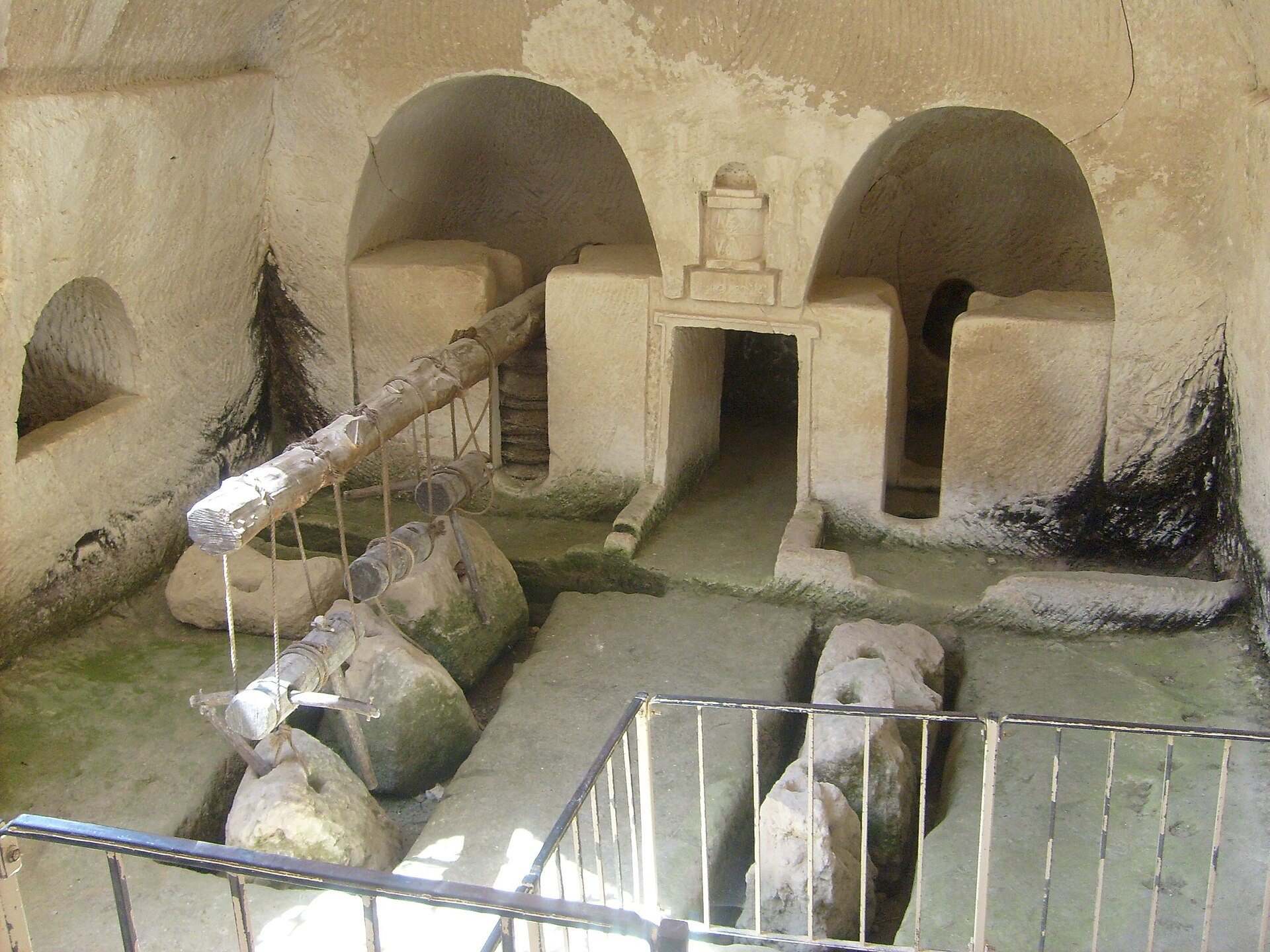
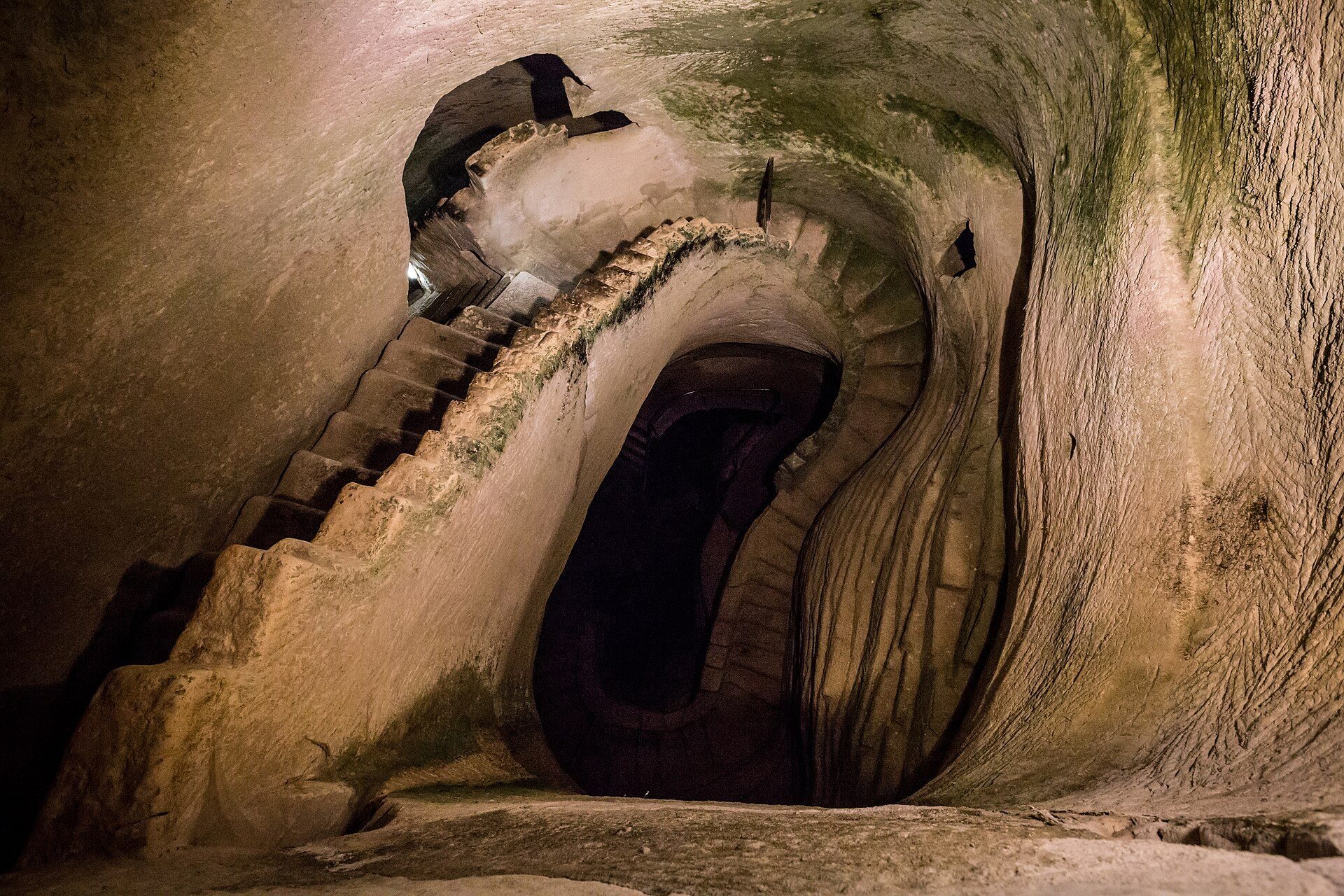
The lower city contains about 160 complex underground systems and approximately 2,500 chambers of different sizes and functions. Some systems contain 60 or 70 rooms linked by passages, allowing movement from one chamber to another without returning outdoors. The spaces served as quarries, storerooms, cisterns, animal facilities, hiding places, and other installations. Excavations have also revealed residential areas, storage facilities, water-management systems, and domestic spaces.
Olive presses and columbaria
About 200 water cisterns, 85 columbaria, 22 olive presses, four stables, numerous storerooms, and many quarries are distributed through the underground complexes. A columbarium is a chamber containing niches for keeping pigeons. Large columbarium caves and numerous olive presses provide evidence for pigeon keeping and olive-oil production. The concentration of olive presses indicates that oil export formed an important part of the city’s economy. Large quantities of chicken bones also suggest commercial poultry raising, although the proposed use of some columbaria for chickens remains uncertain.
Necropolises and burial caves
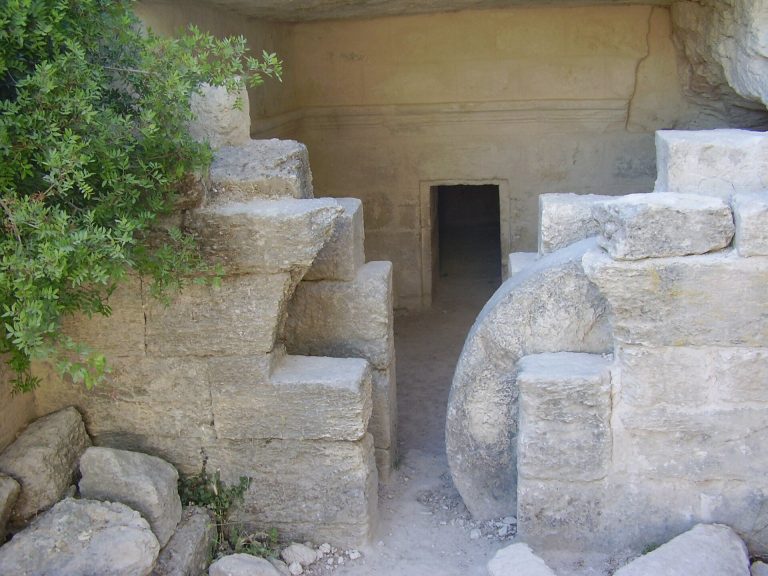
Three cemeteries surround the lower city to the east, southwest, and north. The eastern necropolis contains burial caves that preserve evidence of the city’s mixed cultural environment and its Hellenistic burial practices.
Sidonian Tomb
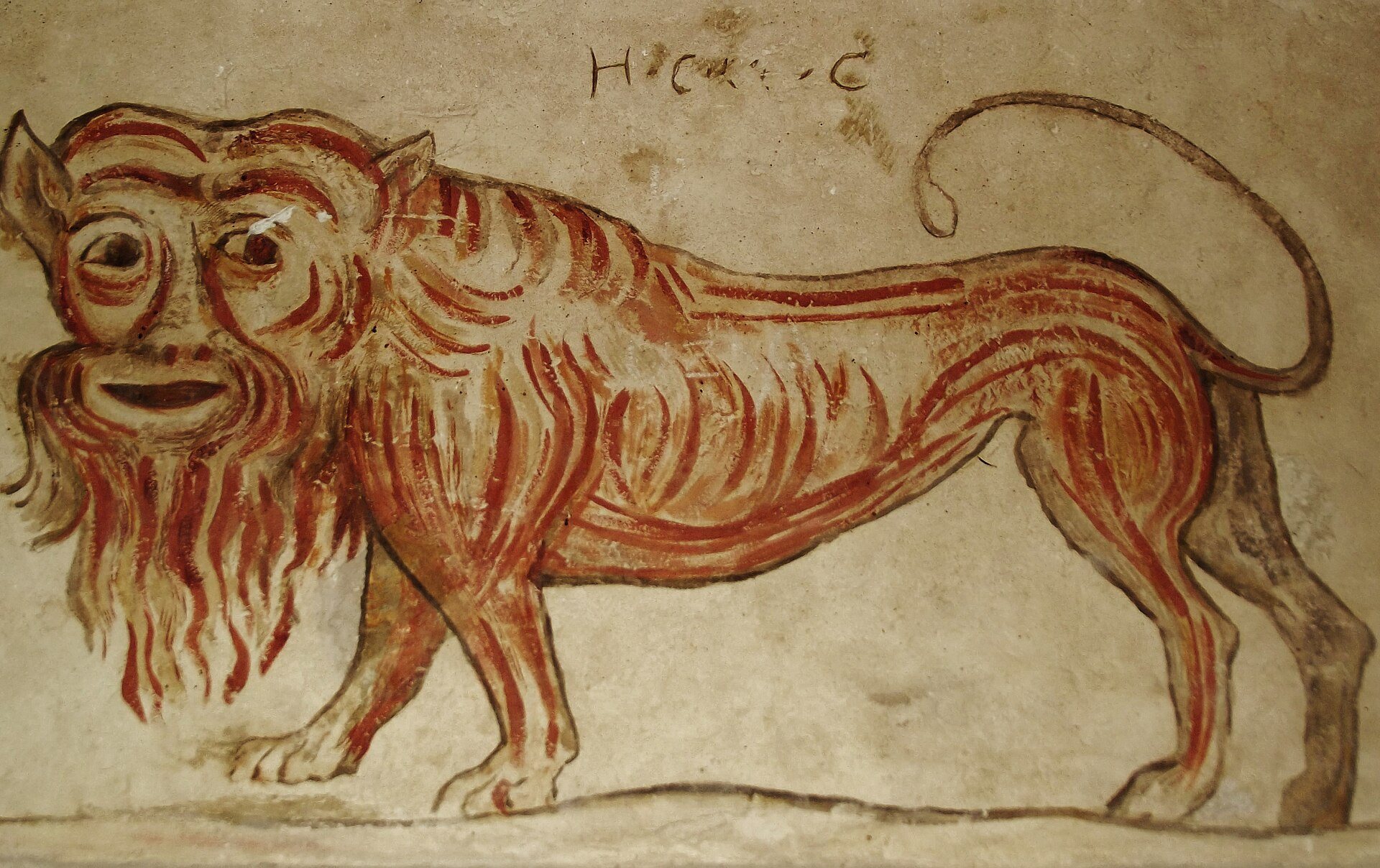
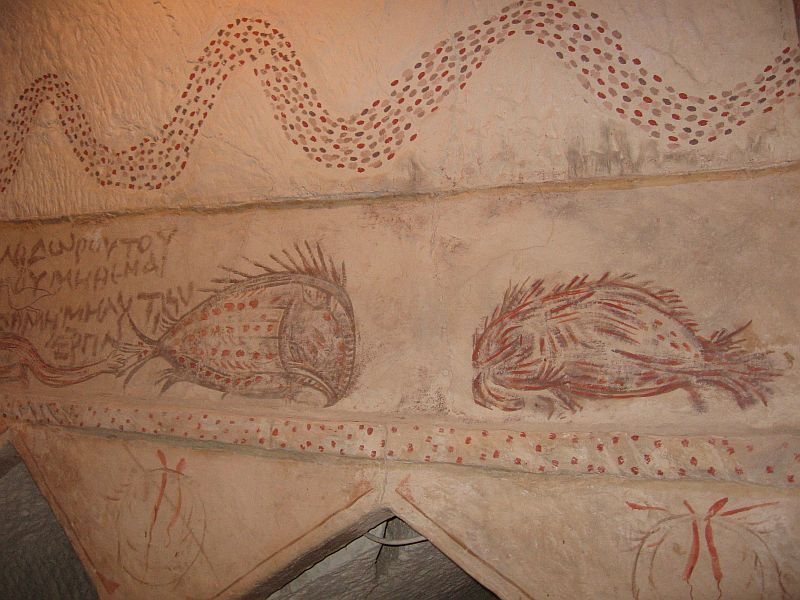
The large family tomb known as the Sidonian Tomb, or Apollophanes Cave, has burial niches and restored, colorful wall paintings that combine Sidonian and Hellenistic influences. A long Greek inscription identifies Apollophanes son of Sesmaios as the archon of the Sidonians at Maresha. An archon was a senior civic official. Another inscription presents an erotic dialogue between two lovers, while a difficult Greek text may refer to an imprisoned person pleading for help.
Cave of the Musicians
A nearby burial cave known as the Cave of the Musicians contains a restored wall painting, restored in 1993. The Cave of the Musicians and the Sidonian Tomb are also known collectively as the Sidonian burial caves.
Inscriptions, coins, and excavated objects
Heliodorus Stele
The Heliodorus Stele is a 23-line royal Greek inscription carved on a stone slab and dated to 178 BCE. It records Seleucus IV’s appointment of Heliodorus as an official responsible for temple affairs in Coele-Syria and Phoenicia, the Seleucid administrative district that included Judea. The inscription provides evidence for Seleucid administration in the region before the Maccabean Revolt.
Market weight and coin hoard
A lead weight from Tel Maresha bears a Greek inscription dated to Seleucid year 170, corresponding to 143–142 BCE. It names the market inspectors Antipater son of Heliodorus and Aristodamus son of Ariston, although the latter name is uncertain. Excavations in 1989 also uncovered a hoard of 25 Seleucid tetradrachms from the mint of Ashkelon. Its latest coin helps date John Hyrcanus’s capture of Maresha.
Ostraca and material culture
Approximately 500 ostraca were found at Tel Maresha, including about 400 discovered since 2000. These small inscribed pieces include dated and undated receipts or dockets, labels with personal names, and correspondence written in Aramaic and Greek.
Excavations also recovered large quantities of pottery, oil lamps, amphorae, mould-made Megarian bowls, terracotta and metal figurines, and other objects illustrating Greek influence on the Idumean population. Eighteen carved representations of circumcised phalli, mostly made from local chalk, were found in secondary fills. Their presence suggests that circumcision was practiced locally before the Hasmonean conquest, while their interpretation remains historically important.
Gaming pieces and divination objects
Numerous knucklebones found in 2022 include gaming pieces and examples used for astragalomancy, a form of divination using knucklebones or similar small bones. Some bear Greek inscriptions.