Naqsh-e Rajab: Sasanian Rock Reliefs in Iran
Site at a Glance
- Rating
- 4.4
- Popularity
- Very Low
- Country
- Iran
- Primary era
- Classical
- Eras represented
- Classical
- Civilizations
- Sassanid
- Site type
- Civic
- Remains
- Monument
On this page11 sections
History
Naqsh-e Rajab is an early Sasanian rock-relief site in Fars Province, Iran, about 3 kilometres north of Persepolis and west of Istakhr. Created during the first century of Sasanian rule, probably in the second half of the third century, it commemorates the royal authority of Ardashir I and Shapur I through reliefs carved in the limestone walls of a rocky cavity. The Sasanian Empire was the Iranian imperial state that ruled from AD 224 to 651, whose kings promoted Zoroastrian religious and royal traditions.
The first Sasanian investitures
The earliest relief at Naqsh-e Rajab represents the investiture of Ardashir I, founder of the Sasanian Empire. In this ceremony, Ahura Mazda, the supreme deity of Zoroastrianism, grants the king the diadem or ring that represents legitimate royal authority. The scene is generally considered one of the earliest Sasanian investiture reliefs and may have been the first. Ardashir’s investiture was also represented at Naqsh-e Rostam and Tang-e Firuzabad.
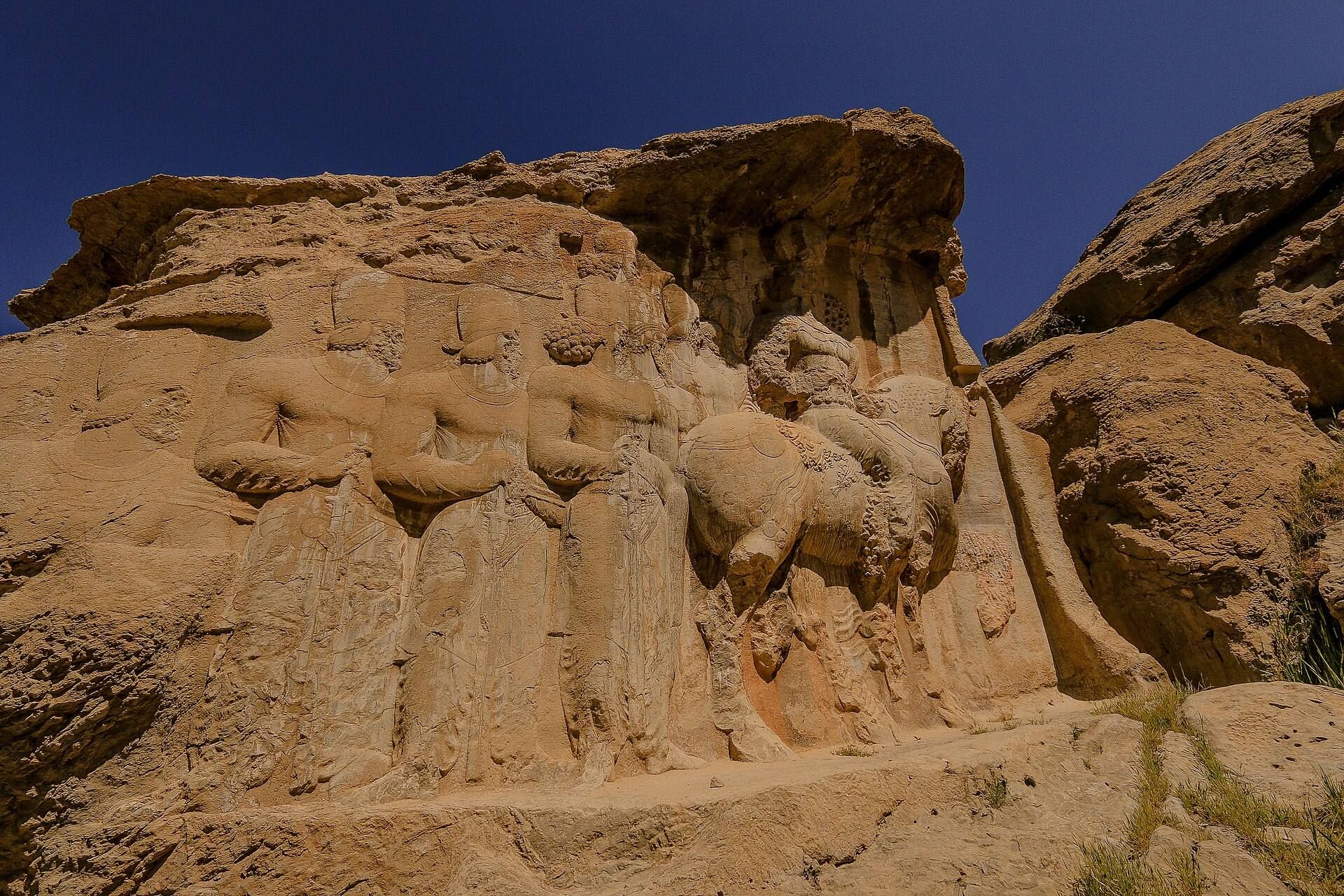
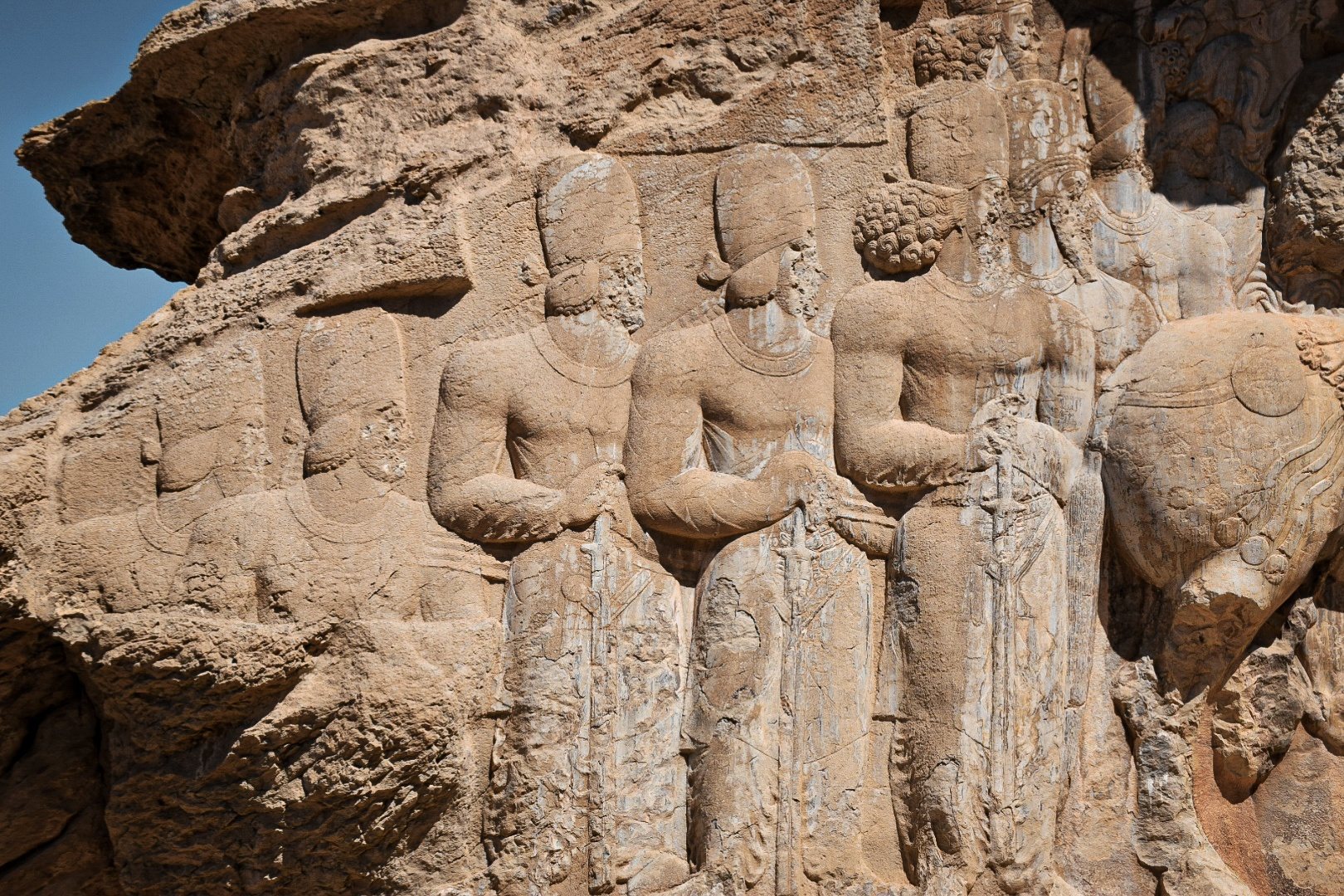
A later composition shows Ardashir’s son Shapur I receiving royal authority from Ahura Mazda. Shapur ruled Iran from AD 241 to 272. The relief may have been carved soon after his accession on 20 March AD 242, or around AD 250 or earlier. Another representation presents Shapur in an equestrian procession or investiture, accompanied by nine figures. At least three may be his sons, while the others appear to be nobles, although their identities remain uncertain. The figure immediately behind the king may be his son and successor, Hormizd I.
Royal and religious associations
The reliefs were connected with nearby Istakhr, an ancient city in Fars regarded as the birthplace of Ardashir I, Shapur I, and their ancestors. Naqsh-e Rajab therefore formed part of a landscape associated with Sasanian dynastic origins and the commemoration of royal investiture ceremonies. The site stood beside the ancient Royal Road, which connected Susa, a capital of the Persian Empire, with Sardis, the capital of Lydia, about 25 centuries ago.
The latest relief is a portrait bust of Kerdir, a powerful Zoroastrian high priest and religious official of the third century, probably made during the reign of Bahram II. Kerdir served under Shapur I, Hormizd I, Bahram I, and Bahram II. His inscription describes his rise and religious services, including efforts to purify Zoroastrianism and suppress groups regarded as heretical, probably including the followers of Mani, as well as Jews and Christians. It also recounts a claimed journey to the Zoroastrian otherworld, presented as a means of strengthening confidence in the faith.
Modern recognition
The name Naqsh-e Rajab is traditionally linked to a coffeehouse once located nearby and associated with a proprietor named Rajab. Another explanation identifies Rajab only as an otherwise unknown person. Iran placed the site on its national heritage list in 1931 under registration number 22, as a monument of the Sasanian period. Naqsh-e Rajab and Naqsh-e Rostam form part of the Marvdasht cultural complex, proposed as a candidate for UNESCO World Heritage status.
Remains
Rock-cut enclosure and royal reliefs
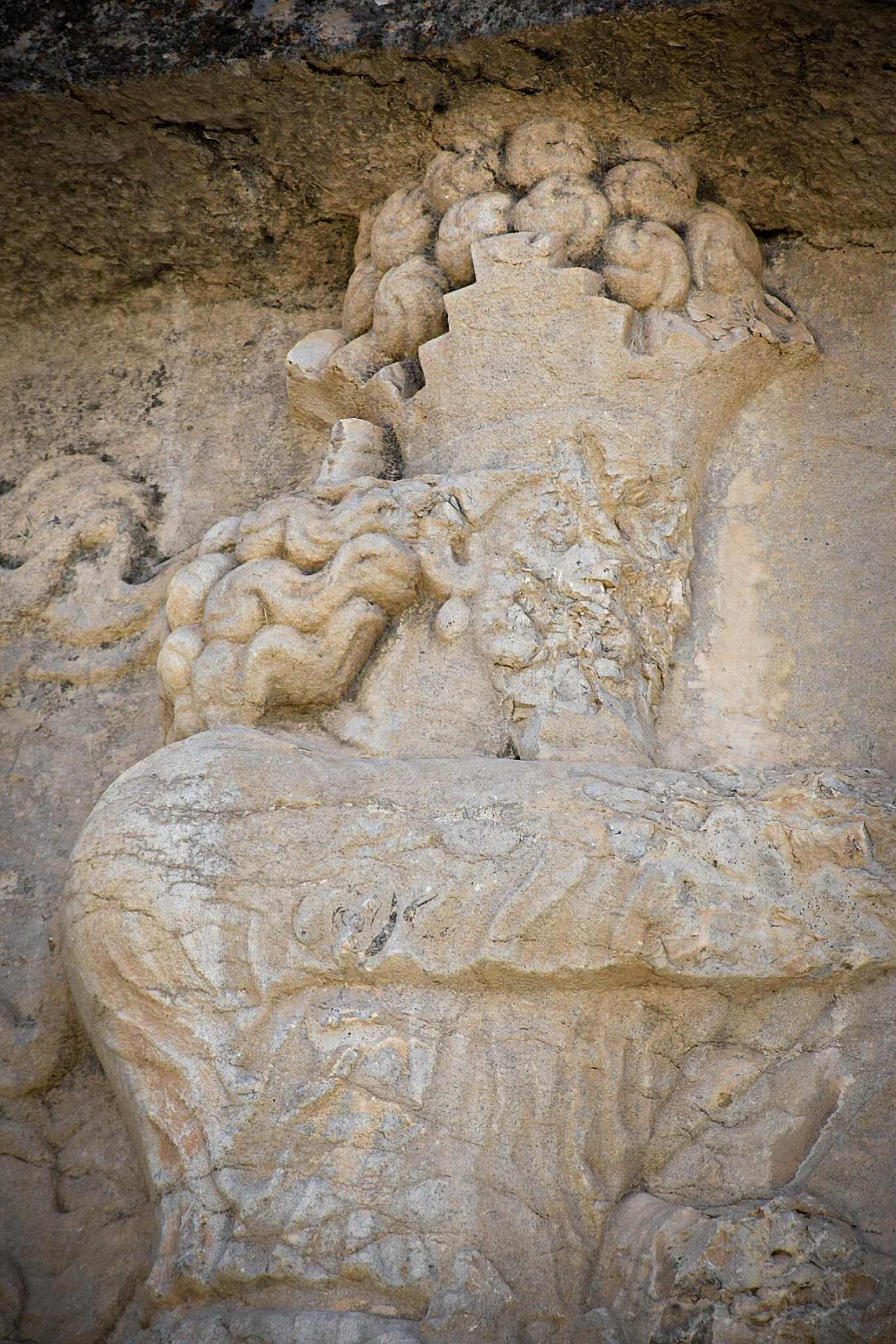
Naqsh-e Rajab consists of four Sasanian limestone reliefs and inscriptions carved into an open, cave-like cavity. The roughly square space opens to the west, with decorated surfaces on its northern, eastern, and southern sides. Its architecture combines Greek-style elements with Sasanian artistic features. The heads of royal and divine figures, along with some horse heads, were hammered after the Arab conquest of Iran.
Ardashir I’s investiture
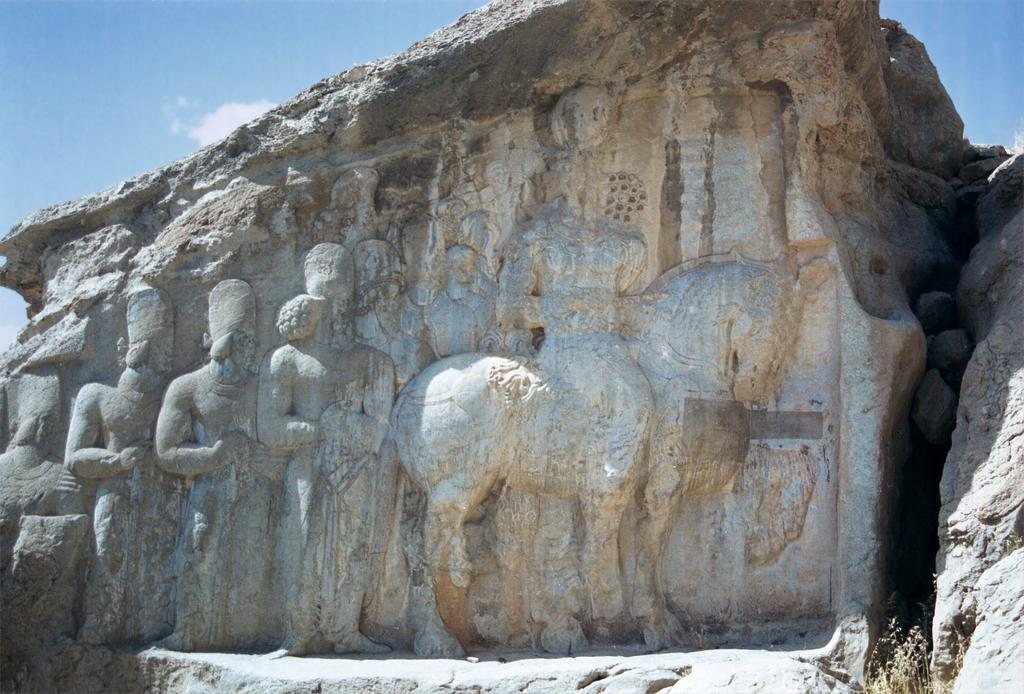
The central investiture composition is about 4.5 metres wide and contains eight men, women, and children. Ahura Mazda presents Ardashir with a crown or ring of royal authority in one hand and a royal staff in the other. The god wears a crenellated crown in the Achaemenid style and holds a barsom, a bundle of ritual twigs used in Zoroastrian ceremonies. Ardashir wears a crown with a korymbos, the globular ornament associated with Sasanian royal headdresses, and raises his left hand before his mouth in a gesture of respect.
Other figures complete the scene. A court attendant holds a fly-whisk above the king, while another dignitary stands behind him. Two children face each other before Ardashir and Ahura Mazda, and the child nearest the king may be the crown prince. Two women stand behind Ahura Mazda in respectful poses. Figures near Ardashir may include his young grandsons, a small person holding an object resembling a mace or royal sceptre, and a figure who may be Shapur I. Two women appear separately behind a column as if inside a room. The principal woman wears a Sasanian headdress and raises her hand to her mouth, while the servant wears a Phrygian cap ending in a small goat’s head.
A short, badly damaged Middle Persian inscription near the relief says that the Zoroastrian faith had declined and that the King of Kings restored it.
Shapur I’s equestrian procession
On the northern rock face, about 1.5 metres above ground level, Shapur I rides a large horse followed by nine standing figures. The animal wears numerous ribbons and two hanging tassels on its flanks, details also seen in representations at Naqsh-e Rostam. Shapur can be identified by his crown and globular korymbos, although his head was damaged. The accompanying figures have individually detailed clothing and distinctive headgear, including a visible triskelion-like motif.
An inscription on the horse’s chest identifies Shapur as a worshipper of Ahura Mazda and as King of Kings of Iran and non-Iran, of divine origin, son of Ardashir and grandson of Papak. It is written in Parthian, Middle Persian, and Greek, with four lines in Sasanian Pahlavi and six in Greek. The scene may predate Shapur’s victory over Philip the Arab in AD 244 because no defeated enemy appears beneath the horse.
Shapur I’s equestrian investiture
A second equestrian composition shows Shapur receiving a diadem or ring of royal authority from Ahura Mazda, who is also mounted on a horse. Shapur does not wear a korymbos in this scene. The heads of both the king and the horses were damaged at a later period.
Kerdir’s portrait and inscription
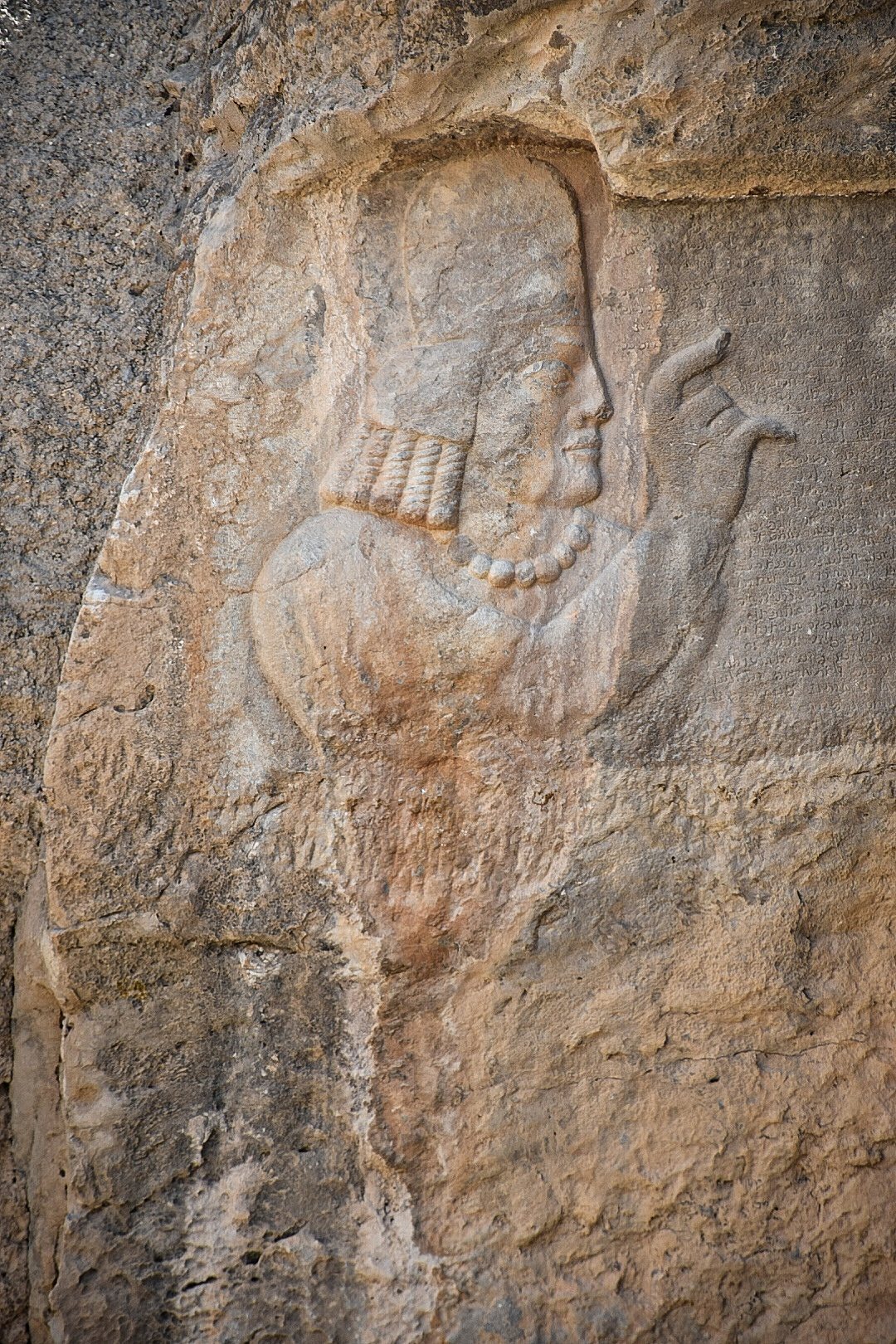
The small bust of Kerdir is carved beside the Ardashir relief. Shown in profile, he raises one hand with the index finger bent in a gesture of respect. He is the only non-royal figure represented in a Sasanian rock relief. Beside the portrait is a Middle Persian inscription of approximately 30 or 31 lines. About 20 lines remain substantially intact, while the rest is badly damaged or lost. A carved image beside the text appears to depict Kerdir pointing toward his inscription.
Open area before the cavity
A broad open area lies in front of the reliefs and may once have contained habitation and houses. A water carving or water-related feature in the mountain has been interpreted as possible evidence for a spring. This has led to the suggestion that the area may once have served as a verdant recreational place, although that interpretation remains inferential.