Ancient Lappa: A Greek City-State on Crete

Site at a Glance
- Rating
- 4.4
- Popularity
- Low
- Country
- Greece
- Primary era
- Classical
- Eras represented
- Iron Age, Classical
- Civilizations
- Ancient Greek, Roman
- Site type
- City
On this page17 sections
History
Ancient Lappa was an ancient Greek city-state in Greece, at modern Argyroupoli on Crete. It developed during the Hellenistic and Roman periods, when it became a prosperous inland centre with territory extending between the northern and southern coasts. The city is also known as Lampa, Lampae, Lampai, and Lampe, although its coins and inscriptions use the name Lappa.
Origins and Cretan Connections
Lappa stood in western inland Crete, about 27 kilometres from the northern coast. Its territory apparently reached both the northern and southern shores. Amfimalla served as its northern port, while Phoenix was its southern port and was associated with the territory of the Lampaeans, the citizens of Lappa. The river Mesapos was also associated with the city’s territory.
A foundation tradition connected Lappa with Agamemnon, the legendary Greek king associated with the leadership of the Greek forces in the Trojan War. The same tradition attributed the city’s name to a man from Tarrha, a settlement in southern Crete. This story may preserve a memory of an earlier connection between Lappa and Tarrha, although the nature of that relationship remains uncertain.
Hellenistic Alliances
Lappa minted coins from approximately 330 to 280 or 270 BC. These issues carried the inscription “LAPPAION,” identifying the citizens or community of Lappa. During conflicts between Knossos and Lyktos in the late third and second centuries BC, divisions among the Cretans brought Lappa into the conflict on Lyktos’s side. When Knossos destroyed Lyktos, Lappa provided refuge for its population.
The city continued to oppose Knossos through alliances with powerful states outside Crete. Lappa allied with Teos in 193 BC and with Pergamon under Eumenes II in 183 BC. Eumenes II ruled Pergamon from 197 to 159 BC. These alliances belonged to a period when Lappa’s political relationships extended beyond its immediate Cretan surroundings.
Roman Conquest and Reconstruction
In 67 BC, the Roman commander Quintus Caecilius Metellus Creticus conquered Lappa after the Roman capture of Eleutherna. The assault almost completely destroyed the city. During the later Roman civil war, Lappa supported Octavian against Marcus Antonius, also known as Mark Antony. Octavian defeated Antonius and became Augustus, the first Roman emperor.
After Octavian’s victory, Lappa received a free or specially privileged status, and Augustus supported its restoration. The rebuilt city became more prosperous and splendid. The Hellenistic and early Roman periods were particularly prosperous, and Lappa remained an important Roman centre with thermal baths and its own coinage, including issues depicting Augustus.
Christian and Byzantine Lappa
In the early Christian period, Lappa became an episcopal see, the official jurisdiction and administrative centre of a Christian bishop. Tradition attributed the foundation of its bishopric to the apostle Titus. Lappa’s bishop attended the Council of Ephesus in 431 and the Council of Chalcedon in 451, major Christian gatherings concerned with doctrine and disputes within the church. The bishopric appears on later occasions as well.
The sixth-century Byzantine geographer Hierocles included Lappa among Crete’s 22 cities. Saracen forces destroyed the city in the ninth century, marking the end of its long history as a major urban centre.
Archaeological Investigation
Archaeological excavations at Argyroupoli have revealed evidence from the Geometric period, an early phase of Greek history associated with geometric artistic patterns, through the Roman era. Work by the regional Greek archaeological authority has exposed Roman baths, mosaic floors, carved tombs, and statues. The nineteenth-century English traveller Robert Pashley also described substantial ancient remains, including a massive brick structure, a circular building, a cistern, another Roman brick building, and rock-cut tombs.
Remains
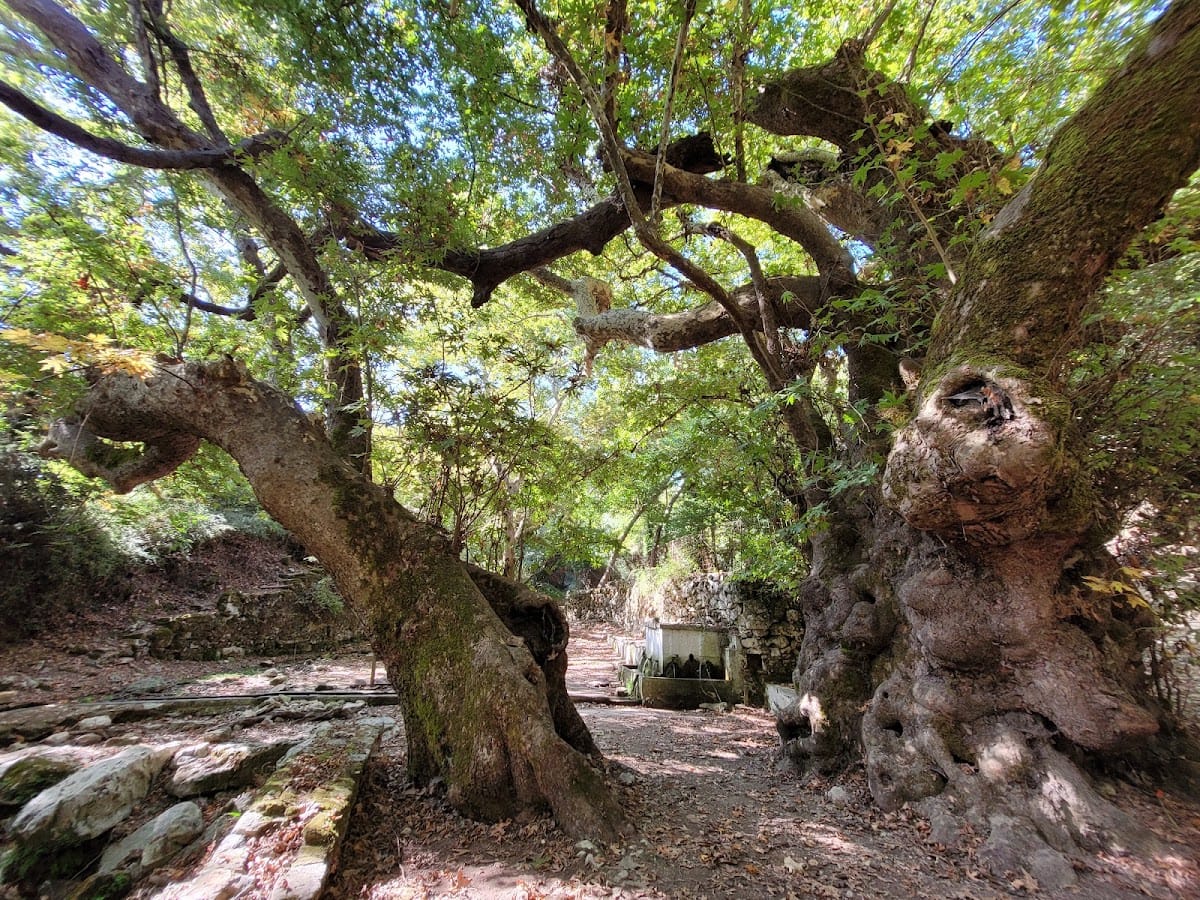
The remains of Lappa are dispersed through modern Argyroupoli. The ancient settlement occupied both an elevated fortified area and a lower city, while Roman buildings, baths, mosaics, tombs, coins, pottery, and sculpture survive from different parts of the site. Many buildings in the modern village incorporate architectural elements taken from ancient structures.
Acropolis and Lower City
Fortified Upper City
The acropolis, meaning the elevated fortified settlement or citadel, stood on a hill south of modern Argyroupoli. Parts of its fortification wall survive on the hill, preserving evidence of the defensive boundary of Lappa’s upper city.
Lower City
The lower city occupied the area of the modern village. Ancient architectural elements were incorporated into many later village buildings, so parts of Lappa remain embedded within the present settlement rather than forming one continuous exposed complex.
Roman Buildings and Waterworks
Brick Edifice
Pashley described a massive brick edifice supported by buttresses. The buttresses measured about 4.6 metres in width and projected approximately 2.7 metres. Its precise function is not stated, but its scale and construction form part of the substantial Roman remains recorded at Lappa.
Circular Building
A circular building recorded by Pashley measured about 18 metres in diameter. Niches around its interior or surrounding structure were approximately 3.4 metres wide. The building formed part of the Roman architectural remains identified in the area.
Cistern and Roman Building
The site also included a cistern measuring approximately 23.2 by 6.1 metres. A separate Roman brick building was recorded nearby, although its function has not been identified. Excavations have additionally exposed Roman-period buildings and thermal baths, along with mosaic floors and other architectural fragments.
Necropolis and Finds
Five Virgins Cemetery
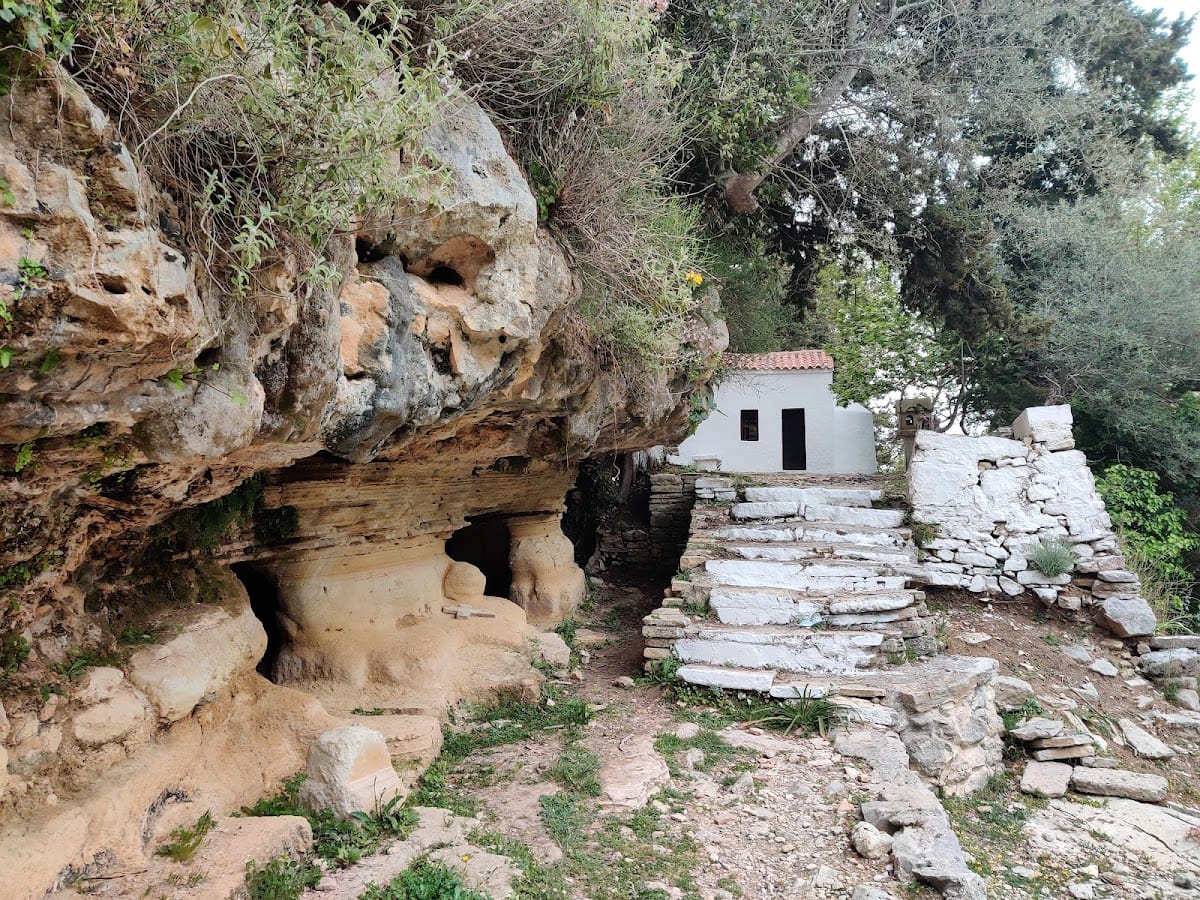
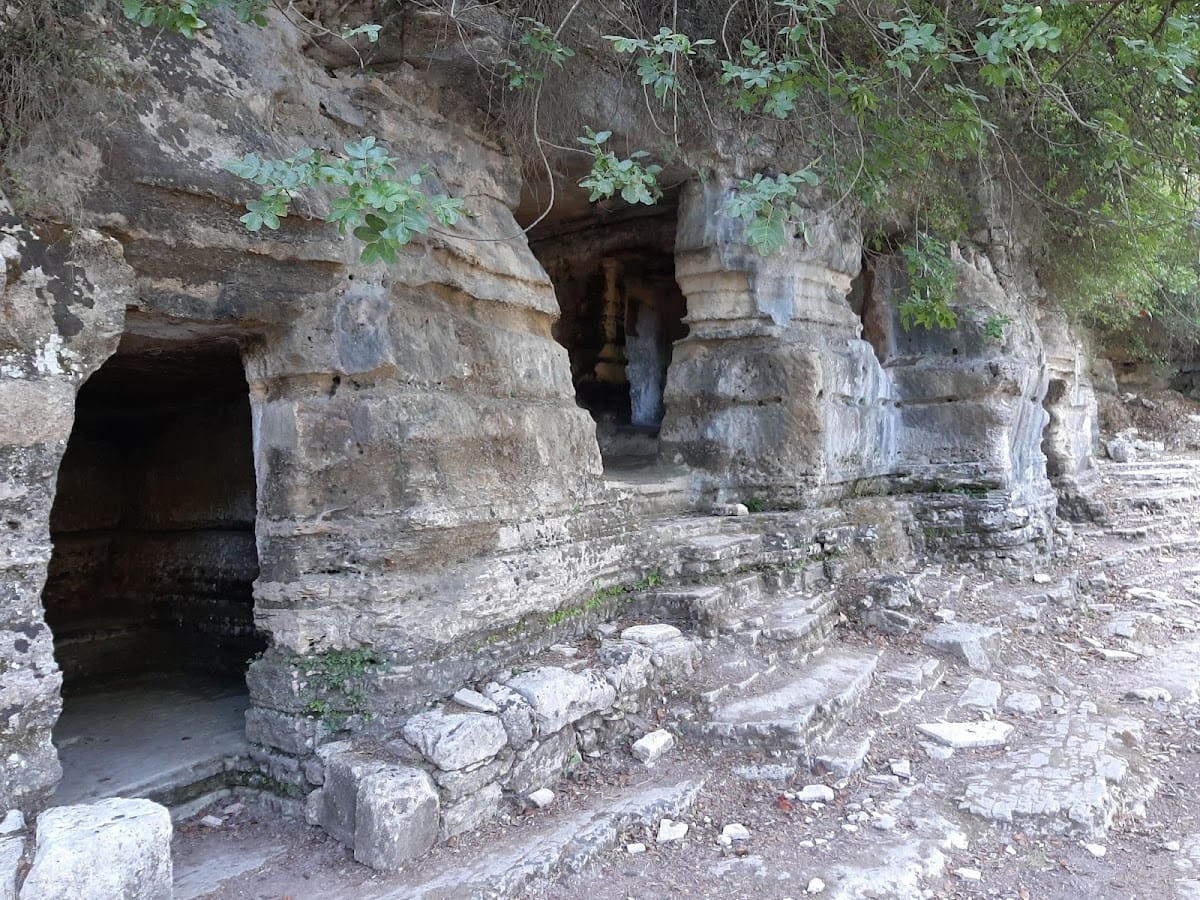
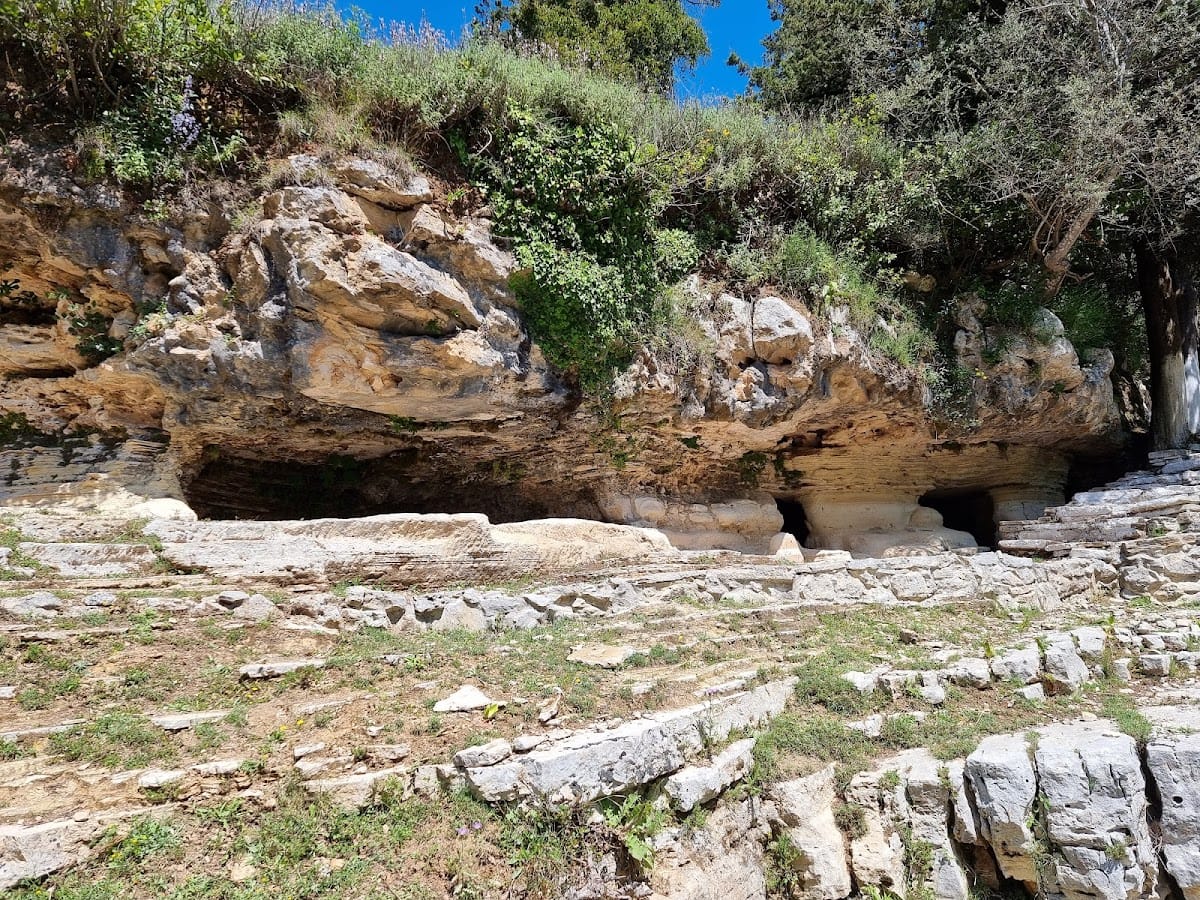
A substantial Roman necropolis, or designated cemetery, lies near the village in the area known as the Five Virgins. It contains numerous tombs cut directly into the rock. Recent excavations exposed carved tombs, while similar rock-cut burials were also described by Pashley.
Sculpture, Coins, and Inscriptions
Excavations at Lappa have produced mosaics, numerous coins, statues, pottery, and other artefacts. Statues identified as Aphrodite, Zeus, and Dionysus are housed in the Archaeological Museum of Rethymno. Two marble statues and a bronze statuette found before systematic excavation are also displayed there.
An inscription associated with Lappa states that the Lappaeans erected a statue in honour of Marcus Aurelius Clesippus. The city’s coinage includes imperial portraits and an issue representing its benefactor Augustus, accompanied by the inscription “To the divine Caesar Augustus.” Maritime symbols on the coins may reflect Lappa’s coastal territories and their ports.