Ochsenhausen Abbey: A Benedictine Monastery and Imperial Abbey in Germany
Site at a Glance
- Rating
- 4.4
- Popularity
- Very Low
- Country
- Germany
- Primary era
- Early Modern
- External website
- Open
- Eras represented
- Medieval, Early Modern
- Civilizations
- Holy Roman Empire
- Site type
- Religious
- Remains
- Monastery
On this page18 sections
History
Ochsenhausen Abbey is a former Benedictine monastery in Ochsenhausen, Germany, founded around 1090–1093 by Benedictine monks and centered on a church whose earliest building was Romanesque. Dedicated to Saint George, it remained a monastic institution until secularization in 1803, later becoming an Imperial Abbey with political and judicial authority over an extensive territory in Upper Swabia.
Foundation and Benedictine beginnings
A foundation tradition connects Ochsenhausen with a ninth-century nunnery called Hohenhusen. According to the legend, the nunnery was abandoned during the Hungarian invasions, and an ox later uncovered a chest of valuables buried by the fleeing nuns. The monastery was supposedly established at that place. This story belongs to the abbey’s traditional foundation narrative rather than to its firmly established history.
Around 1090, the Frankish-Welf ministerials Konrad, Hawin, and Adelbert of Wolfertschwenden, together with their sisters, donated land near Biberach an der Riß for a Benedictine monastery. The new foundation was transferred to St. Blaise Abbey in the Black Forest and became its priory. Its first church was consecrated to Saint George in 1093 by Gebhard III of Zähringen, Bishop of Constance. The founding family confirmed the donation in a charter dated 31 December 1100, and Pope Adrian IV confirmed the monastery in 1157.
The monastery initially stood under Welf protection. During the twelfth century, its Benedictine community showed the influence of the Fruttuaria reform, a movement within Benedictine monasticism that sought stricter observance of communal religious life. Heinrich of Zwiefalten served as prior from 1238 to 1262.
Protection, independence, and imperial status
In the fourteenth century, disputes over secular protection affected the monastery’s position. In 1343, the monks appealed to Emperor Louis the Bavarian against the activities of the Schellenberg vogts. A vogt was a secular guardian who could represent an ecclesiastical institution in legal and military matters. In 1347, Louis placed the convent under imperial protection and assigned the Imperial City of Ulm to act as its protector.
Ochsenhausen became independent from St. Blaise in 1391 against the background of the Western Schism, the division within the Latin Church from 1378 to 1417, when rival popes claimed authority. Ochsenhausen supported Pope Urban VI and the Roman obedience, while St. Blaise supported the Avignon obedience and Antipope Clement VII. After Nikolaus Faber appealed to Pope Boniface IX in Rome, the pope confirmed the abbey’s independence. On 19 April 1392, the seven-member convent elected Faber as its first abbot.
A charter of 13 October 1397 allowed the abbot and convent to elect their own vogt and freed them from foreign courts. Ulm remained their freely chosen protector, while the abbey became subject only to imperial authority. Its subjects were judged by the abbey’s own courts. The abbey itself held citizenship in Ulm and remained subject to the city court.
Under Abbot Simon Lengenberger, Ochsenhausen received the status of a free Imperial Abbey in 1495. An Imperial Abbey was an ecclesiastical territory whose ruler held immediate status within the Holy Roman Empire rather than answering to a territorial prince. The status followed Emperor Frederick III’s grant of high jurisdiction in 1488, including the right to erect a pillory and gallows. Ochsenhausen became part of the Swabian Imperial Circle and held one curiate vote on the Swabian Bench of Imperial Prelates.
Territory, revolt, and Reformation conflict
The abbey controlled an extensive ecclesiastical territory between the Iller and Riß rivers. Around 1800, at its greatest extent, this territory covered about 255 square kilometres and contained approximately 8,665 to 11,000 inhabitants, roughly one-fifth of the modern Biberach district. It included the offices of Ochsenhausen, Ummendorf, Sulmetingen, and Tannheim, the Hummertsried court, the Hersberg estate near Immenstaad on Lake Constance, and numerous villages, hamlets, parish rights, revenues, and rights in territories belonging to others. The Tannheim office formed an enclave within the territory of Rot an der Rot Abbey.
In 1501, peasants from 38 villages belonging to the abbey revolted. A treaty concluded in 1502 converted monastic holdings into hereditary fiefs and regulated sales and succession payments. It also granted limited freedom of movement, restricted certain personal dues, and provided rights to building and firewood. Most of these concessions were largely withdrawn after the peasant defeat in 1525. The agreement may nevertheless have helped prevent more extensive damage to the abbey during the German Peasants’ War.
The Reformation brought further conflict. In 1542, Protestant-controlled Biberach intervened in a dispute concerning a parish priest, while Ulm, then also predominantly Protestant, sent two companies of troops to Ochsenhausen. Roman-rite Masses were prohibited, and a Protestant preacher was intended to hold services for the soldiers in the abbey church. Abbot Georg Müller fled to Augsburg in 1547.
Gerwig Blarer, formerly abbot of Weingarten, succeeded Müller and became a leading Catholic figure in Upper Swabia. With help from the Jesuits of Dillingen, he prevented the Reformation from being introduced into the abbey’s territory, restored monastic discipline, and strengthened Catholic religious life. In 1548, Ochsenhausen ended Ulm’s protective role and placed itself directly under the protection of King Ferdinand and the Habsburg dynasty.
Renewal, war, and late development
Ochsenhausen was a founding member of the Upper Swabian Benedictine Congregation in 1603–1604. It established a lyceum, or monastic secondary school, in Ochsenhausen in 1613 and maintained another at Ummendorf from 1623 to 1630. From 1673 to 1691, it also participated in the Benedictine school at Rottweil. During the eighteenth century, the abbey maintained good relations with the Benedictine University of Salzburg.
The Thirty Years’ War, the European conflict of 1618–1648, brought military occupation, requisitions, epidemics, and severe disruption. Swedish forces demanded 6,000 gulden under threat of burning the monastery. On 22 June 1632, Swedish soldiers plundered the abbey, while its castles at Tannheim and Ummendorf were also looted. Further Swedish occupations caused repeated losses, and epidemics badly affected the community. Recovery was sufficiently rapid for a guest wing to be built by 1650.
Under its late seventeenth- and eighteenth-century abbots, Ochsenhausen experienced a major economic and cultural revival. The abbey rebuilt or altered churches and castles throughout its territory, promoted its library and scientific studies, and added an armarium, library hall, chapter house, and observatory between 1783–1785 and 1793. Shortly before secularization, its territory produced an estimated annual income of 120,000 gulden.
Secularization and later preservation
French Revolutionary troops first occupied the abbey’s territory in 1796 and confiscated its money, grain, and wine supplies. The territory had no independent militia. Secularization, the transfer of ecclesiastical property and authority to secular rulers, ended the abbey’s legal existence in 1803 after more than seven centuries.
Franz Georg Karl von Metternich received Ochsenhausen as compensation for his possessions on the left bank of the Rhine. Emperor Francis II granted him a personal princely title on 30 June 1803, temporarily transforming the former ecclesiastical territory into a secular principality. Abbot Romuald Weltin was ordered to live at Obersulmetingen Castle and received an annual pension of 7,500 gulden. The convent was finally dissolved in 1807.
In 1806, the territory passed to the Kingdom of Württemberg. In 1825, Metternich sold his remaining possessions to Württemberg for 1.2 million gulden. Much of the movable inventory, library holdings, and liturgical equipment had already been removed or sold. Objects transferred to Stuttgart or Ludwigsburg represented what could be saved from the former abbey’s contents.
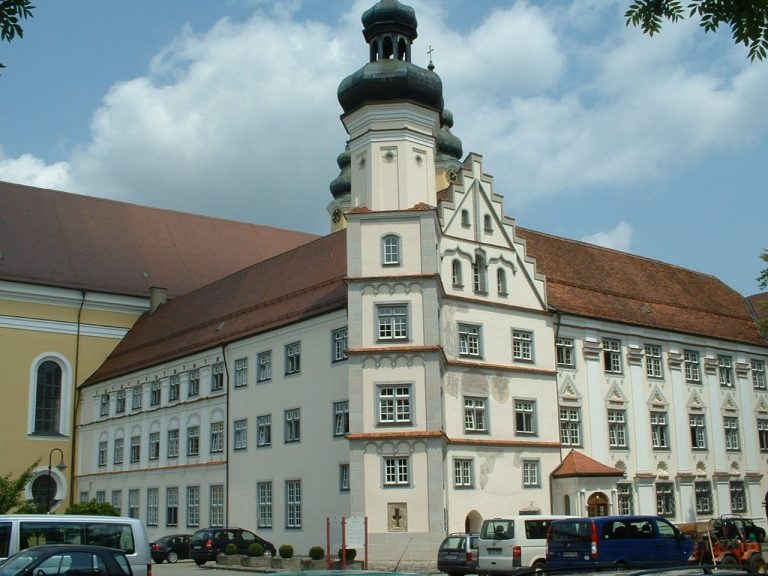
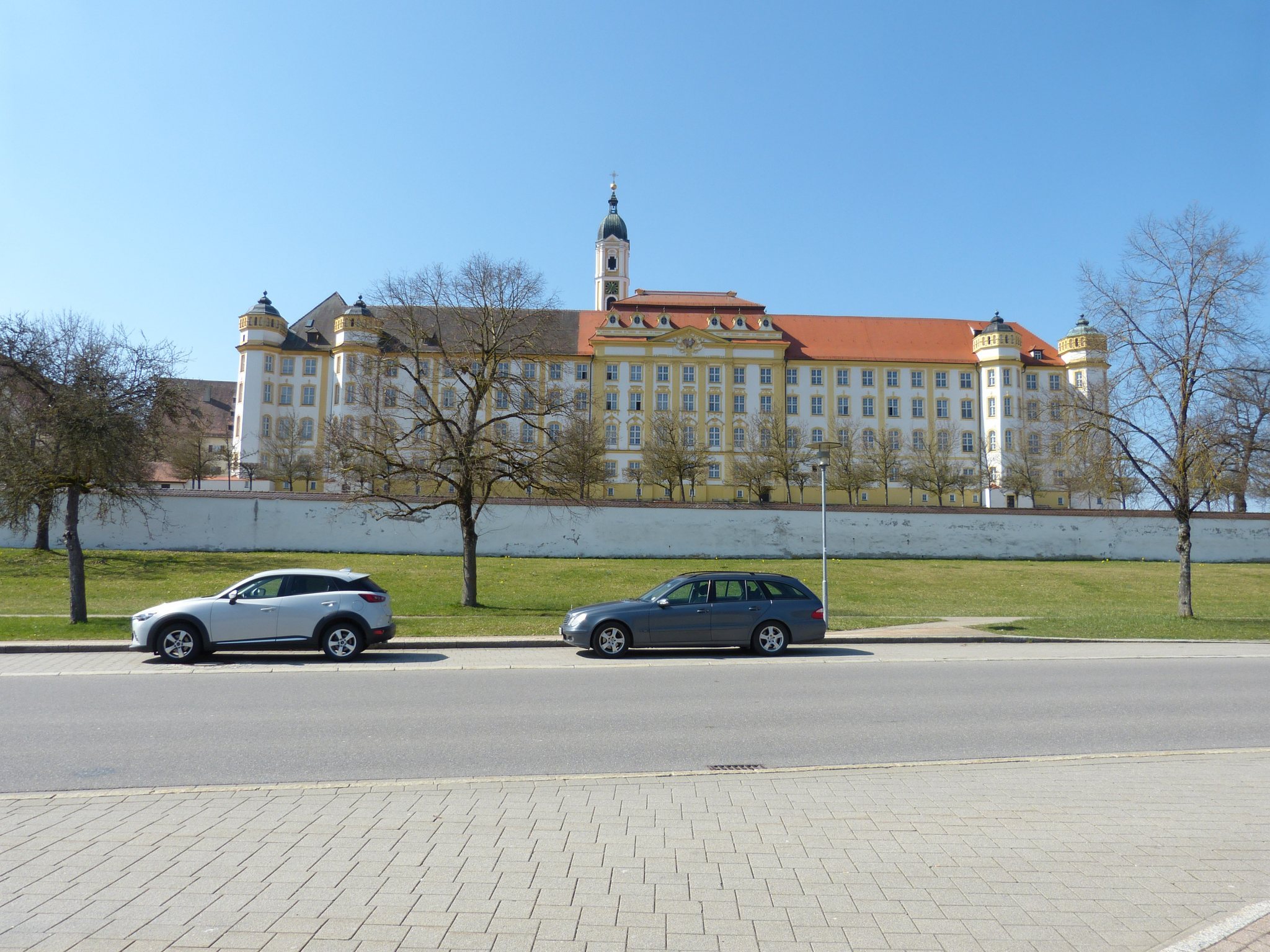
The state of Baden-Württemberg extensively repaired and conserved the abbey complex between 1964 and 1992. About 800 craftspeople took part in the work, which secured the continued preservation and use of the buildings. The former abbey now accommodates the Baden-Württemberg State Youth Music Academy and part of the Ochsenhausen Gymnasium. A monastery museum in the south wing of the Princely Building presents the abbey’s approximately seven-century history, and State Palaces and Gardens of Baden-Württemberg administers the complex.
Remains
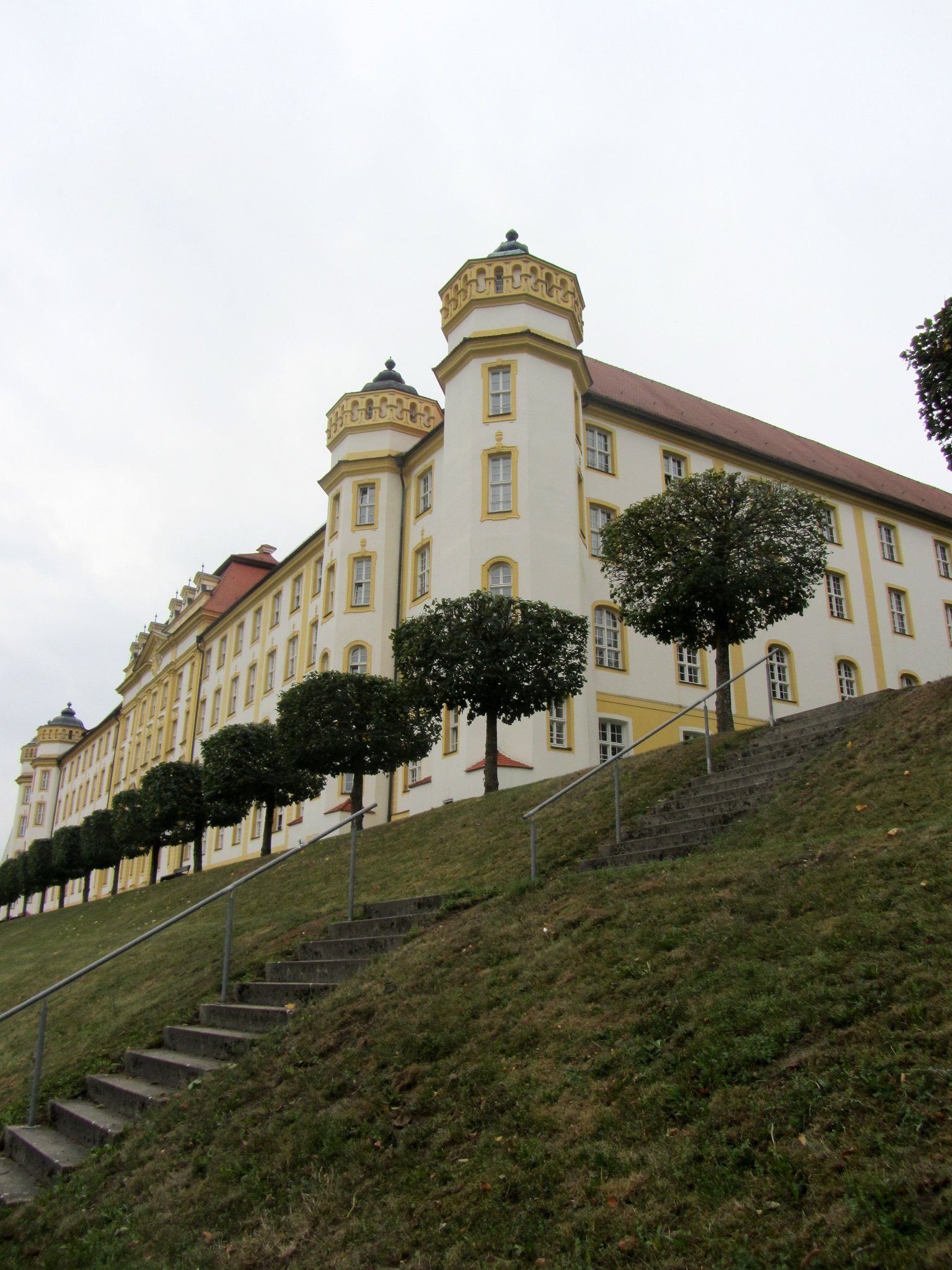
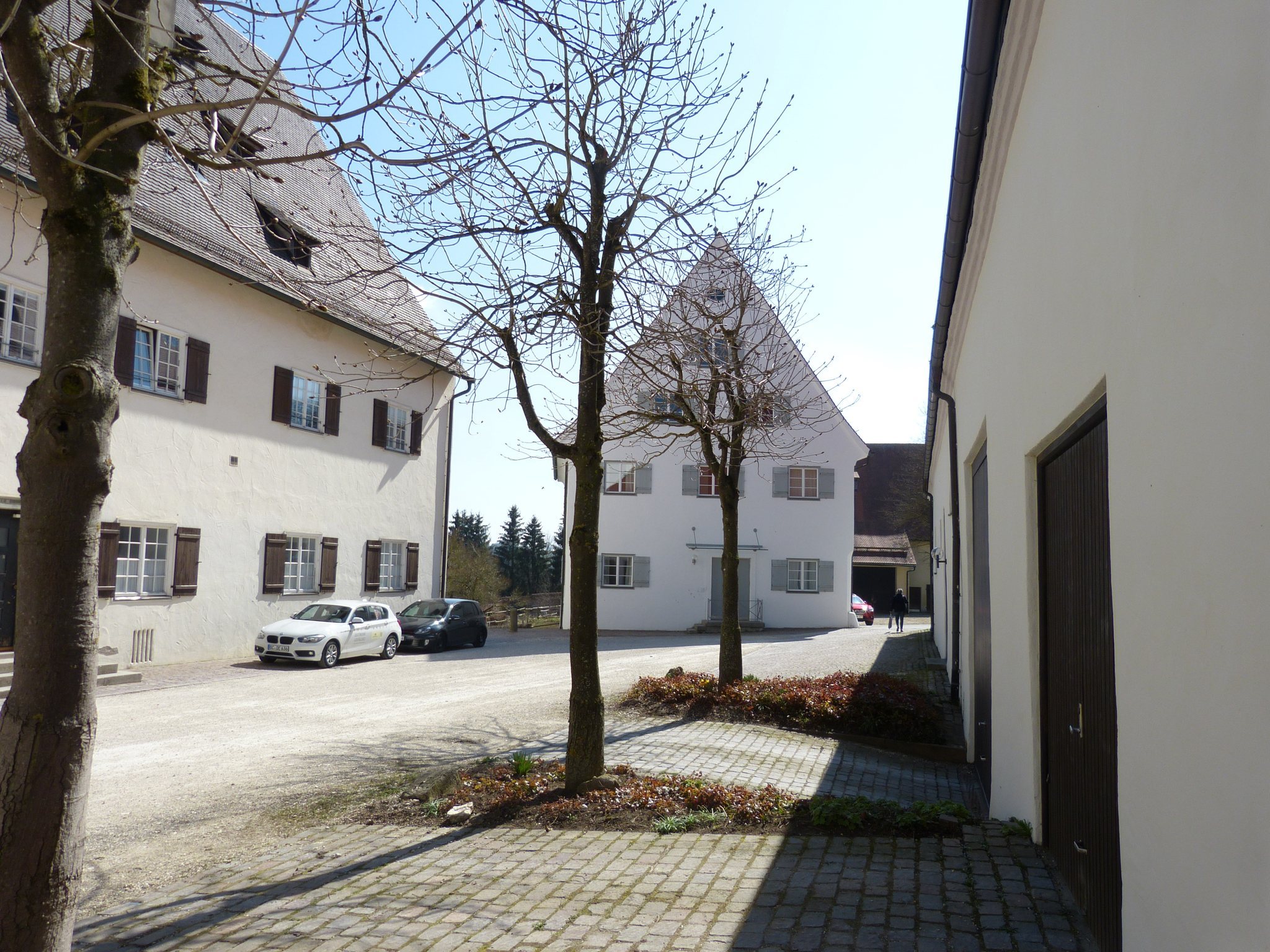
Ochsenhausen preserves a connected group of ecclesiastical and agricultural buildings developed over many centuries. The church, convent buildings, prelature, refectory, historic observatory, granary, cemetery chapel, and other structures remain identifiable parts of the complex. Their surviving forms combine the original Romanesque foundation, late Gothic rebuilding, and extensive Baroque and Rococo alterations.
Church and religious buildings
Early Romanesque church
The earliest monastery church was a three-aisled Romanesque column basilica consecrated in 1093. Before the later rebuilding, the monastic complex consisted of three modest two-storey wings arranged with the church around a regular quadrangle. This earlier monastery is identified with the present small cloister garden. Six heated rooms served the community: a refectory that also functioned as a winter study room, rooms for the prior and provost, an infirmary with a small chapel dedicated to the Holy Spirit, a guest room, and a gatekeeper’s room.
Late Gothic abbey church
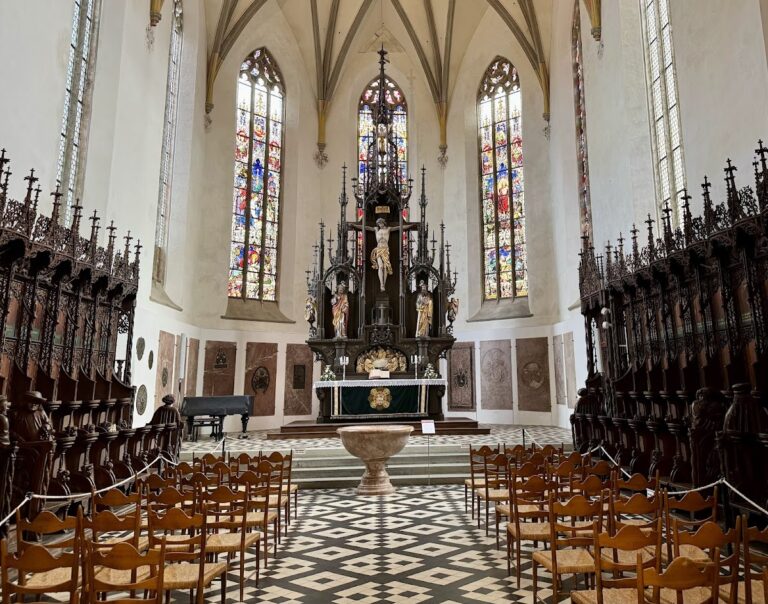
The present late Gothic abbey church was built between 1489 and 1495 under Abbot Simon Lengenberger by Martin Österreicher of Buchberg. Daniel Zehender, the Constance episcopal vicar and titular bishop of Belline in Syria, consecrated it on 29 May 1495. The church contained fifteen altars. Jörg Sürlin of Ulm made its high altar between 1496 and 1499, beginning the work under Lengenberger and completing it under Abbot Hieronymus Biechelberger.
Baroque and Rococo transformation
Baroque alteration began in 1660 with the decoration of the sacristy and continued for more than eight decades. The choir stalls date from 1686, and the tower was raised by two additional storeys in 1698. During the 1720s, Johann Georg Bergmüller and Johann Joseph Anton Huber painted frescoes, while Gaspare Moli supplied stucco work. Joseph Gabler installed a new organ in 1725, and Christian Wiedemann redesigned the facade in the same year.
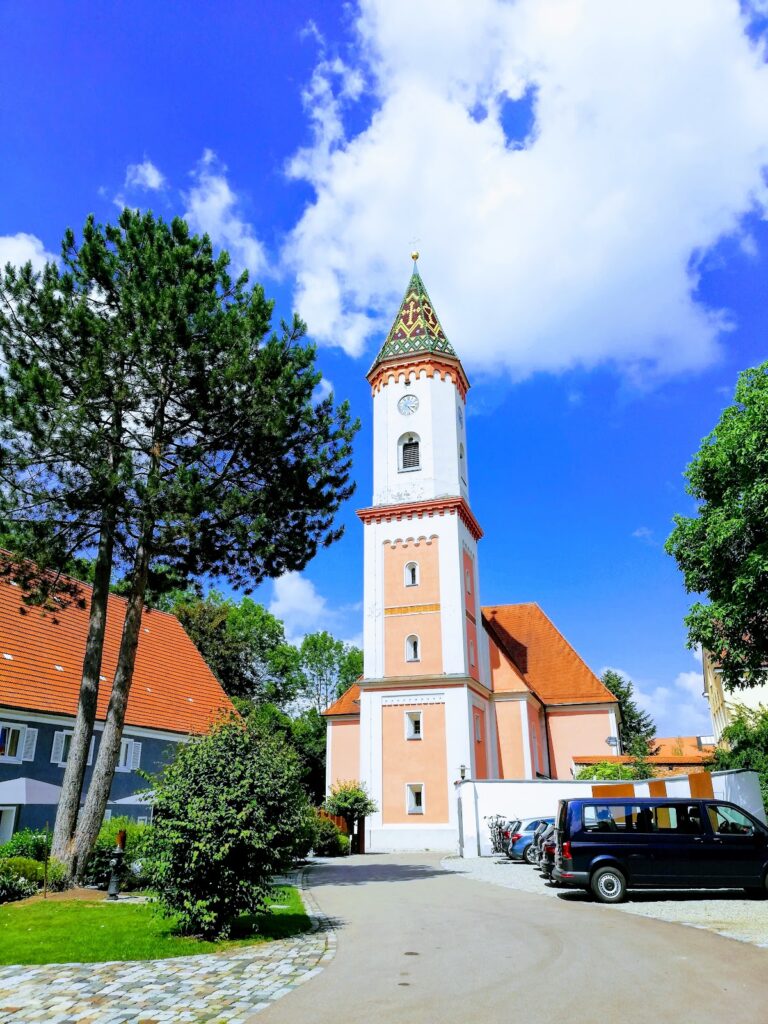
The church’s Rococo high altar includes a painting of the Coronation of the Virgin by Johann Heinrich Schönfeld, incorporated into the altar by Dominikus Hermengild Herberger. The former abbey church now serves as the parish church of Saint George. Since 3 June 2019, it has held the honorary Catholic status of a minor basilica, a designation for a church of particular historical, liturgical, or devotional importance.
Chapel and cemetery buildings
Abbot Michael Ryssel enlarged the church tower and supplied it with larger bells. He also built the Gothic cloister and prelature and erected a Gothic chapel beside the tower dedicated to Benedict of Nursia. The dilapidated Saint Vitus cemetery chapel was rebuilt at the same time. The chapel contained three altars and served as the burial place of the monastery’s founders. Seventeenth-century bells from the complex were requisitioned during the Second World War.
Convent and scholarly buildings
Convent complex and prelature
A new four-wing convent complex was begun under Abbot Johannes Lang between 1615 and 1618. Its later Baroque remodeling involved Johann Michael Fischer, who redesigned the east wing and its staircase, and the sculptor Egid Verhelst the Elder. A guest building was erected under Abbot Simon Lengenberger, and a further guest wing was added in 1650 after the disruptions of the Thirty Years’ War.
The prelature and refectory remain identifiable within the former convent buildings. The former convent now contains the State Youth Music Academy and part of the local secondary school, while the prelature, refectory, and observatory are accessible during guided visits.
Library, chapter house, and observatory
Between 1783–1785 and 1793, the south-eastern pair of towers received an armarium, library hall, chapter house, and observatory. An armarium was a room for storing books and other scholarly materials. The historic observatory remains part of the former convent buildings and preserves the complex’s late eighteenth-century investment in scientific study.
Granary and later-use structures
Fruchtkasten granary
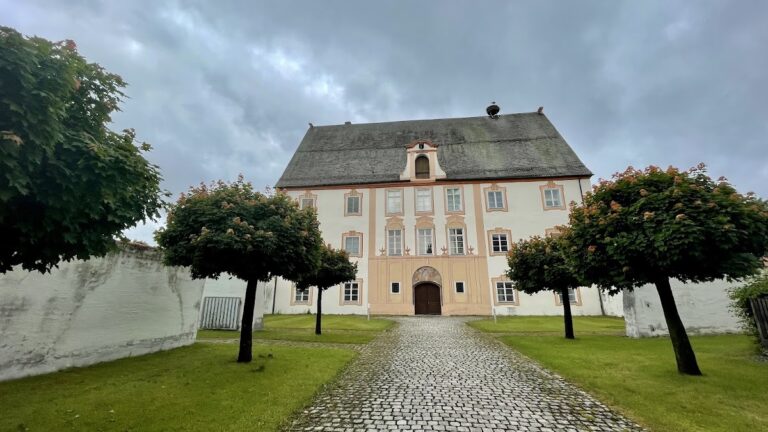
The Fruchtkasten, or granary, was built between 1719 and 1725 under Abbot Hieronymus II Lindau to store agricultural produce from the abbey’s territory. During the Second World War, Henrich Focke built helicopters inside the structure. It was later converted into housing for refugees, and since 1987 it has contained the municipal gallery and an event hall.
Surviving abbey complex
The former convent buildings, church, prelature, refectory, observatory, granary, and associated structures continue to define the physical extent of the former abbey. The monastery museum occupies the south wing of the Princely Building, where the history of the institution is presented within the surviving architectural complex.