Ubud Palace: The Royal Residence of Ubud, Indonesia
Site at a Glance
- Rating
- 4.3
- Popularity
- Very High
- Country
- Indonesia
- Primary era
- Early Modern
- Eras represented
- Early Modern
- Civilizations
- Balinese
- Site type
- Domestic
- Remains
- Palace
On this page7 sections
History
Ubud Palace, officially Puri Saren Agung, is a historic royal complex in Ubud, Indonesia, built in the traditional Balinese architectural style and developed as the residence of Ubud’s ruling family. A royal residence is said to have occupied the site around 1640, while the palace acquired its present form during the rule of Tjokorda Putu Kandel from 1800 to 1823. Members of the royal family continue to live within the complex.
Spiritual and Political Foundations
The wider Ubud area is traditionally connected with Rsi Markandya, a Hindu sage associated with the spiritual foundations of Balinese Hinduism. According to tradition, he came with followers to Campuhan, where the Wos River meets, after receiving a revelation about five precious metals to be buried near the future Mother Temple of Besakih. He established Pura Gunung Lebah, a pura, or Balinese Hindu temple, and is also associated with shared irrigation for Bali’s terraced landscape and with the formation of the banjar, a village council responsible for communal and religious affairs.
Campuhan had been regarded as a spiritually powerful place by Balinese Hindus since its settlement in the eighth century. Pilgrims traditionally went to the river confluence to meditate, bathe, gather holy water, and carry out cleansing and temple rituals. The political setting around Ubud changed as new Balinese kingdoms and royal houses emerged during the seventeenth century. The Gelgel kingdom developed after nobles moved from Java to Bali following the decline of the Majapahit Empire in the fifteenth century, bringing artistic traditions and principles of the caste system with them.
Establishment of Ubud’s Royal House
After Sukawati established a ruling authority, court retainers were sent to secure Ubud in the late eighteenth century. Conflicts between neighboring communities led the king of Sukawati to send his brothers, Tjokorde Ngurah Tabanan and Tjokorde Tangkeban, to Peliatan and Sambahan. They established palaces and sought to control areas affected by the disputes. Ubud Palace developed within this wider process of royal expansion and consolidation.
Damage, Restoration, and Cultural Use
An earthquake in 1917 severely damaged the palace buildings. Since the complex continued to serve as the royal family’s home, it was restored soon afterward. The palace was opened to foreign guests in 1928, and it has remained associated with traditional Balinese dance accompanied by gamelan, an Indonesian percussion-based musical ensemble used for ceremonies and performances.
Remains
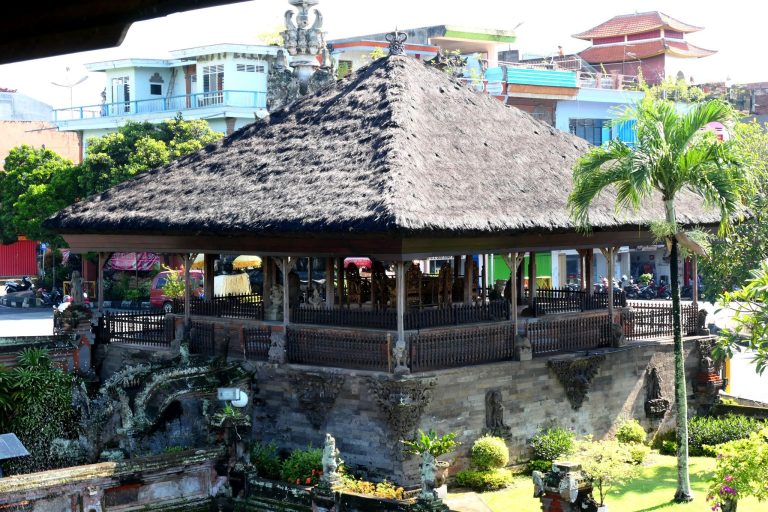
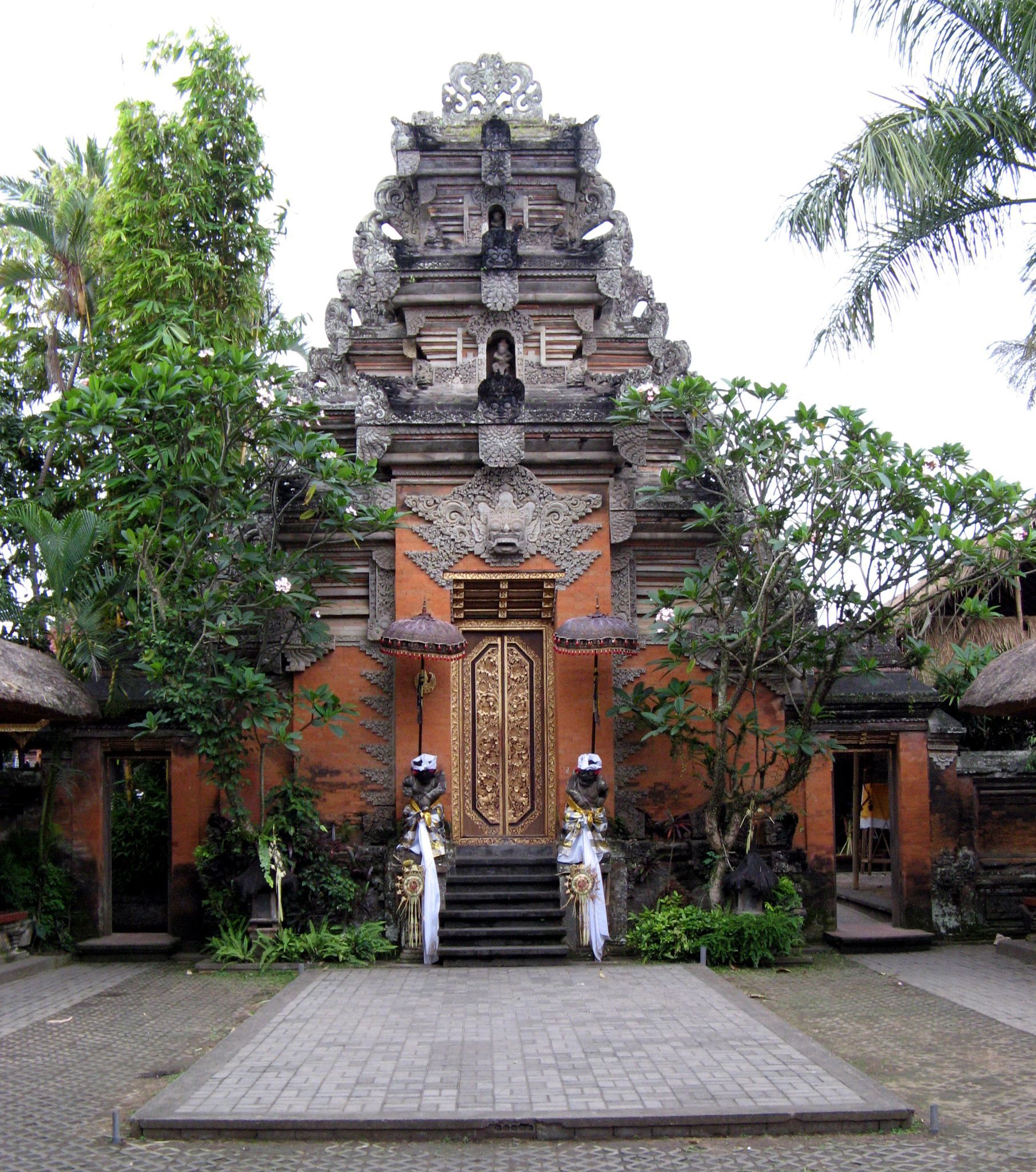
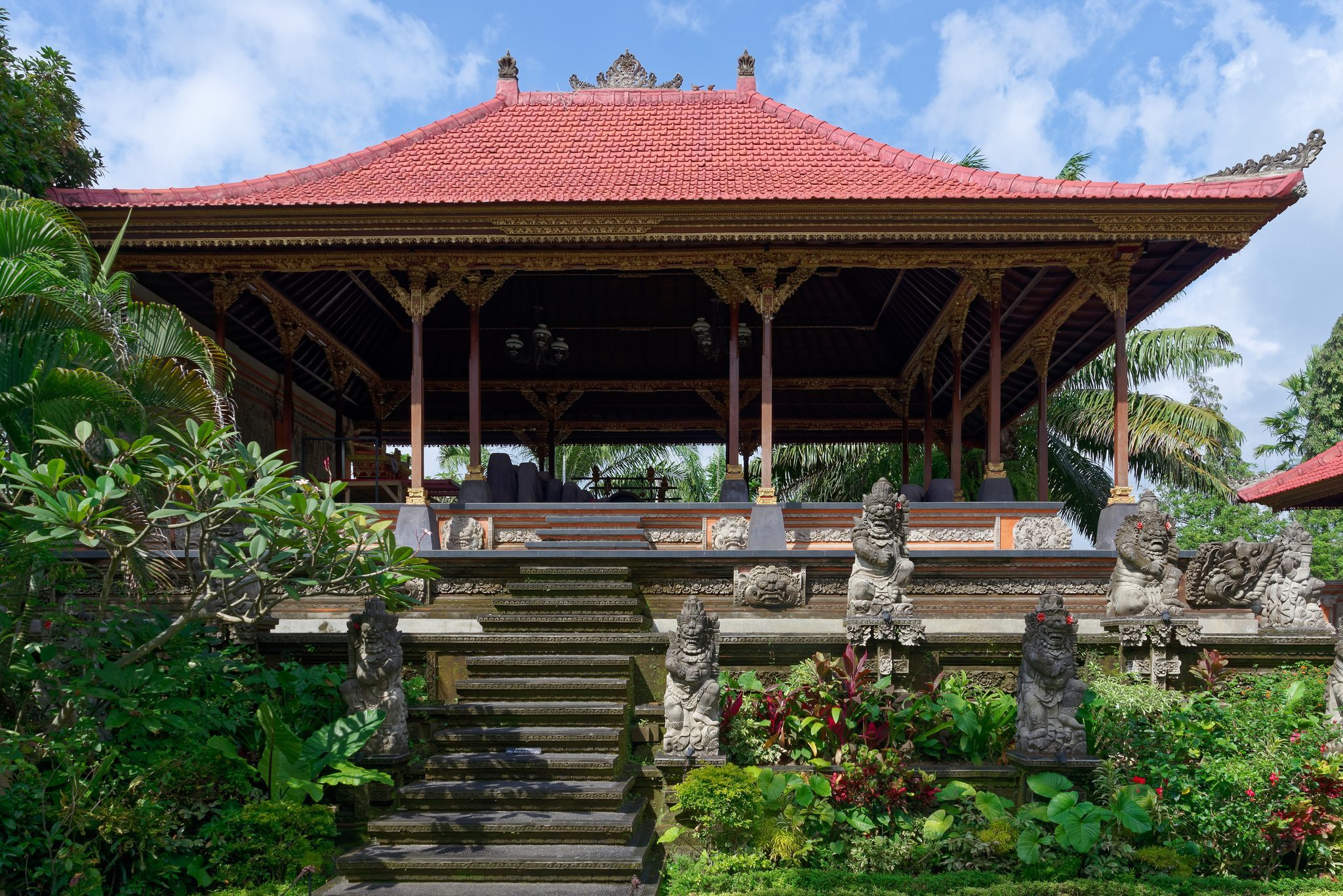
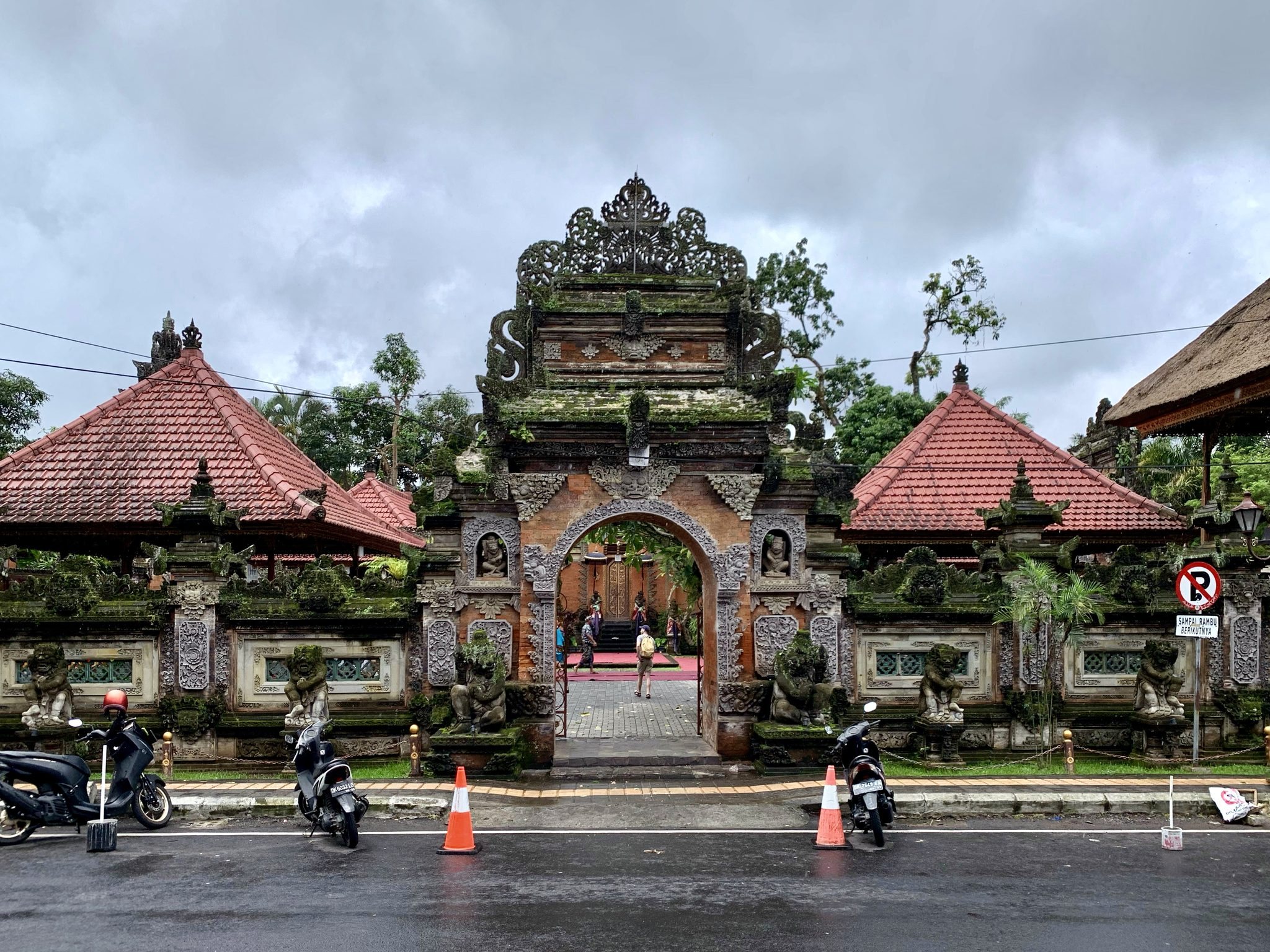
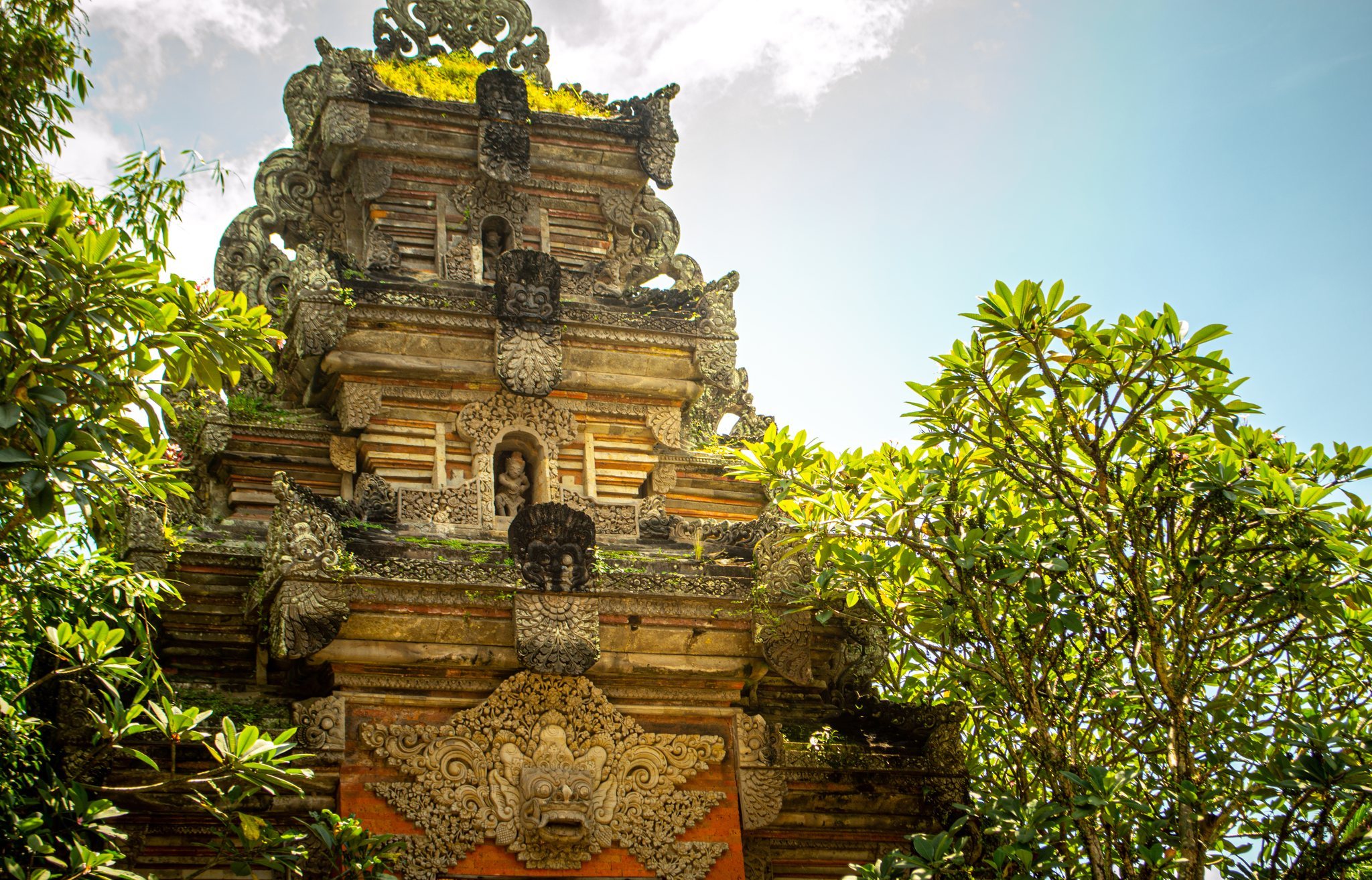
Ubud Palace survives as an enclosed group of buildings arranged in the traditional Balinese architectural style. Its spaces combine royal residence, sacred architecture, and performance areas, while the continued presence of the royal family gives the complex an ongoing residential function.
Enclosure and Sacred Space
The enclosure in front of the palace contains a large Bengal fig tree and also provides living space for members of the royal family. North of the palace stands Pura Marajan Agung, the private temple of the royal family. Together, these areas form part of the complex’s relationship between domestic life and Balinese Hindu practice.
Performance Pavilion and Carving
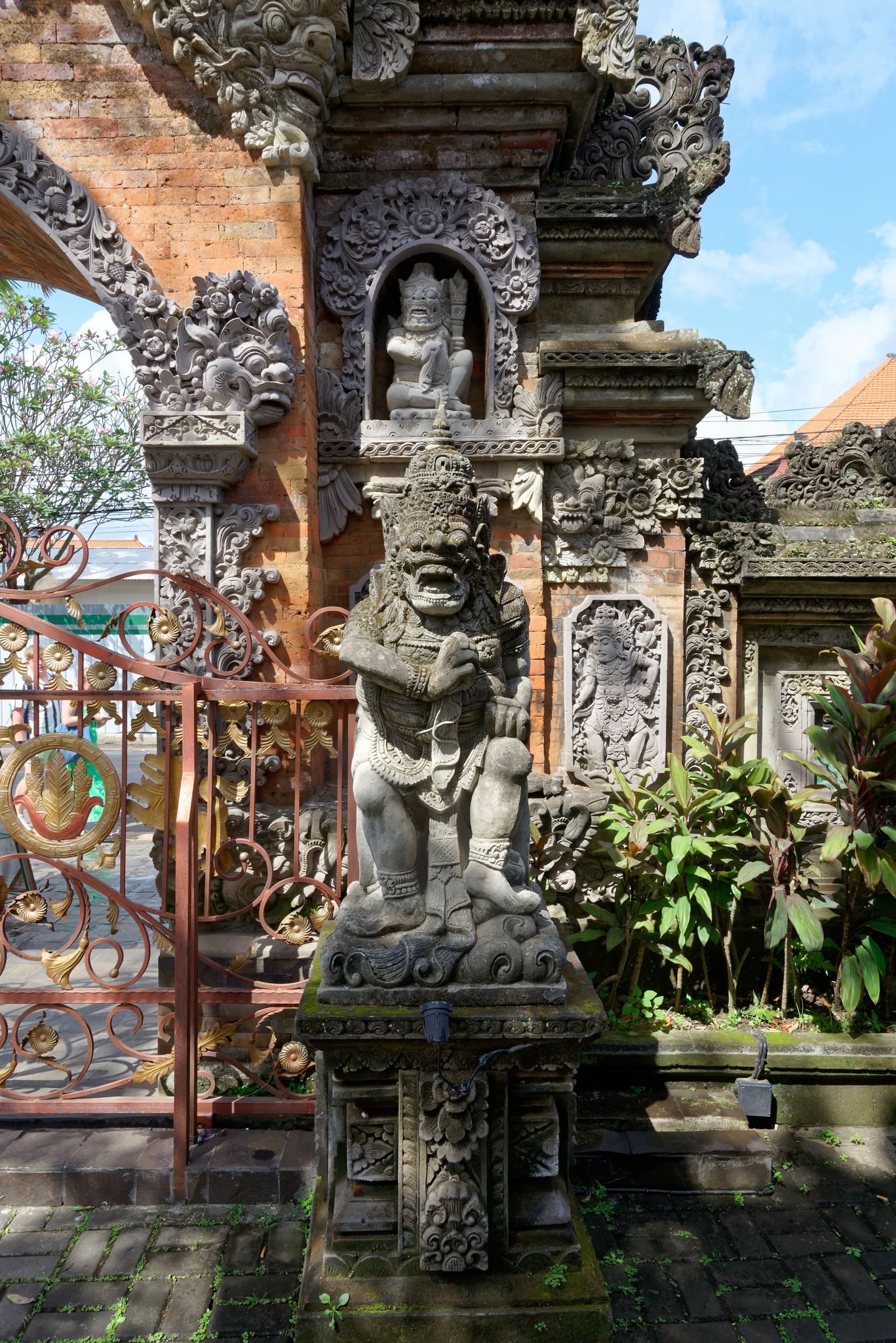
The main pavilion commonly provides the setting for evening dance performances. Its stage has an ornamented angkul-angkul backdrop, a traditional Balinese entrance gate decorated with guardian figures. Many of the palace’s stone carvings were made by I Gusti Nyoman Lempad, a prominent Balinese artist known for stone carving and other artistic works.