Kloster Gotteszell: A Former Cistercian Monastery in Germany
Site at a Glance
- Rating
- 4.9
- Popularity
- Very Low
- Country
- Germany
- Primary era
- Medieval
- External website
- Open
- Eras represented
- Medieval, Early Modern, Modern
- Civilizations
- Duchy of Bavaria, German, Holy Roman Empire, Kingdom of Bavaria
- Site type
- Religious
- Remains
- Monastery
On this page8 sections
History
Kloster Gotteszell in Gotteszell, Germany, was founded in 1285 as a Cistercian monastery, a Catholic religious house shaped by communal discipline and relatively austere traditions. The knight Heinrich von Pfelling established it by donating his manor or farm at Achslach. Dedicated to the Virgin Mary and Saint Anne, the monastery was founded as a daughter house of Aldersbach within the Cistercian institutional lineage of Morimond and Ebrach, and belonged to the Diocese of Regensburg.
Foundation and Growth
Heinrich II of Rottenegg, Bishop of Regensburg and Heinrich von Pfelling’s brother-in-law, formally confirmed the foundation in 1286. This act removed the monastery from the parish association of Geiersthal. The Bavarian dukes Ludwig III, Stephan I, and Otto III later made substantial donations, including a castle and the market settlement of Ruhmannsfelden.
Gotteszell became an abbey in 1320. Berthold, who had previously administered the monastery, became its first abbot. In 1345, Emperor Ludwig IV granted the institution a charter freeing it from the authority of local officials. During the fifteenth century, Gotteszell became a center of devotion to Saint Anne, whose cult was spreading widely in Germany. The community nevertheless declined, and by the end of the century only one monk remained.
War, Renewal, and Baroque Transformation
Abbots Achatius Einspeck, who led the monastery from 1596 to 1611, and Michael Kössler, who followed him until 1638, restored its strength. During the Thirty Years’ War, the conflict that devastated much of central Europe between 1618 and 1648, a fire on 24 March 1629 severely damaged the church and monastic buildings. Swedish forces invaded Gotteszell in 1633 and 1634, capturing, torturing, and mutilating the abbot. They occupied the monastery again briefly in 1641.
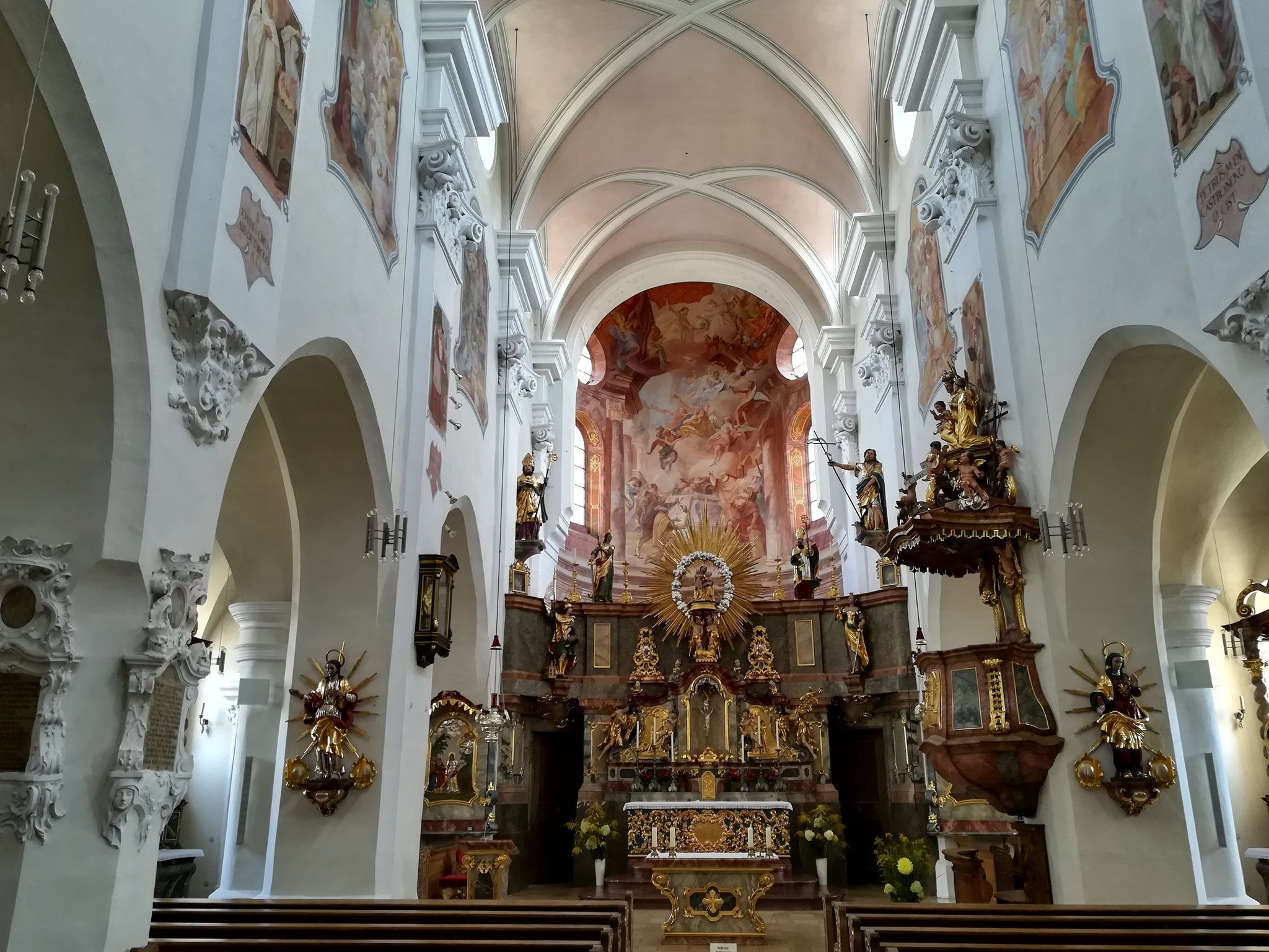
A period of intellectual and institutional prosperity followed under Abbot Gerhard Hörger. Under Abbots Bonifaz Hildebrand and Wilhelm I Pertl, the monastery strongly supported natural science, philosophy, and theology. In 1729, Abbot Wilhelm II Grafsturm commissioned new Baroque decoration for the church. Baroque art, associated with dynamic forms, elaborate stucco, fresco painting, and dramatic religious imagery, included an Assumption of the Virgin by Cosmas Damian Asam. Grafsturm’s successors continued the monastery’s opposition to the anti-monastic policies of the Bavarian government.
Dissolution and Later Use
Bavaria secularized and dissolved Gotteszell on 24 March 1803. The former abbey church became the parish church of Saint Anne, while the former monastic hall was converted into a primary school and the former abbot’s residence became the parish house. Dilapidated parts of the complex were demolished, and the remaining buildings passed into private ownership.
The former monastery and its dissolution later provided the setting for Maximilian Schmidt’s 1895 story Der Prälatenschatz, or “The Prelate’s Treasure.” Its plot concerns treasure hidden during the abbey’s dissolution.
Remains
Parish Church of Saint Anne
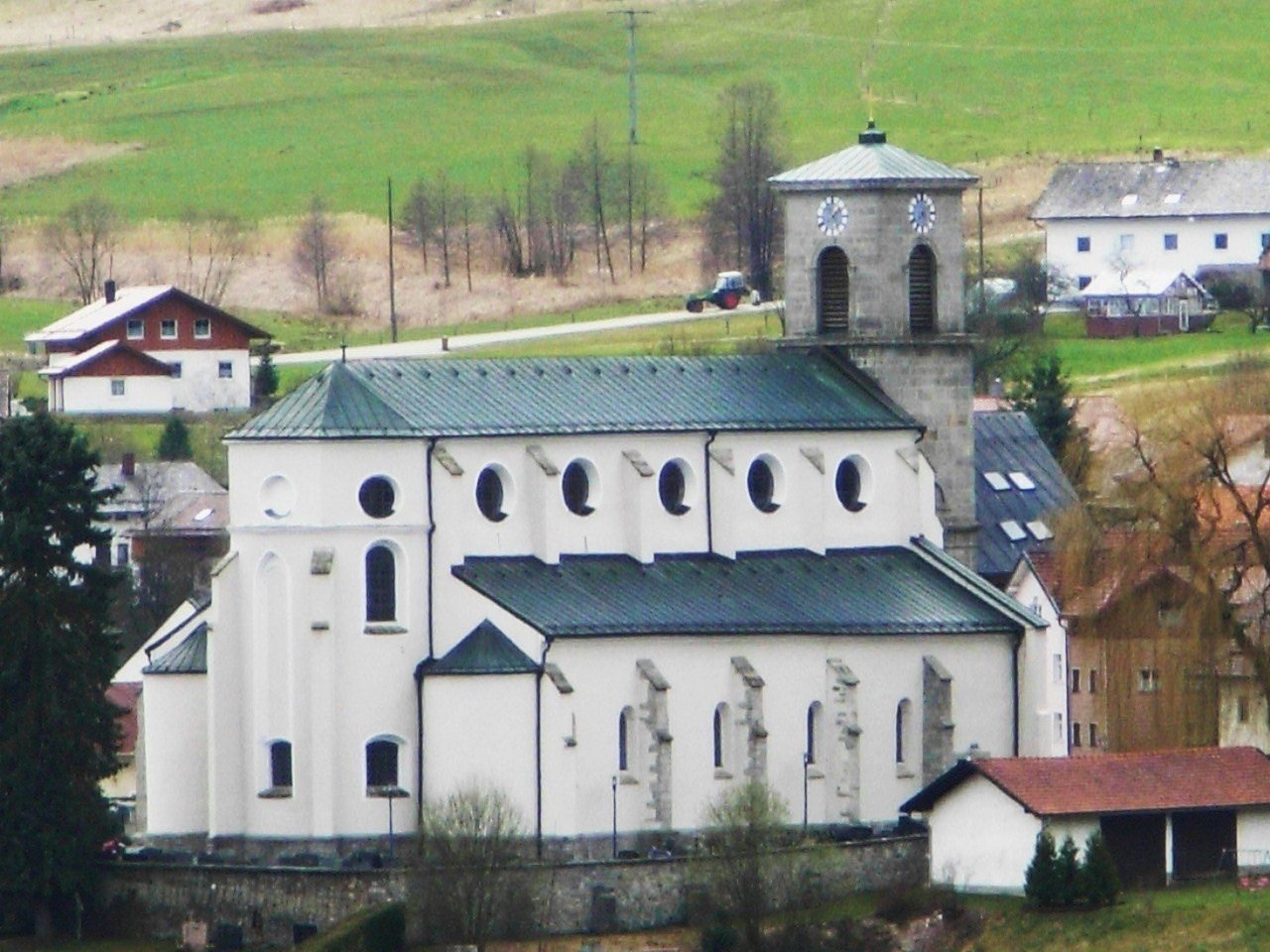
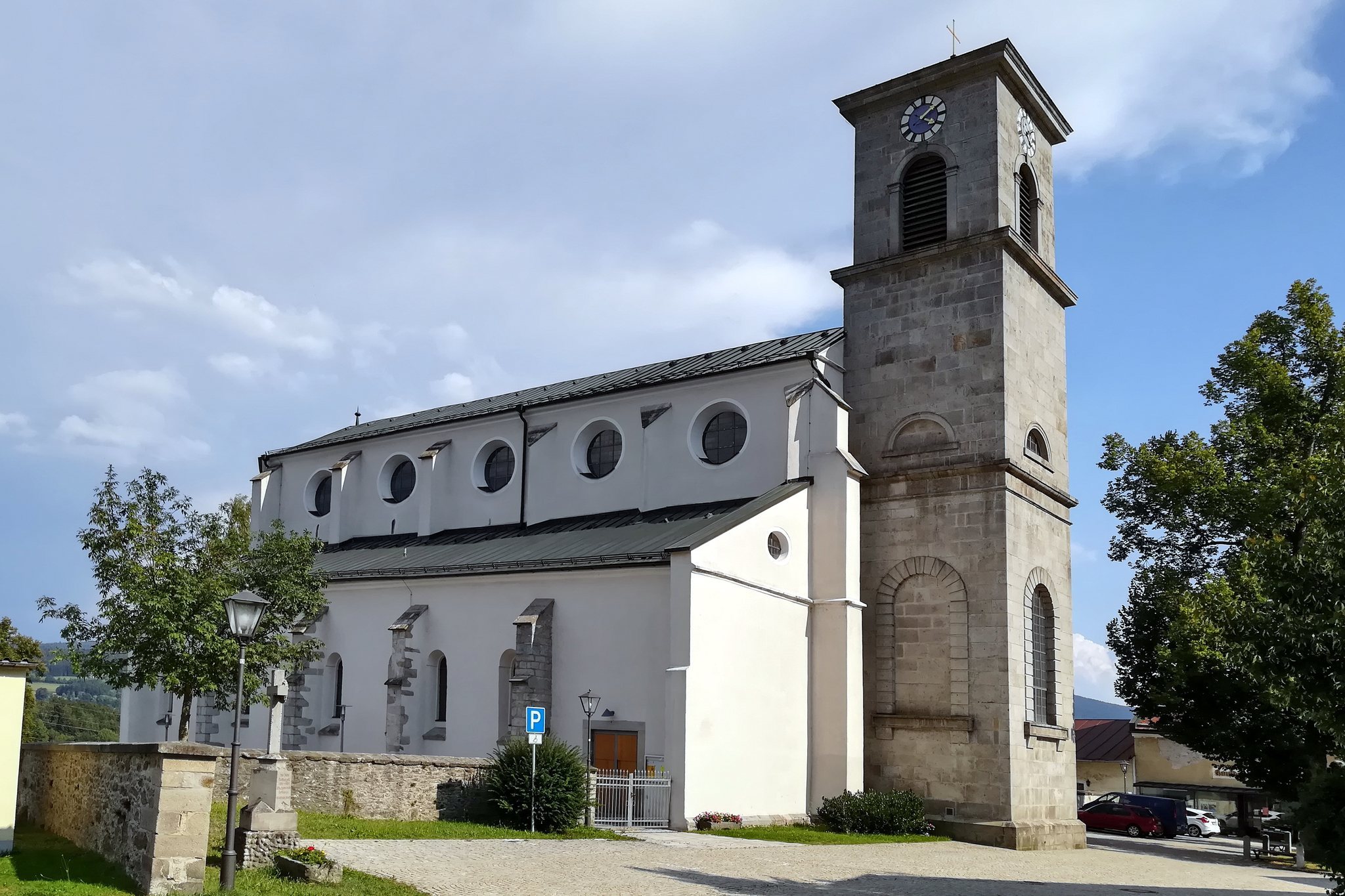
The former abbey church is a three-aisled basilica, meaning a church with a central nave and two side aisles, built without a transept. Construction of the larger church began around 1339. After the fire of 24 March 1629, it was rebuilt through a campaign repeatedly interrupted by military events. From 1729, the Asam brothers reshaped the interior with Baroque stucco and fresco decoration. A high altar from the seventeenth century contains the devotional image Anna Selbdritt, showing Saint Anne with the Virgin Mary and the infant Jesus as three generations of the Holy Family. The tabernacle by Joseph Deutschmann has two side reliefs and two adoring angels. The pulpit and several side altars also belong to the Baroque remodeling.
Later Alterations
A major fire in 1830 destroyed parts of the church and the monastic buildings. The west tower was subsequently built from granite blocks. The interior was refurbished in 1889, when parts of the Baroque furnishings were removed. Wall paintings from that refurbishment remain. The fresco of the Assumption of the Virgin on the east wall was overpainted and was not uncovered again until 1940.
Monastic Buildings and Calvary
Only the southern monastic wing and parts of the western wing survive. Beside the gateway stands a polygonal oriel tower carried on four columns and dating from the later seventeenth century. A Calvary complex lies west of the church. Such a complex is a devotional arrangement commemorating Christ’s Passion through images or stations associated with the events leading to the Crucifixion.