Babītes Hillfort: A Medieval Fortified Site in Latvia
Site at a Glance
- Rating
- 4.3
- Popularity
- Very Low
- Country
- Latvia
- Primary era
- Medieval
- External website
- Open
- Eras represented
- Medieval
- Civilizations
- Unclassified
- Site type
- Military
- Remains
- Castle
On this page6 sections
History
Babītes hillfort is a medieval fortified site in Latvia, located in Jūrmala near the eastern end of Babīte Lake. Before the thirteenth century, the area belonged to the Semigallian territory of Upmale, while the Lielupe waterway and the Semigallian Road connected the site with Zemgale. The hillfort first served as a fortified port before becoming the location of a castle during the Livonian Crusades, the thirteenth-century military and missionary campaigns that established German-led Christian control in the eastern Baltic.
Semigallian port and the castle of Babate
The site occupied a strategically valuable position beside the Lielupe. After the Battle of Mežotne in 1219, the Semigallians lost control of the waterway and abandoned their fortified port there. Afterward, Bernhard of Lipe, the first bishop of Selonia, built a wooden castle at the site. It was known as Babate or Holy Mary Castle. A bishopric was a church territory governed by a bishop, who also exercised political and territorial authority.
When Bernhard died in 1224, the castle passed to Lambert, Bishop of Selonia and Zemgale. The treaty of 16 March 1226 transferred the territory on the lower Lielupe’s right bank to Riga. Riga paid 37 silver marks for Babate, or Holy Mary Castle, which had been taken from the Bishop of Zemgale, and helped construct a new castle on the opposite bank of the river. In 1228, during a Semigallian and Curonian campaign against Daugavgrīva, the fortress at Babīte was possibly destroyed.
Later conflicts and protection
After the Livonian Order, a medieval Catholic military order that governed territory in the eastern Baltic, collapsed in 1562, the territories that now form Babīte Municipality came under Riga and Vidzeme. The Lielupe’s left bank belonged to the Duchy of Courland, an early modern state centred in present-day western Latvia. The river became an international boundary, and disputes involving the Lielupe, Babīte Lake, and connected waters continued between the Duke of Courland and Riga until the eighteenth century, at times leading to armed clashes.
The hillfort gained the alternative name Polish Hill after a Polish-Lithuanian army camped there in 1622 during the Polish-Swedish War. The camp was intended to hinder Swedish movement toward Jelgava. Babītes hillfort is now a state-protected archaeological monument of national importance, designated protection object no. 2083 in 1998. Under the present territorial division, it is the only archaeological monument in Jūrmala. Its name comes from Babīte Lake. A separate protected archaeological monument called Baznīckalns lies nearby in Egļuciems, within Mārupes Municipality.
Remains
The hillfort mound
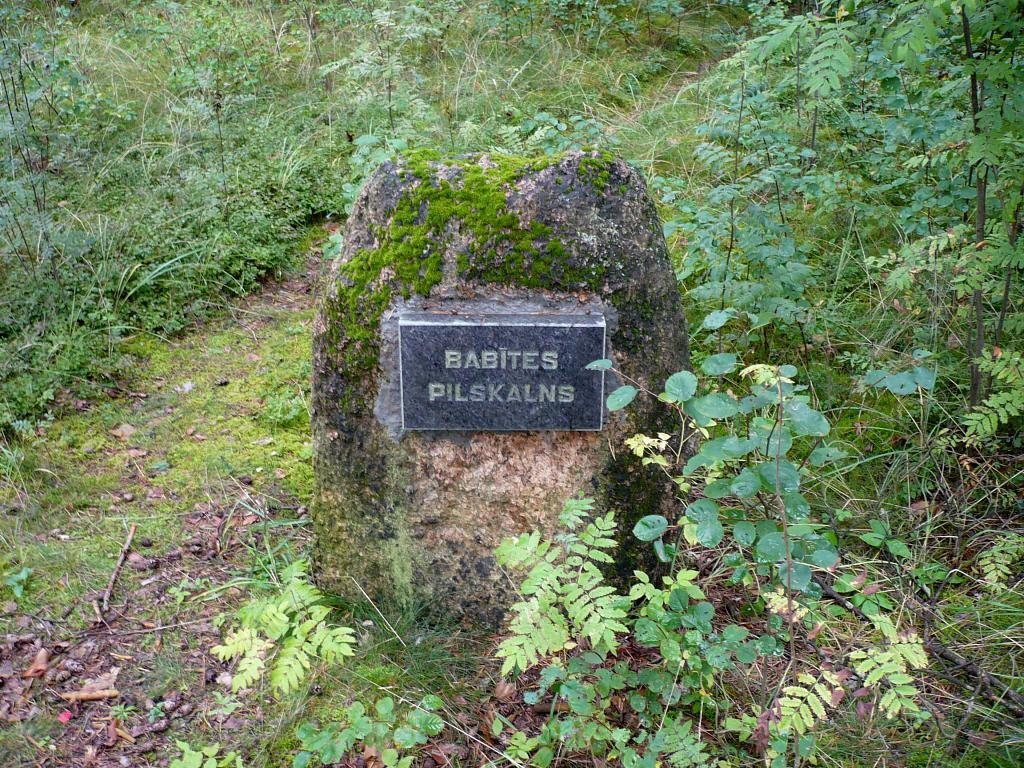
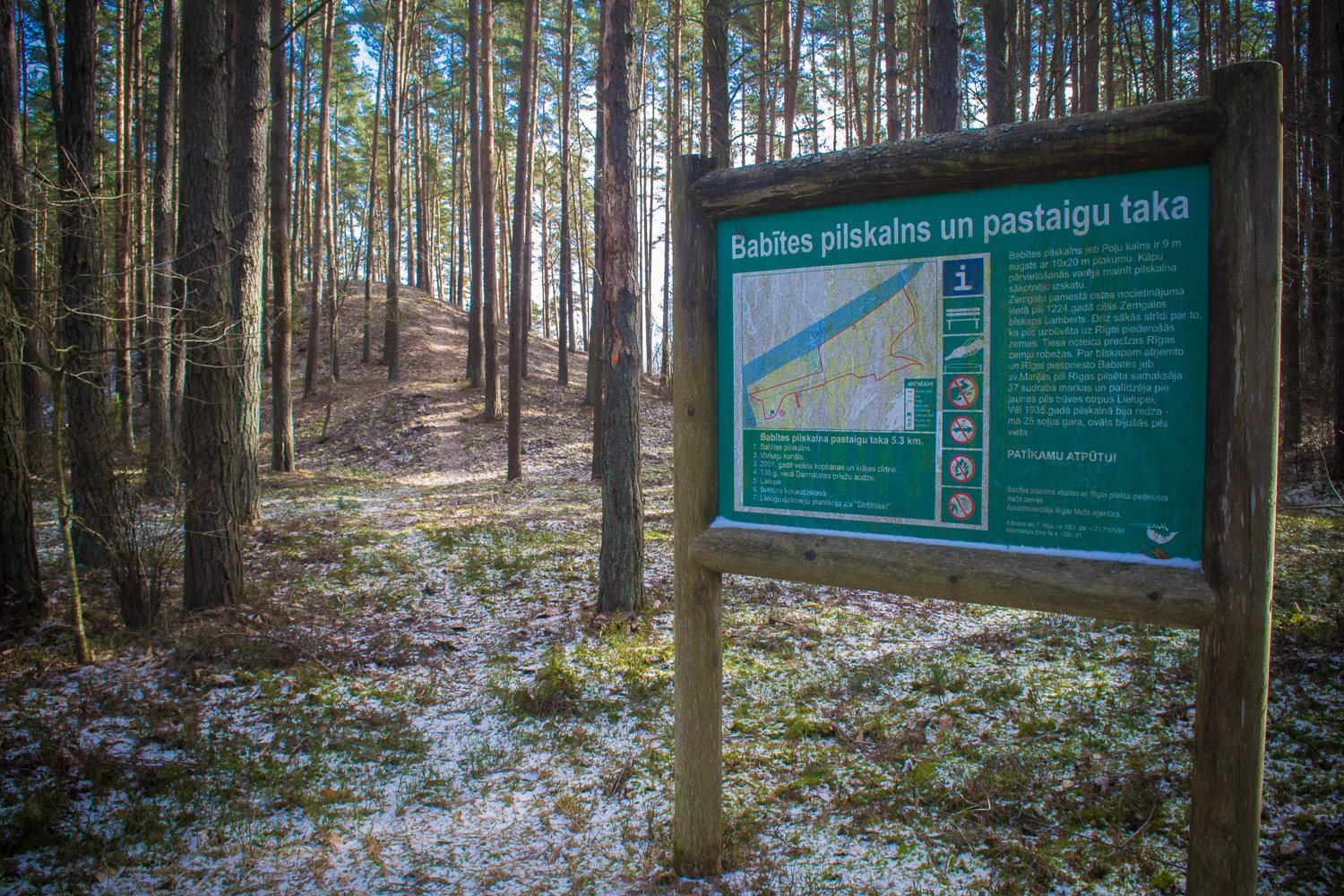
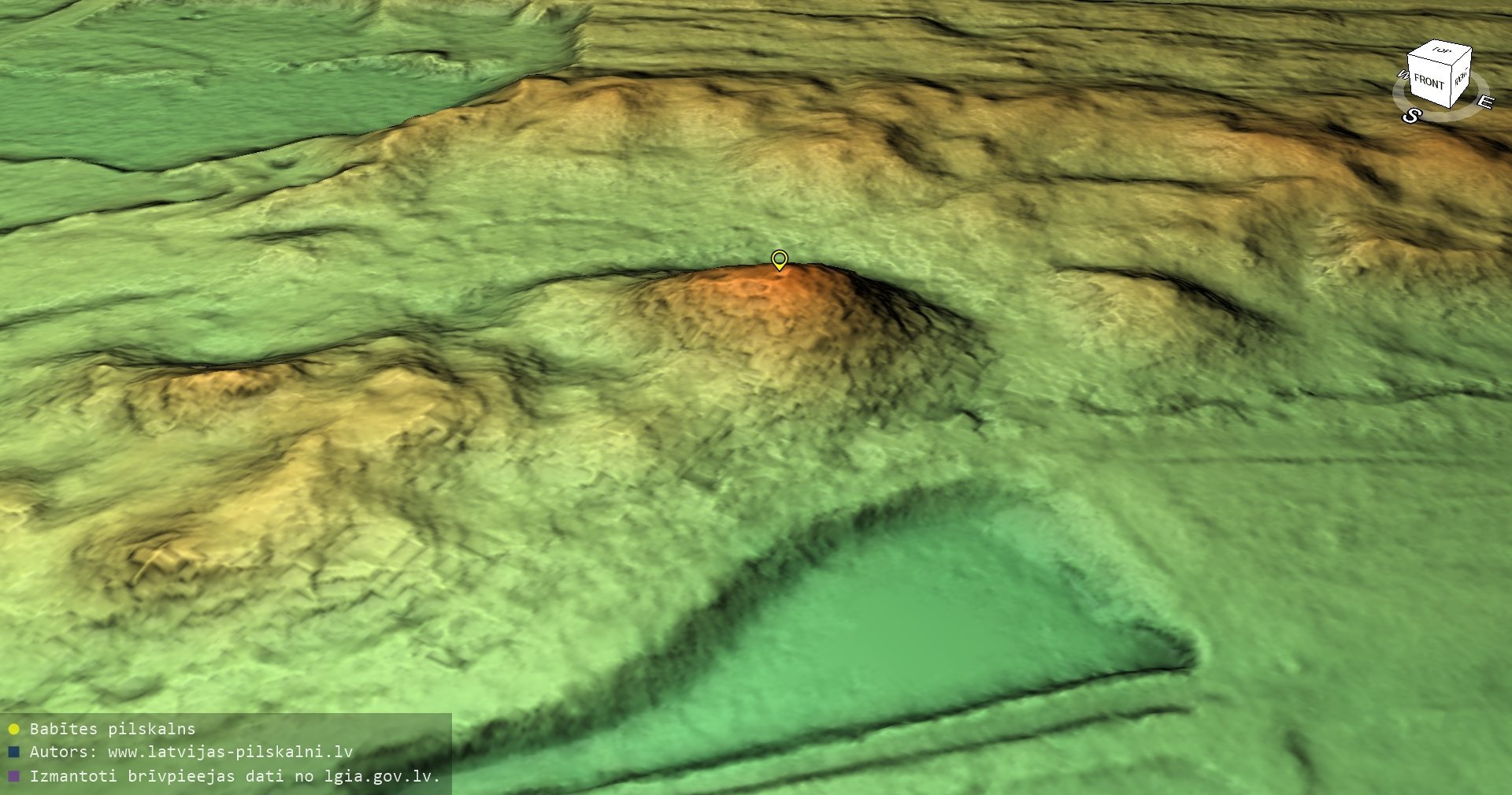
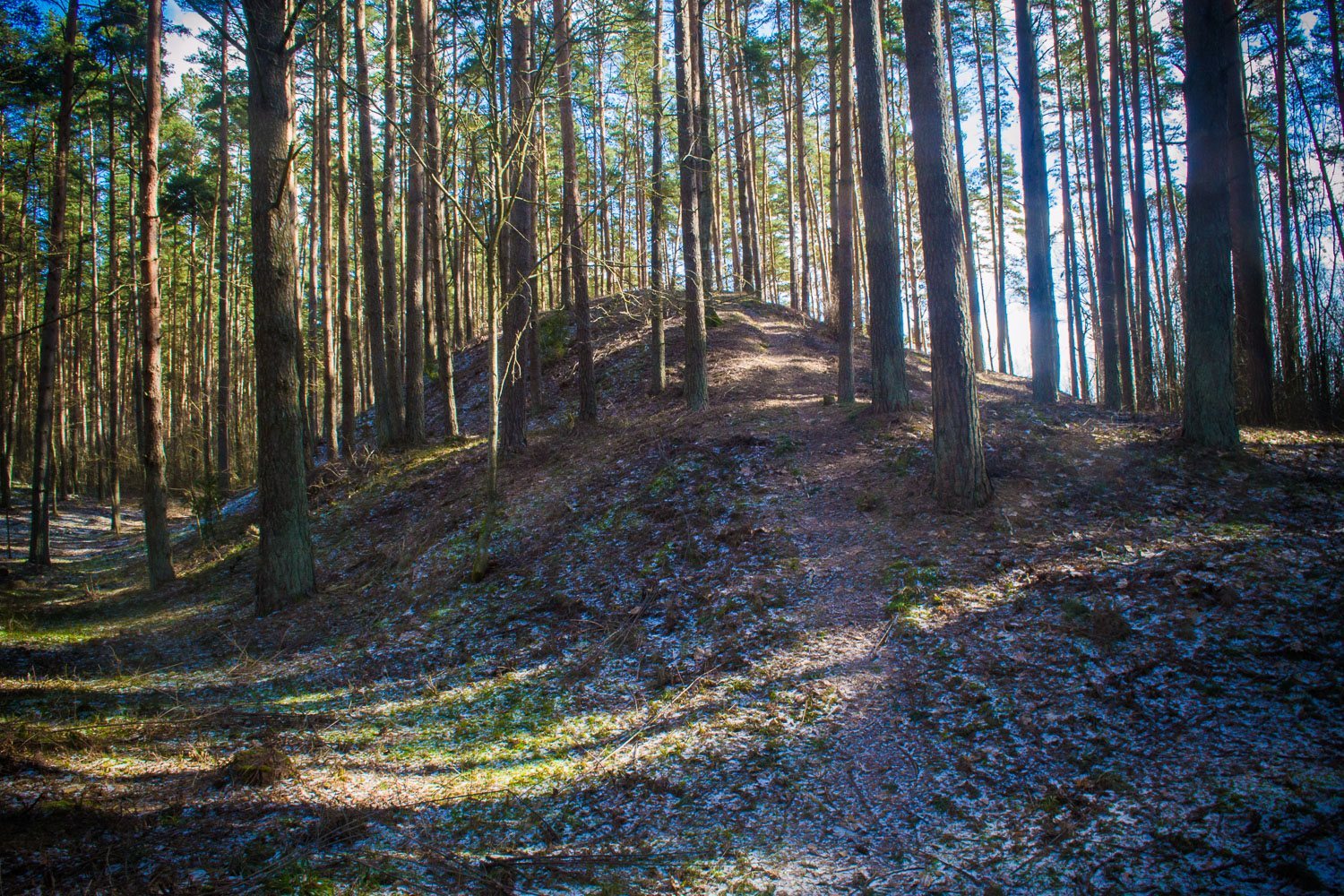
Babītes hillfort is a mound about 9 metres high, with a summit measuring approximately 10 by 20 metres. It stands on the right bank of the Lielupe, at the eastern end of Babīte Lake, between the Jūrmala bypass road and the lake. Movement of the surrounding dunes may have changed the mound’s original appearance. The position reflects the site’s earlier role beside the river and lake system, which connected the fortified port with important routes through the region.
Castle remains
The castle erected after 1219 was built of wood on the earlier fortified-port site. In 1935, an oval area interpreted as the former castle location was reportedly visible on the hillfort. It measured approximately 25 paces in length and provides a physical indication of the castle area within the mound.