Gößweinstein Castle: A Medieval Administrative Fortress in Germany
Site at a Glance
- Rating
- 4.4
- Popularity
- Medium
- Country
- Germany
- Primary era
- Medieval
- External website
- Open
- Eras represented
- Medieval, Modern
- Civilizations
- Holy Roman Empire
- Site type
- Military
- Remains
- Castle
On this page8 sections
History
Gößweinstein Castle is a medieval hilltop fortress in Gößweinstein, Germany, first recorded in 1076 and associated with the Bamberg ecclesiastical estate. Its name probably derives from Count Gozwin, who was killed in 1065 after invading territory belonging to the Bishop of Würzburg. The castle’s early role as a stronghold is suggested by the imprisonment there of Burchard II, Bishop of Halberstadt, by Emperor Henry IV during the Saxon Rebellion.
Bamberg Administration
From the time of Otto of Bamberg, a medieval bishop of Bamberg, Gößweinstein Castle formed part of the bishopric’s possessions. Between 1348 and 1780, it was the seat of a Bamberg vogtei, an administrative jurisdiction overseen on behalf of an ecclesiastical lord. The castle consequently served as a local administrative center for Bamberg’s surrounding holdings.
Destruction and Rebuilding
The castle was destroyed during the Peasants’ War in 1525, a widespread uprising in the German lands, and was rebuilt afterward. It suffered a second destruction during the Second Margrave War in 1553 and was again reconstructed.
State Ownership and Later Remodeling
When the Bishopric of Bamberg was secularized in 1803, its territories and property passed to the Bavarian state. The state sold the castle in 1875 to Pauline Rabeneck, a landowning widow from the Aspach estate near Uffenheim. Baron Edgar von Sohlern acquired it in 1890 and remodeled parts of the complex in the Neogothic style. In 2013, Michael Baron von Sohlern bequeathed the castle to the Layritz family of Gößweinstein.
Gößweinstein Castle is listed as a Bavarian architectural monument under number D-4-74-129-10. It may also have influenced Richard Wagner’s conception of the Grail Castle in Parsifal, his opera based on the Grail legend.
Remains
Hilltop Complex
Overall Layout
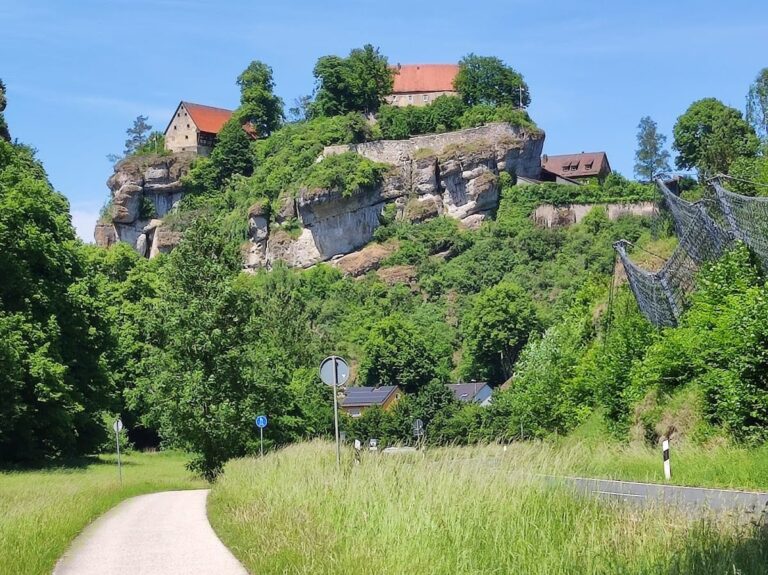
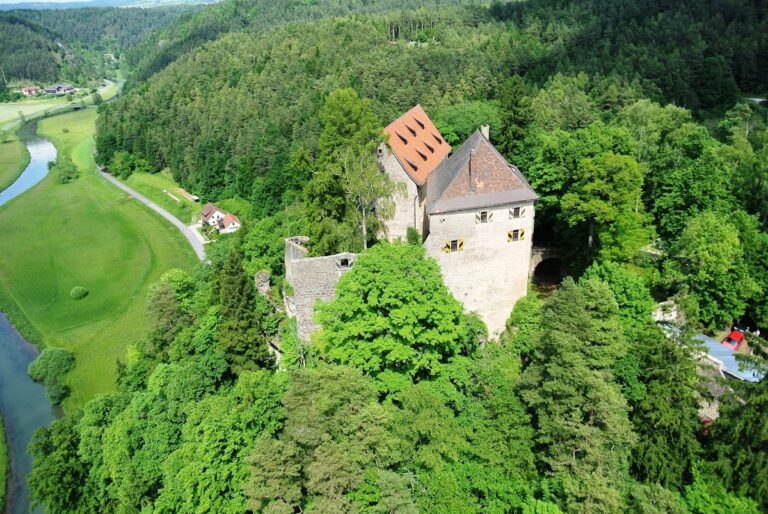
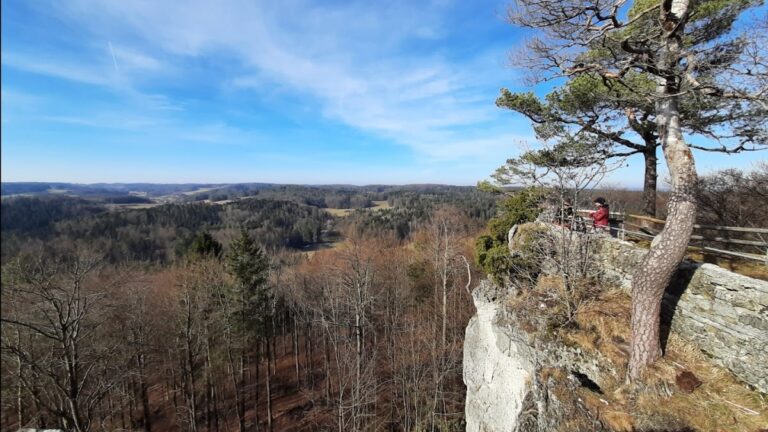
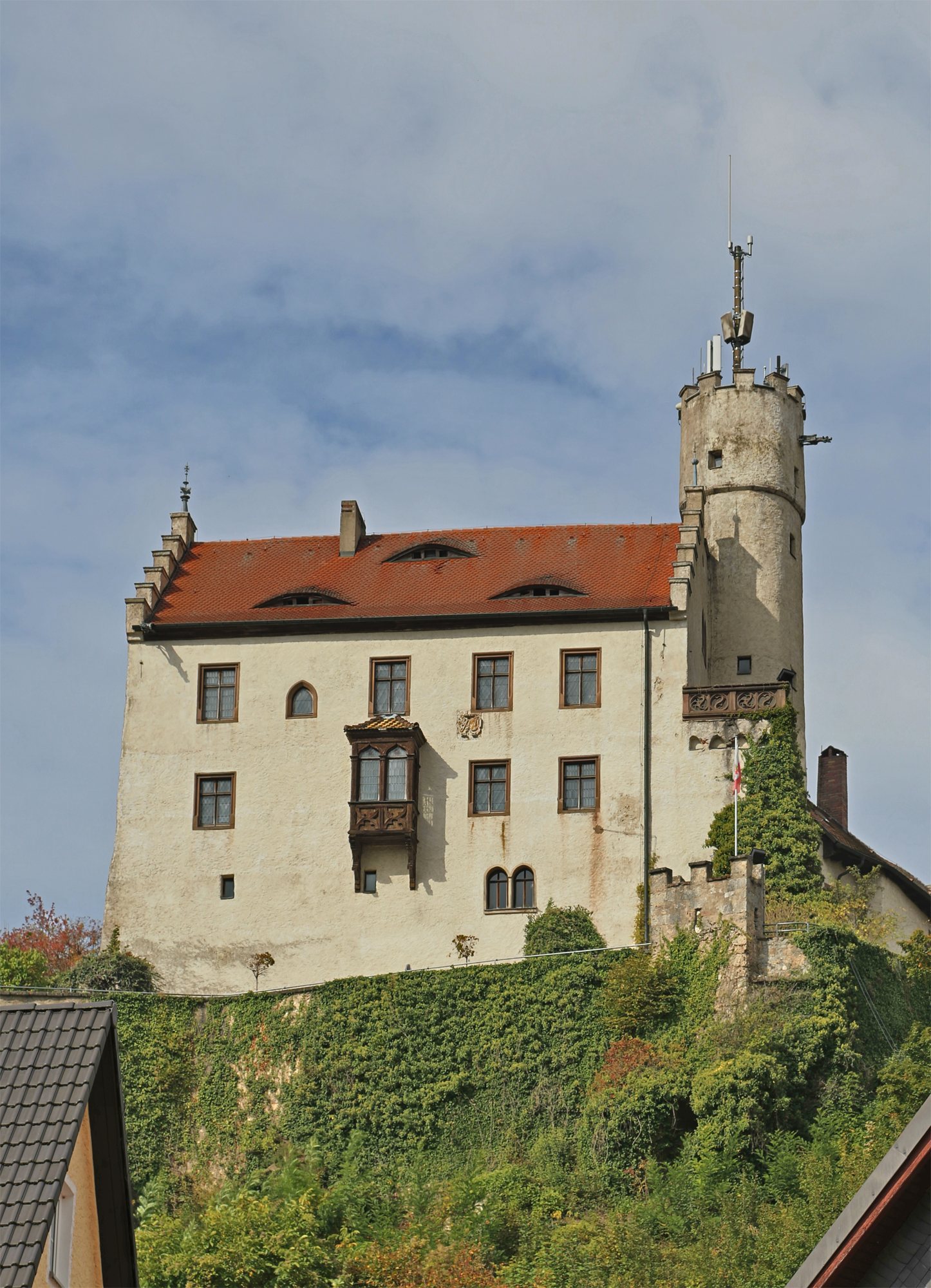
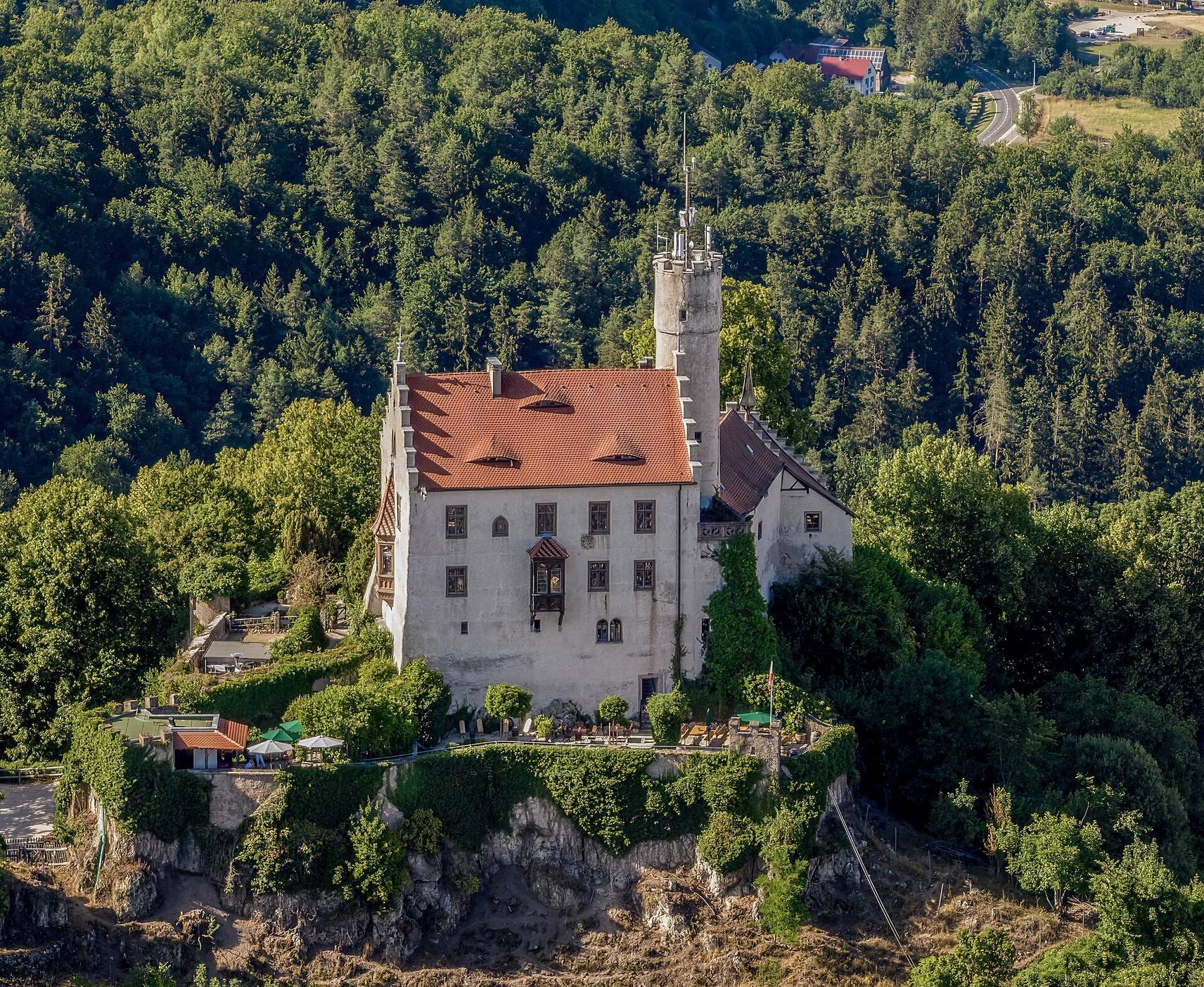
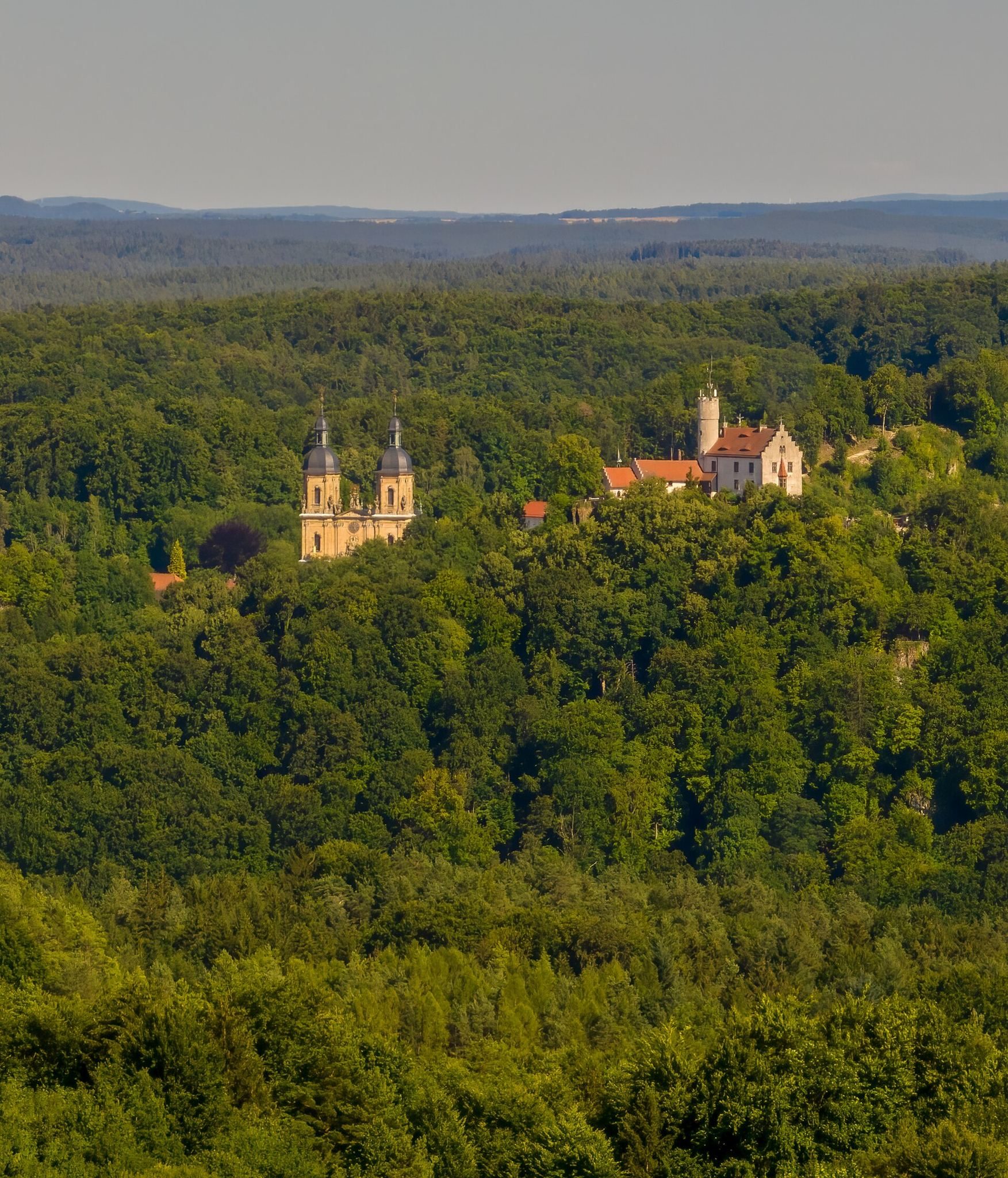
The largely preserved castle occupies a summit above Gößweinstein and the River Wiesent. Its surviving fabric combines the medieval hill-castle complex with alterations made in the Neogothic style after 1890. The castle now houses a medieval museum, and a beer garden and terrace form part of the present complex, with the terrace overlooking the Wiesent valley and Gößweinstein.
Castle Chapel
The surviving castle chapel contains Late Gothic figures. It forms part of the preserved complex and retains material evidence of the castle’s religious and architectural history.