St James’s Church, Piccadilly: An Anglican Parish Church in London
Site at a Glance
- Rating
- 4.6
- Popularity
- Medium
- Country
- United Kingdom
- Primary era
- Early Modern
- External website
- Open
- Eras represented
- Early Modern
- Civilizations
- English
- Site type
- Religious
- Remains
- Church
On this page12 sections
History
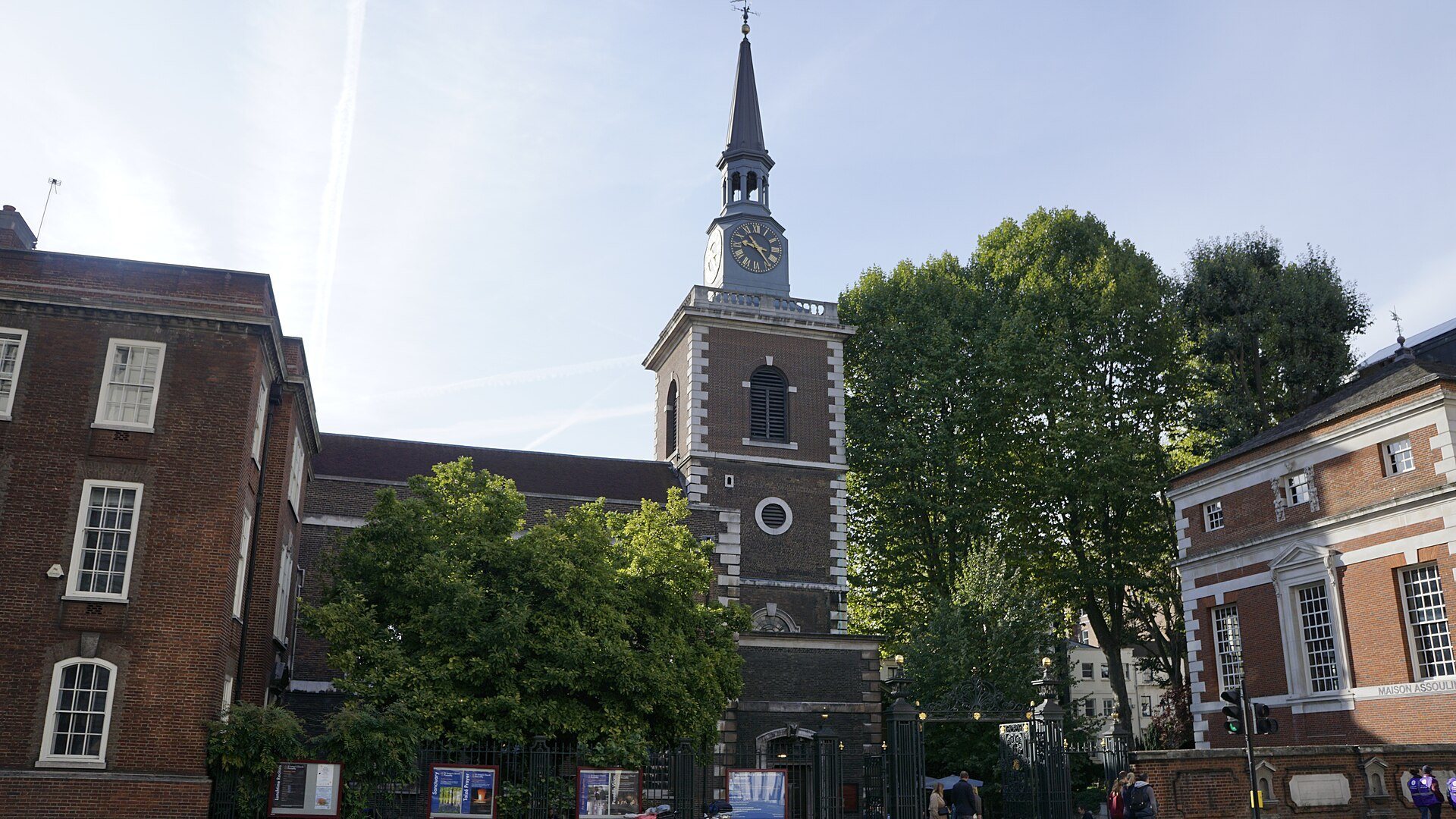
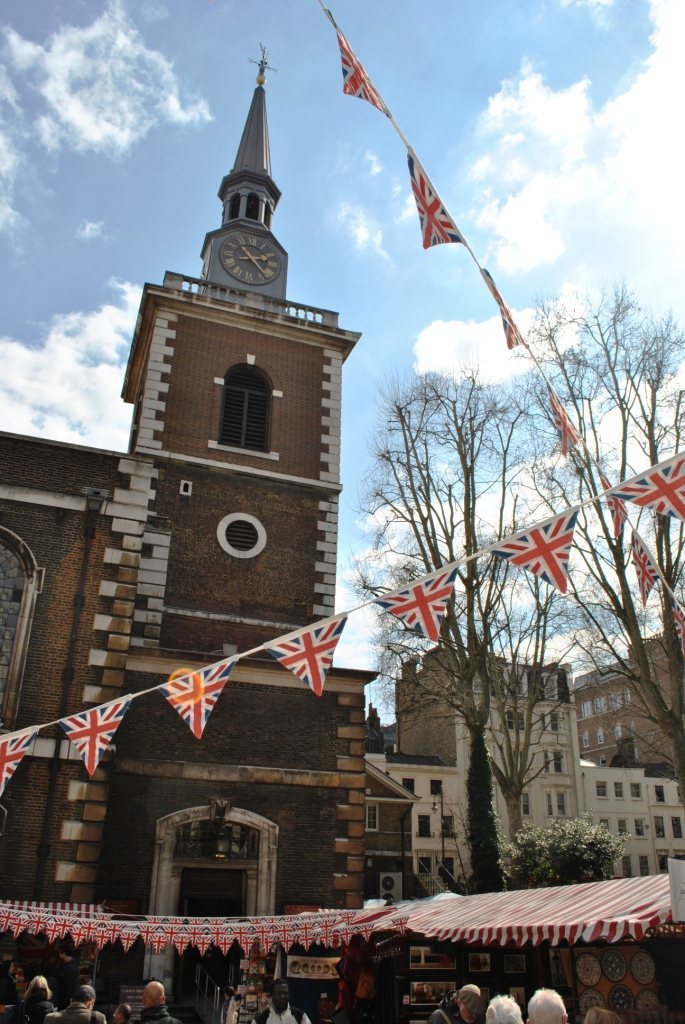
St James’s Church, Piccadilly, is an Anglican parish church in London, United Kingdom, designed by Christopher Wren in the English Baroque style and constructed in 1676. It was established on the south side of Piccadilly, then beyond the built-up centre of London, and became a parish church within the Church of England, the legally established Anglican church in England.
Foundation and consecration
In 1662, Henry Jermyn, 1st Earl of St Albans, received land for residential development in the area. He reserved a site and £7,000 for a parish church and churchyard. Wren was appointed architect in 1672, and the completed church was consecrated on 13 July 1684 by Henry Compton, Bishop of London. The parish of St James was created the following year.
The church is also known as St James’s Church, Westminster, and St James-in-the-Fields. Its position reflected the growth of London westward, as new housing developed around what had previously been an outlying area. The parish church provided a religious centre for the expanding district and later became associated with the cultural life of the capital.
Parish life and musical associations
The church’s baptismal register includes several notable figures. Joseph Banks was baptised there on 13 February 1743, William Blake in 1757, and Ottobah Cugoano, baptised as John Stuart, on 20 August 1773. Cugoano was an author and campaigner against slavery, and a permanent artwork commemorating his baptism was installed in the church in 2023.
St James’s also developed a distinguished musical history through its organ. Henry Purcell and John Blow played the newly installed instrument, while Raphael Courteville became organist in 1691 on Purcell’s recommendation. George Frideric Handel probably played it as well. In 1792, Joseph Haydn recorded hearing Thomas Sanders Dupuis improvise on the organ.
Burial ground and chapel at Hampstead Road
A separate burial ground for the parish was obtained in Camden through the Saint James, Westminster Improvement Act of 1789. The same act provided for a chapel of ease, a subsidiary church for parishioners living some distance from the main parish church. Designed by Thomas Hardwick, the chapel opened in 1791, while the burial ground was used from 1790 to 1853.
The Camden chapel became the parish church of St James Hampstead Road in 1871. The former burial ground fell into disrepair and was converted into St James’s Gardens in 1878. Expansion of Euston station around 1887 built over part of the site, and affected remains were reinterred at St Pancras Cemetery.
St James’s Gardens closed to the public in 2017 because of works for High Speed 2, a major British railway construction project. Between October 2018 and 2020, archaeologists excavated approximately 40,000 burials. The remains were subsequently intended for reinterment at Brookwood Cemetery, while Matthew Flinders was reinterred in his home village of Donington in Lincolnshire. In spring 2023, the church hosted the exhibition Stories of St James’s Burial Ground with the Museum of London Archaeology.
War damage and changing community
Enemy action during the London Blitz, the sustained German bombing campaign against Britain during the Second World War, severely damaged the church on 14 October 1940. Sir Albert Richardson restored the building after the war, with specialist contractors Rattee and Kett carrying out the work under the supervision of W. F. Heslop and F. Brigmore. The restoration was completed in 1954.
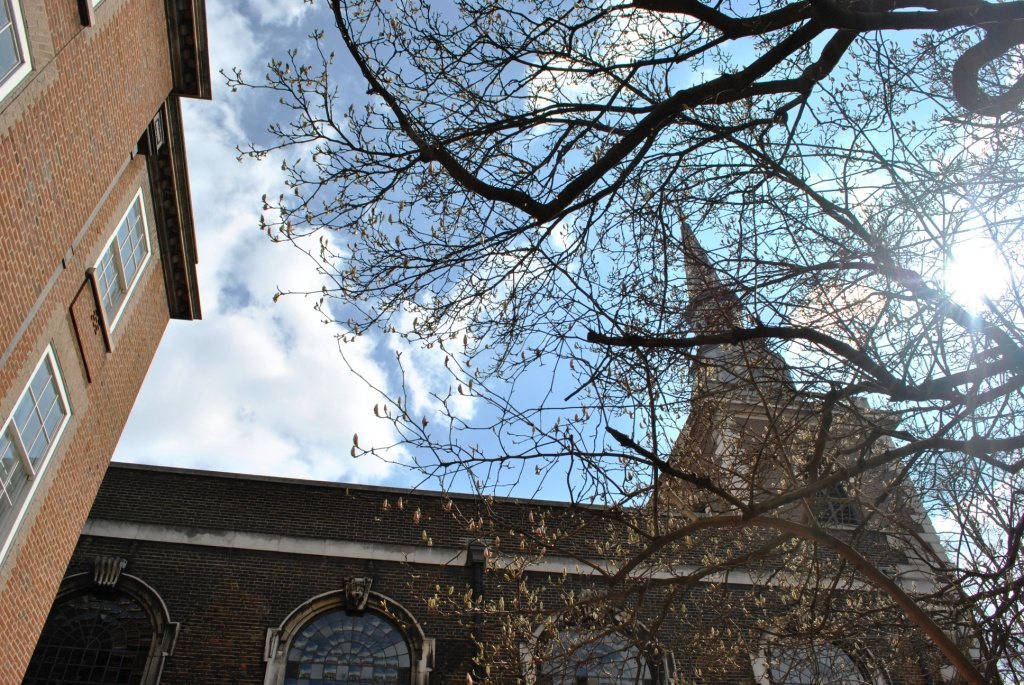
The former lead-covered spire was replaced during the restoration by a much lighter fibreglass replica. The furnishings and lighting were restored as a coordinated group, creating a rare surviving complete suite of fittings associated with Richardson. The church was listed at Grade I in 1958, placing it among buildings recognised as having the highest level of architectural and historical interest in the national listing system.
After the Second World War, part of the churchyard was laid out as Southwood Garden by Julius Elias, 1st Viscount Southwood. It was intended as a remembrance garden commemorating the courage and fortitude of London’s people, and Queen Mary opened it in 1946.
During the 1960s and 1970s, activity and attendance declined as central London became increasingly commercial and its resident population diminished. Donald Reeves served as rector from 1980 to 1998. During the 1980s and most of the 1990s, the church saw renewed activity and attendance and gained a reputation for progressive, liberal, and campaigning positions.
The community describes itself as inclusive and centres its worship on the Eucharist, the Christian rite in which bread and wine commemorate and sacramentally represent the Last Supper. It has supported the ordination of women to all orders of the Church of England and the just treatment of asylum seekers and people living in poverty, expressing these commitments through what it calls a “radical welcome.”
Remains
Church structure and interior
St James’s is built of red brick with Portland-stone dressings. Inside, galleries run along three sides of the church and are carried on square pillars. The nave is covered by a barrel vault, a continuous tunnel-shaped ceiling, supported by Corinthian columns with elaborate leaf-decorated capitals.
Font and reredos
The carved marble font and the limewood reredos, an ornamental screen behind the altar, are notable works by Grinling Gibbons. They form part of the church’s surviving interior furnishings and remain connected with the building’s late seventeenth-century decorative character.
External pulpit
An external pulpit was added to the north wall in 1902. Temple Moore designed it and Laurence Arthur Turner carved it. Wartime damage in 1940 affected the pulpit, which was restored as part of the wider postwar work on the church.
Organ and musical fittings
The west wall is dominated by a carved and gilded oak organ case made by Grinling Gibbons. The case originally held an organ by Renatus Harris, built for the Roman Catholic chapel in Whitehall Palace and installed at St James’s in 1691.
J. C. Bishop completely rebuilt the organ in 1852 and added a choir case in front of Gibbons’s original case. A restoration project has continued since at least 1982 but remains unfinished. The historic case is currently empty, and an electronic instrument is used instead.
Churchyard and later artworks
Southwood Garden occupies part of the churchyard and functions as a memorial garden. In 2009 and 2010, Hauser & Wirth organised outdoor sculpture exhibitions there, beginning with work by the Swiss sculptor Hans Josephsohn.
From 23 December 2013 to 5 January 2014, the Bethlehem Unwrapped demonstration included a large replica section of the Israeli West Bank barrier. The installation temporarily obstructed the view of the church except for part of the tower.
Following a short-term residency based in the bell tower, Jesse Darling’s Miserere was installed in the church from 12 to 16 October 2022. The work took the form of a choir or congregation. In September 2023, Che Lovelace’s murals commemorating Ottobah Cugoano’s 1773 baptism were unveiled. They became the church’s first permanent commissioned artwork and were described as the first artwork anywhere to commemorate Cugoano.
Memorials
The church contains memorials to William Blake, Sir William Bowman, Richard Bright, Mary Delany, William Curtis Green, General John Studholme Hodgson, Sir Herbert Hughes-Stanton, Francis Ernest Jackson, Sir George Johnson, Joseph McCormick, Frederick William Pomeroy, Sir Henry Rushbury, Sir James Jebusa Shannon, George Spencer Watson, and William Yarrell.