Derawar Fort: A Desert Fortress in Pakistan
Site at a Glance
- Rating
- 4.4
- Popularity
- Medium
- Country
- Pakistan
- Primary era
- Early Modern
- Eras represented
- Medieval, Early Modern
- Civilizations
- Unclassified
- Site type
- Military
- Remains
- Castle
On this page15 sections
History
Derawar Fort is a Bhati Rajput fortress in Pakistan’s Cholistan Desert, founded in AD 858 under Rai Jajja Bhati and later rebuilt and expanded through successive periods of regional rule. The Bhatis were Rajput hereditary warrior and ruling lineages associated with Jaisalmer in present-day Rajasthan and adjoining areas. The fort was traditionally established as a tribute to Rawal Deoraj Bhati, ruler of the Kingdom of Jaisalmer, and was first known as Dera Rawal, then Dera Rawar, before its name developed into Derawar.
Desert routes and early history
Derawar formed part of a chain of desert forts that included Meergarh, Jaangarh, Marotgarh, Maujgarh, Dingarh, Khangarh, Khairgarh, Bijnotgarh, and Islamgarh. These strongholds provided shelter for travelers crossing the desert, and Derawar is the best-surviving example of the group. The wider Cholistan region had earlier supported an Indus Valley culture that used the Hakra River for agriculture. Around 600 BC, the river changed course and disappeared underground, helping transform the area into an arid desert that could no longer sustain settlement on its former scale.
Even after the landscape became more difficult to inhabit, it remained part of an important trade route between Central Asia and the Indian subcontinent. It also lay within a pilgrimage route used by travelers journeying between India and Mecca. The desert forts therefore served not only defensive purposes but also offered shelter and access to water along routes crossing a harsh environment. Ruins of up to a dozen forts survive across the wider region, with Derawar remaining the best preserved.
Jaisalmer and Bahawalpur rule
The Bhati royal family of Jaisalmer held Derawar until the Nawabs of Bahawalpur captured it in 1733. The Nawabs were Muslim hereditary rulers of the former Bahawalpur state, while the Abbasis were the ruling family that controlled Bahawalpur and later held the fort. Nawab Sadeq Muhammad renovated Derawar in 1732, giving the stronghold much of the form associated with it today.
Control shifted again in 1747, when Bahawal Khan’s difficulties at Shikarpur led to the fort passing out of Bahawalpur control. Nawab Mubarak Khan recaptured it in 1804. The fort was later taken over by the British and used to house prisoners, including inmates described as unlucky. Nawab Sadeq Muhammad Khan Abbasi V, the twelfth and last ruler of Bahawalpur State, was born at Derawar in 1904.
Decline, military use, and conservation
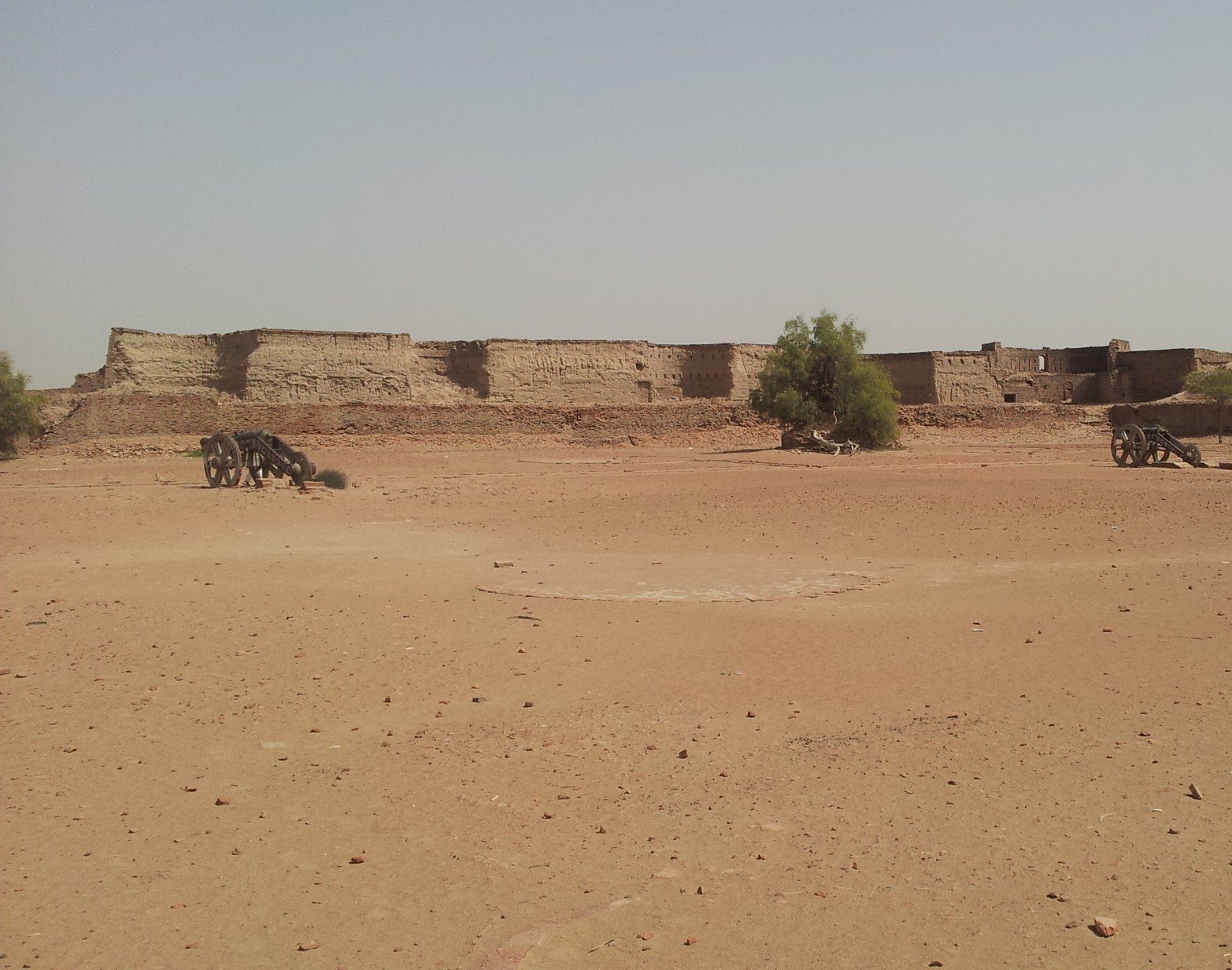
Derawar’s survival was linked to the continued presence of a resident population that maintained it. Other medieval desert buildings declined after they lost their permanent inhabitants. During the war with India in 1965, several structures inside the fort were demolished to create space for military training, altering parts of the interior.
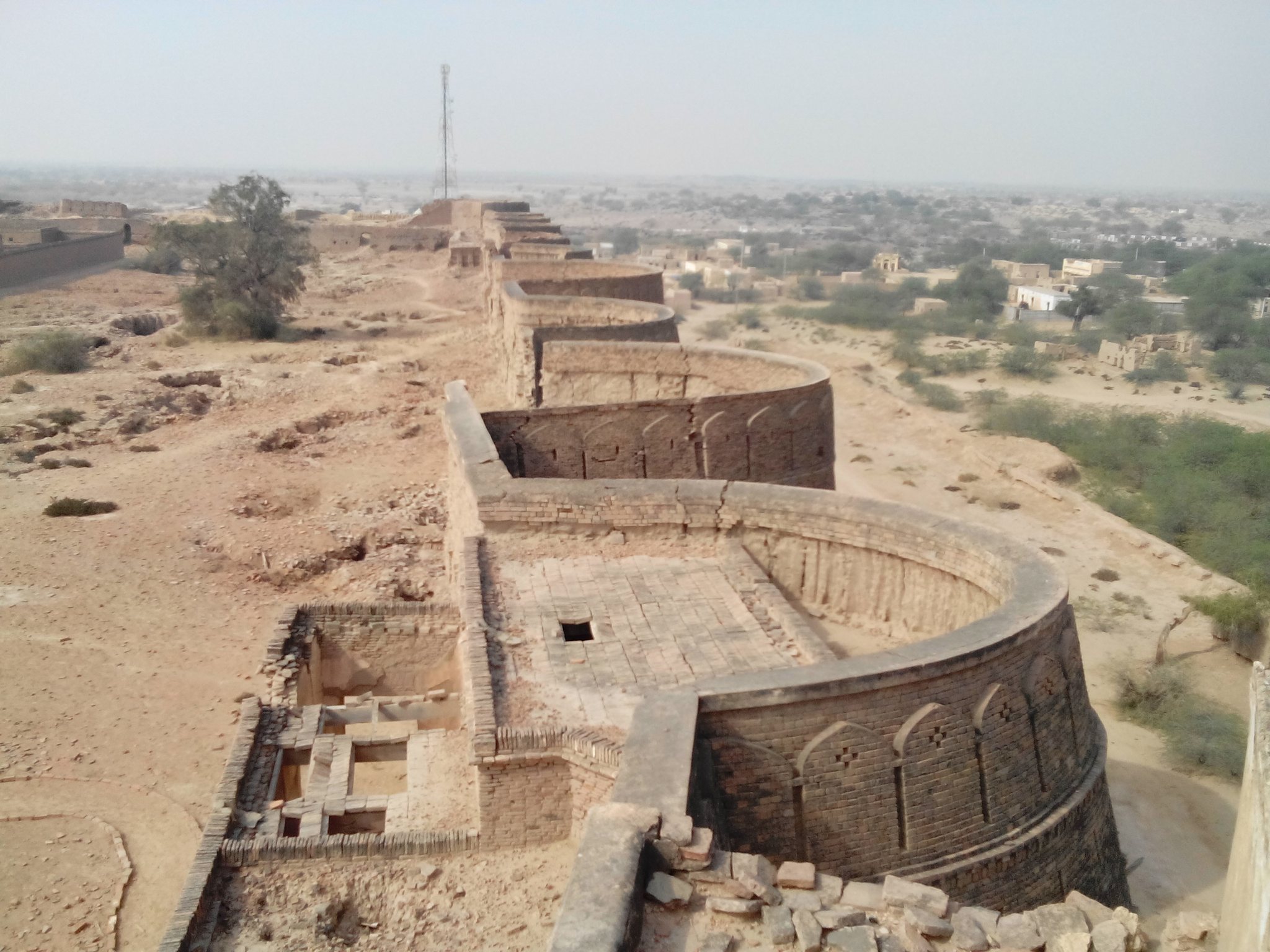
In 2019, the provincial government set aside funds for conservation work. The intervention included repairs to damaged fortifications and associated areas, conservation of a grain warehouse outside the fort, underpinning for damaged sections of the front and southeastern bastions, work on walls and platforms, underpinning of the northeastern bastion and its walls, repairs inside the fort, work on the sloped flooring leading to the baradari, and repairs to walls beside the main gate. A baradari is a pavilion or hall traditionally designed with openings on twelve sides to encourage air circulation.
Despite these interventions, extreme weather, visitor damage, and neglect continue to cause severe deterioration. In 2016, the Government of Pakistan submitted Derawar and the Desert Forts of Cholistan for consideration as a UNESCO World Heritage Site. The proposed heritage case emphasizes their relationship to desert trade routes, provision of water, defense and shelter, and adaptation to limited environmental resources. The submission refers to UNESCO criteria concerning cultural evidence of a civilization or tradition and human interaction with the environment.
Remains
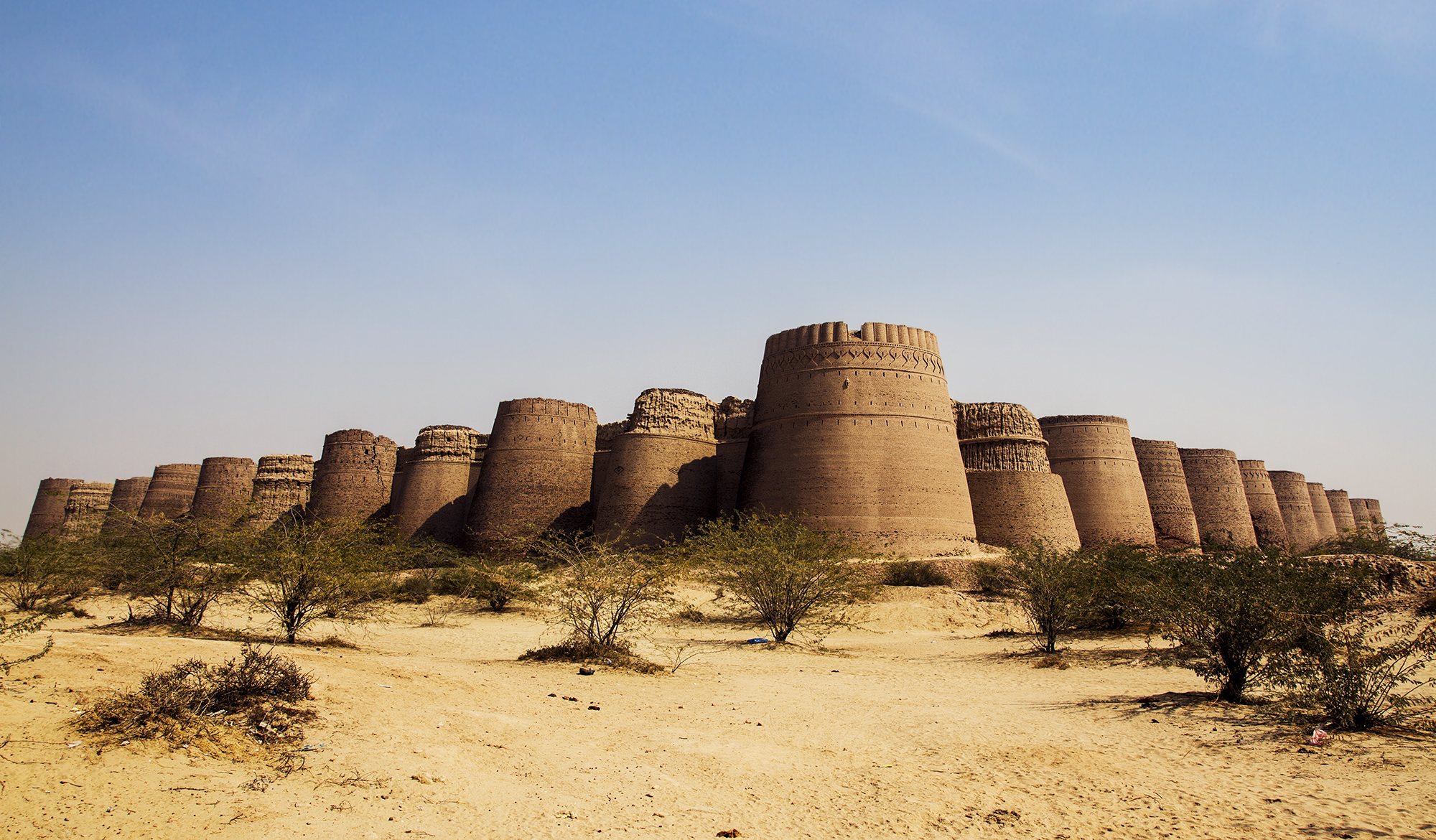
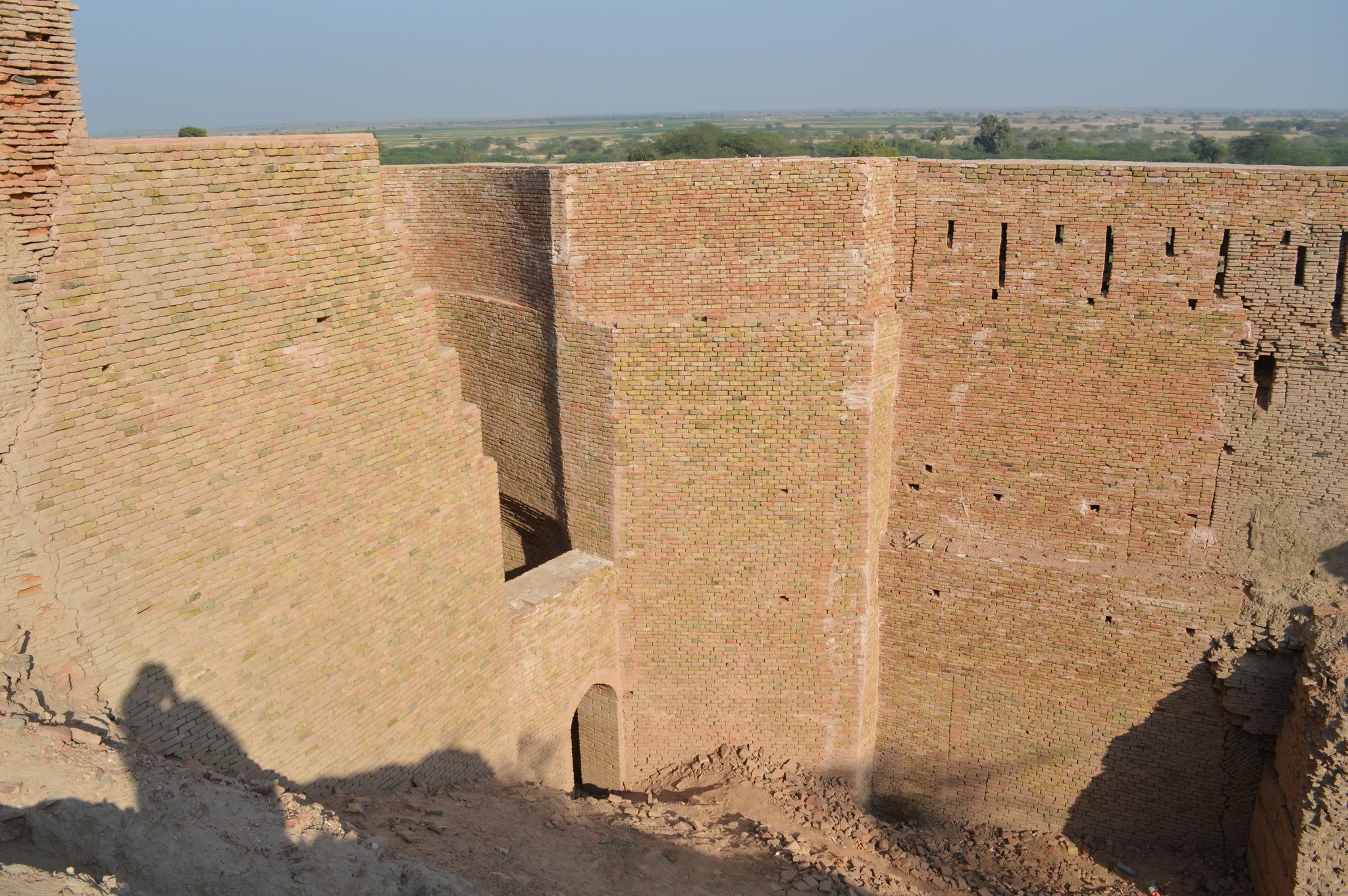
Derawar is a large square fortress occupying approximately 35 acres in the Cholistan Desert, about 20 kilometres south of Ahmedpur East in Punjab. Its defensive walls form a perimeter of roughly 1,500 metres and rise as high as 30 metres. Built mainly from clay bricks, the complex combines square-based brick construction with architectural forms that generally date from the sixteenth to eighteenth centuries, while some renovations are attributed to as early as the ninth century.
Fortifications and interior spaces
Walls and bastions
Forty circular bastions, ten along each side, rise to about 30 metres and can be seen for many miles across the desert. A bastion is a projecting fortified structure attached to a defensive wall, allowing defenders to protect the walls from the sides. The Derawar bastions are faced with decorative brick patterns, giving the otherwise strongly defensive perimeter a detailed surface treatment. Repairs have addressed damaged sections of the front, southeastern, and northeastern bastions, as well as adjoining walls and platforms.
Underground palace and passages
An underground passage once allowed the emperor to travel from his castle to the fort. Underground lodgings also survive, although many sections have deteriorated. The underground palace contains a passive-ventilation system that keeps its interior cool, an adaptation suited to the extreme heat of the desert. Within the fort, the remains also include structures decorated with tile and fresco artwork. Fresco is a mural-painting technique in which pigment is applied to wet plaster.
Interior fabric
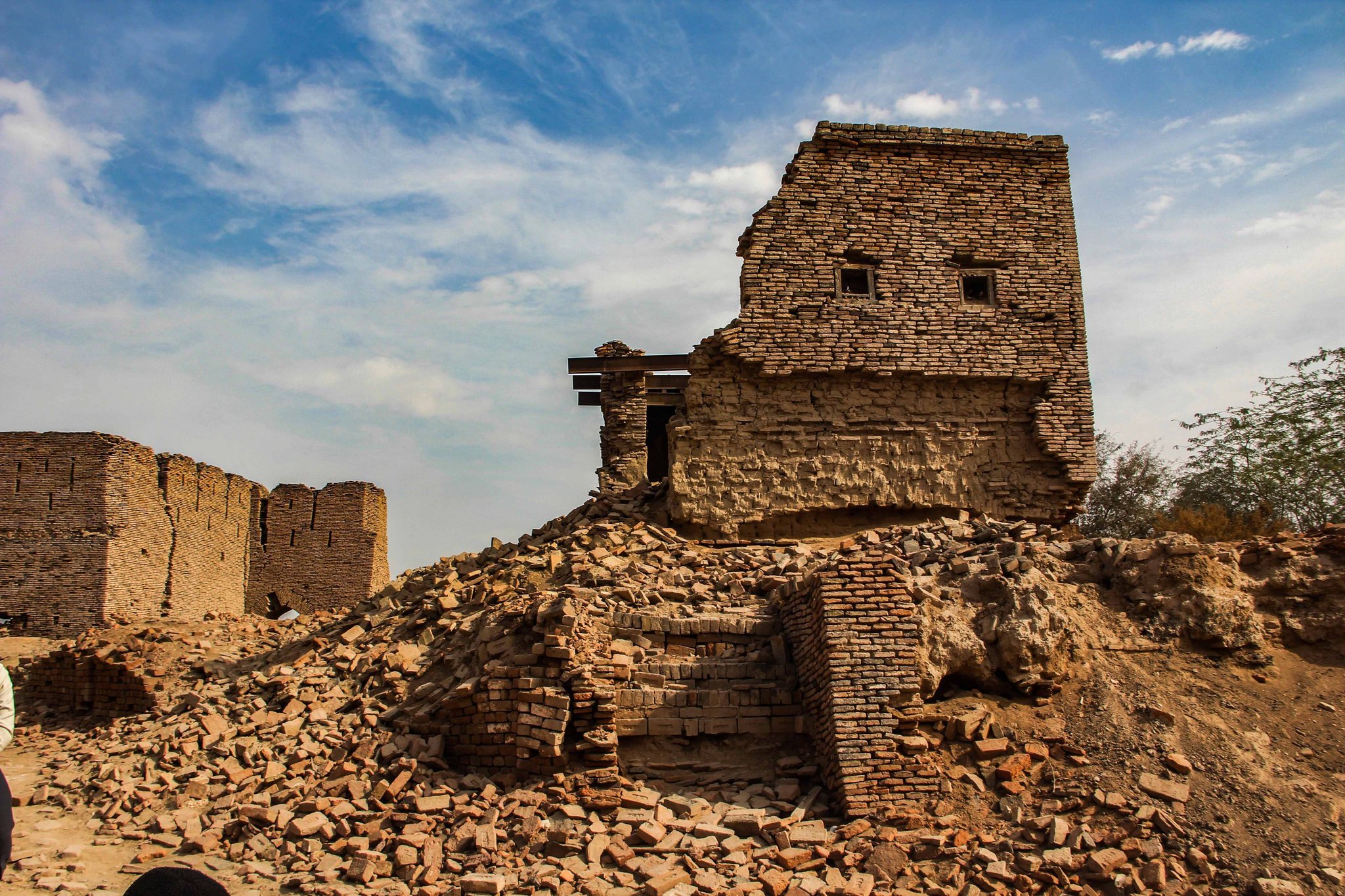
The fort’s interior woodwork has almost completely disappeared, while the flooring has deteriorated severely. Conservation work has included repairs inside the fort and to the sloped flooring leading to the baradari. These surviving and repaired elements form part of an interior that has been altered by long use, military activity, weather, and continuing decay.
Religious and dynastic remains
Moti Mosque
The nearby Moti Mosque, or Pearl Mosque, is associated with Derawar and was modeled on the Moti Mosque at Delhi’s Red Fort. Its relationship with the fortress forms part of the religious and architectural landscape surrounding the defensive complex.
Abbasi Mosque
The Abbasi Mosque stands near the fort and was constructed in 1849 for Pir Ghulam Farid, the personal religious figure of a Nawab. The mosque belongs to the period when Derawar and the surrounding area were connected with the ruling Abbasi family of Bahawalpur.
Royal mausoleums
A cemetery of the Nawabs and a royal Abbasi necropolis lie near the fort. The complex includes mausoleums of the Nawabs and their families, as well as a domed marble mausoleum for the last Nawab’s English wife. These funerary buildings preserve the dynastic connections that continued around Derawar after its principal defensive role had changed.
Archaeological landscape
Ganweriwala and the wider Cholistan remains
The wider area includes Ganweriwala, a large city of the Indus Valley civilization that remains unexcavated, along with other archaeological artifacts. These remains connect Derawar’s later desert history with the much earlier urban culture that occupied the Cholistan region before the transformation of the Hakra river system.