Tomb of Bibi Jawindi: A Fifteenth-Century Sufi Mausoleum in Pakistan
Site at a Glance
- Rating
- 4.4
- Popularity
- Low
- Country
- Pakistan
- Primary era
- Medieval
- Eras represented
- Medieval
- Civilizations
- Unclassified
- Site type
- Religious
- Remains
- Tomb
On this page9 sections
History
The tomb of Bibi Jawindi is a fifteenth-century mausoleum in Uch Sharif, Pakistan, built in 1494 or 1497 for Bibi Jawindi, a Sufi holy woman and the great-granddaughter of the fourteenth-century saint Jahaniyan Jahangasht. The monument is associated with the Suhrawardiyyah order, a Sufi religious tradition that developed a network of saints, shrines, and religious lineages across South Asia.
Construction and religious association
Construction is attributed to Dilshad, a Persian prince who is said to have provided financial support for the project. The tomb became the principal monument associated with Bibi Jawindi and forms part of the Uch Sharif mausoleum complex in southwestern Uch. The complex occupies the site of an old fort overlooking the alluvial plain south of the Chenab River, and includes a group of Sufi shrines and mausoleums.
Flood damage and conservation
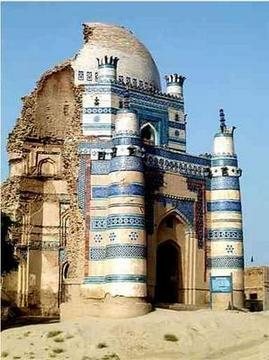
In 1817, torrential floods washed away half of the tomb. The same disaster caused the western sides of several mausoleums elsewhere in the complex to collapse. Humidity, salt infiltration, erosion, and unsuitable repair methods continued to damage the surviving fabric.
Conservation efforts gained international attention in the late twentieth century. The World Monuments Fund placed the tomb on its Watch in 1998, 2000, and 2002 to encourage support for its preservation. In 1999, Pakistan’s Conservation and Rehabilitation Center invited international organizations and local officials to participate in conservation work. Stabilization and conservation followed between 2000 and 2004, with assistance from the state, donors, and international organizations, including the World Monuments Fund.
Heritage status and continuing use
In January 2004, Pakistan’s Department of Archaeology and Museums submitted the tomb and four other Uch Sharif monuments for possible inclusion on UNESCO’s World Heritage List under cultural criteria ii, iv, and vi. The group remained on UNESCO’s tentative list as of 2020. A tentative-list entry identifies a possible future nomination and is not the same as World Heritage inscription. The wider complex is also recorded by Pakistan’s heritage authorities and remains an active cemetery and pilgrimage site for Muslim devotees.
Remains
Tomb structure and decoration
Form and construction
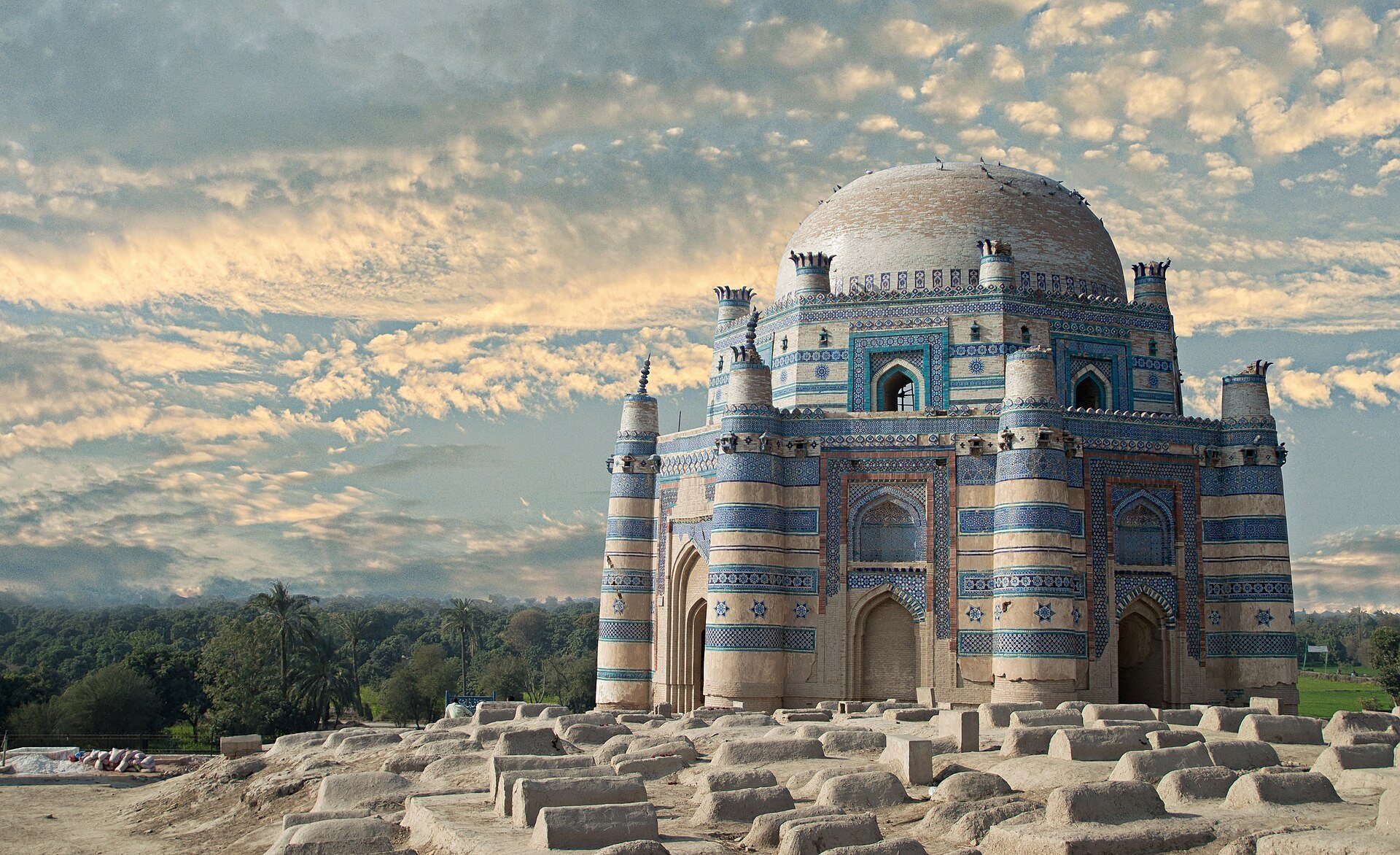
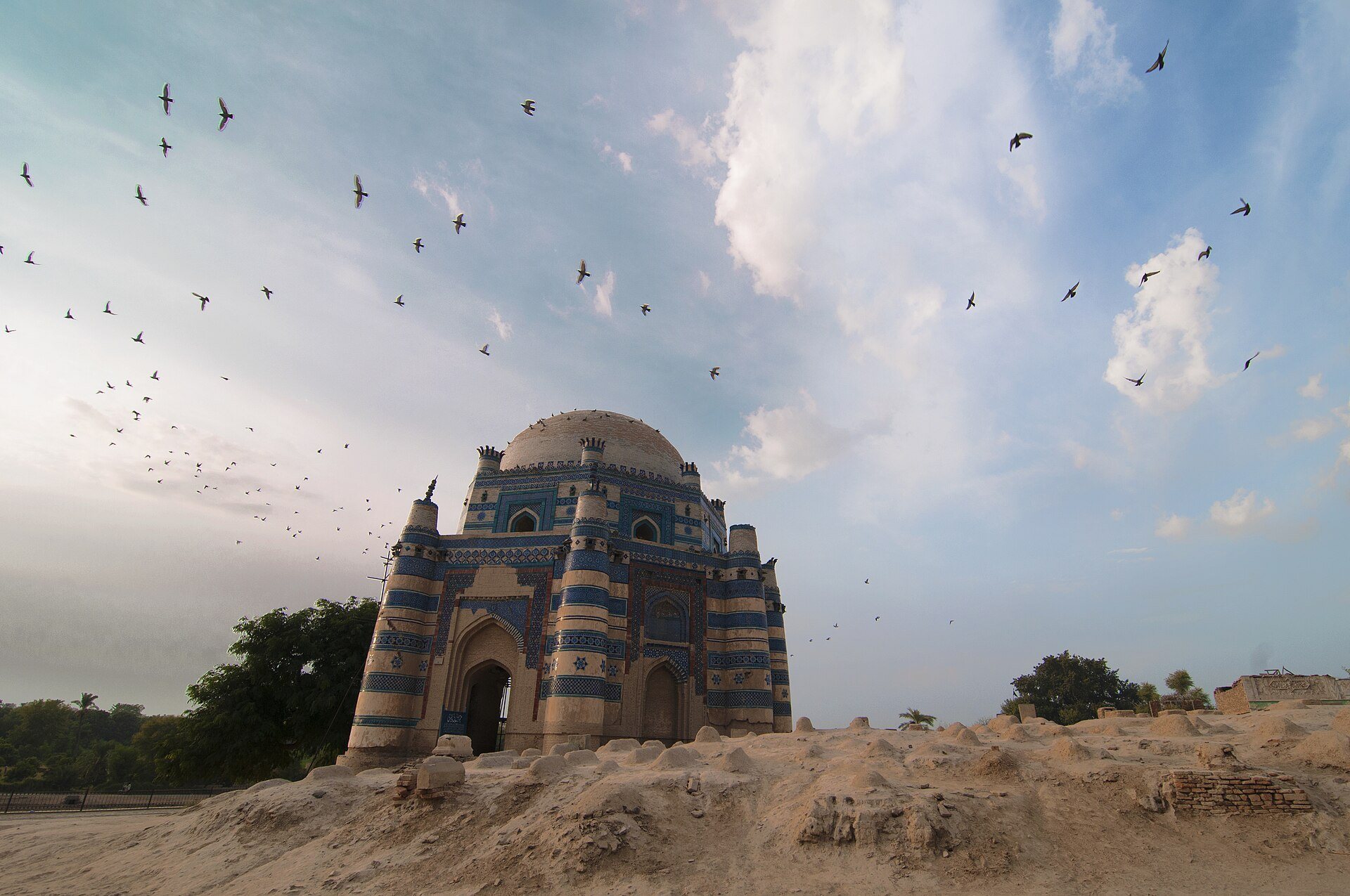
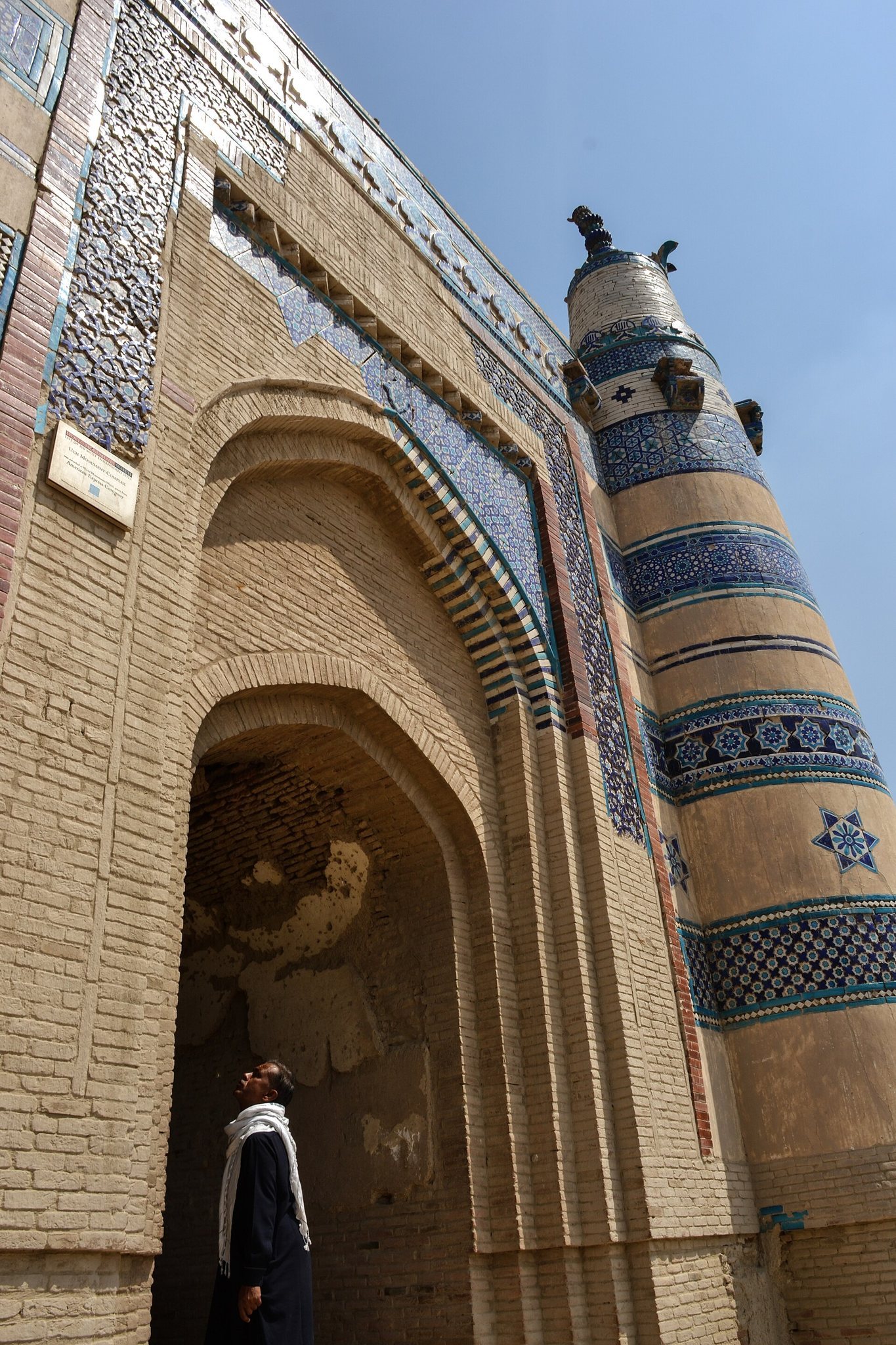
The surviving monument is an octagonal brick structure raised on an octagonal base. A tapering turret or tower once stood at each of its eight corners, while five of the original corner supports survived the 1817 flood. The exterior is arranged in three tiers, with the uppermost tier supporting a dome. Thick, angled walls rise through two stories and make the interior appear circular.
Fired bricks, including glazed bricks, form the structure. Earthen mortar bonds the masonry, and wooden reinforcement was incorporated into the construction. Only about half of the original structure survives, leaving the tomb partly ruined while preserving its principal octagonal form and domed upper composition.
Architectural decoration
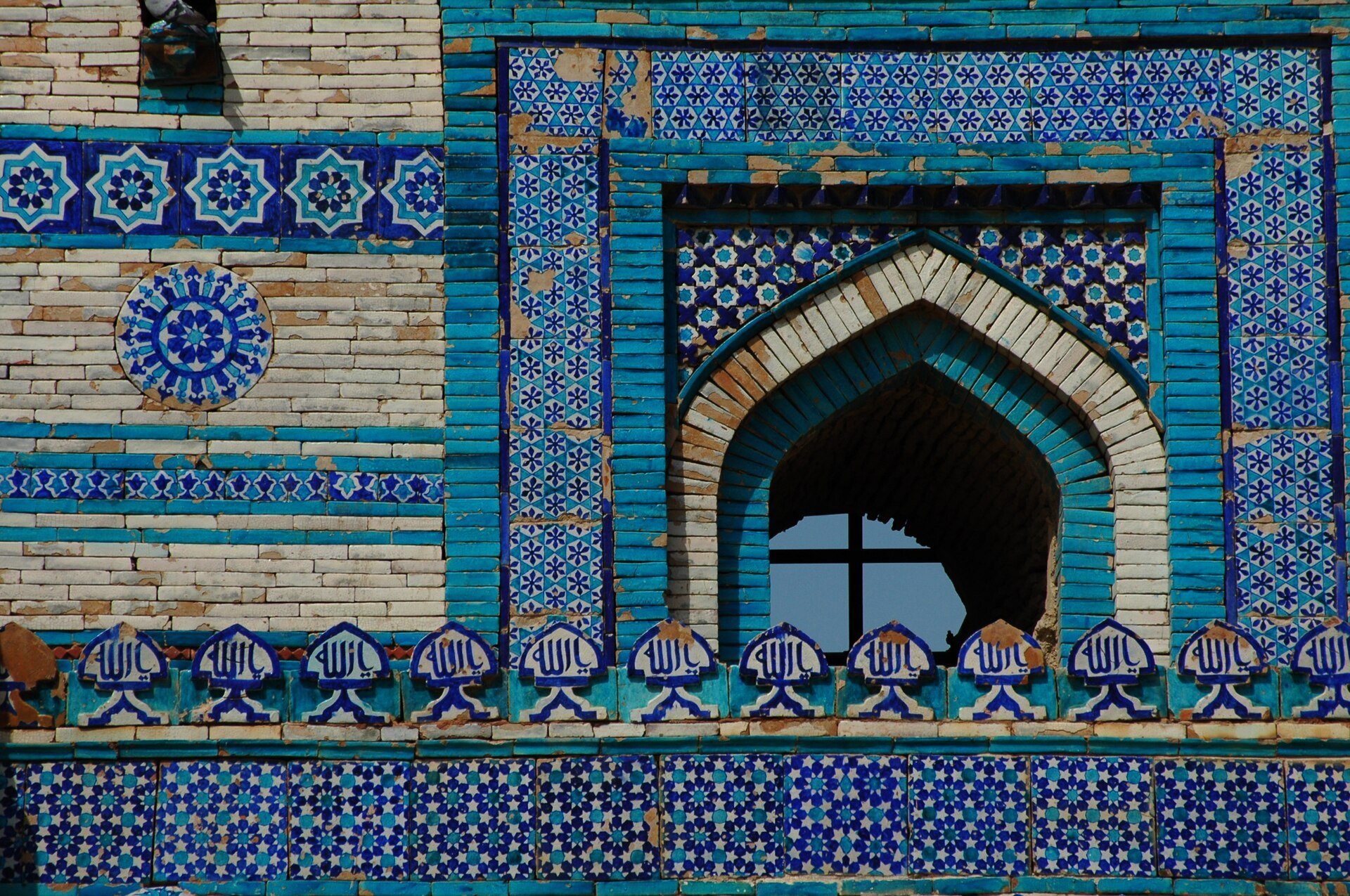
The interior and exterior carry Islamic sacred inscriptions, carved timber, and bright blue and white glazed mosaic tiles. The decorative treatment also includes simple and patterned tiles, brick elements, finials, and faience, a glazed ceramic surface used here for architectural decoration. These materials combine with the brick structure to form the tomb’s richly colored surface scheme.
Surrounding compound
The tomb stands within a compound whose desert-like appearance is largely shaped by cemented graves. Green vegetation surrounds the wider complex because river tributaries and canals cross the surrounding area. The mausoleum group occupies the former fort site, linking the surviving tombs and shrines to the broader cemetery and pilgrimage landscape of Uch Sharif.