Fort Cornwallis: A British East India Company Bastion Fort in Malaysia
Site at a Glance
- Rating
- 3.5
- Popularity
- Medium
- Country
- Malaysia
- Primary era
- Modern
- External website
- Open
- Eras represented
- Early Modern, Modern
- Civilizations
- British
- Site type
- Military
- Remains
- Fort
On this page9 sections
History
Foundation and early fortification
Fort Cornwallis is a British East India Company bastion fort in Malaysia, established in 1786 at George Town during the company’s expansion across South and Southeast Asia. Captain Francis Light took possession of Penang Island from the Sultan of Kedah under an agreement that transferred a port to the company for commercial use. The fort protected the port and the company’s foothold from pirates, French vessels, and forces associated with Kedah. Light named the fort Fort Cornwallis after Charles Cornwallis, a British military officer and colonial administrator, and renamed Penang Island Prince of Wales Island.
The first fortification was a temporary stockade made from palm trunks. It had no permanent buildings and served as an immediate enclosure for the new British settlement. The fort’s intended military role became more important during the Napoleonic Wars, the European conflicts fought mainly between France and shifting coalitions from 1803 to 1815, although the anticipated assault did not take place.
Rebuilding and administrative use
From 1804, the stockade was rebuilt in brick and stone using Indian convict labour. The work took place during Colonel R. T. Farquhar’s administration, under the supervision of contractor Lam To’Kai, and was completed in 1810 during Norman Macalister’s governorship. The project cost $80,000. Although the rebuilt fort was designed to meet military threats, its historical function was more administrative than defensive.
The fort housed personnel and offices connected with the administration of the island. When the Supreme Court of Penang opened on 31 May 1808, its judge was accommodated within the fort. During the 1920s, the site also housed the Sikh police of the Straits Settlements, the British-administered port territories that included Penang, Malacca, and Singapore.
Religious, civic, and later history
A chapel was built inside the fort in 1799. That year, John Timmers married Martina Rozells, the widow of Francis Light, in what was the first marriage held there. In 1881, Britain transferred the fort to the local authorities. A lighthouse was erected within its grounds the following year and later renovated in 1914 and 1925.
In 1950, the historical cannon Seri Rambai and other cannon were placed at the fort for display. Royal Navy personnel carried out an archaeological survey in July and August 1970 under the direction of the Reverend Peter Brown. Malaysia gazetted Fort Cornwallis as an Ancient Monument and Historic Site on 8 September 1977 under the Antiquities Act 168/1976, after which it functioned as a museum. George Town and Fort Cornwallis were inscribed in 2008 as part of the UNESCO World Heritage Site of the Historic Cities of the Straits of Malacca, and the fort lies within George Town’s UNESCO Core Zone. Restoration work in 2026 included excavating and restoring the former moat to its original configuration.
Remains
Fort layout and defenses
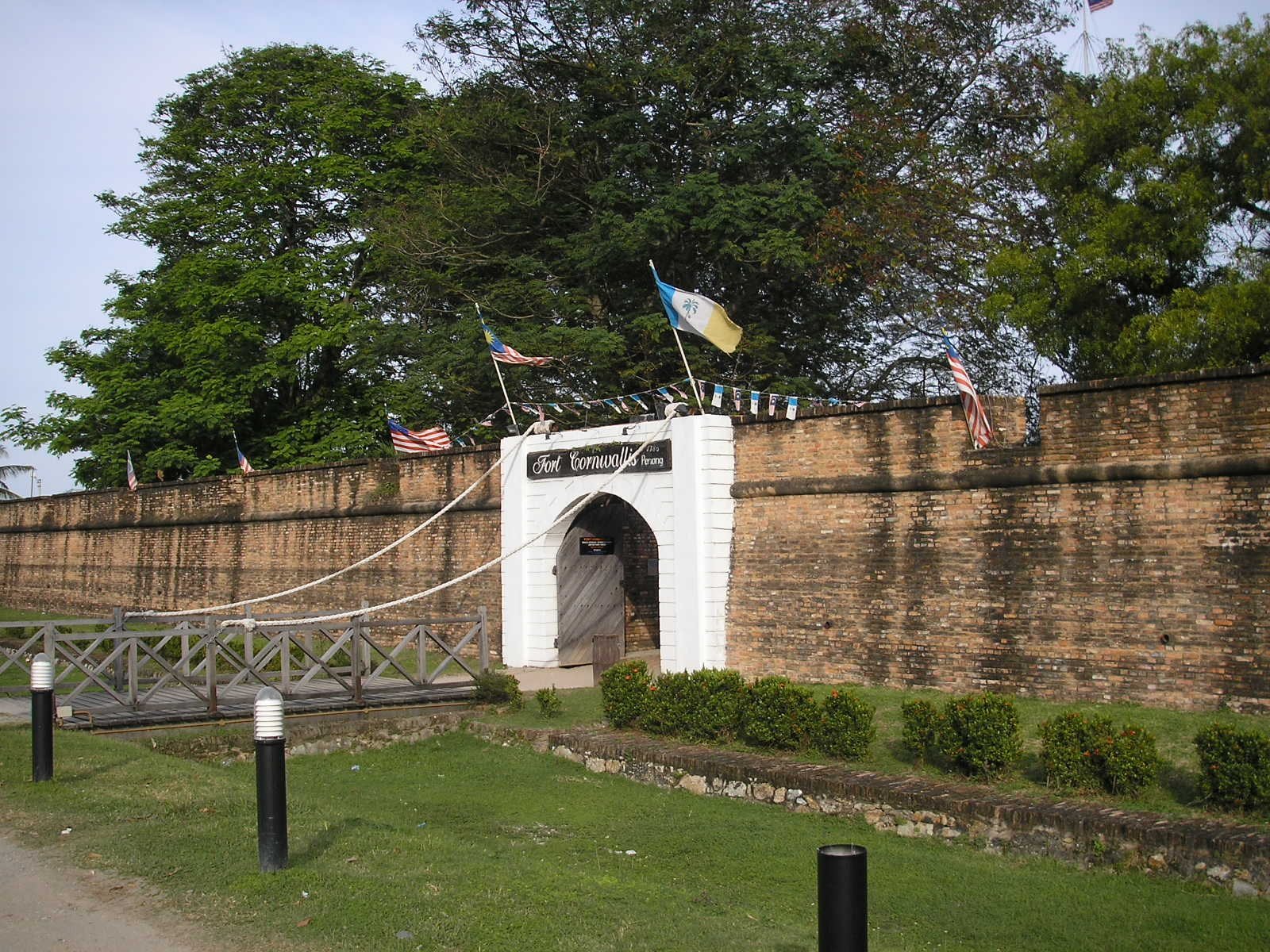
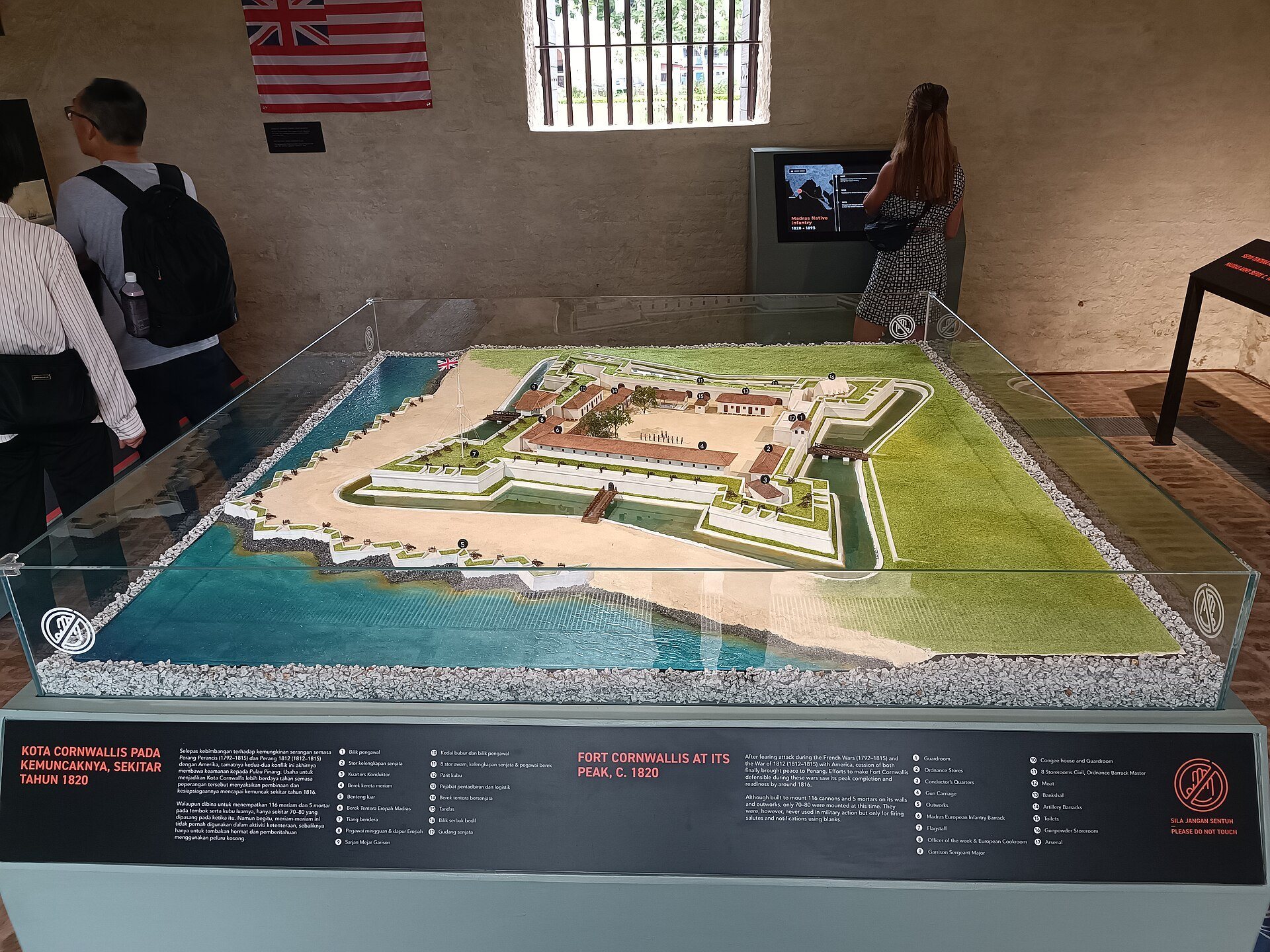
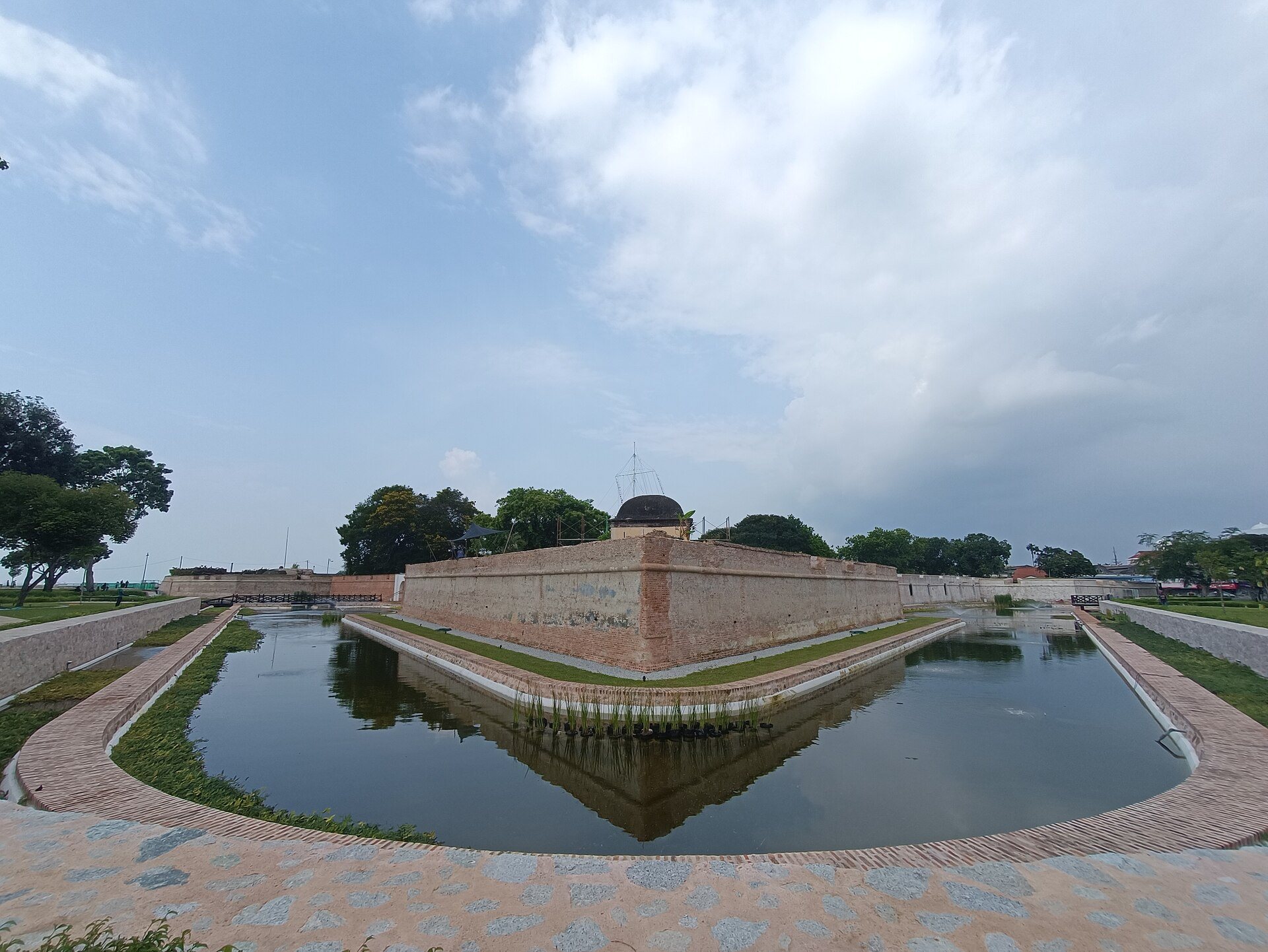
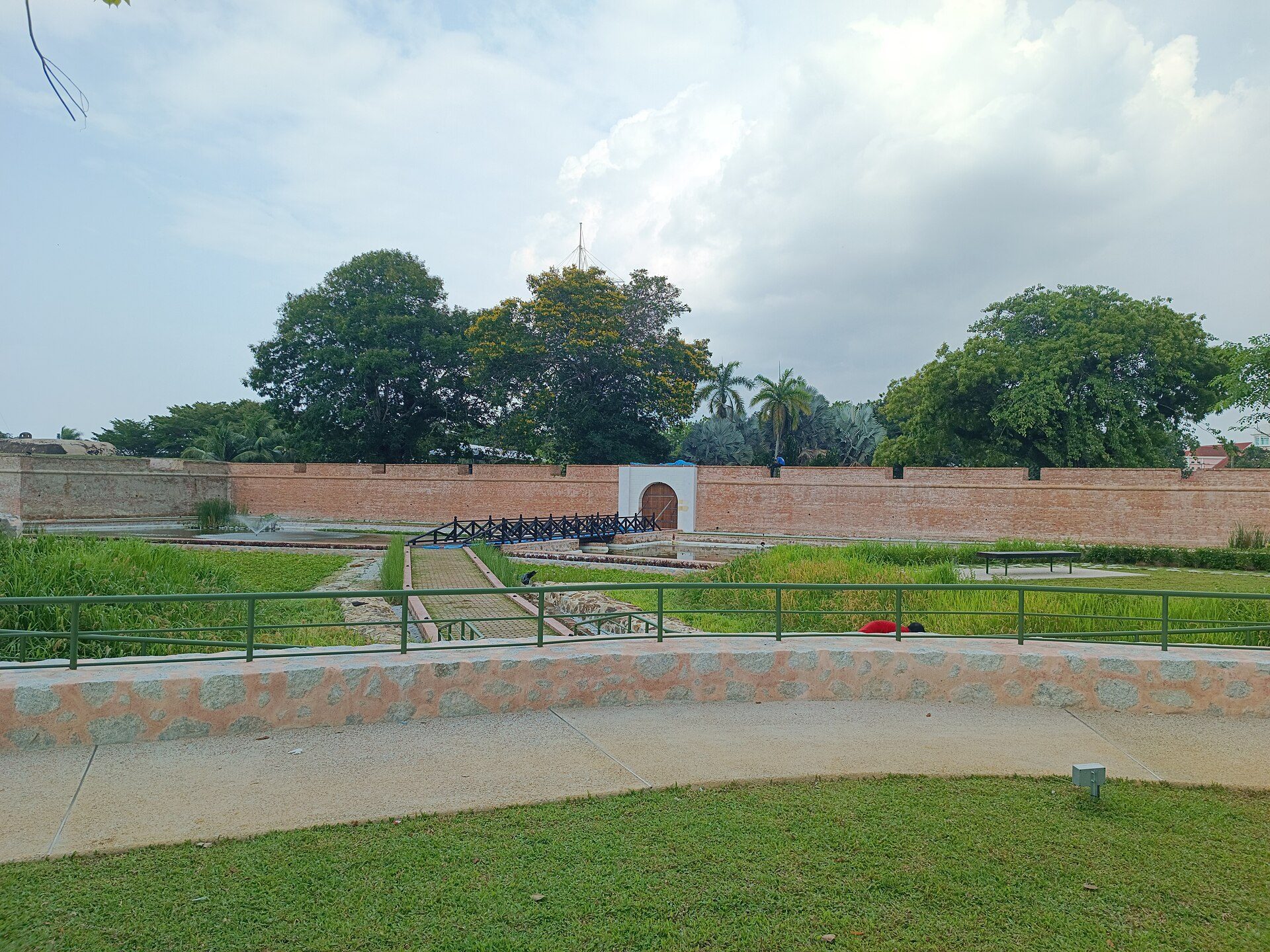
Fort Cornwallis has a broadly square plan, measuring approximately 150 metres by 150 metres and covering about 22,000 square metres. The bastion fort, built mainly of brick and stone, has projecting sections at each corner. These bastions allowed observation along the outer walls and provided space for additional cannon. The enclosure includes walls, an entrance drawbridge, an ammunition bunker, and other cannon positions. Its height is approximately 3 metres.
The original 1786 enclosure occupied about 38.8 square metres and consisted of nibong, a Malay term for palm trunks. The later fort was surrounded by a moat about 9 metres wide and 2 metres deep. The ditch was eventually filled because retained water contributed to malaria in the surrounding area. In 2026, it was excavated and restored to its earlier configuration.
Chapel and military magazine
The chapel built in 1799 survives within the fort. Another building in the southwest bastion is probably the main magazine, a structure used to store ammunition and other military supplies, rather than the chapel. Its massive roof and surrounding buttresses resemble those of magazine buildings from the period. The building is the earliest surviving roofed colonial-era structure in Penang.
Lighthouse and cannon
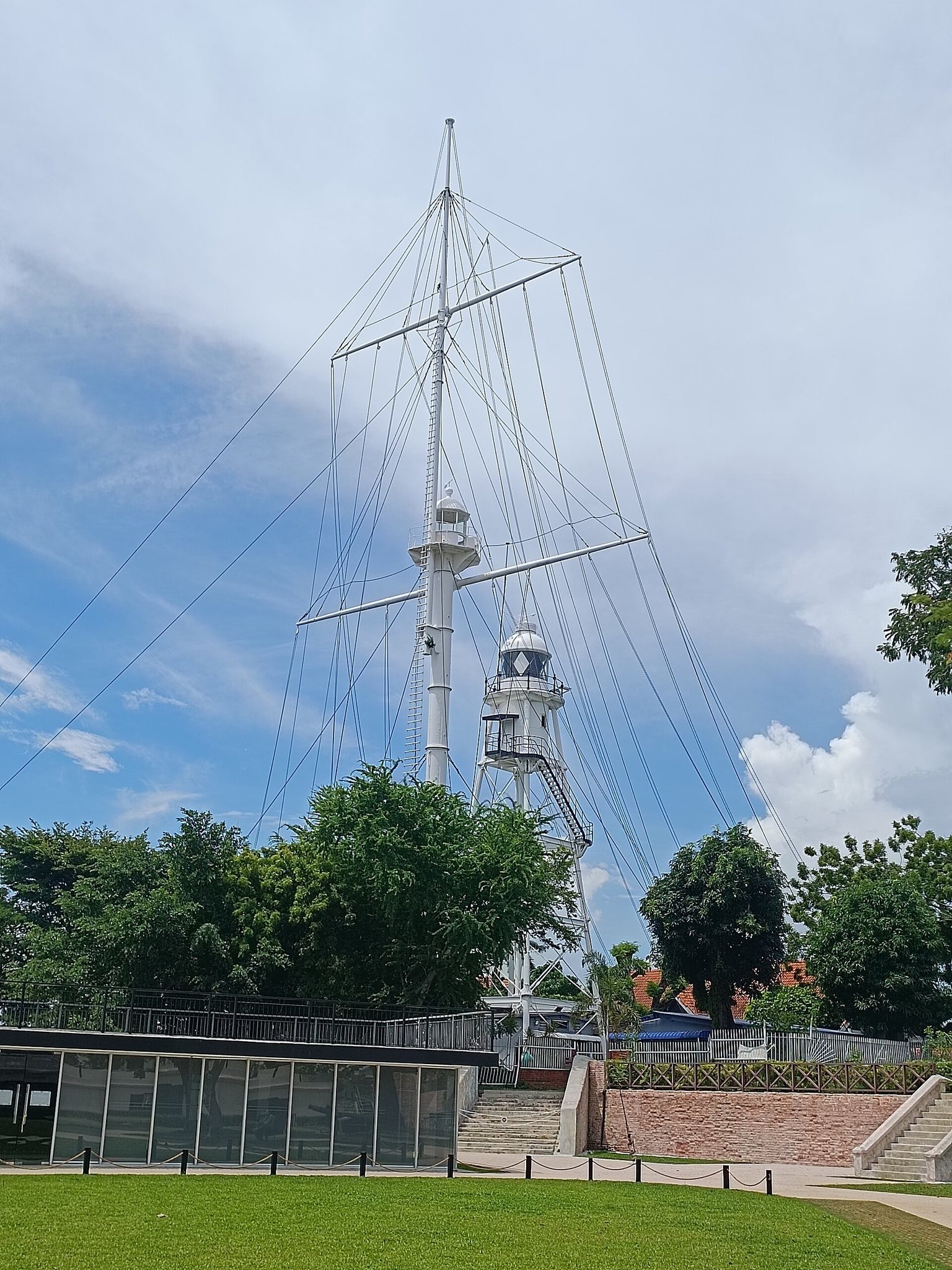
A 21-metre skeletal lighthouse, an open framework tower rather than a solid masonry structure, was erected in the northeast corner in 1882. It was first called the Fort Point Lighthouse and was renamed the Penang Harbour Lighthouse after renovations in 1914 and 1925. It is the second-oldest lighthouse in Malaysia.
Seri Rambai was cast in 1603. The Dutch East India Company gave it to the Sultan of Johore in 1606, and the Acehnese seized it in 1613 and took it to Aceh, a region at the northern end of Sumatra. The cannon was later transferred to Kuala Selangor, where British forces seized it during a punitive raid in 1871. The government moved it to Fort Cornwallis in the 1950s. Other old cannon, including pieces taken as booty from pirate ships, stand along the fort’s walls.
Central grounds
An amphitheatre was constructed in the centre of the fort, and a statue of Francis Light was installed in the grounds.