Kō Site: A Multiperiod Archaeological Site in Japan
Site at a Glance
- Rating
- 3.3
- Popularity
- Very Low
- Country
- Japan
- Primary era
- Stone Age
- External website
- Open
- Eras represented
- Stone Age, Classical, Medieval
- Civilizations
- Jomon, Yamato, Yayoi
- Site type
- City
On this page8 sections
History
Kō Site is a complex archaeological site in Japan, located in Fujiidera, Osaka, with evidence spanning the Japanese Paleolithic period through the medieval period, including the Heian period. The site became especially important in the study of Japan’s earliest prehistory because its characteristic stone tools helped establish the presence of a Japanese Paleolithic period, which earlier archaeological opinion had denied.
Recognition of the Paleolithic site
By the late nineteenth century, researchers had collected stone tools from Kō that were thought to belong to the Japanese Paleolithic, the period before the Jōmon era and its hunter-gatherer communities. The tools included distinctive knife-shaped forms. Their character helped persuade scholars that the site preserved evidence of human activity from this early period.
Ten excavations took place between 1917 and 1921, led principally by Hamada Kōsaku of Kyoto Imperial University. The work revealed remains from the Early Jōmon period, when hunter-gatherers used stone tools and produced distinctive pottery, as well as from the Yayoi period, when agriculture, particularly wet-rice cultivation, spread through Japan. Numerous buried human remains also drew scholarly attention. Participants included Koganei Yoshikiyo, Suzuki Buntarō, Adachi Buntarō, Kiyono Kenji, Ogushi Kikutaro, Hasebe Kotondo, Torii Ryūzō, and Kida Sadakichi, whose affiliations included the Imperial Universities of Tokyo, Kyoto, Osaka, and Tohoku, as well as institutions concerned with anthropology and history.
Reassessment of the stone-working tradition
Further excavations in 1957 and 1958 followed the recovery of large sanukite tools that earlier investigations had not fully explained. Sanukite is a hard volcanic stone used widely for prehistoric tools in Japan. The later work found a group of sanukite implements in a clay layer beneath the earlier Jōmon cultural layer.
Kamaki Yoshimasa reconstructed a production process based on repeatedly removing wing-shaped flakes, which are horizontally elongated pieces struck from a stone core in a manner compared with slicing sashimi. Matsufuji Kazuto rejected that reconstruction and developed an alternative explanation now known as the Setouchi technique, a Paleolithic method associated with distinctive flakes and tools in western Japan. Knife-shaped tools made from wing-shaped flakes are sometimes called Kō-type knife-shaped tools, while assemblages using the Setouchi technique are known collectively as the Kō lithic industry, meaning a technologically related group of stone tools and manufacturing debris.
Collections, designation, and local memory
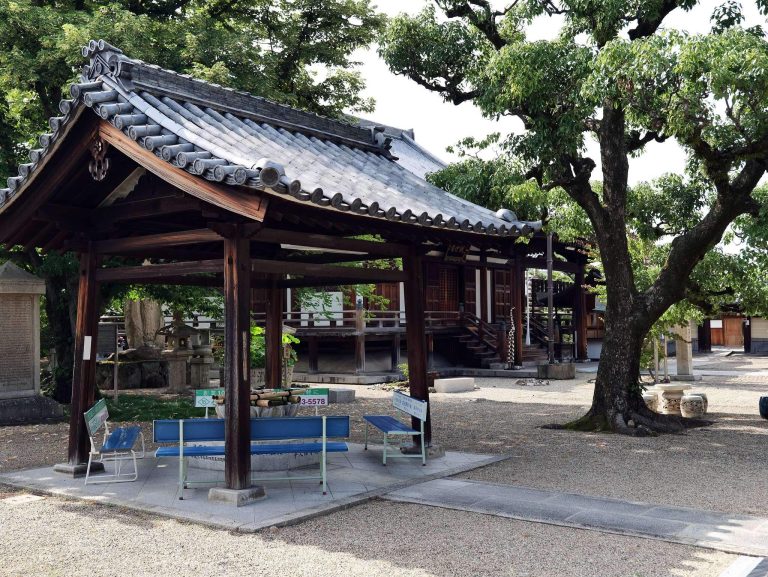
Materials excavated during the Taishō period were partly donated to Kyoto University, Osaka Medical University, and Dōmyōji Tenmangū. Much of the remaining material entered the collection of the proprietor of the Osaka Mainichi Shimbun, who sponsored the excavations and acquired excavation rights. Most of this material later formed the Motoyama Collection of the Kansai University Museum, with part designated an Important Cultural Property. Kō Site became a National Historic Site of Japan in 1974.
The excavations also attracted public attention. During the second investigation, large crowds gathered around the work area, where forged stone tools were sold. The excavation team stayed at the residence of Minamibōjō Yoshioki, chief priest of Dōmyōji Tenmangū. Because cattle were regarded at the shrine as messengers of Sugawara no Michizane, a Heian-period scholar and statesman later revered there as the Shinto deity Tenjin, the Minamibōjō family did not eat beef within the shrine precincts. The team nevertheless ate sukiyaki at the residence and was reprimanded by Yoshioki.
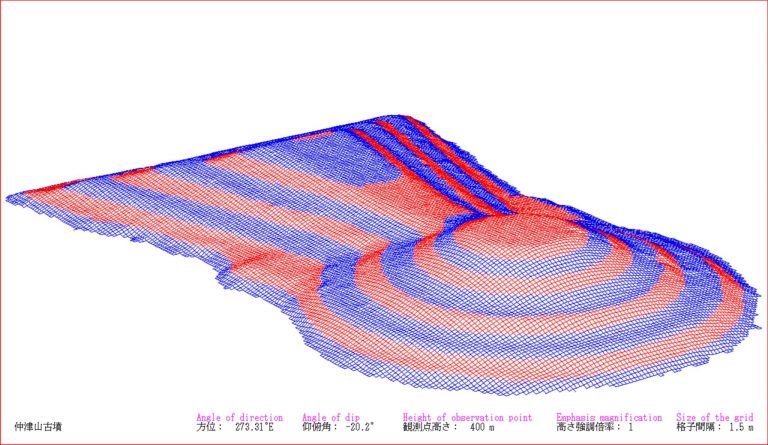
A Jōmon-period slit-ring-shaped ear ornament from Kō later became part of the motif for the Fujiidera municipal emblem, together with the city’s many keyhole-shaped burial mounds.
Remains
Setting and layered remains
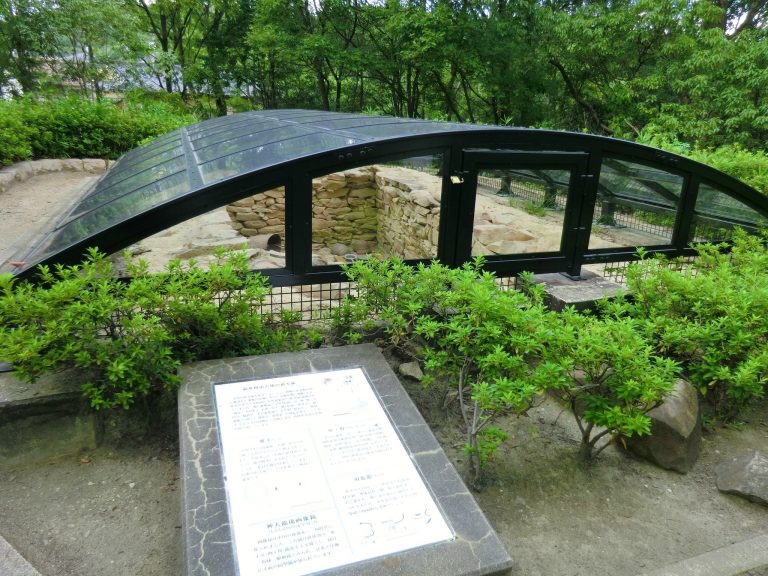
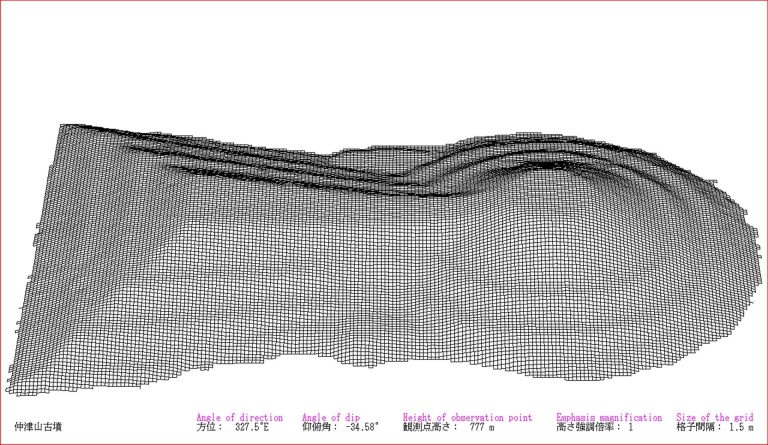
Kō Site lies near the northeastern terrace cliff of the Habikino hill, west of the confluence of the Yamato and Ishikawa rivers. Its layers preserve activity from many thousands of years. Upper deposits contain Jōmon- and Yayoi-period human bones, Yayoi underground storage pits, Kofun-period pottery associated with salt production, and remains of a Buddhist temple built during the Asuka period, a phase of early centralized government and the spread of Buddhism in Japan.
Administrative and medieval-period layers
The uppermost layers contain remains of the provincial capital of Kawachi Province during the Nara period. A provincial capital was an administrative center within Japan’s historical system of provincial government. Finds from these deposits include porcelain fragments, glazed pottery, and earthenware, with additional earthenware dating into the Heian period, the court-centered era conventionally dated from 794 to 1185.
Paleolithic stone tools
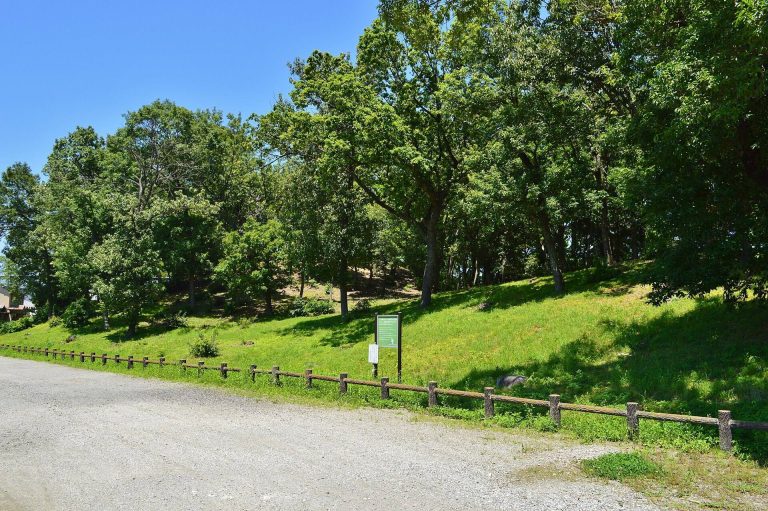
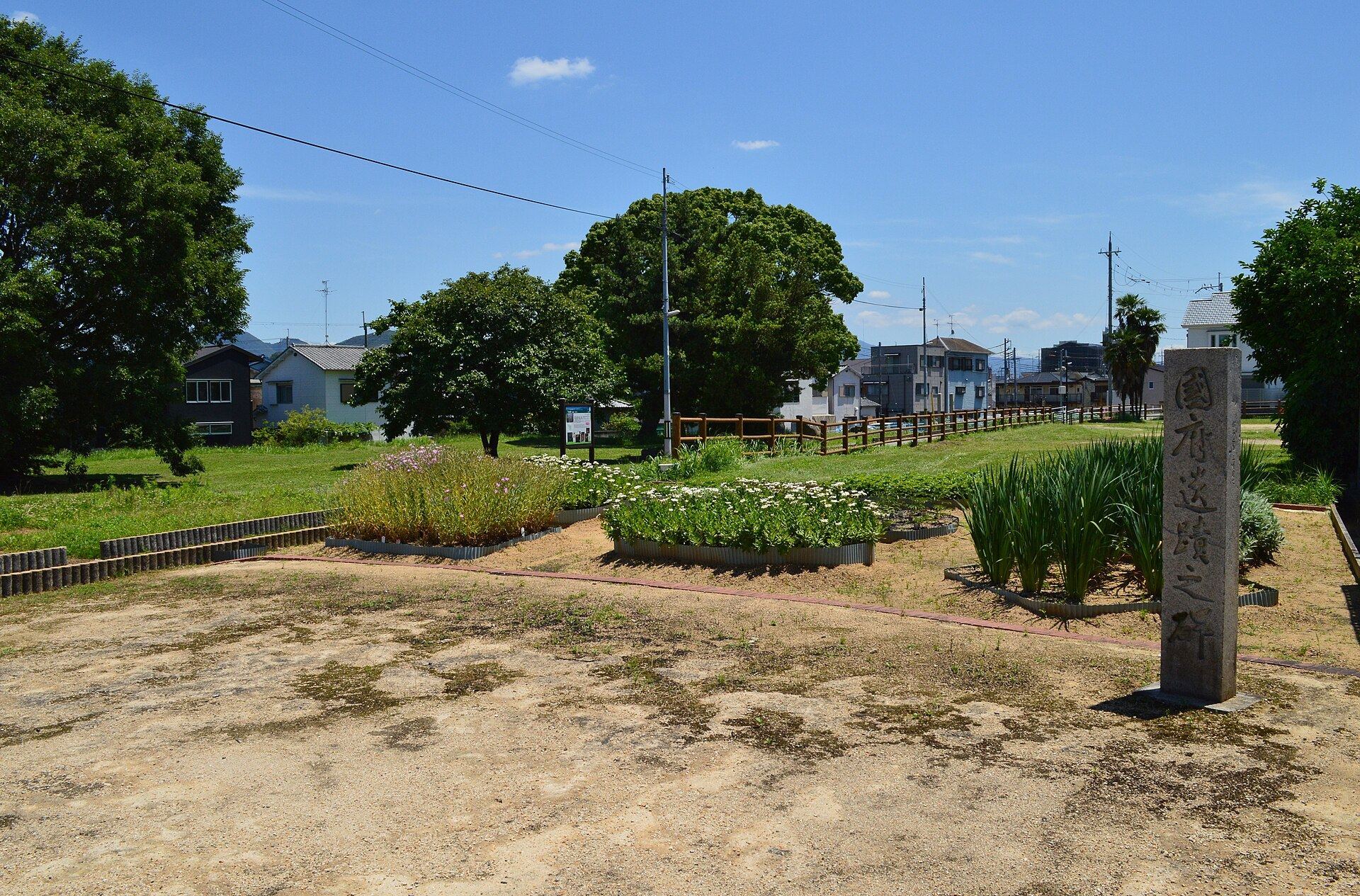
Below the Jōmon cultural layer, a clay deposit contains Paleolithic sanukite assemblages. The material includes wing-shaped flakes and knife-shaped tools made from them. These implements preserve the stone-working tradition that gave Kō its importance in research on Japan’s Paleolithic period. Part of the archaeological site is maintained as a park.