Upminster Tithe Barn: A Medieval Grange Barn in England
Site at a Glance
- Rating
- 4.2
- Popularity
- Very Low
- Country
- United Kingdom
- Primary era
- Medieval
- External website
- Open
- Eras represented
- Medieval
- Civilizations
- English
- Site type
- Economic
- Remains
- Warehouse
On this page7 sections
History
Medieval grange barn
Upminster Tithe Barn is a medieval agricultural building in the United Kingdom, dating to around 1450. Its surviving timbers were dated through dendrochronology, a method that examines annual tree-ring growth. The barn formed part of Hall Farm, within the manor of Upminster Hall, and belonged to Waltham Abbey.
Although traditionally called a tithe barn, the building is more accurately understood as a grange barn, an agricultural structure attached to a manor or religious estate for storing crops and supporting estate farming. The name refers to its association with Hall Farm rather than establishing a use for storing tithes, which were religious dues traditionally paid in kind.
From estate farming to public ownership
During the Dissolution of the Monasteries, the process by which Henry VIII’s government suppressed England’s monasteries and transferred their property to secular ownership, Waltham Abbey lost the barn in 1540. It then passed through secular ownership, while agricultural use continued as the surrounding area gradually suburbanised during the twentieth century.
In 1937, the barn and approximately 30 acres around it were sold to Hornchurch Urban District Council. Ownership passed to Havering London Borough Council in 1965. A fire damaged part of the roof in 1973, and rethatching repairs were completed by February 1975. Further repairs converted the building from agricultural use to museum use, with the work completed in February 1976.
Museum use and conservation
An agricultural museum operated in the barn from 1 May 1976 until January 2024. Havering Council and the Hornchurch and District Historical Society ran it jointly, and it opened twelve days each year. The barn has been a scheduled monument since November 1971. This designation provides legal protection for historic and archaeological sites of national importance in England.
In 2023, Historic England, the public body that advises on England’s historic environment, added the building to its Heritage at Risk Register because its thatched roof required urgent work. Restoration was completed in June 2025. At that time, the building was vacant and its future museum use had not been confirmed.
Remains
Barn structure and setting
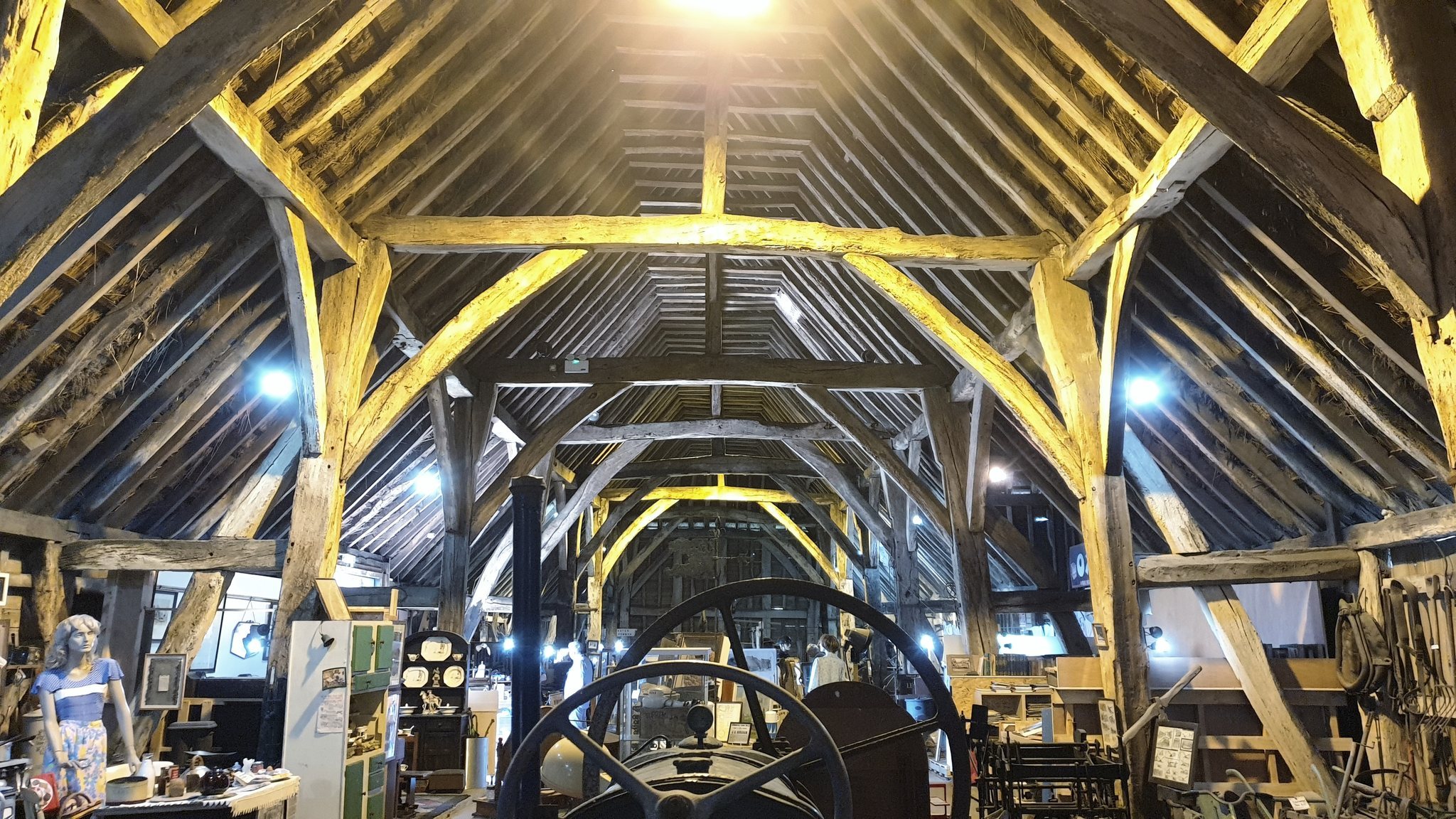
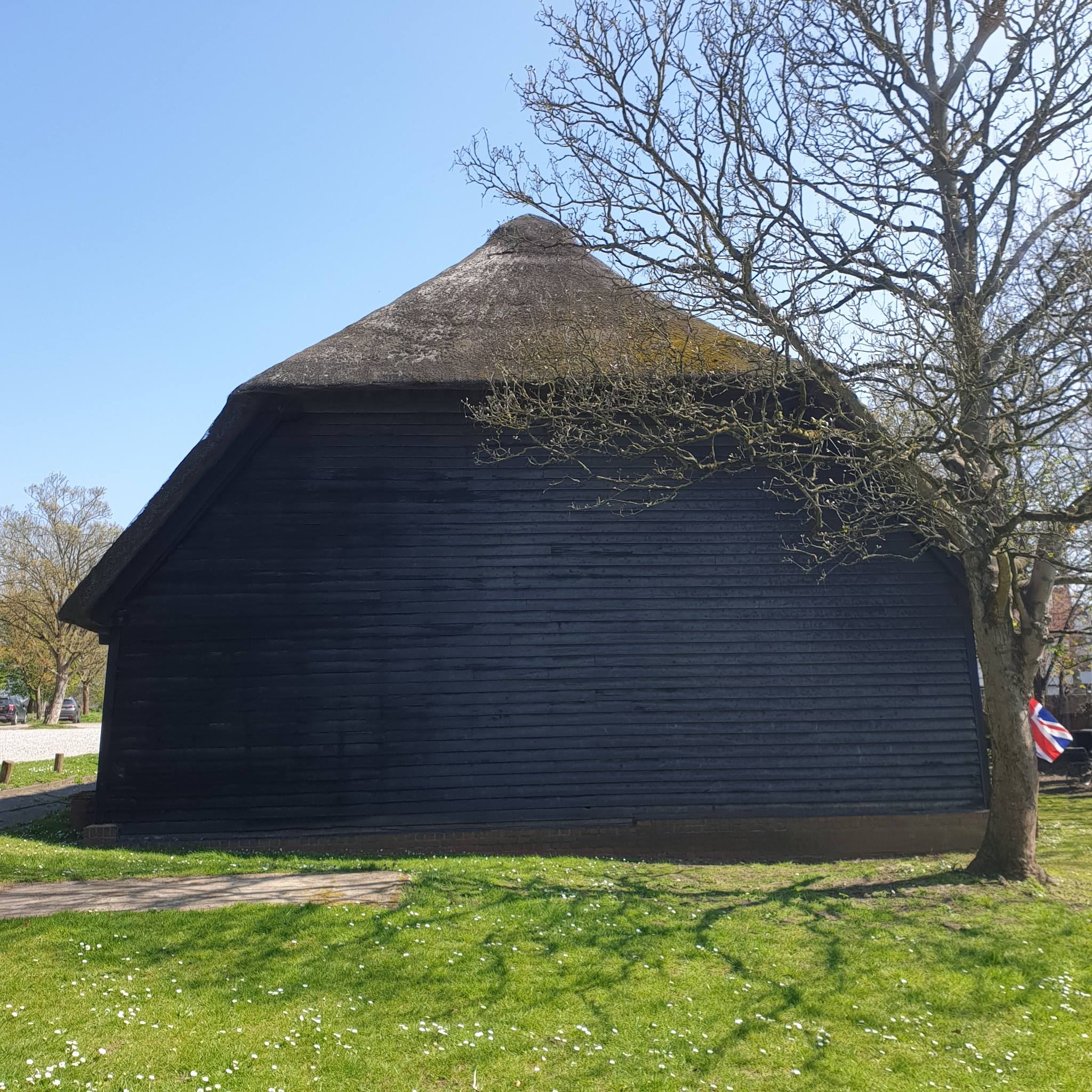
The surviving building is a one-storey medieval grange barn with a timber structure and thatched roof. It stands approximately 228 metres south-east of Upminster Court. Timber elements dating to around 1450 remain within the building, preserving its connection with the medieval agricultural estate of Hall Farm.
Roof and later adaptation
The roof was rethatched in 1965 and repaired after the 1973 fire, with further work completed by February 1975. The barn was adapted for museum use in 1976, and additional renovation took place in 2025. These interventions preserved and altered the building as its function changed from estate agriculture to public museum use.