Osvračín Castle: A Baroque and Neo-Gothic Chateau in Czechia
Site at a Glance
- Rating
- 4.4
- Popularity
- Very Low
- Country
- Czechia
- Primary era
- Early Modern
- External website
- Open
- Eras represented
- Early Modern, Modern
- Civilizations
- Austrian Empire, Habsburg, Holy Roman Empire, Kingdom of Bohemia
- Site type
- Domestic
- Remains
- Elite Residence
On this page8 sections
History
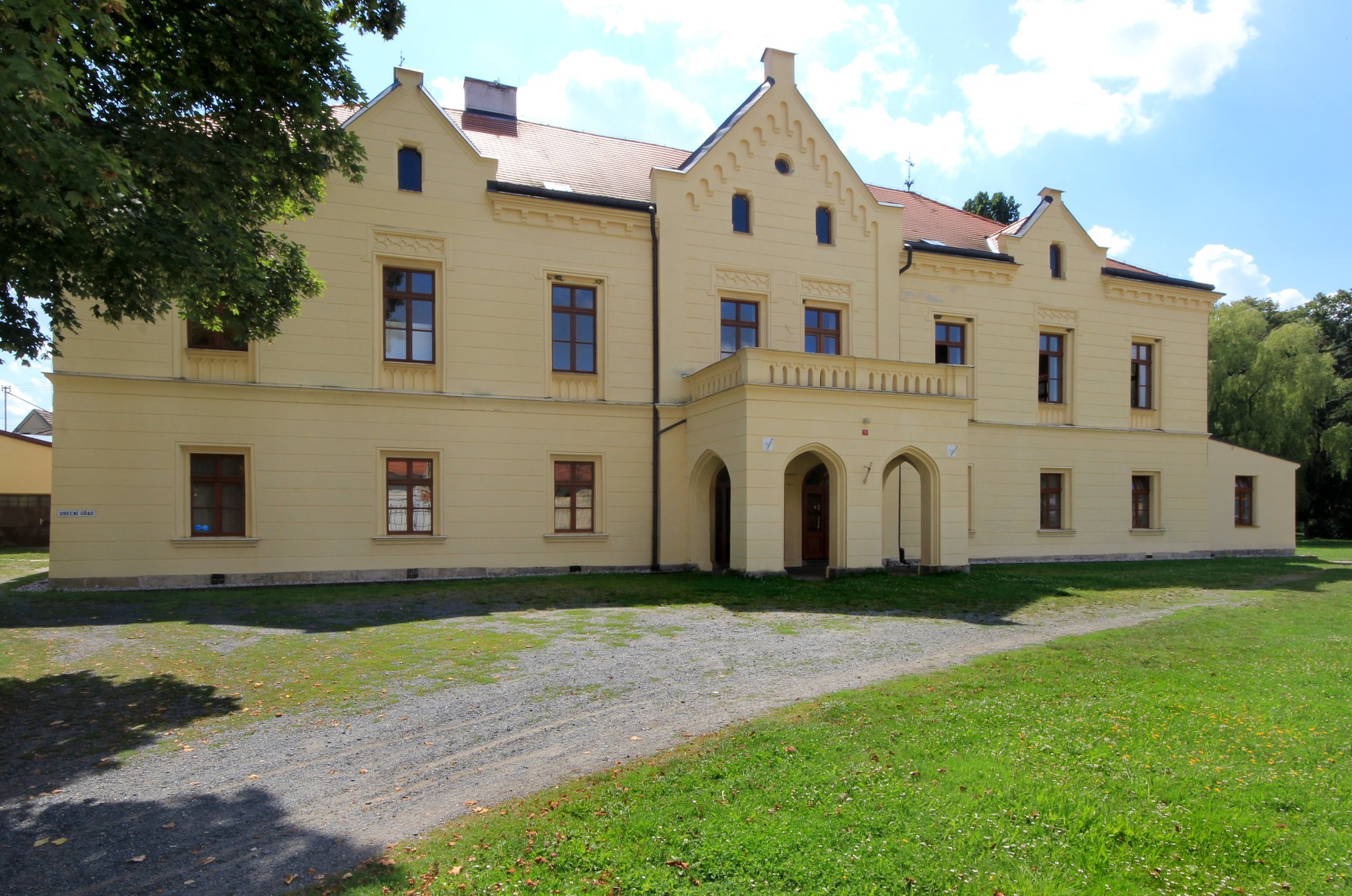
Osvračín Castle is a historic fortified manor and chateau in Osvračín, Czechia. The earlier stronghold was abandoned by the end of the fifteenth century, when Osvračín belonged to the Švihov estate. A fortified manor, meaning a defended residence belonging to a landed estate, was later established in the village and eventually became the basis of the present chateau.
From the Švihov estate to the Kočov family
In 1504, Osvračín was inherited by Bohunka of Lomnice, the widow of Půta of Rýzmberk. Her son Jindřich of Rýzmberk later received the property and sold it to Jan Vidršpergár of Vidršperk. The estate belonged to Markéta Kočovská of Křimice in 1544, while Ofka Kočovská held it in 1570 and Anna Kočovská in 1579. During this period, the Kočov family built a new fortified manor in the village.
Jiří of Kočov owned the fortified manor from 1585 to 1619. After his death, it passed to Anna Černínová, née Kočovská, and her four sons. Osvračín went to Humprecht Černín, while his brother Jan received the fortified manor at Lštění.
Černín ownership and the Baroque rebuilding
Humprecht Černín died young, and the estate was intended for Drslav Černín. Because Drslav could not compensate the other heirs, Jiří Černín took possession of Osvračín in 1625. He died in 1669, after which his uncle Jiří Václav inherited the property and left it to his own children, contrary to Jiří Černín’s wishes. Jiří Černín’s eldest son, Vilém Václav Černín, successfully challenged the will in 1688 and sold the estates six years later to Count Heřman Jakub Černín.
František Josef Černín later had the fortified manor rebuilt as a Baroque chateau. Baroque is an architectural style associated with the seventeenth and eighteenth centuries. The design is attributed to the architect František Maxmilián Kaňka, although the identity of the builders remains uncertain. The rebuilding is associated with the Černín family, but the Hildprants may instead have been responsible for constructing the Baroque chateau.
Hildprant ownership and later changes
In 1734, the knight Jan Josef Hildprant of Ottenhausen purchased the estate and briefly incorporated Osvračín into the Kanice estate. Osvračín became independent again in 1761 and remained with Hildprant descendants until 1800. Six owners held the chateau between 1800 and 1841. It was eventually acquired by the glass entrepreneur Ondřej Ziegler, who remodelled the building in the Neo-Gothic style, a nineteenth-century revival of medieval Gothic forms.
The municipality is now the owner and uses the chateau for cultural purposes and as the seat of the municipal office. Since 1993, Osvračín Chateau has been protected as a cultural monument of the Czech Republic.
Remains
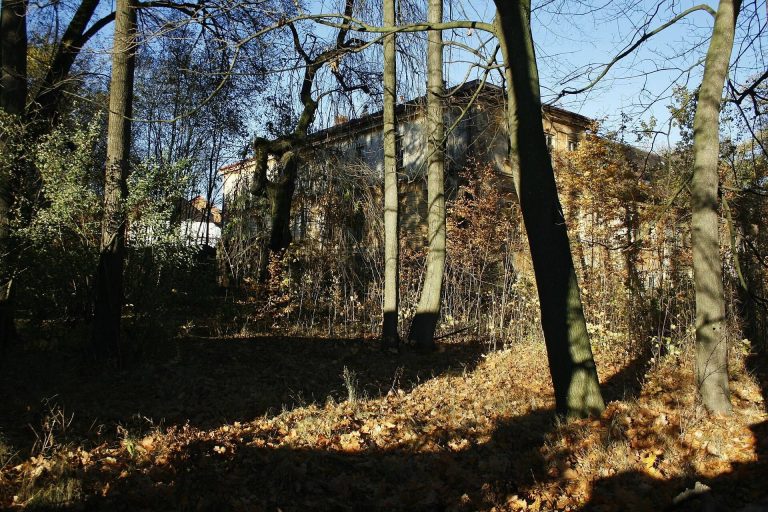
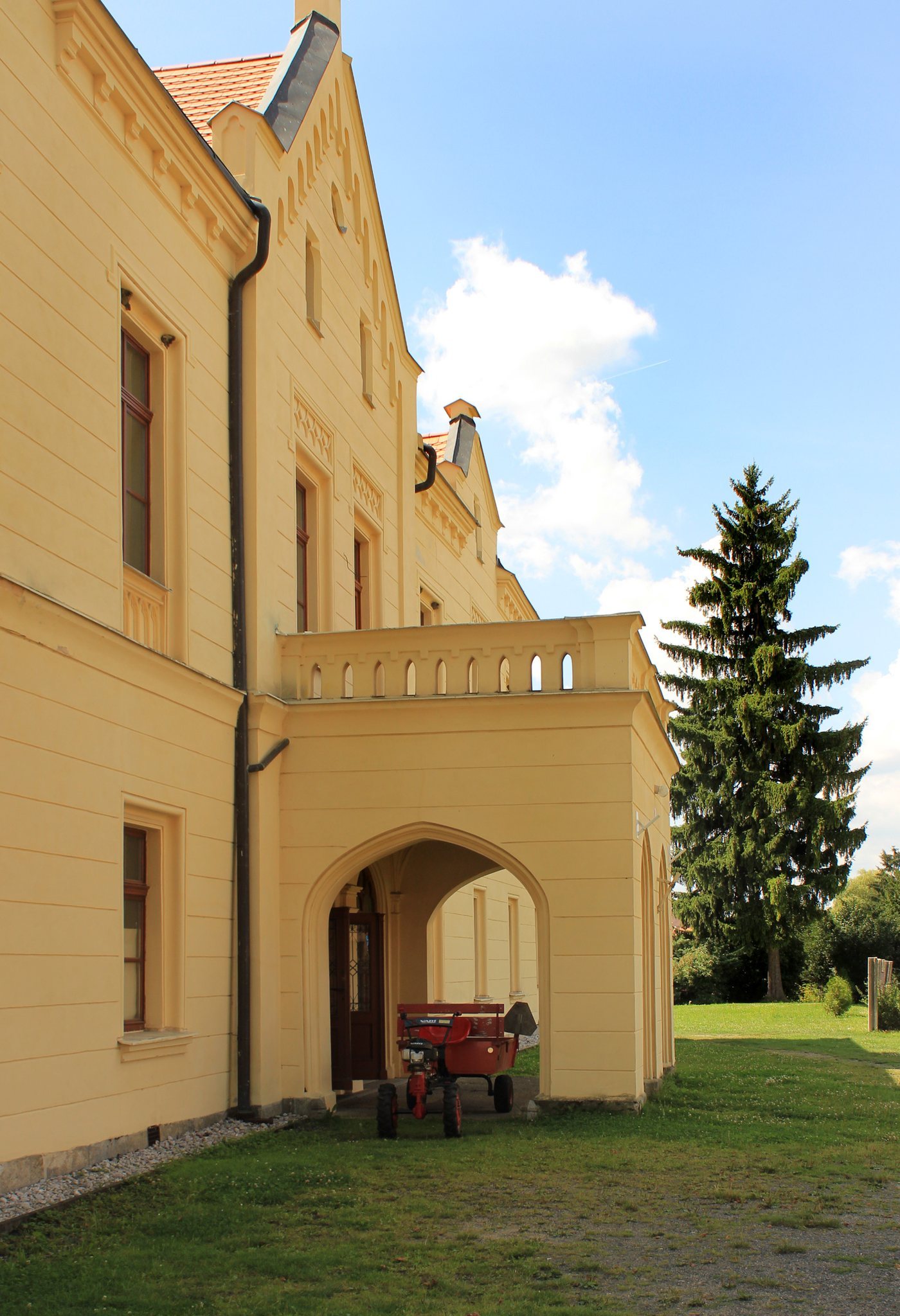
Osvračín Chateau stands in the centre of Osvračín in the Domažlice District. It is a two-storey building with two wings. The surviving structure combines the Baroque rebuilding of the earlier fortified manor with later Neo-Gothic remodelling, preserving the building’s principal architectural phases in its present form.
Chateau and library collections
The chateau
The building’s recorded architectural styles are Baroque and Neo-Gothic. Its development from a defended manor into a country residence of the landed elite reflects the change in function that accompanied the rebuilding. The two-storey, two-winged structure remains in municipal ownership and accommodates cultural uses and the municipal office.
The former library
The chateau formerly housed a library assembled by the Ziegler and Pack families and the nobles of Debern. It contained more than 1,500 books and 110 volumes of music, chiefly from the nineteenth and twentieth centuries. More than 400 books were published in the Netherlands. German was the predominant language, alongside English, French, Italian, and, exceptionally, Czech.
Most of the books were works of fiction, including frequent translations of contemporary international authors, as well as language textbooks and dictionaries. The music collection followed a similar linguistic pattern and consisted mainly of piano scores.