Zimmertoren: Lier’s Medieval Defensive Clock Tower
Site at a Glance
- Rating
- 4.5
- Popularity
- Medium
- Country
- Belgium
- Primary era
- Medieval
- External website
- Open
- Eras represented
- Medieval, Modern
- Civilizations
- Duchy of Brabant, Holy Roman Empire
- Site type
- Military
- Remains
- Tower
On this page10 sections
History
Medieval Defensive Tower
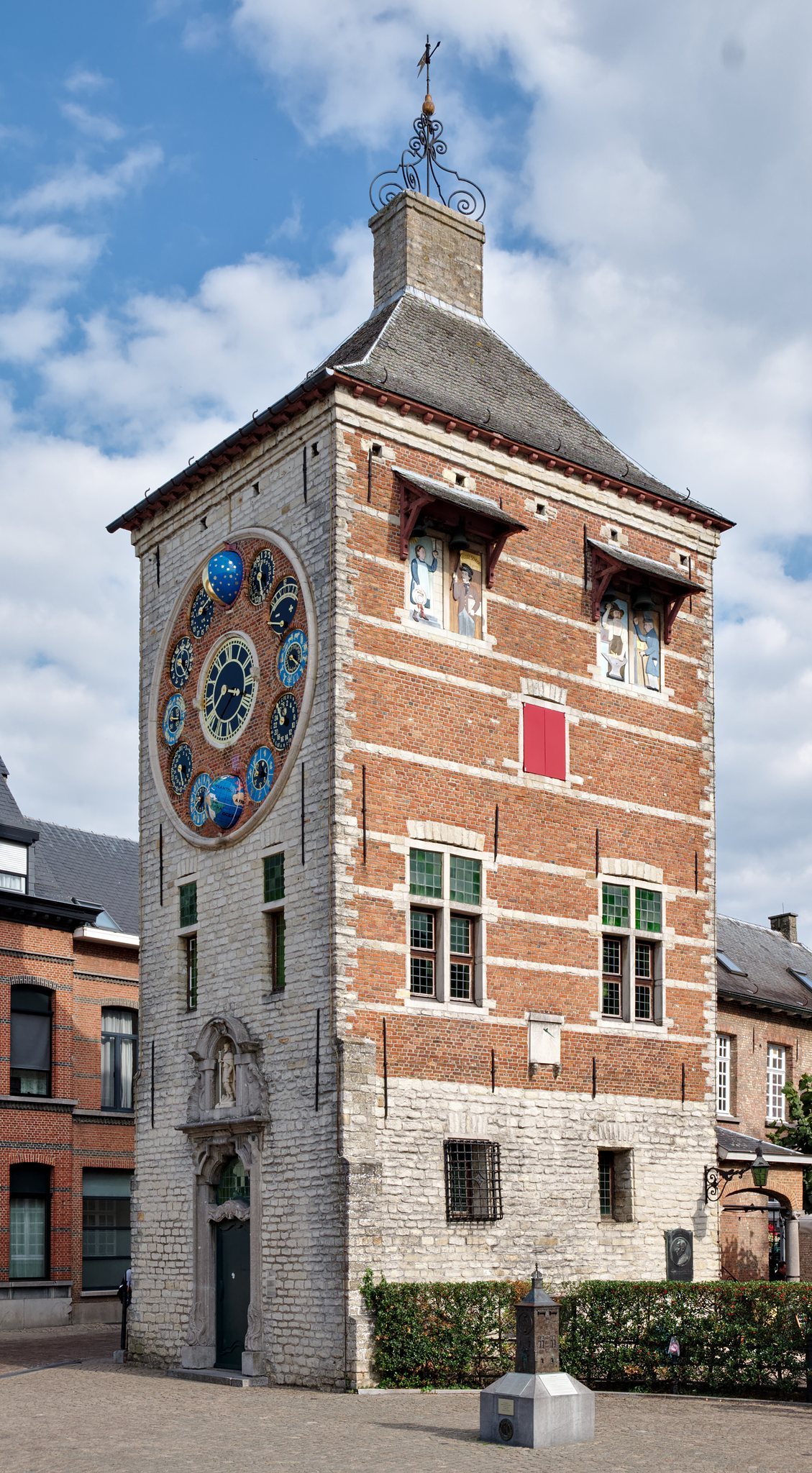
Zimmertoren, also known as the Cornelius Tower, is a medieval defensive tower in Lier, Belgium, beside Binnennete. It originally formed part of Lier’s fourteenth-century city fortifications. The precise construction date is unknown, but the original tower existed by 1425 at the latest.
From Municipal Sale to Reconstruction
In 1812, the municipal authorities sold the tower. After the First World War, the municipality bought it back with the intention of demolishing it. Its future changed in 1930, when Louis Zimmer, a Belgian astronomer and clockmaker who lived from 1888 to 1970, gave the city his Jubilee Clock, also called the Centenary Clock.
The old tower was substantially reconstructed to accommodate Zimmer’s clock and was renamed Zimmertoren in his honor. A pavilion for Zimmer’s Wonder Clock was built beside the tower in 1960. The Wonder Clock had been made for the 1935 World Exhibition in Brussels and was later demonstrated in the United States. Zimmer subsequently added a mechanical planetarium. Albert Einstein was impressed by the mechanism and congratulated Zimmer on its creation.
Zimmertoren became a state-protected monument in 1980. The tower and the adjacent pavilion now function as a museum, combining the surviving medieval structure with Zimmer’s astronomical and calendar displays.
Remains
Tower and Jubilee Clock
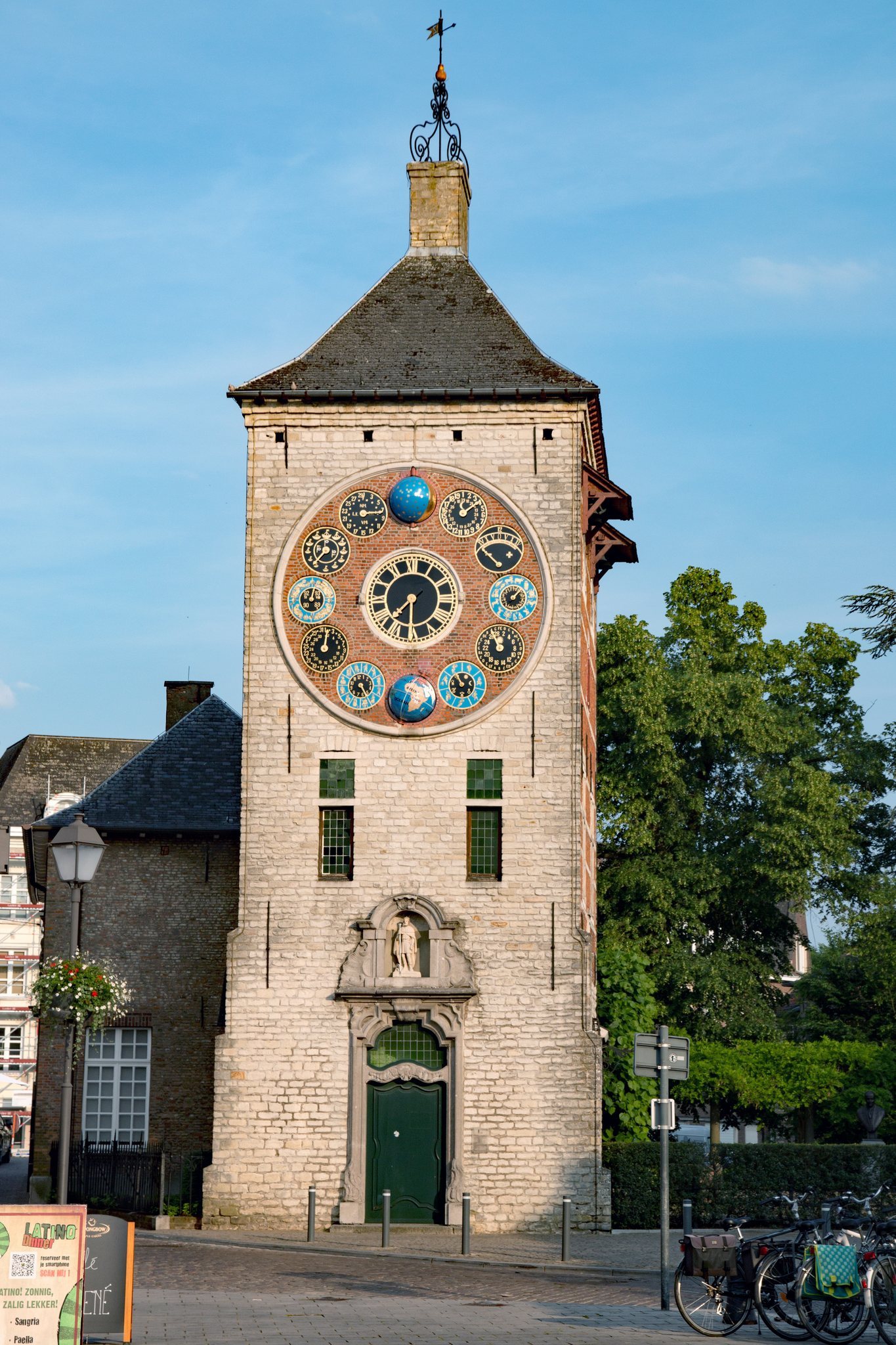
The fortified clock tower stands beside Binnennete and measures 20.31 metres in height. It forms part of the former Lier city walls, while a small square lies at its foot. The front of the tower carries the Jubilee Clock, whose central dial is surrounded by twelve further clock faces. The complete clock has 57 dials, including 13 on the outside of the tower.
Central and Calendar Dials
The central dial is 1.5 metres across and shows exact time, using UTC+1 or UTC+2 during daylight-saving time. Other displays explain different systems for measuring and organizing time. The equation-of-time dial shows the difference between apparent solar time, based on the Sun’s apparent position, and mean solar time, based on a uniform daily average. It reaches its largest positive differences around 3 November and 15 May, and its largest negative differences around 12 February and 27 July. It shows zero around 16 April, 15 June, 1 September, and 25 December.
The zodiac dial is divided into twelve signs associated with constellations and completes one revolution each year. Virgo appears as a unicorn, representing virginity and purity. A solar-cycle dial represents a 28-year sequence in which calendar dates recur in the same order. Its inner ring gives the current year in that cycle, while its outer ring shows the dominical letter, a calendar letter identifying the date of the first Sunday of the year. Leap years use two letters because the applicable letter changes after February.
The week dial represents the seven days with ancient gods and their symbols, completing one revolution each week. A globe dial represents Earth’s rotation and the succession of day and night. A fixed golden belt marks a meridian from the North Pole to the South Pole, while the globe turns once every 24 hours. The months dial shows the twelve months, with a hand completing one revolution each year. Human figures illustrate traditional activities associated with the months.
The calendar-date dial is numbered to 31 and completes one revolution each month. It advances automatically to the first day of the next month when a month has 28, 29, or 30 days.
Seasonal and Lunar Displays
The seasons dial contains four drawings by Felix Timmermans, a writer from Lier. Spring appears as a child with flowers, summer as a person mowing wheat, autumn as a young man with a cornucopia, fruit, and vegetables, and winter as an elderly woman reading beside a fireplace. The dial gives spring as 92 days and 11 hours, summer as 93 days and 8 hours, autumn as 89 days and 10 hours, and winter as exactly 90 days. Small globes between the drawings show the part of Earth illuminated by the Sun at the beginning of each season, while the hand completes one revolution annually.
A tides dial indicates the tides at Lier. A large ship and a flag without a streamer represent high water. A streamer above the flag indicates flood tide, and one below it indicates ebb tide. The display shows water rising for 3 hours and 53 minutes and falling during the remaining hours, with the dial completing a revolution in 12 hours and 25 minutes.
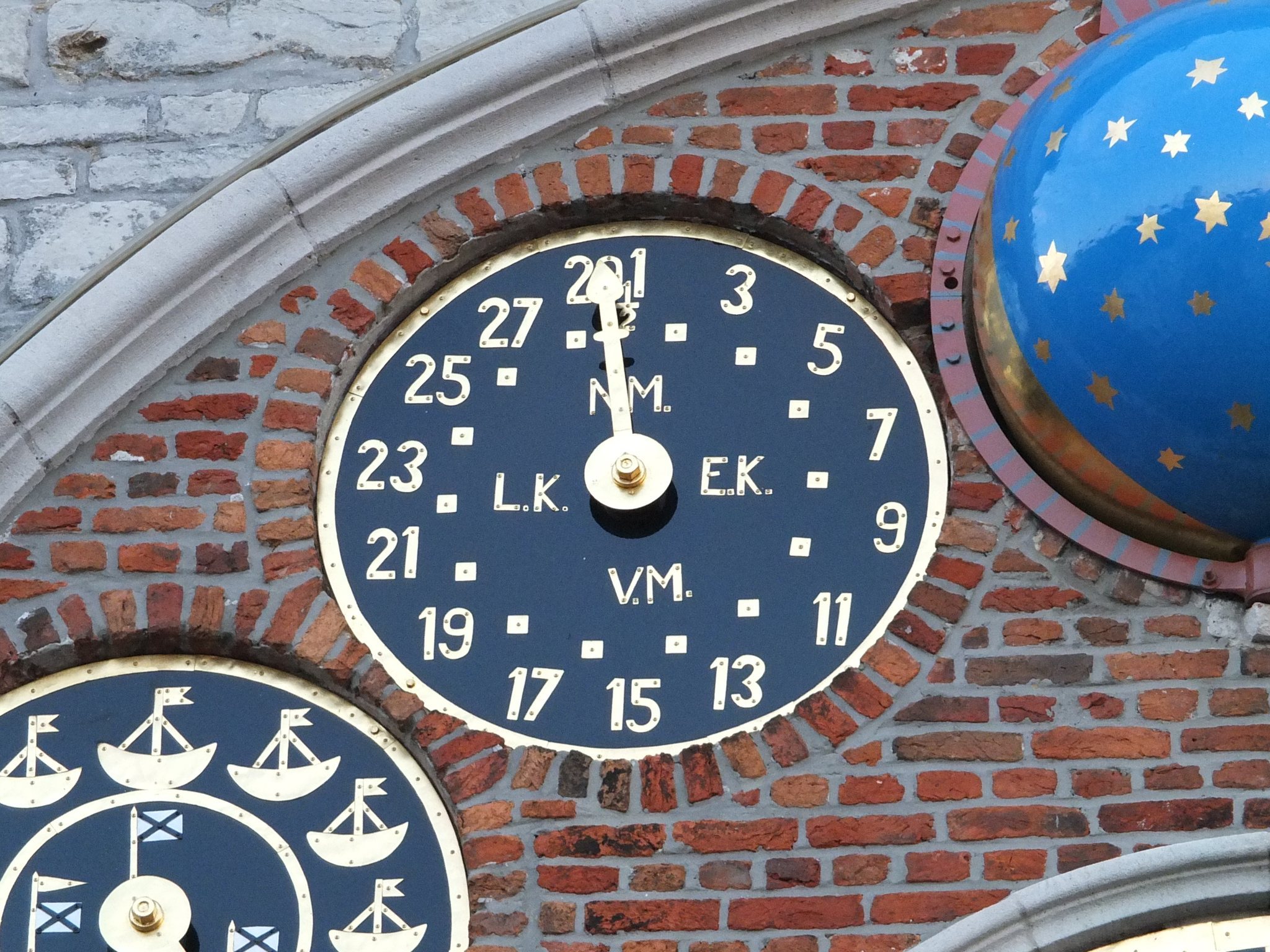
The age-of-the-Moon dial shows the number of days since the last new moon and represents the new moon, first quarter, full moon, and last quarter. It gives the interval between full moons as approximately 29 days, 12 hours, and 44 minutes. A separate lunar-phases dial uses a globe painted half gold and half blue with golden stars. Its golden half represents the visible part of the Moon.
The Metonic-cycle and epact dial completes one revolution in 19 years. The Metonic cycle is the period after which lunar phases recur on approximately the same calendar dates. Its outer ring shows the golden number, or year within that cycle, and its inner ring gives the epact, the Moon’s calculated age on 1 January. The associated inscription will require alteration in 2100 because that year is not a leap year.
Wonder Clock Pavilion and Astronomical Model
Wonder Clock
The pavilion beside the tower houses the Wonder Clock. Its mechanisms include a hand that takes 25,800 years to complete one revolution, matching the approximate period of axial precession, the slow change in the direction of Earth’s rotational axis. The clock also contains a mechanical planetarium.
Solar System Representation
The small square at the foot of the tower contains a metal representation of the Solar System. Discs indicate the Sun and planets, while rings mark their orbits. The display also marks the minor planets Felix, number 1664, discovered in 1929, and Zimmer, number 3064, discovered in 1984.