Hinoe Castle: A Medieval and Sengoku-Period Japanese Castle
Site at a Glance
- Rating
- 3.5
- Popularity
- Low
- Country
- Japan
- Primary era
- Early Modern
- External website
- Open
- Eras represented
- Medieval, Early Modern
- Civilizations
- Kamakura shogunate
- Site type
- Military
- Remains
- Castle
On this page11 sections
History
Hinoe Castle is a Japanese hilltop castle in Minamishimabara, Japan, built between 1213 and 1219 during the early Kamakura period by Fujiwara Tsunezumi, the governor of Takaku District. The Kamakura period, conventionally dated from 1185 to 1333, was the era of Japan’s first long-lasting warrior government. Hinoe later became the principal stronghold and administrative base of the Arima clan, whose changing fortunes connected the site with regional warfare, Christian missions, and the political reorganization of Japan.
Foundation and the Arima domain
Fujiwara Tsunezumi claimed descent from the Northern House of the Fujiwara, specifically through Fujiwara no Sumitomo, although descent from the Taira or the Northern Fujiwara was also asserted. He used the surname Arima when Hinoe Castle was built and later changed it to Arima. The clan initially controlled only part of the southern Shimabara Peninsula. Under Arima Takazumi, it defeated rival powers across the peninsula and developed into a Sengoku-period daimyo house. The Sengoku period was the later age of regional warfare and competing territorial lords, generally spanning the fifteenth and sixteenth centuries.
The Arima expanded their influence through both territorial control and maritime commerce. Under Arima Haruzumi, the clan reached its greatest extent, holding land assessed at approximately 210,000 koku. Koku was a historical measure of agricultural production, conventionally based on the amount of rice associated with a territory. The clan also gained substantial income from sea transport, while Portuguese traders began operating at nearby Kuchinotsu Port in 1550. Hara Castle was built as a subsidiary of Hinoe Castle during this period.
Christianity and late-sixteenth-century transformation
After the destruction of the Ouchi clan, which had previously supported the Arima, the clan came under pressure from the Ryuzoji. Arima Harunobu, the thirteenth head of the family, converted to Christianity and established a seminary in the castle town. A seminary was an institution for educating and training Christian clergy. Harunobu also ordered Buddhist temples and Shinto shrines to be demolished so that their timber could be reused in the castle. The main remains exposed through excavation belong to his period, when Hinoe underwent substantial rebuilding.
Harunobu held territory assessed at 40,000 koku in the early Edo period. In 1612, he was compelled to commit seppuku in Kai Province because of his involvement in the Okamoto Daihachi Incident. Seppuku was a formal method of ritual suicide associated with the samurai class, often carried out under orders or following political disgrace. His eldest son, Arima Naozumi, succeeded him, but was transferred to Nobeoka in Hyuga Province in 1614. This ended approximately four centuries of Arima residence at Hinoe Castle.
Abandonment and later interpretation
After the Arima departure, Hinoe became territory administered directly by the shogunate. Until Matsukura Shigemasa took possession of the castle in 1616, lords of the Hizen-based Nabeshima, Omura, and Matsuura clans shared responsibility for its defence. Matsukura considered Hinoe inconvenient and built Shimabara Castle, moving his seat there. Hinoe was abandoned in 1616, and some of its buildings and sections of its stone walls were reused at the new castle.
Following the Shimabara Rebellion, the remaining works at Hinoe were demolished to prevent further military use. Settlers later converted much of the site into orchards and farmland. Eight tengu are enshrined at the castle site. Hinoe Castle was designated a National Historic Site on July 3, 1982.
Four excavations carried out between 1995 and 2000 revealed construction features and materials indicating close ties between Hinoe and the Toyotomi government, the central regime established by Toyotomi Hideyoshi before the Tokugawa shogunate. In early 2006, the abandonment of agricultural use and declining visitation had left about 30 percent of the castle area requiring repair. A park-development project intended to restore the site and create a cherry-blossom attraction was halted after allegations that archaeological remains had been damaged.
Hinoe was later included in a proposed UNESCO World Heritage property concerning the churches and Christian heritage of Nagasaki. After an on-site assessment by the International Council on Monuments and Sites in 2015, the recommendation was temporarily withdrawn in 2016 because the proposal needed a stronger focus on the period when Christianity was prohibited in Japan. Although renomination was subsequently agreed, Hinoe Castle was ultimately removed because its connection with that period was judged insufficient.
Remains
Hilltop layout and defensive areas
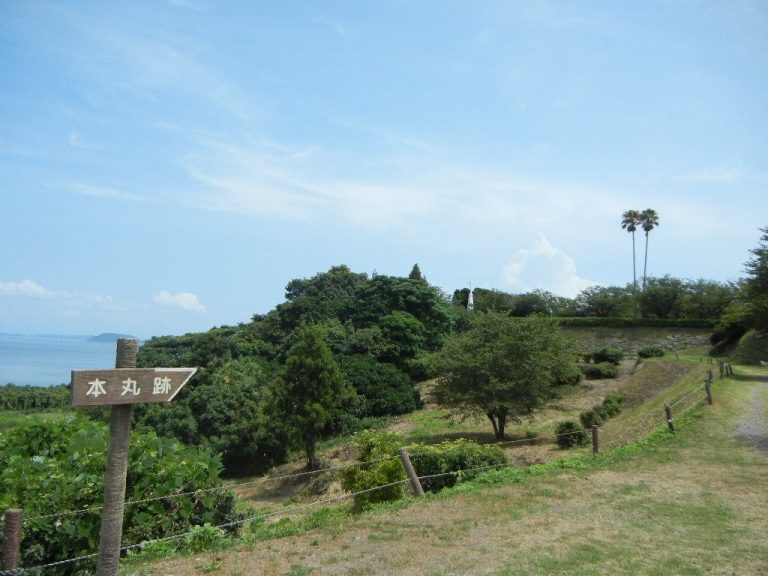
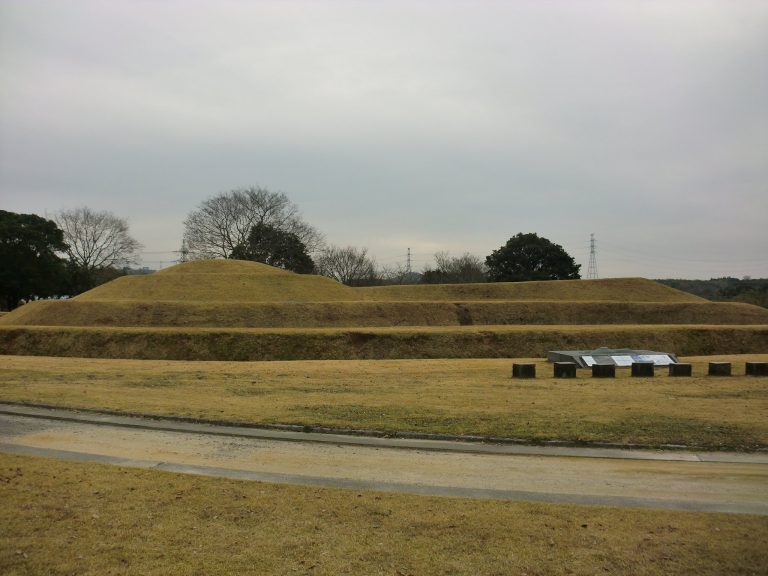
Hinoe Castle is a connected-enclosure hilltop castle, or hirayama-style Japanese castle, built on a low hill near the mouth of the Arima River. The hill forms the southern end of a ridge extending from Mount Unzen, a volcanic massif on the Shimabara Peninsula. The Arima River lies to the south and the Ote River to the east. The principal castle area measured approximately 400 by 200 meters and was separated from the adjoining ridge by a valley.
Central enclosures
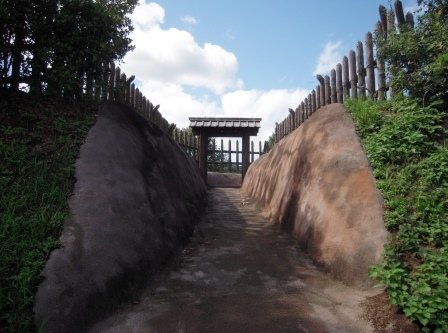
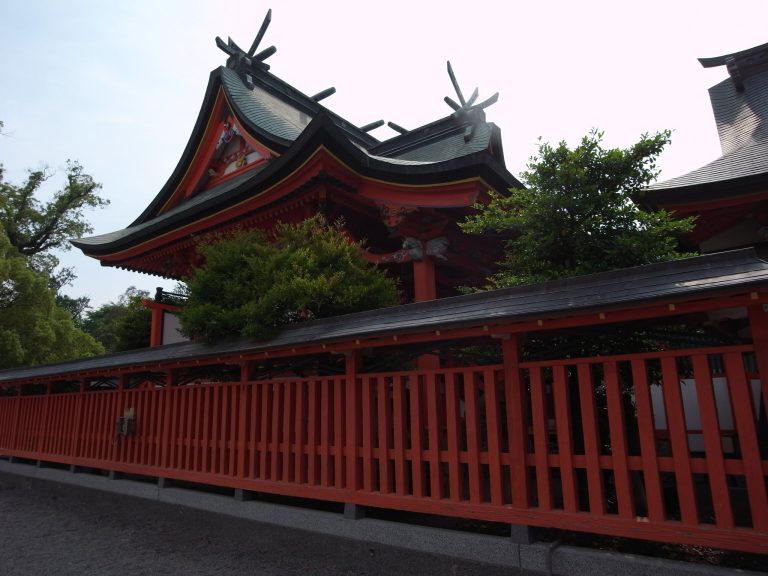
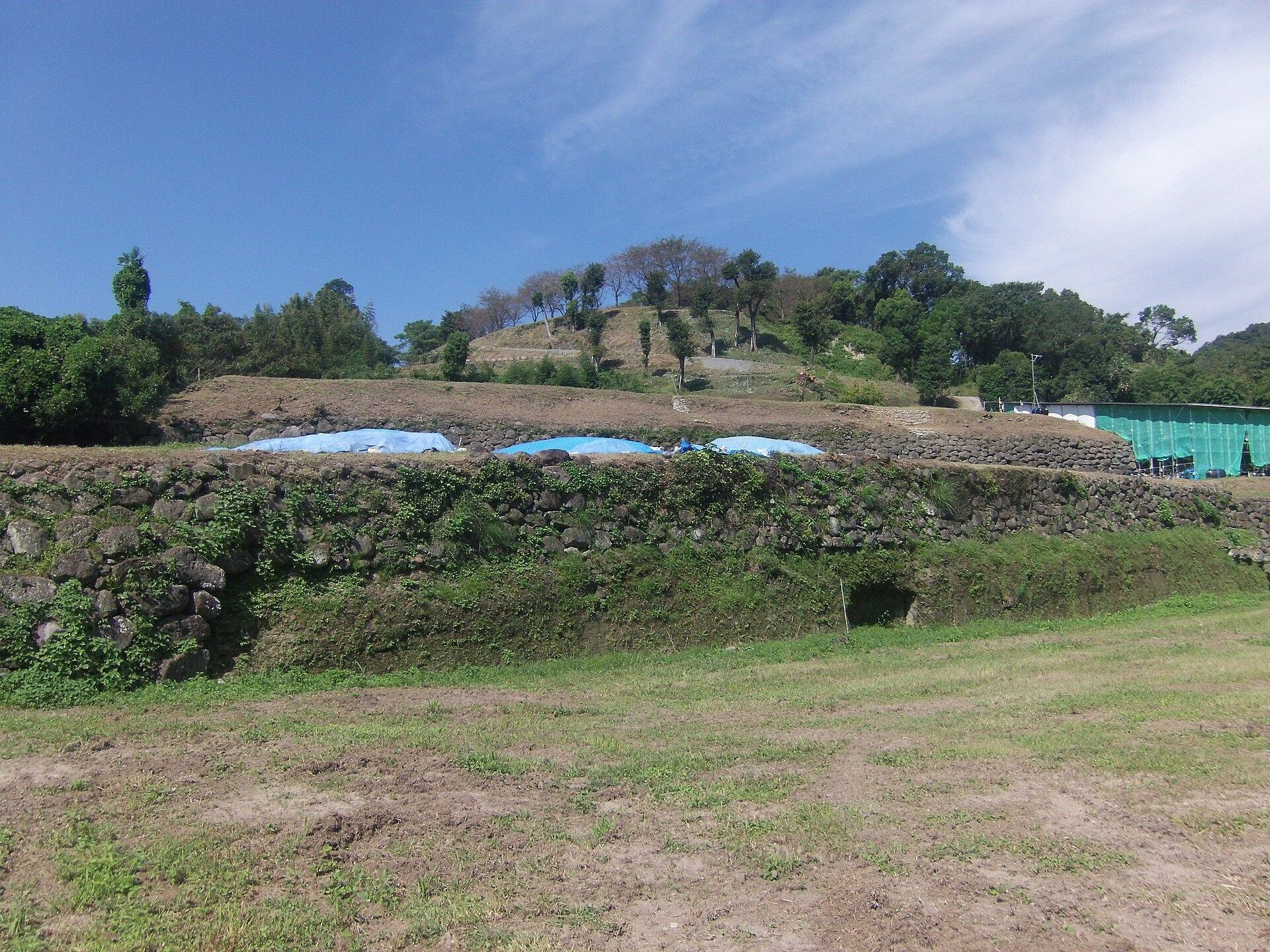
The core of the castle occupied the eastern half of the site. The main enclosure stood at the highest central point, with the second enclosure to the southeast and the third enclosure to the west. Numerous terraces surrounded these principal areas. A second peak on the western side of the hill formed a forward fortification facing the castle town, while the main gate is presumed to have stood on the eastern side. The form of the castle’s tenshu, or principal tower, remains unknown. Hinoe Shrine now occupies the area identified as the former tenshu.
Walls and moats
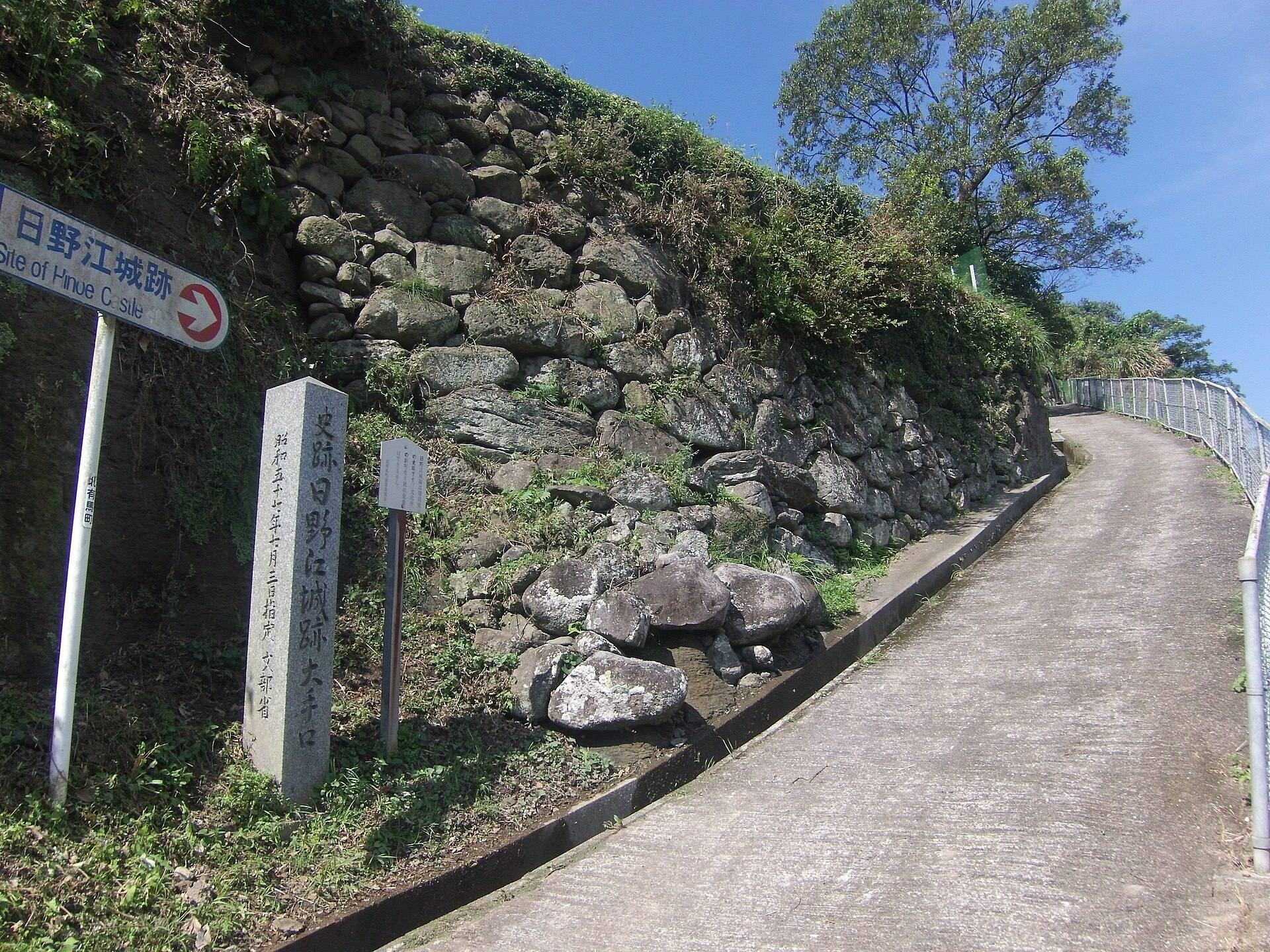
Stone walls and dry moats survive across the castle site. Excavation has also traced the enclosures, terraces, and gate area. Some walls were built directly on natural bedrock, while other stonework incorporated construction techniques of foreign origin. These features belong principally to the period of Arima Harunobu and help define the scale and character of the late-sixteenth-century castle.
Excavated architectural features
Main-enclosure staircase
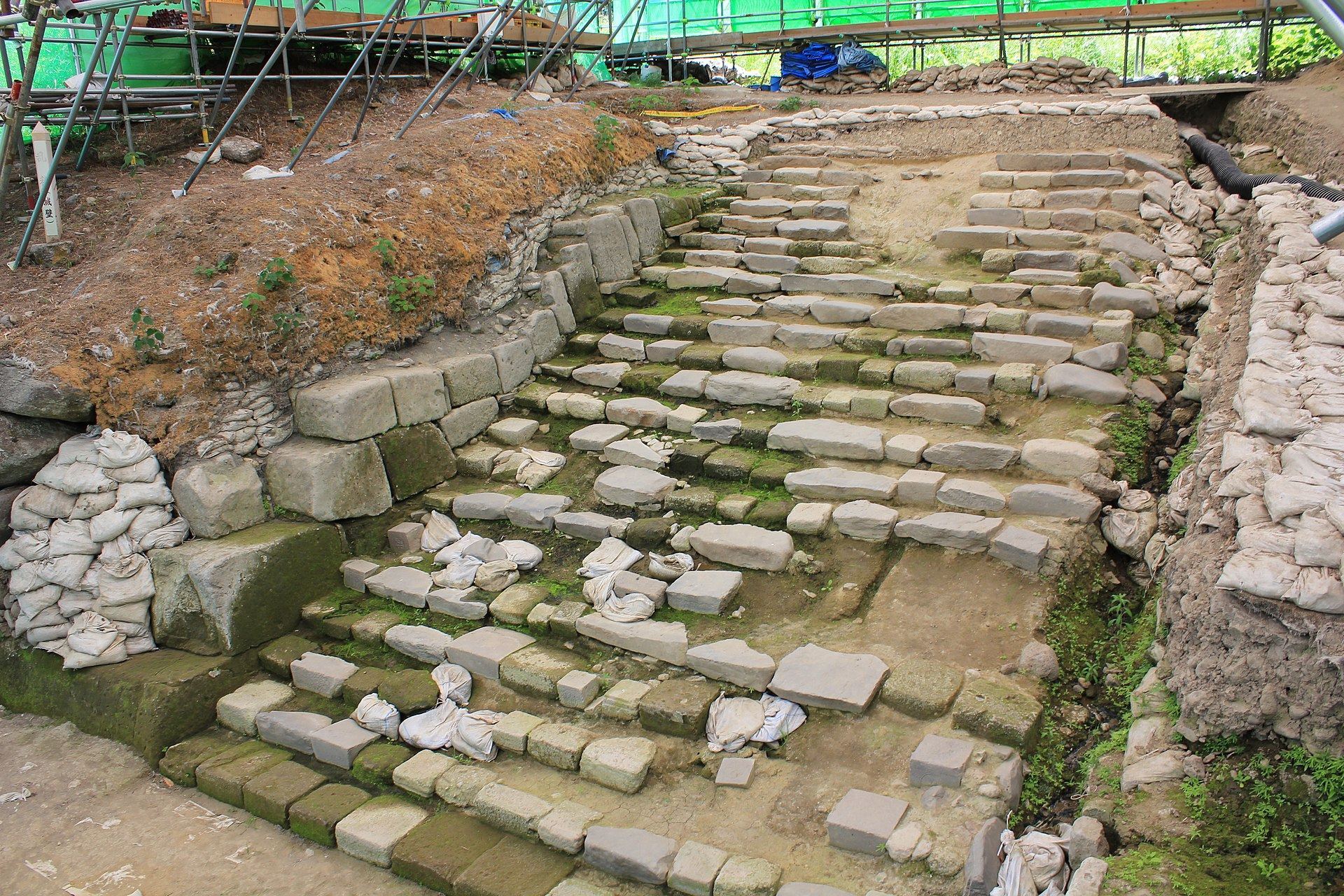
A straight staircase more than 100 meters long extended from the bottom of the main enclosure. A staircase of this kind was otherwise known only at Azuchi Castle, a major late-sixteenth-century castle associated with Oda Nobunaga. The Hinoe staircase was backfilled around 2015 to preserve it and is not currently visible.
Decorative and imported materials
Excavations recovered Chinese ceramics and roof tiles bearing gold leaf. The site also yielded stonework using foreign construction techniques. Together with the bedrock-based walls and the long staircase, these materials point to an ambitious rebuilding phase under Arima Harunobu and to the castle’s close relationship with the Toyotomi government. The remains provide physical evidence for Hinoe’s transformation during the political and religious changes of the late sixteenth century.