Alamparai Fort: A Mughal-Era Trading Fort in India

Site at a Glance
- Rating
- 4.1
- Popularity
- Medium
- Country
- India
- Primary era
- Early Modern
- External website
- Open
- Eras represented
- Early Modern
- Civilizations
- Mughal
- Site type
- Military
- Remains
- Fort
On this page10 sections
History
Alamparai Fort is a Mughal-era fort in India, located at Edaikazhinadu in Tamil Nadu and constructed in the 1730s. Alamparai was a seaport and trading center on the Coromandel Coast, a role also associated with the region in Sangam literature, an early body of Tamil works concerning the society and economy of the ancient Tamil region.
The Port of the Arcot Nawabs
The fort was initially controlled by Doste Ali Khan, Nawab of Arcot. A nawab was a regional governor or ruler who could exercise substantial authority under a larger political framework. Alamparai became the principal trading port of the Arcot nawabs, with a dockyard supporting exports of zari cloth, salt, and ghee. Ships travelling along the Coromandel Coast regularly stopped at the port.
The Arcot nawabs also operated a mint at Alamparai, an establishment where coins were produced. At the request of Dumas, the governor of the Madras Presidency, mint workers from Alamparai moved to Pondicherry after receiving the Nawab of Arcot’s approval and established a mint there.
French and British Control
In 1750, Alamparai Fort was transferred to the French in recognition of the services that the French commander Dupleix had rendered to Subedar Muzaffar Jung. A subedar was a high-ranking provincial military or administrative governor. The fort is also mentioned in the diaries of Ananda Ranga Pillai, who served as Dupleix’s dubash, an interpreter and commercial intermediary between European officials and local communities.
During the Carnatic Wars, a series of eighteenth-century conflicts in which British and French interests competed for influence in southern India, the French were defeated by the British. Alamparai Fort then came under direct British control and was captured and demolished in 1760.
Archaeological Evidence and Later Damage
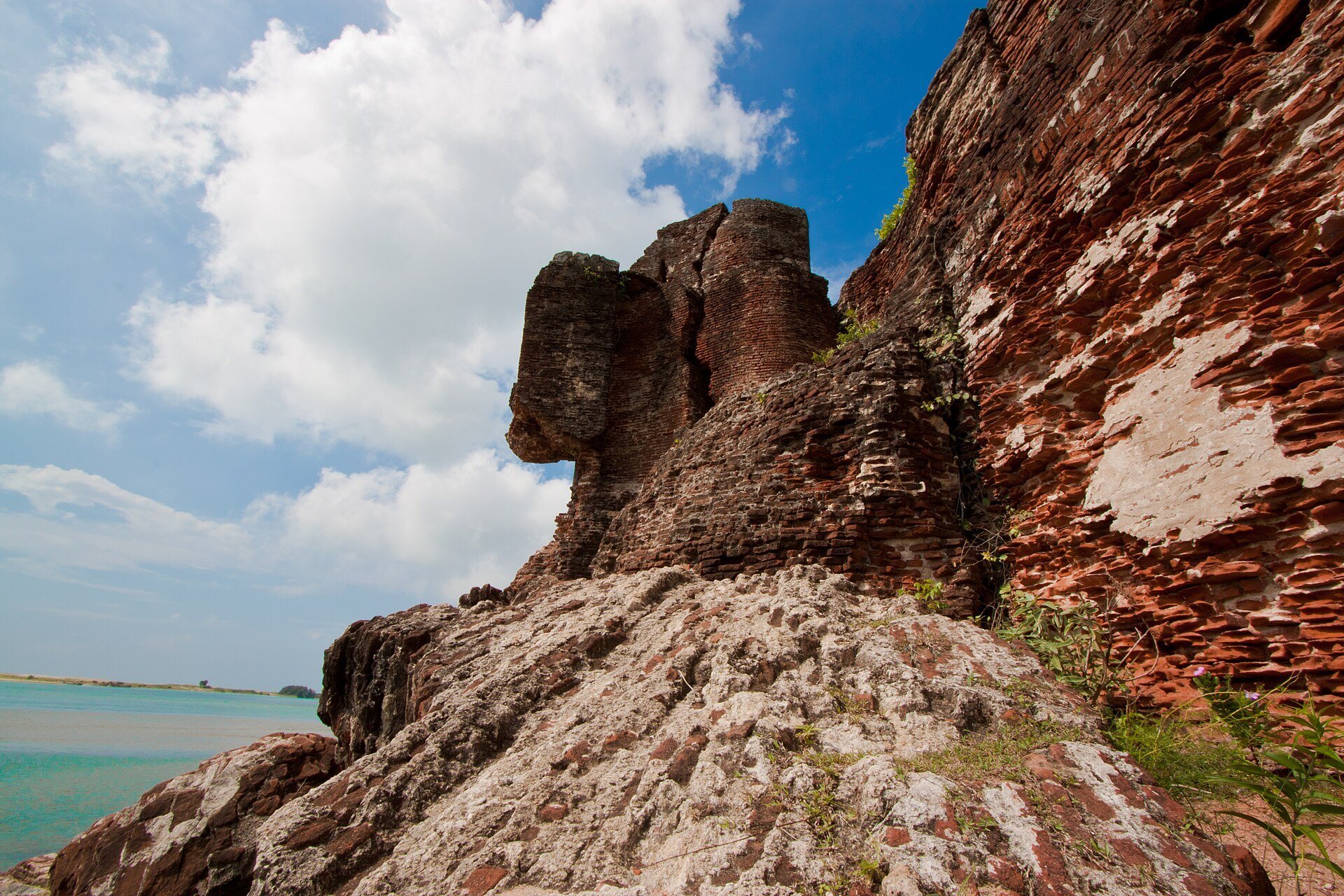
Coins minted under the Arcot nawabs were found at the site, along with arms and ammunition associated with both the nawabs and the French. The fort suffered further damage during the 2004 Indian Ocean tsunami, and parts of the ruined complex subsequently lay beneath the sea. The ruins are controlled by the Department of Archaeology of the Government of Tamil Nadu.
Remains
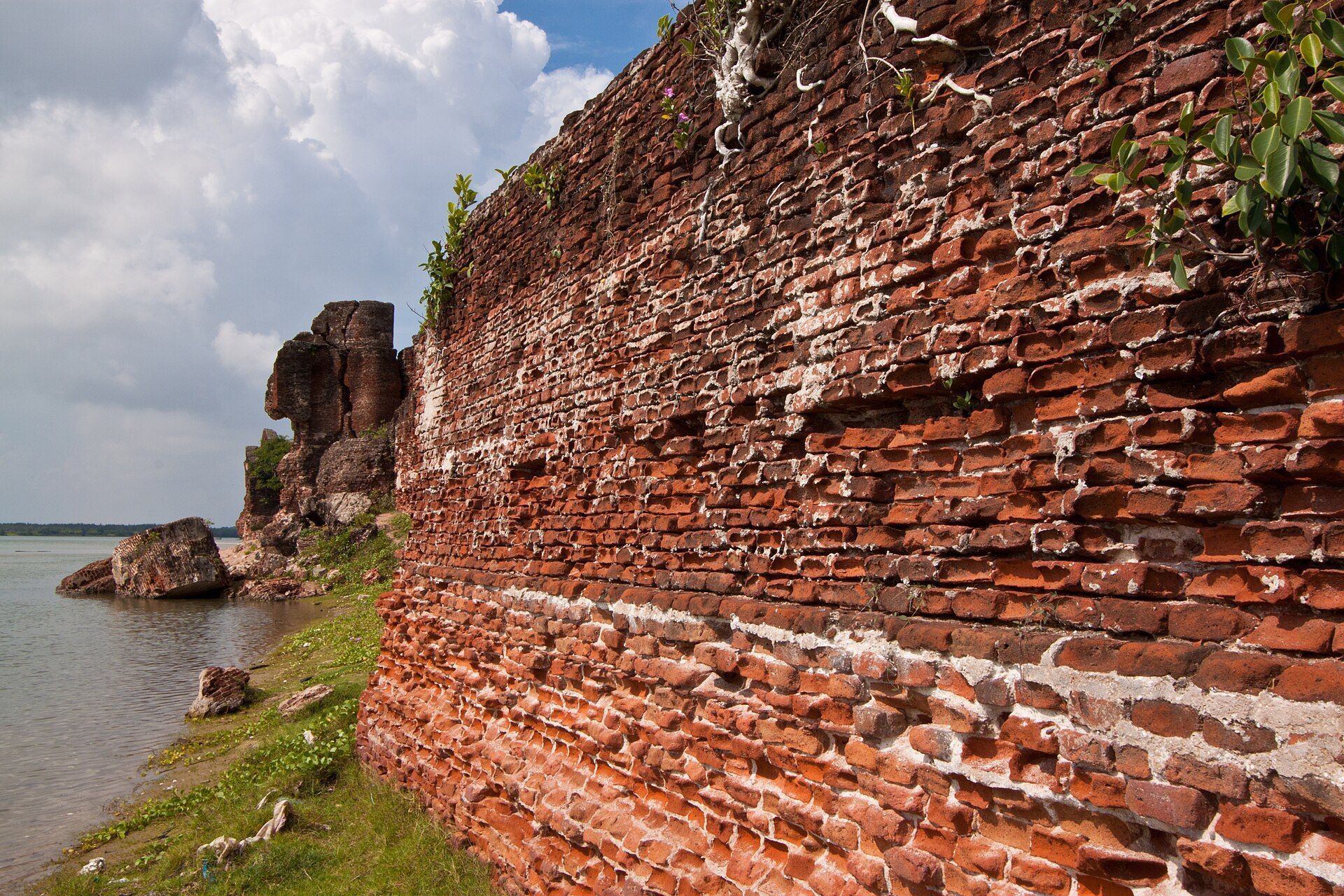
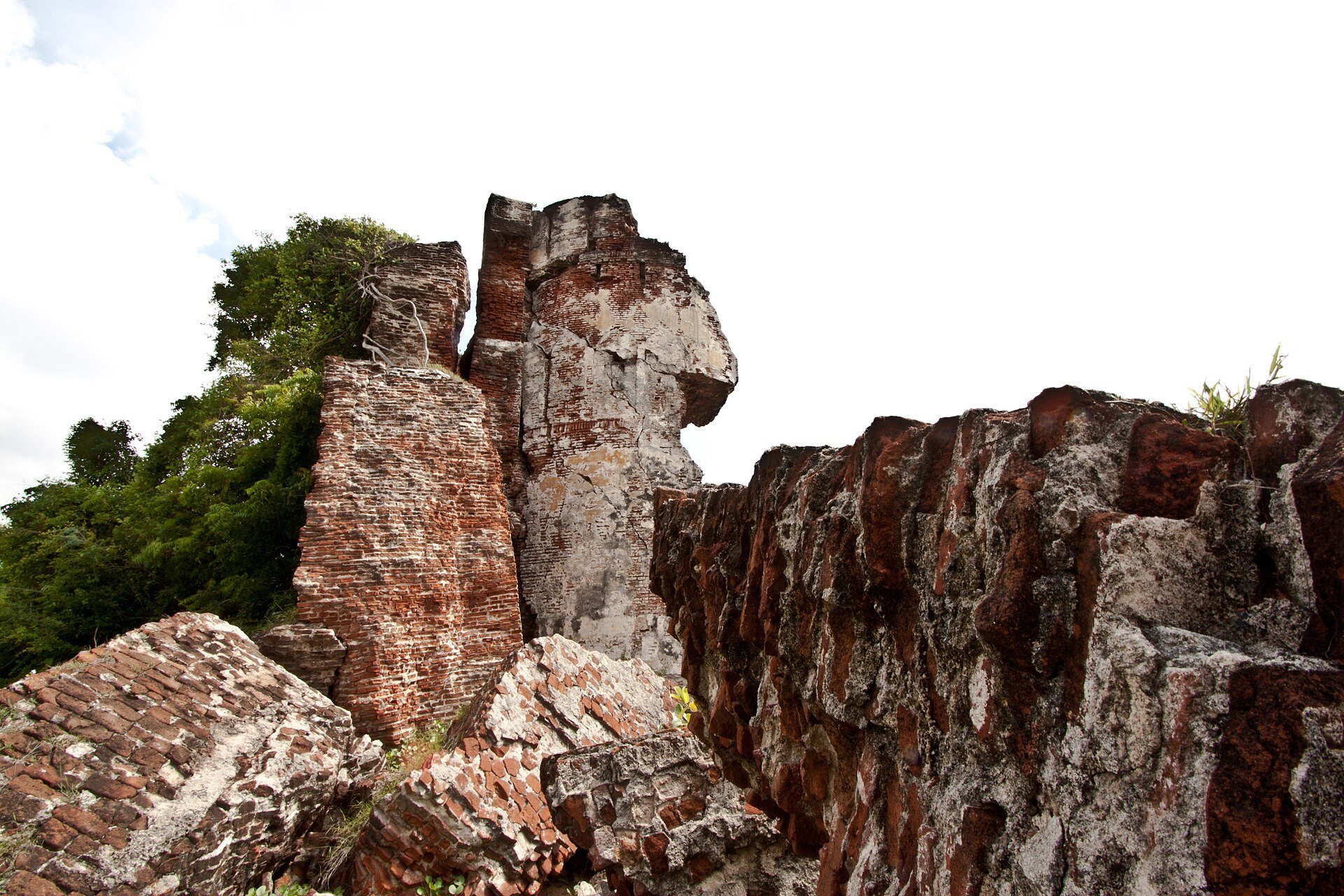
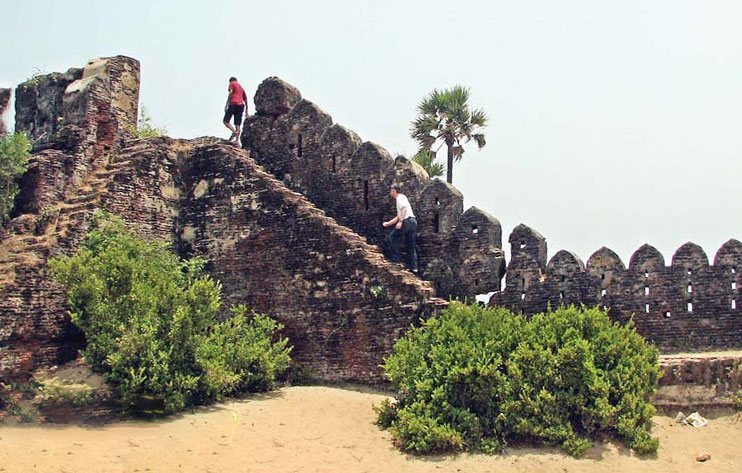
The ruins stand near Kadappakkam on land overlooking the sea. The fort covered approximately 15 acres and combined tall enclosing walls, a maritime dockyard, a central mausoleum, and a watchtower. Built with brick and limestone, with granite also among its construction materials, the surviving structure is in a dilapidated condition, while portions of the former complex now lie beneath the sea.
Maritime and Defensive Structures
Dockyard
A dockyard about 100 metres long extended into the sea. It served the fort’s trading and maritime function, linking the enclosed stronghold with the seaport that handled vessels travelling along the Coromandel Coast.
Fort Walls and Watchtower
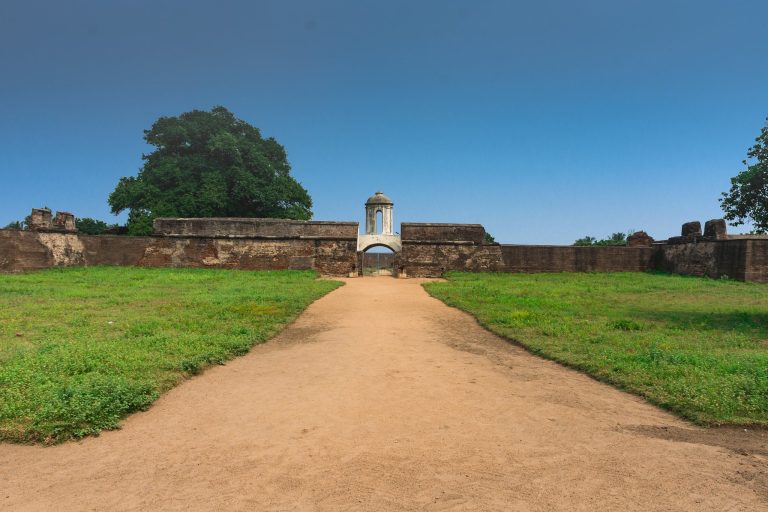
Tall walls surrounded the fort, and brick steps led to the tops of the walls. A watchtower provided views over the surrounding area. These defensive features survive within the ruined complex, whose fabric was further affected by the 2004 tsunami.
Central Monument
Mausoleum
A mausoleum stood at the center of the fort. It forms part of the surviving architectural remains within the enclosure, together with the walls, steps, watchtower, and other ruined structures.