Acropolis of Serres: A Byzantine Fortress in Greece
Site at a Glance
- Rating
- 4.7
- Popularity
- Medium
- Country
- Greece
- Primary era
- Medieval
- Eras represented
- Iron Age, Medieval
- Civilizations
- Byzantine, Crusader, Serbian
- Site type
- Military
- Remains
- Citadel
On this page8 sections
History
The Acropolis of Serres is an ancient and medieval defensive site in Greece, rising on the hill north of the modern city of Serres. It was founded over an earlier fortress dated to the seventh or sixth century BC, while its surviving form is primarily Byzantine and construction of the Byzantine acropolis probably began in the ninth century, probably under Emperor Nikephoros Phokas. The city occupied a strategically important position and was protected by three successive lines of walls, with the acropolis serving as the highest refuge during danger.
Byzantine fortress
Byzantine imperial charters called the fortress a kastron, a fortified settlement or stronghold used in Byzantine administration and defense. In time, the whole city was described as a kastron, and its inhabitants were known as kastrinoi. One recorded fortress warden was Leon the Azanite. The western tower served as the acropolis’s final defensive refuge if the rest of the fortress fell.
Frankish and Ottoman periods
After 1204, Serres came under the Frankish Kingdom of Thrace, a crusader state established after the Fourth Crusade and the capture of Constantinople. In 1206, Kaloyan, ruler of the Second Bulgarian Empire from 1197 to 1207, destroyed parts of the city walls and part of the acropolis. The acropolis was rebuilt in 1208, and its rulers added further defenses before the Ottoman conquest of Serres in 1383.
Under Frankish rule, the city was called a kasteli. During the Ottoman period, the fortress was known as Bas Kule, meaning “chief tower,” and the modern name Koulas derives from this designation. The seventeenth-century traveler Evliya Celebi mentioned the fortress, while the French Capuchin monk Robert de Dreux described four towers along its walls.
Protection and later condition
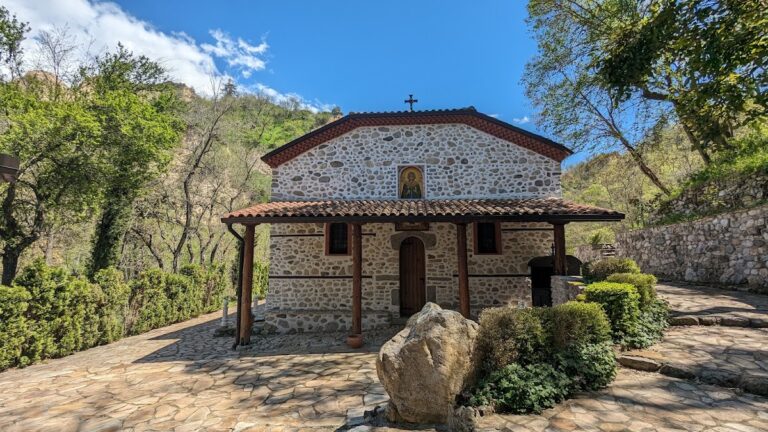
In 1925, the fortress, its tower, and the Church of Saint Nicholas were declared protected cultural monuments. The fortress is state-owned and partly preserved. Its present condition reflects both the survival of substantial defensive structures and the collapse or destruction of other sections.
Remains
Fortified layout
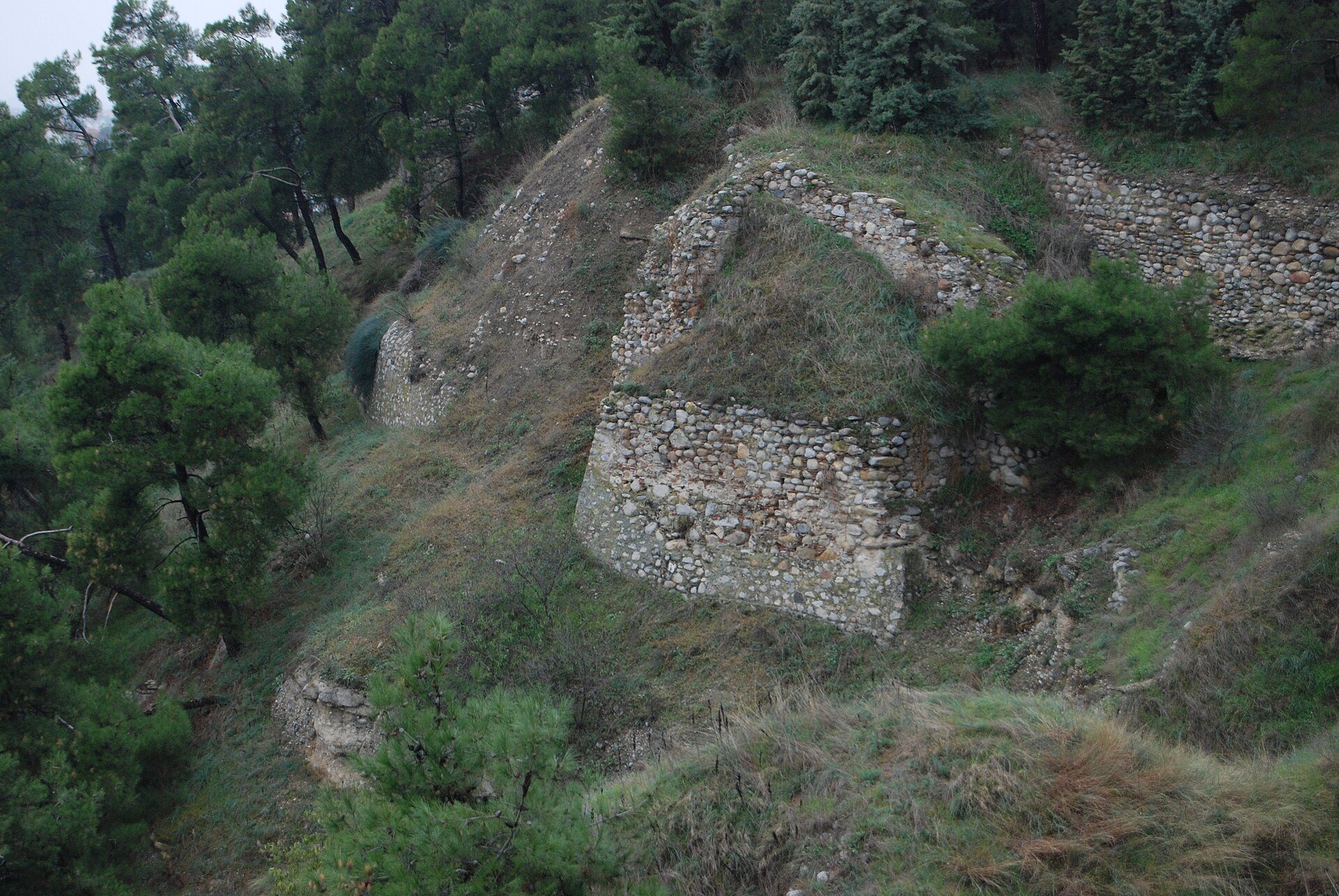
The fortress occupies a hill north of Serres, and its perimeter wall generally follows the hill’s contours. Towers terminate its eastern and western ends. A second enclosure begins on the northern side and continues to the western tower, forming an inner citadel. Two further northern towers and the wall sections between them survive to a substantial height. Most of the visible fortifications date from the fourteenth century, while a pentagonal southern tower preserves Early Christian, Middle Byzantine, and Late Byzantine phases. The perimeter can be reconstructed with reasonable confidence, although some sections have collapsed and large portions were destroyed during construction of a tourist pavilion in the 1950s.
Western tower
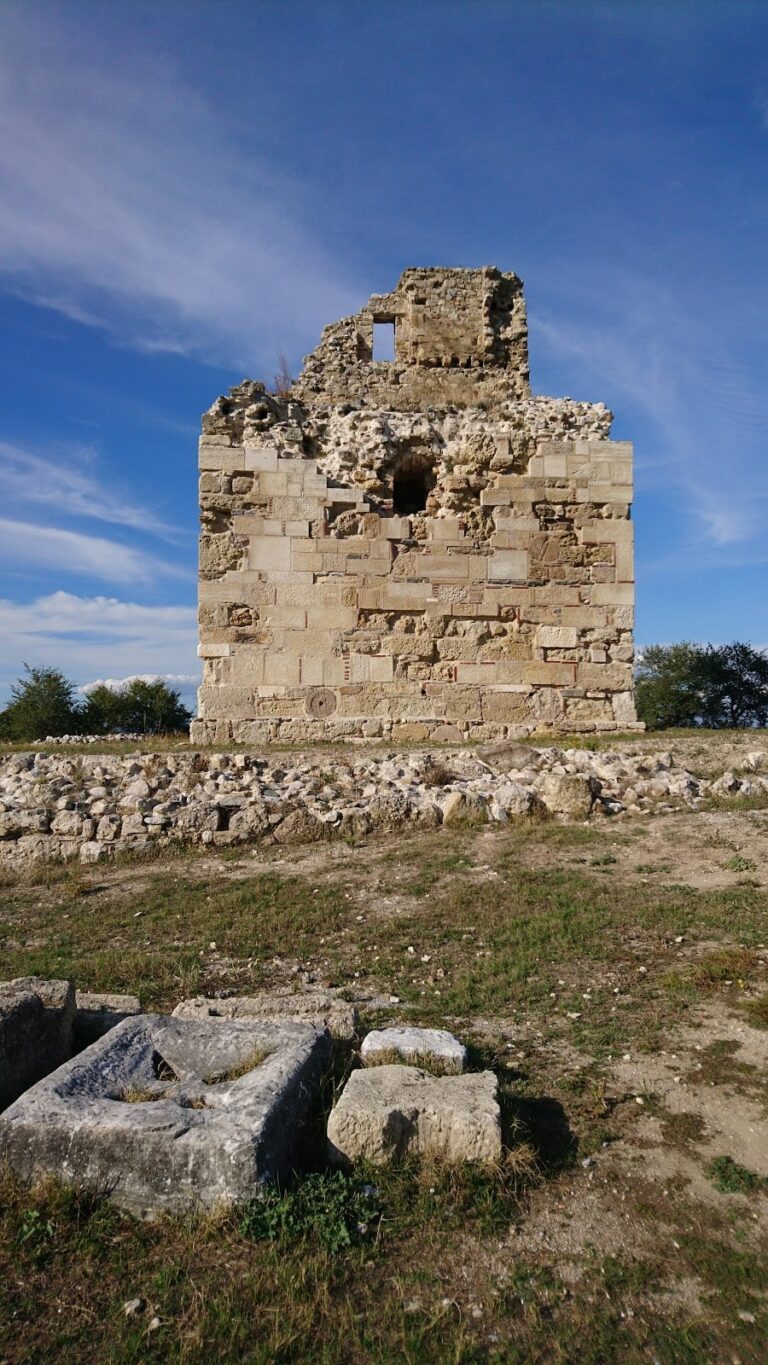
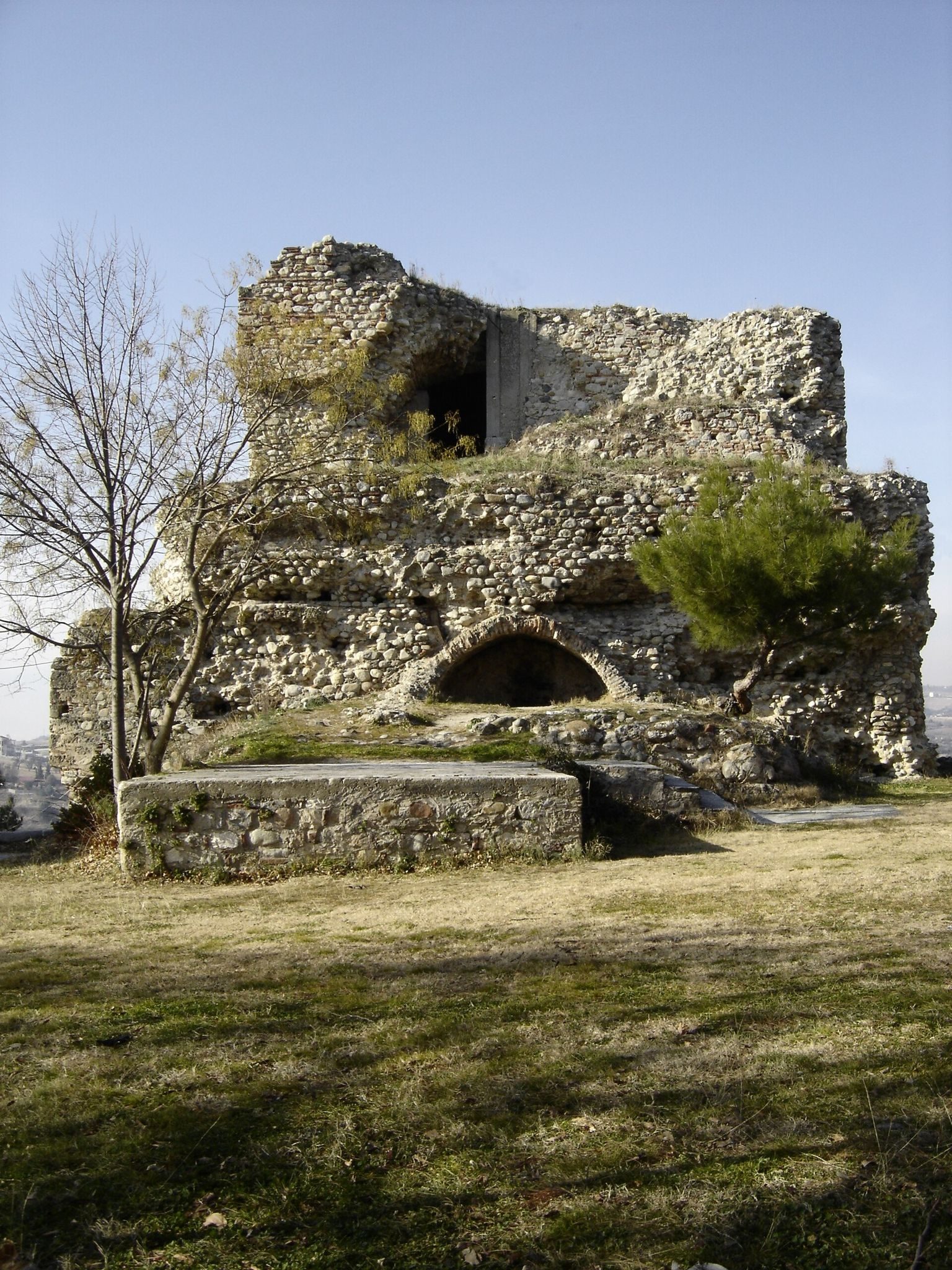
The western tower, called the Tower of Orestes and also identified as the Tower of the King, is the best-preserved and most characteristic part of the Byzantine fortification. It is a massive rectangular structure with a solid foundation and an arched or vaulted interior element. The tower stands about 18 metres high today and is estimated to have originally reached approximately 20 metres, including its battlements. Its name derives from an inscription set into the western side of its base. The inscription names a king and Orestes, and the tower is dated to around 1350, when it is considered to have been built under the Serbian ruler Stefan Dusan.
Earlier fortress remains
The acropolis also retains remains associated with the earlier fortress dated to the seventh or sixth century BC. These include a tower approximately 18 metres high, which is today also called the Tower of Orestes. The shared name links this ancient feature with the later western tower in the site’s modern identification, while the medieval tower’s inscription and construction date connect it to the Byzantine fortification above the city.