Fort Istibey: A Greek Frontier Fortification on the Metaxas Line


Site at a Glance
- Rating
- 4.6
- Popularity
- Very Low
- Country
- Greece
- Primary era
- Modern
- Eras represented
- Modern
- Civilizations
- Greek
- Site type
- Military
- Remains
- Fort
On this page8 sections
History
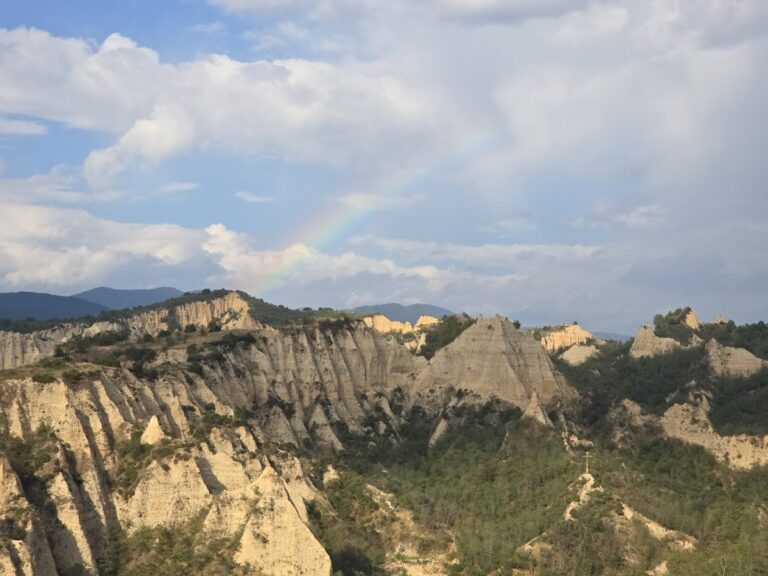
Fort Istibey is a Greek frontier fortification on Mount Beles, also called Mount Kerkini, near Neo Petritsi in Greece. Built during the 1930s as one of the 21 forts of the Metaxas Line, Greece’s defensive system along the Bulgarian frontier, it was intended to prevent an advance from Bulgaria and to protect routes leading toward Greek Macedonia.
Construction and strategic purpose
The fort stands near Neo Petritsi, a settlement populated by Greek refugees from Petrich after the Second Balkan War of 1913, when Bulgaria fought its former Balkan allies and territorial changes contributed to the movement of Greek refugees into Greek Macedonia. Fort Istibey formed part of a defensive group with the forts of Aspri Petra and Stirigma. Together, they were assigned to block routes from Petrich toward Neo Petritsi and to support the capture of the heights known as Pyramid 36, which were intended to serve as a base for offensive operations toward Petrich.
Its garrison consisted of 13 officers and 350 soldiers under Major Ksanthos Pikoulakis. The enclosed installation held weapons, ammunition, and food provisions planned for 15 days of combat. Its position, approximately 250 metres from the Greek-Bulgarian border, gave it a direct role in the defence of the frontier.
The Battle of Fort Istibey, 1941
After the Greek army repelled the Italian invasion in October 1940 and transferred the fighting into Albania, Germany invaded Greece from Bulgaria on 6 April 1941. The battle at Fort Istibey began at 05:15 with artillery fire from distances of about 250 to 600 metres. An air attack followed at 06:00, and troops of Germany’s 5th Mountain Division launched a ground assault at 07:00.
German forces did not capture the fort immediately. About 200 demolition troops reached the surface and tried to destroy the concrete works with explosives, but the defenders forced them back. Greek reserve units failed to mount a successful counterattack. During the night, approximately 100 German soldiers entered the tunnels and were killed.
On 7 April, the fort continued to resist after its surface installations had been destroyed. German troops blockaded the position, introduced gas and petrol into the interior, and threw bundles of explosives inside. Suffering from the gas, the main garrison emerged at 16:00. Its members were taken prisoner temporarily and were released with military honours several days later.
The final surrender and wider campaign
The auxiliary fort of Papadopoula resisted until 19:00 on 8 April, while the auxiliary fort of Paliouriones was not captured by German forces. On 9 April at 17:30, German negotiators delivered an order from the commander of the East Macedonia division group directing the remaining defenders to end their resistance. Commanded by Major Alexandros Hadzigeorgiou, they emerged at 09:00 on 10 April and were saluted by a German honour guard.
Fort Istibey’s single anti-aircraft gun was disabled during the battle, although it shot down four German aircraft before becoming inoperable. Strong resistance along the Metaxas Line influenced the German high command to order the 2nd Panzer Division through the Strumica valley in Yugoslavia. After taking Gevgelija and crossing the weakly defended Greek-Yugoslav frontier, German forces entered Greece from that direction.
Military use and commemoration
Fort Istibey remains under Greek Army control and continues to have a military garrison. A small museum and memorial were established on the site in the late 1980s or early 1990s through veterans’ and friends’ associations. They commemorate the fort’s role in the April 1941 Battle of the Forts and preserve weapons, uniforms, personal belongings of the defenders, a detailed map of the battle and fortifications, and a film about the defence of the position.
Remains
Fortification and underground system
Fort Istibey is an enclosed, sealed installation built into Mount Beles at an elevation of 1,339 metres, about 16 kilometres from Neo Petritsi. Its defensive layout included 12 single machine-gun emplacements and six double machine-gun emplacements. A combined double anti-tank machine-gun emplacement and observation post protected the position, while three observation posts and one double observation post allowed the surrounding terrain to be monitored and fire to be directed.
The installation also contained two artillery emplacements arranged to provide flanking fire toward Spanis Petra and Papadopoula, an anti-aircraft emplacement, two mortar emplacements, a shelter, and a simple exit. A flanking emplacement fires along the side of an attacking force rather than directly toward it. The armament comprised two 75 mm guns, one 37 mm anti-tank gun, one 20 mm anti-aircraft gun, two 81 mm mortars, 26 machine guns, nine submachine guns, and 17 grenade launchers.
The underground galleries extend for approximately 650 metres, while connected shelter installations reach about 1,650 metres. The entrance gallery descends to the first floor by 76 steps. German bombardment and assault destroyed the surface structures by 7 April 1941, but the underground defensive system continued to be used during the fighting.
Museum and memorial precinct
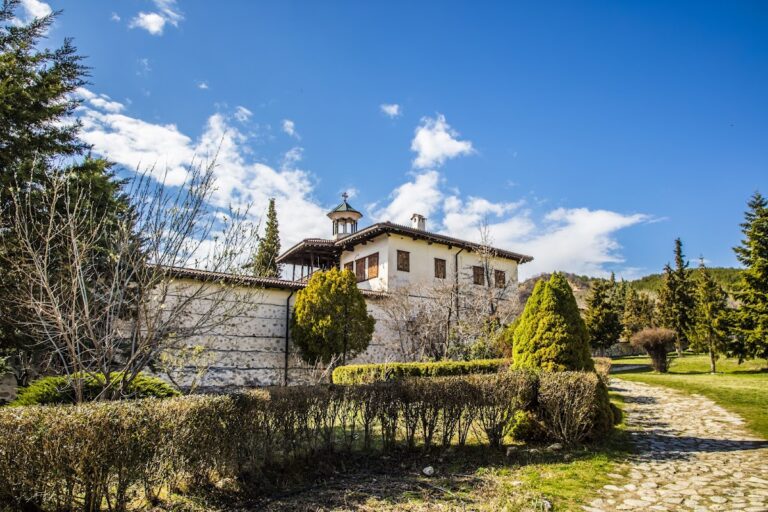
The site includes a small museum, an observation post, a guesthouse, and the Church of Saint George. The museum presents firearms from the Greek and German armies, period military uniforms, and personal objects associated with the defenders. It also displays a detailed map of the battle and the fortifications, together with a film devoted to the defence of Fort Istibey.