Podgoria Copou Monastery: A Romanian Orthodox Monastic Foundation in Iași
Site at a Glance
- Rating
- 4.8
- Popularity
- Low
- Country
- Romania
- Primary era
- Modern
- External website
- Open
- Eras represented
- Early Modern, Modern
- Civilizations
- Ottoman, Principality of Moldavia
- Site type
- Religious
- Remains
- Monastery
On this page8 sections
History
Podgoria Copou Monastery is a Romanian Orthodox nuns’ monastery in Iași, Romania, founded in 1638 by Moldavian Prince Vasile Lupu. Also known as the Church among the Vineyards, it stands within the vineyard landscape of the Iași Botanical Garden and is dedicated to Saints Athanasius and Cyril. Its history includes a princely foundation, destruction and rebuilding, dissolution as a monastery, and revival as a monastic community.
Princely Foundation
The site was formerly a princely estate with an earlier wooden church. Local tradition connects its foundation with Tudosca, the wife of Vasile Lupu. During a Tatar invasion, she is said to have hidden inside a hollow tree. The ruler later found her unharmed with the help of his hunting dog, Copou, and tradition holds that he decided to establish a monastery there in gratitude.
In 1638, Vasile Lupu replaced the earlier church with a stone foundation. The monastery was established before his better-known foundation at the Three Hierarchs Monastery and was dedicated to the Caracalu Monastery on Mount Athos. Cyril Lukaris, Patriarch of Constantinople, consecrated the church on 30 April 1638.
Destruction and Restoration
After Vasile Lupu was deposed in 1653, the church was burned and demolished. It was rebuilt several times, and these changes eventually made its original architectural character no longer recognizable. An inscription from 1702 records a restoration carried out under Prince Constantin Duca. Prince Nicolae Mavrocordat later expanded the monastery’s estate with vineyards, gardens, abandoned vineyard land, and forest along the Căcaina valley, extending from the pond of Dancu Monastery northward.
Greek abbots of the Three Hierarchs Monastery administered Podgoria Copou and sent monks to care for the church. Its abbot Serafim restored the building in 1809, and the interior was painted in 1850. The monastery was dissolved in December 1863 after the secularization of monastic estates, but the church continued to serve as a parish church.
Parish Use and Monastic Revival
After 1960, the former monastery grounds became part of the Iași Botanical Garden. Neglect contributed to the church’s deterioration. Between 1983 and 1986, parish priest Vasile Vaida organized structural consolidation and restoration inside and outside the building, supported by parishioners’ voluntary contributions and by the Metropolis of Moldavia and Bukovina. The church received new frescoes by Vasile and Violeta Carp of Bucharest, together with chandeliers, furnishings, and a choir loft.
During the same period, IPROCHIM constructed a large parish house with several rooms, an attic, and domestic outbuildings, with support from engineer Dumitru Rădăuceanu. Access routes were later improved with a concrete path, and the cemetery was reorganized. Teodor Mera was the last parish priest of Saint Athanasius Parish. The church was also described as restored during the tenure of Metropolitan Teoctist Arăpașu.
On 20 April 2001, after almost 150 years, Metropolitan Daniel Ciobotea of Moldavia and Bukovina reactivated the institution as a nuns’ monastery under the authority of Galata Monastery. The Holy Synod of the Romanian Orthodox Church and the metropolitan synod of the Metropolis of Moldavia and Bukovina had approved the change. A reactivation service took place on 29 April 2001, led by Metropolitan Daniel. The church then received a second dedication to the Sunday of the Myrrh-Bearing Women.
The former parish property, including the church, ancillary buildings, courtyard, cemetery, and land obtained under the land-restitution law, passed to Podgoria Copou Monastery. The former parish was reassigned to the church in Cârlig village, dedicated to the Prophet Isaiah. Three nuns initially arrived from Galata Monastery, and the first abbess was the rassophore nun Teodora Vrânceanu. The parish house beside the church was enlarged and converted into monastic cells. The community works in embroidery, tailoring, and church-painting workshops. Fourteen nuns lived at the monastery in April 2009, when its spiritual father was the protosinghel Hrisostom Andrioaia.
Podgoria Copou Monastery was included in the 2015 register of historic monuments of Iași County under code IS-II-m-B-04001. The register gives 1809 as the construction date, while the foundation inscription and historical tradition associate the church’s original foundation with 1638.
Remains
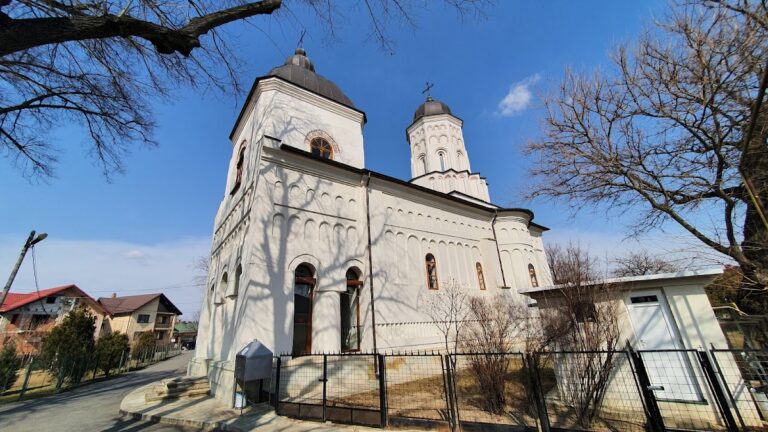
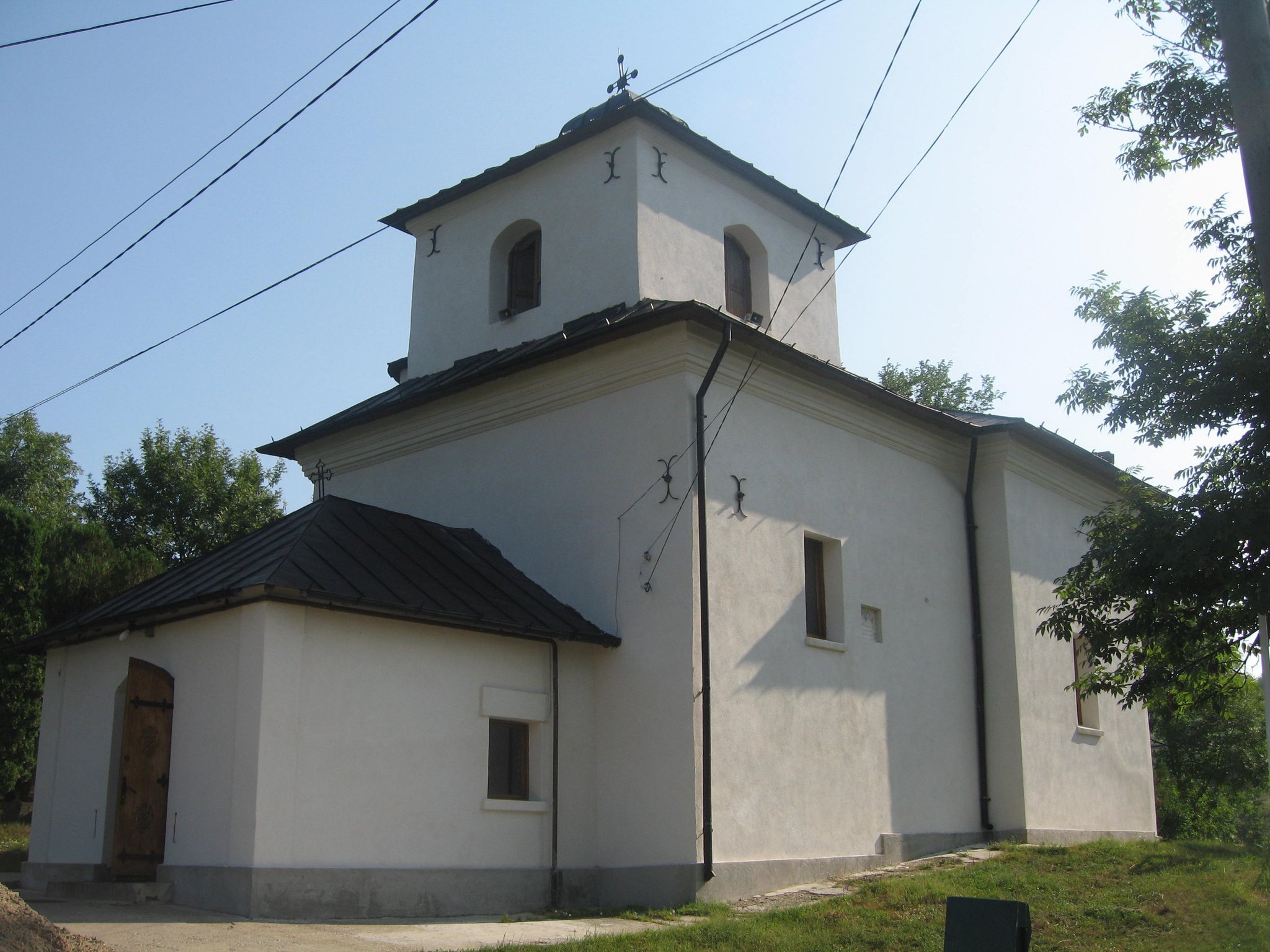
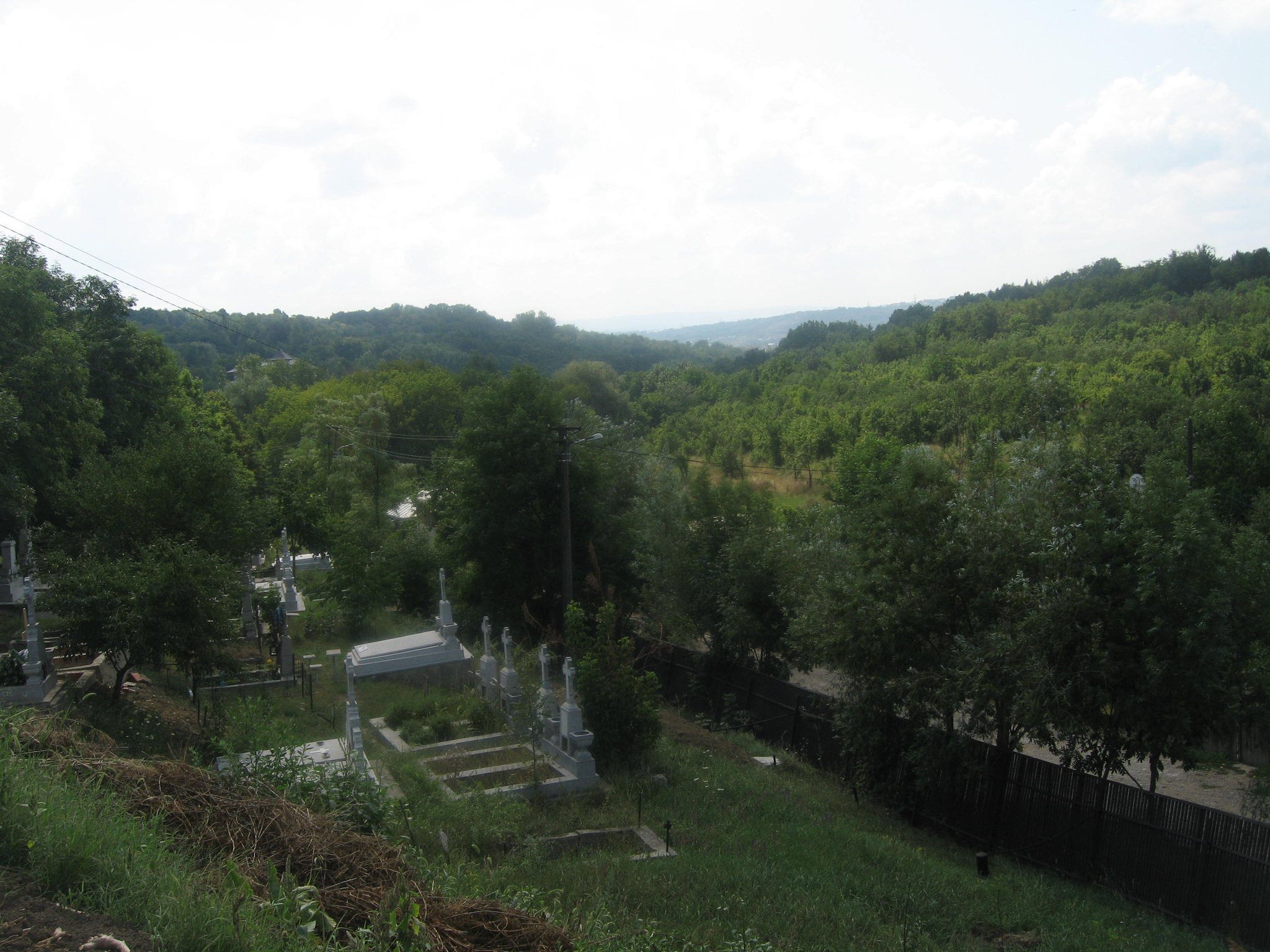
The church stands on a hill within the monastery cemetery, surrounded by the wooded and vineyard landscape of the Iași Botanical Garden. The monastery complex includes the church, the former parish house now enlarged for monastic cells, domestic buildings, a courtyard, the cemetery, and monastery land. Trees partly conceal the church, leaving its tower barely visible among them, while views from the church extend across the Botanical Garden.
The Church
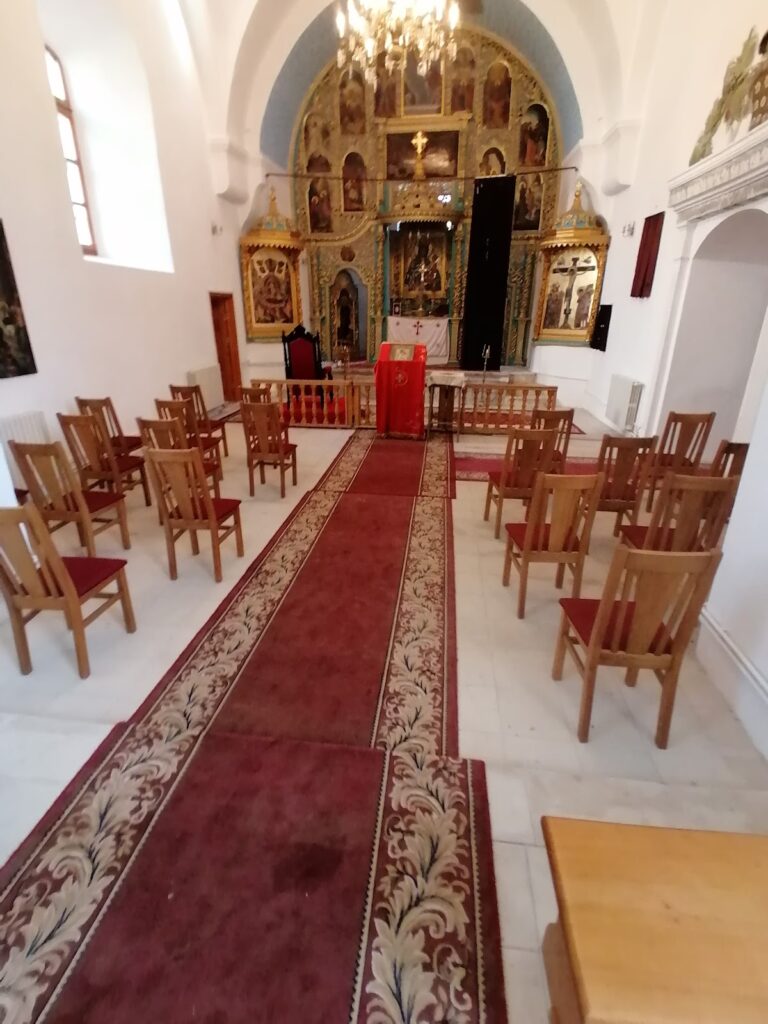
The present church reflects repeated rebuilding and later restoration rather than the fully recognizable form of the 1638 foundation. It contains the surviving historical inscriptions associated with its foundation and successive repairs. The building was frescoed in 1850 and received new interior frescoes during the 1983–1986 restoration, along with chandeliers, furnishings, and a choir loft. Its votive painting shows Vasile Lupu and Tudosca, presenting the princely founders in relation to the church.
Inscriptions and Interior Decoration
Above the wall between the porch and the pronaos, the entrance chamber of an Orthodox church, is the 1638 foundation inscription in Slavonic. It names Vasile Lupu, Tudosca, and their children, dedicates the church to Saint Athanasius the Great, Archbishop of Alexandria, and records its consecration by Patriarch Cyril. A white-marble Greek inscription on an exterior wall records the 1702 restoration under Constantin Duca and bears the country’s coat of arms. A third inscription belongs to the 1809 restoration, while another above the entrance between the pronaos and porch records the restoration of 1983–1986.
Cemetery
The cemetery contains the graves of several academics and public intellectuals associated with Iași. Among them are the geographer and professor Gheorghe I. Năstase; entomologist Mihail Peiu; academician and professor Dimitrie Mangeron; medical scholar Gheorghe Bădărău; former University of Iași rector Mihai Todosia; soil-science professor and rector Costache Teșu; botany professor Eugenie Turenschi; professor Mihai Cotruț; and Bogdan M. Sadoveanu, son of the writer Mihail Sadoveanu, who died in 1920.