Porte des Forgerons: Molsheim’s Medieval Southern City Gate
Site at a Glance
- Rating
- 4.3
- Popularity
- Very Low
- Country
- France
- Primary era
- Medieval
- External website
- Open
- Eras represented
- Medieval, Early Modern, Modern
- Civilizations
- French, Holy Roman Empire
- Site type
- Military
- Remains
- Gate
On this page7 sections
History
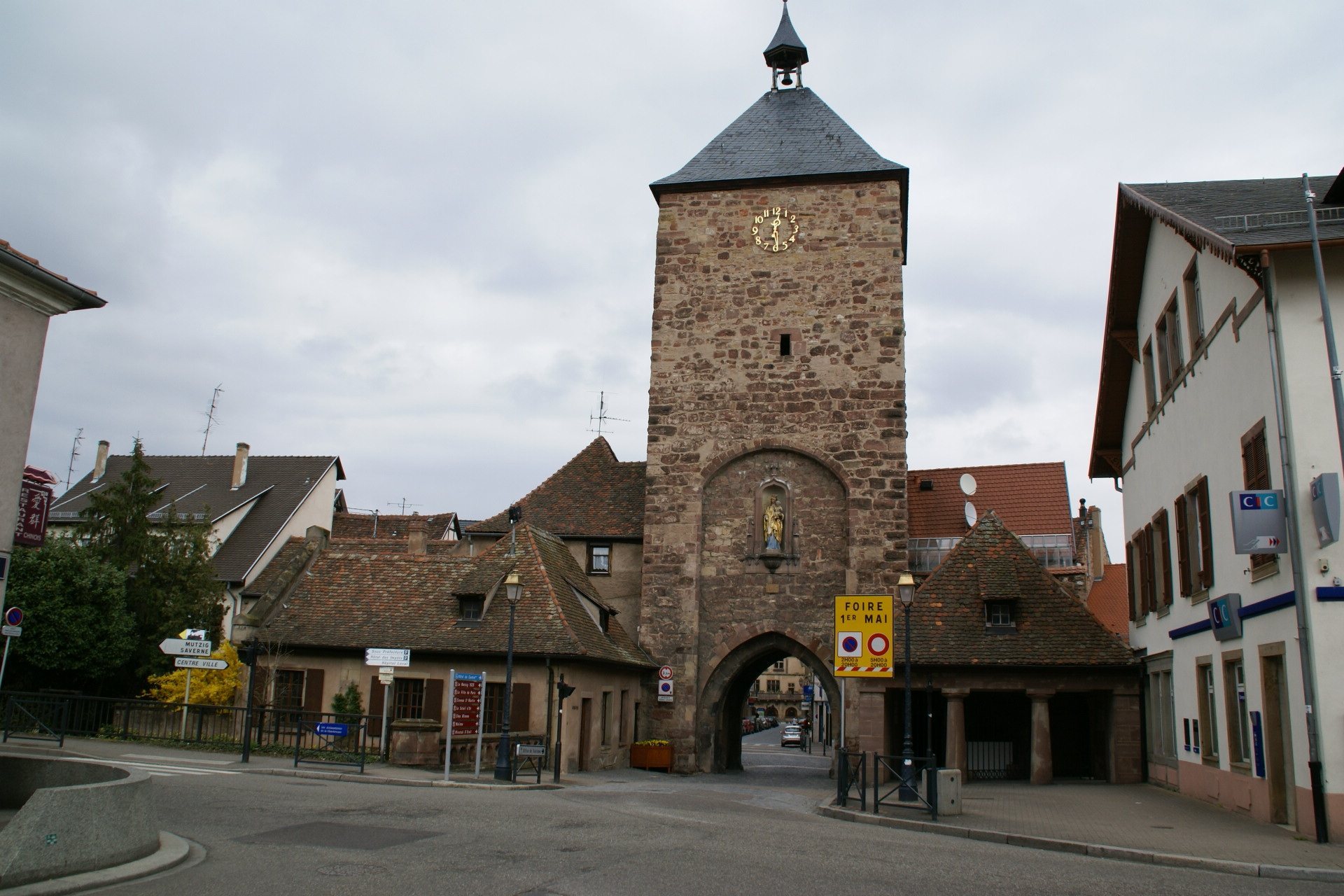
The Porte des Forgerons is a surviving medieval city gate in Molsheim, France, built as part of the town’s fortified enceinte during the fourteenth century. It formed the southern entrance to the medieval city and was already its principal entry by 1363, when it appeared under the name Smidttor. The gate is also known as the Schmiedtor, the Porte de Strasbourg, and, more rarely, the Porte Saint-Georges.
Medieval origins
The exact construction date is unknown. The gate was incorporated into Molsheim’s city walls, built between 1250 and 1260 and extensively altered around 1320. Its position at the entrance to the road toward Strasbourg gave it an important role in controlling movement into the town. A guardroom, known as a Wachstube, stood on one side of the entrance, where a watchman supervised the surrounding area. The gatekeeper and toll collector occupied a house on the opposite side.
The fire of 1783
On 21 June 1783, a fire that began in the hayloft of an inn devastated the district between the present-day rues de Strasbourg, de l’Église, and Notre-Dame. As the gatekeeper climbed the tower to sound the alarm, he accidentally ignited its roof structure. The fire melted the gate’s bell and prevented assistance from outside the town from reaching the affected district. The roof was rebuilt afterward at a different angle, and a replacement bell was brought from Saint-Georges Church.
Later history
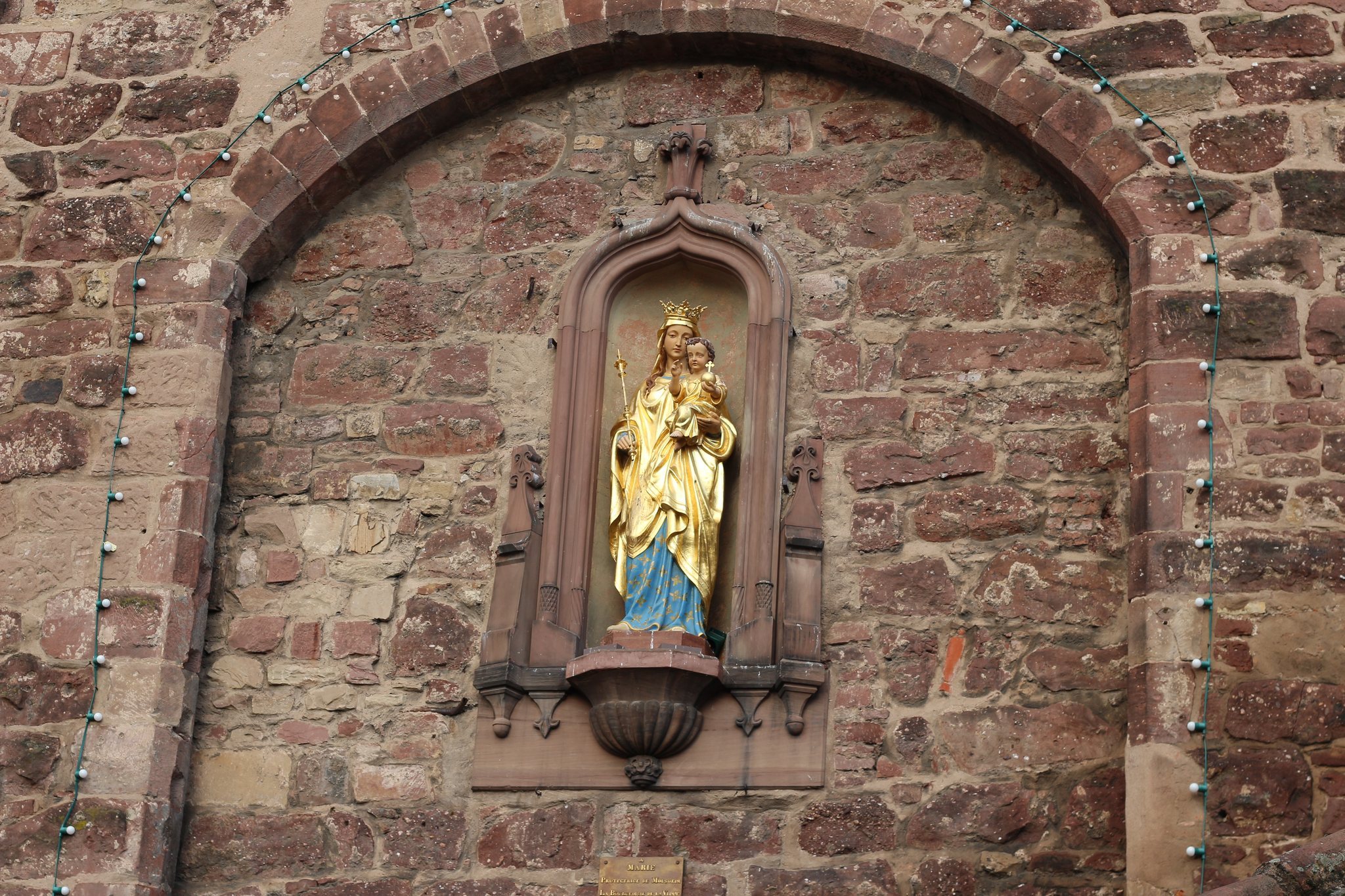
In 1868, Molsheim’s bourgeoisie gave the city a gilded cast-iron statue of the Virgin and Child. Standing two metres high and weighing 500 kilograms, it was placed on the gate’s outer face. The Porte des Forgerons is the only one of Molsheim’s city gates to have survived beyond the nineteenth century. The tower and its two guardhouses have held listing in the supplementary inventory of historic monuments since 1929, a French legal heritage status intended to protect historically or architecturally important buildings.
The replacement bell weighs four tonnes. It was traditionally sounded at 6:00 a.m. to announce the opening of the city gates and at 10:00 p.m. to announce their closing. The custom continues even though the gates are no longer shut.
Remains
Tower and gateway
The Porte des Forgerons stands approximately midway along the southern side of Molsheim’s historic centre, at the entrance to the rue de Strasbourg. Its outer side faces the rue de la Gare, which follows the line of the city’s filled-in defensive ditches. The tower has an almost square rectangular plan, measuring about 9 metres by 8.5 metres. It rises four storeys above the ground floor, with an attic beneath a four-sided roof and a bell turret above.
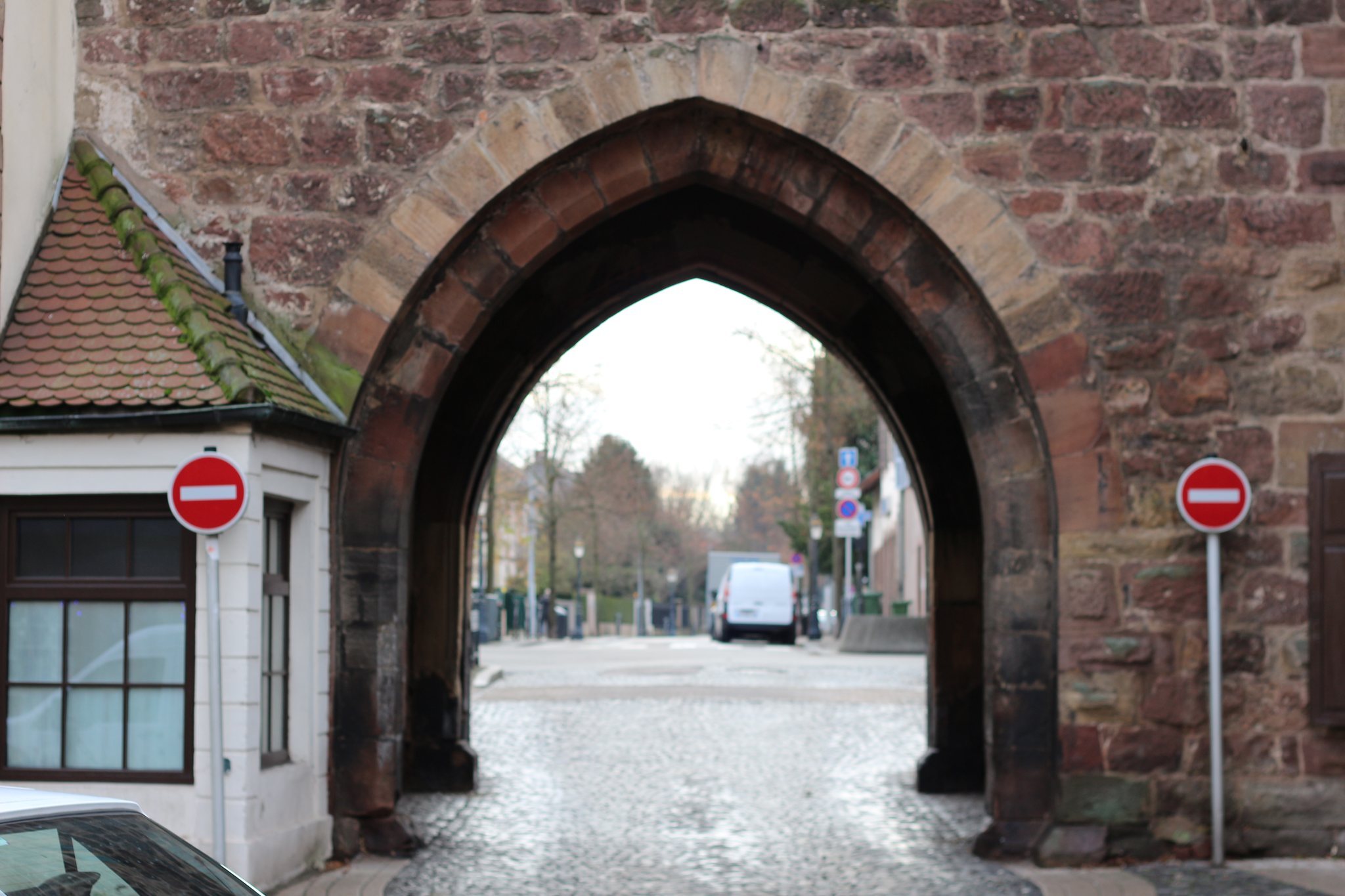
A pointed-arch gateway passes through the tower and remains in use as a vehicle passage. The earlier gate projected over the defensive ditch and was approached by a drawbridge. The tower’s exterior walls contained guides for a portcullis, a vertically sliding defensive grille used to block a fortified entrance, protecting the actual door leaves. Before the fire of 1783, the tower had a steeper roof that rose higher than the present one. The replacement roof followed a different angle.
Bell turret and statue
The bell turret contains the small upper structure associated with the gate’s bell. The earlier bell was destroyed in the 1783 fire, while the replacement came from Saint-Georges Church and weighs four tonnes. On the outer face of the gate, the gilded cast-iron Virgin and Child installed in 1868 remains a prominent later addition to the medieval structure.