Tátika Castle: A Medieval Fortress Ruin in Hungary
Site at a Glance
- Rating
- 4.7
- Popularity
- Low
- Country
- Hungary
- Primary era
- Medieval
- Eras represented
- Medieval
- Civilizations
- Hungarian
- Site type
- Military
- Remains
- Castle
On this page11 sections
History
Tátika Castle is a medieval castle ruin in Hungary, near Zalaszántó on the Keszthely Plateau. Built as a stone fortress after the Mongol invasion, it was probably among Hungary’s earliest private castles and later passed between bishops, kings, and noble families.
Origins and episcopal control
The castle’s name may come from a landowner called Tádenka or Tadeuka, who was said to have built an earlier stronghold before the Mongol invasion. That structure was different from the upper-castle ruin that survives on the mountain summit. The earlier fortress, later known as Lower Tátika, was confiscated in 1248 by King Béla IV after Tádé violently ravaged Erek, where Zlaudus, the bishop of Veszprém, had a residence. Béla awarded the castle to the injured bishop.
Zlaudus considered Lower Tátika too vulnerable and commissioned a new stone castle on the mountain summit. He died there in 1262. His relatives took control of the estate for a time, but the property was later returned to the bishopric of Veszprém, the institution and territory governed by the bishop.
Royal and noble ownership
The Kőszegi kindred occupied Tátika during the early fourteenth century. King Charles I, also known as Charles Robert, recovered it from them during his campaign of 1321, after which the castle remained under royal administration for several decades.
In 1341, Kál obtained Tátika from the Veszprém bishopric in exchange for estates in the Kál Valley. The transaction led to litigation involving local inhabitants and agricultural communities. During the reign of King Louis I, Charles I’s successor, the castle was granted to the Lackfi family, members of Hungary’s highest court nobility. Two prominent Lackfi figures were later killed by supporters of King Sigismund because of conspiracies against the king.
After the Lackfi estates were confiscated and the castle passed through a succession of pledge holders, the Gersei Pethő family acquired Tátika through the favor of Albert of Habsburg, a fifteenth-century king of Hungary. The Veszprém bishopric continued to claim its earlier ownership and seized the castle with armed men in 1494 and again in 1538.
Ottoman-era decline and destruction
During the 1538 occupation, Bishop Márton Kecsethy reportedly took valuables that nearby noble families and Pauline monasteries had moved to Tátika for safekeeping because of the Ottoman threat. The Pauline Order was a Hungarian-founded Catholic monastic order. The valuables were said to have been worth more than 100,000 gold forints.
By the middle of the sixteenth century, Tátika had become an unimportant privately held castle. Its fortifications were in poor condition, and its garrison no longer formed a substantial military force. In 1589, a large Ottoman raiding force captured and plundered the castle before burning its buildings. The impoverished Gersei Pethő family did not rebuild it.
Imperial troops burned the abandoned castle during a military exercise in 1713. By 1741, the Festetics family, which had acquired the estate, possessed only a ruin. Archaeologists identified the location of Lower Tátika in 1980, while excavation and restoration of the ruins continued during the 2000s. These efforts helped preserve and present surviving parts of the medieval castle. Since 1997, Tátika Castle has formed part of Balaton Uplands National Park.
Remains
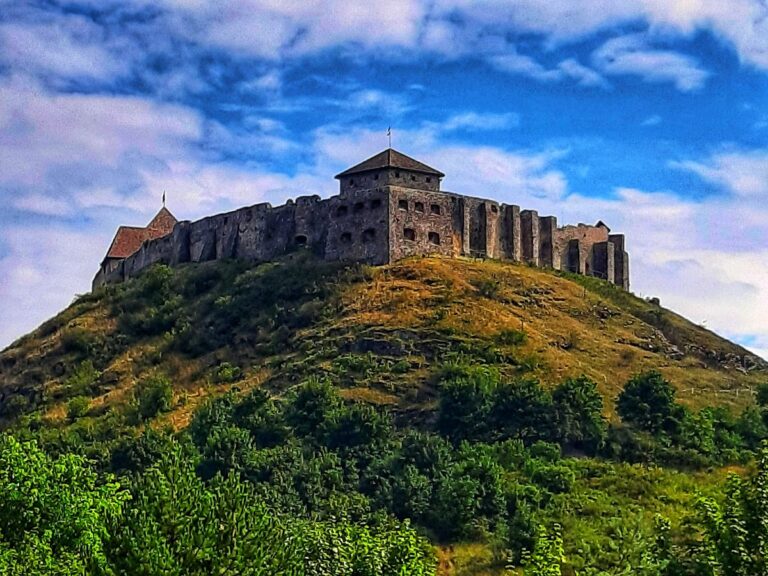
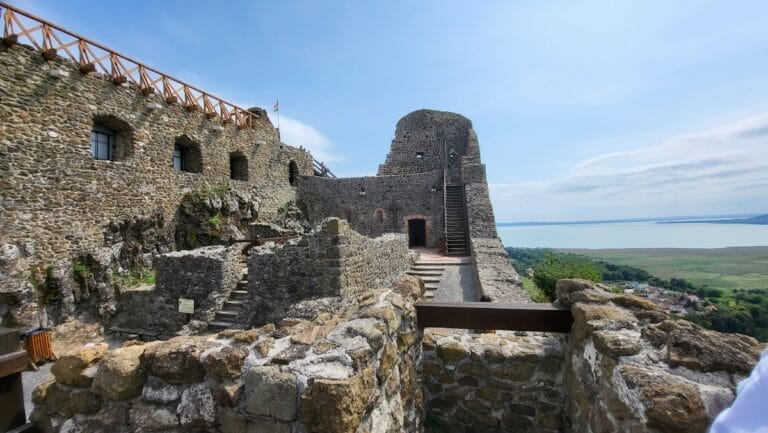
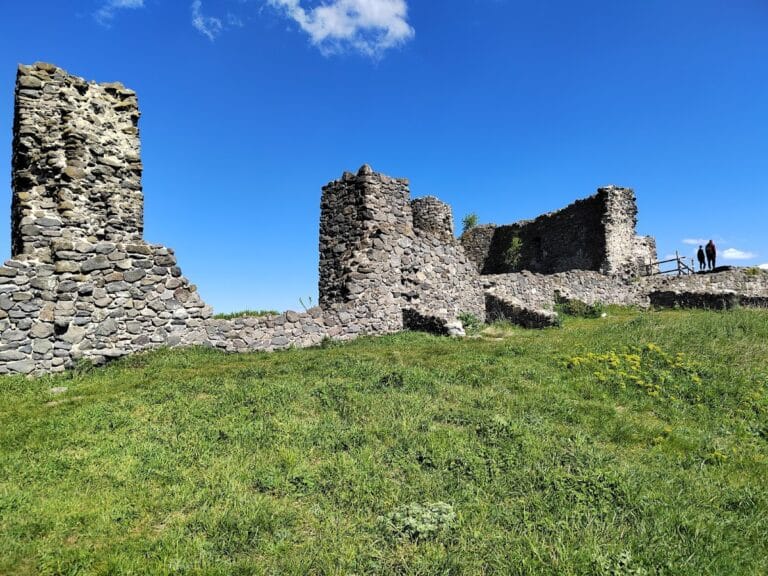
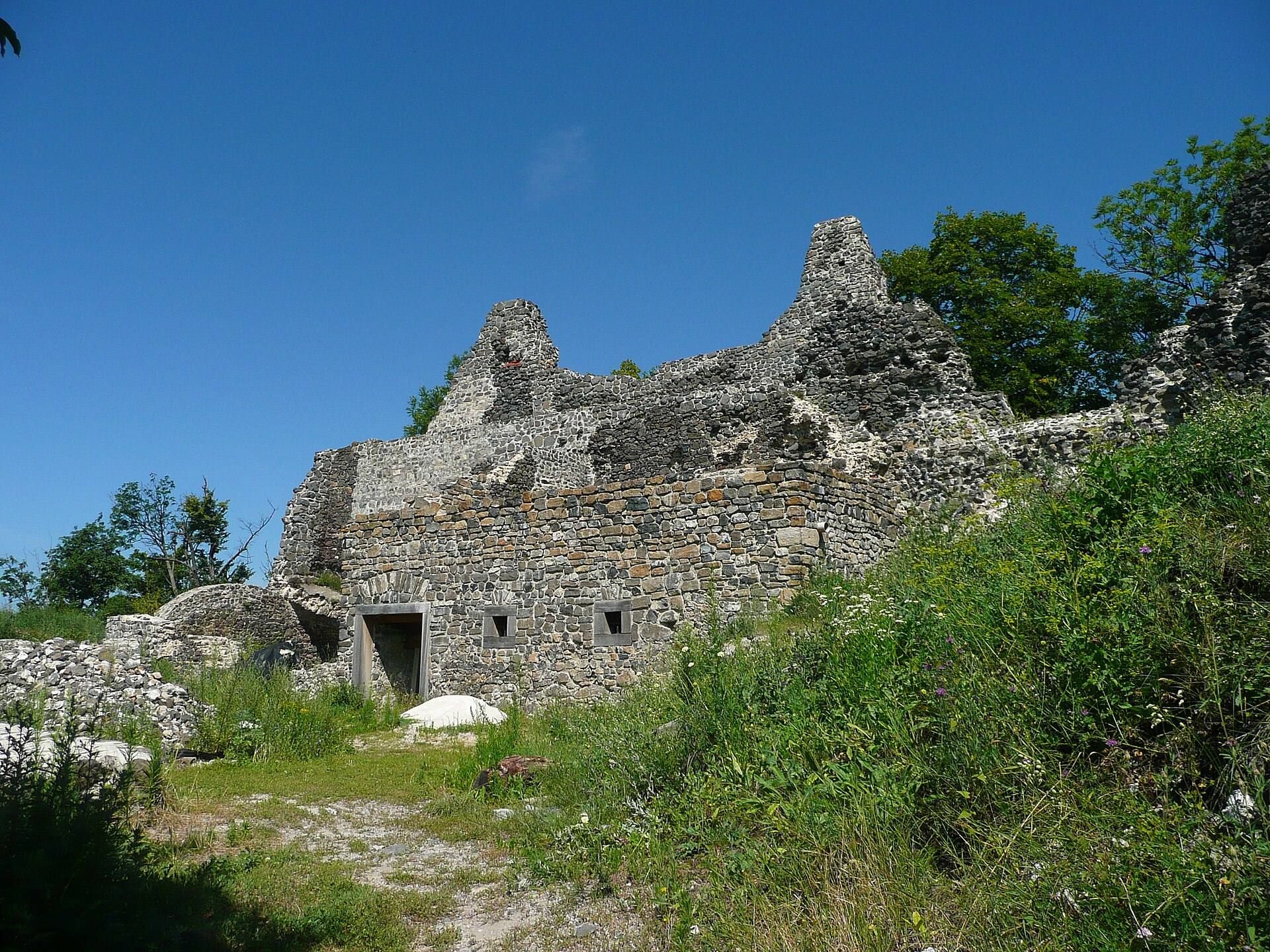
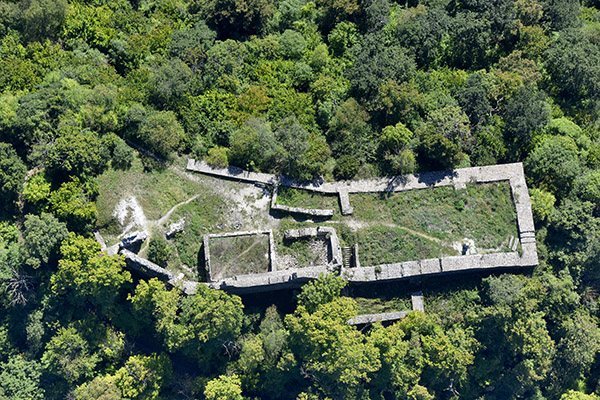
Tátika Castle stands at an elevation of 413 metres on a basalt summit of the Keszthely Plateau, northwest of Lake Balaton and near Zalaszántó. The surviving upper castle is a stone-built ruin arranged around an elongated courtyard, with the principal defensive and residential buildings positioned along its edges.
Upper castle layout
Entrance gate and courtyard
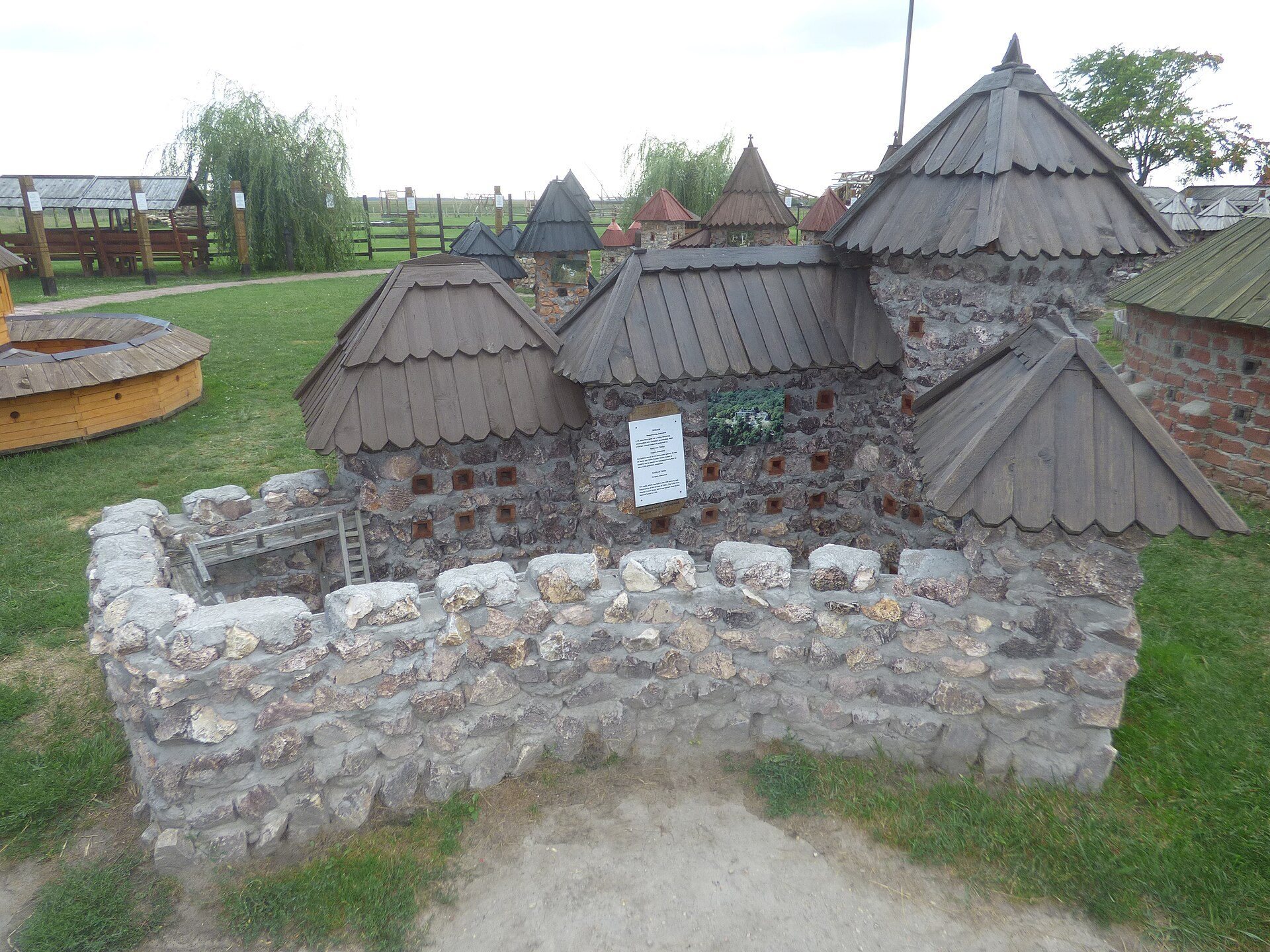
Drawings by the Italian military engineer Turco show an entrance gate tower leading into the elongated castle courtyard. The gate formed the main approach to the upper castle, while the courtyard organized the relationship between its defensive and residential buildings.
Keep and palace wing
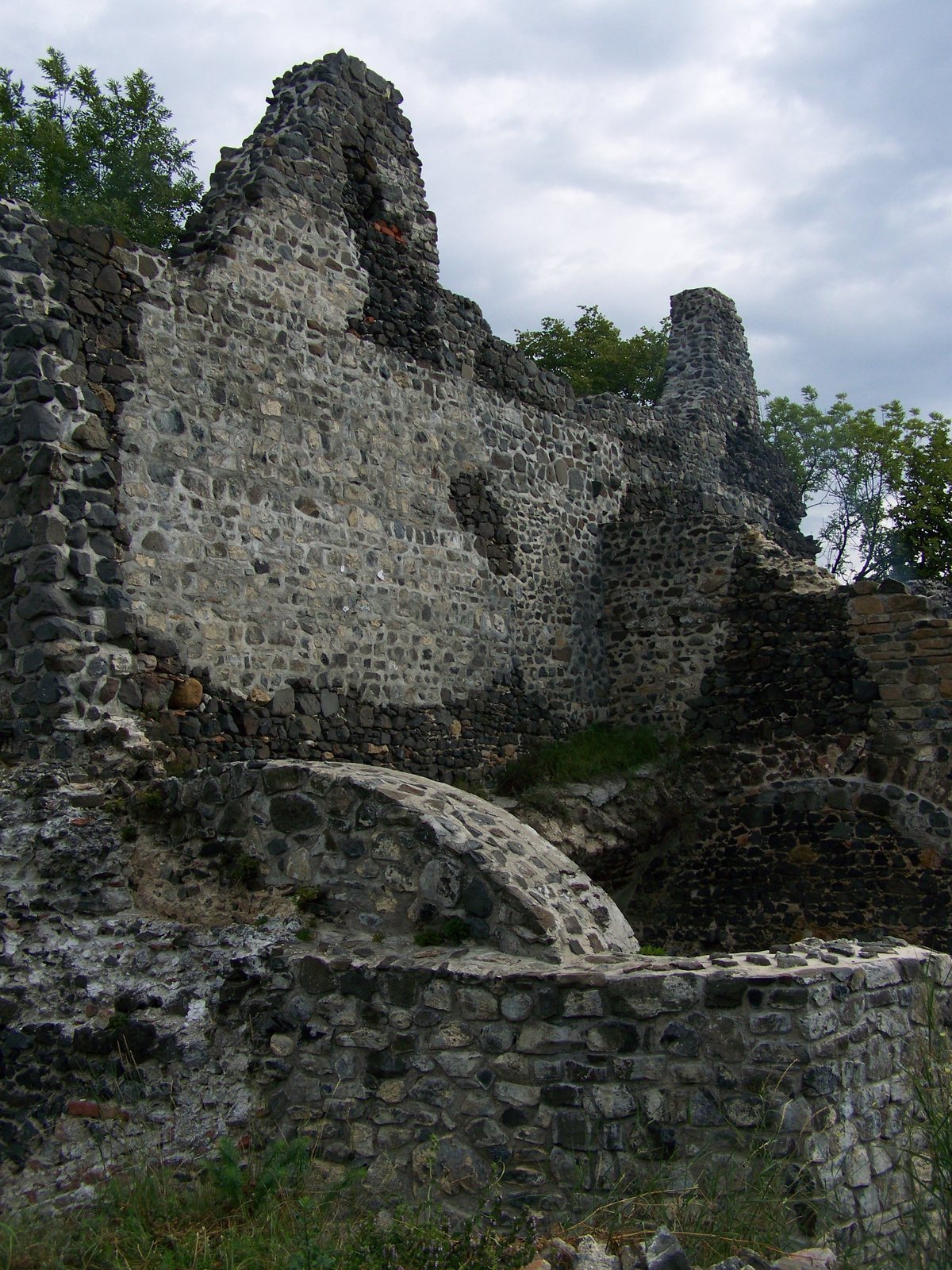
A massive keep bordered the courtyard alongside a multistorey palace wing. Together, these structures combined the castle’s defensive strength with accommodation and administrative space. Archaeologically investigated and restored wall sections preserve material evidence of the medieval stone construction.
Lower and outer castles
Lower Tátika
Lower Tátika occupied a projecting edge on the northwestern side of the mountain, above the area known as Tátikahidegkút-puszta. A vertical rock face bounded the position and contributed to its defensive setting. The lower fortress preceded the summit castle and was the stronghold confiscated by Béla IV in 1248. Its location was identified by archaeologists in 1980.
Outer castle
An outer castle was built at approximately the same time as the main upper castle. Ottoman forces destroyed it during their attack in 1589. Lapos Lake originates at the foot of the outer-castle area, linking the castle’s wider physical setting with the surviving archaeological landscape.