Quin Abbey: A Franciscan Friary in County Clare
Site at a Glance
- Rating
- 4.7
- Popularity
- Low
- Country
- Ireland
- Primary era
- Medieval
- External website
- Open
- Eras represented
- Medieval, Early Modern
- Civilizations
- Irish, Norman
- Site type
- Religious
- Remains
- Monastery
On this page12 sections
History
Quin Abbey is a Franciscan friary in Quin, Ireland, built in the Gothic period between 1402 and 1433. The Franciscans were a Catholic mendicant order founded by Saint Francis of Assisi, whose communities emphasized communal religious life, preaching, and poverty. Quin became an important religious foundation in County Clare, while its buildings also preserve traces of an earlier monastery and Norman castle.
Monastery, castle, and medieval rebuilding
A monastery occupied the site before it was burned in 1278. Around 1280, Thomas de Clare, Lord of Thomond and an Anglo-Norman nobleman and military commander, built a Norman castle there. Thomond was a historical lordship in north Munster. The castle was attacked and burned in 1286 by Cuvea MacNamara, who sought retaliation for the killing of an O’Liddy.
By about 1350, the MacNamara family had rebuilt the ruined castle as a church. The MacNamaras were a Gaelic Irish lineage prominent in County Clare and remained closely associated with Quin for centuries. The present friary was established between 1402 and 1433, with its foundation attributed either to Mac Cam Dall Macnamara or to Sioda Cam MacNamara. The church and conventual buildings were completed in 1433.
Suppression and early modern conflict
In 1541, during the English Reformation, Henry VIII confiscated and formally suppressed the friary. The English Reformation was the sixteenth-century process through which Henry VIII severed the English church’s ties with the papacy and suppressed many religious houses. By 1547, Quin belonged to Conor O’Brien, Earl of Thomond, an Irish nobleman who held that title, and the buildings were allowed to deteriorate.
Donnchadh Beg O’Brien captured the abbey in 1584, but English forces later recovered it. Sir John Perrot, an English administrator who served as Lord Deputy of Ireland, executed Donnchadh O’Brien at the church tower even though Elizabeth I had granted him a pardon. With assistance from the MacNamara family, the friary was restored around the late sixteenth or early seventeenth century and had been repaired by 1604.
College, destruction, and decline
Quin became a college around 1640 and enrolled as many as 800 students. Around 1650, forces associated with Oliver Cromwell destroyed and desecrated the friary and killed the friars. Cromwell was an English military and political leader associated with the Parliamentarian conquest of Ireland.
Franciscan friars returned in 1667, and the buildings were restored in 1671, but the institution never regained its former status. The friars were finally expelled in 1760. John Hogan, described as the last friar, remained at Quin until his death in 1820. By that time, neglect had left the buildings ruined.
Ruins and continued remembrance
In 1740, Bishop Pococke, an Anglican bishop and travel writer, described Quin as one of the finest and most complete monasteries he had seen in Ireland. In 1808, the monastery appears to have been in much the same condition as when Pococke visited. A new Franciscan monastery was established beside the ruins in the twentieth century. Quin Abbey is an Irish National Monument.
Remains
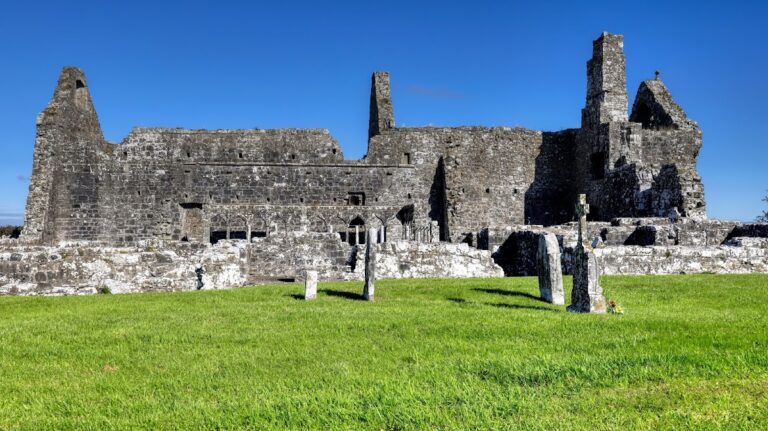
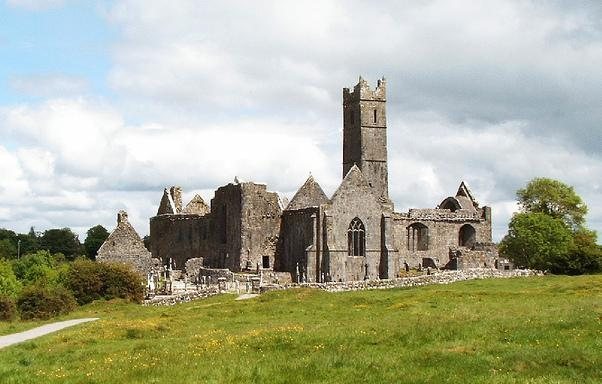
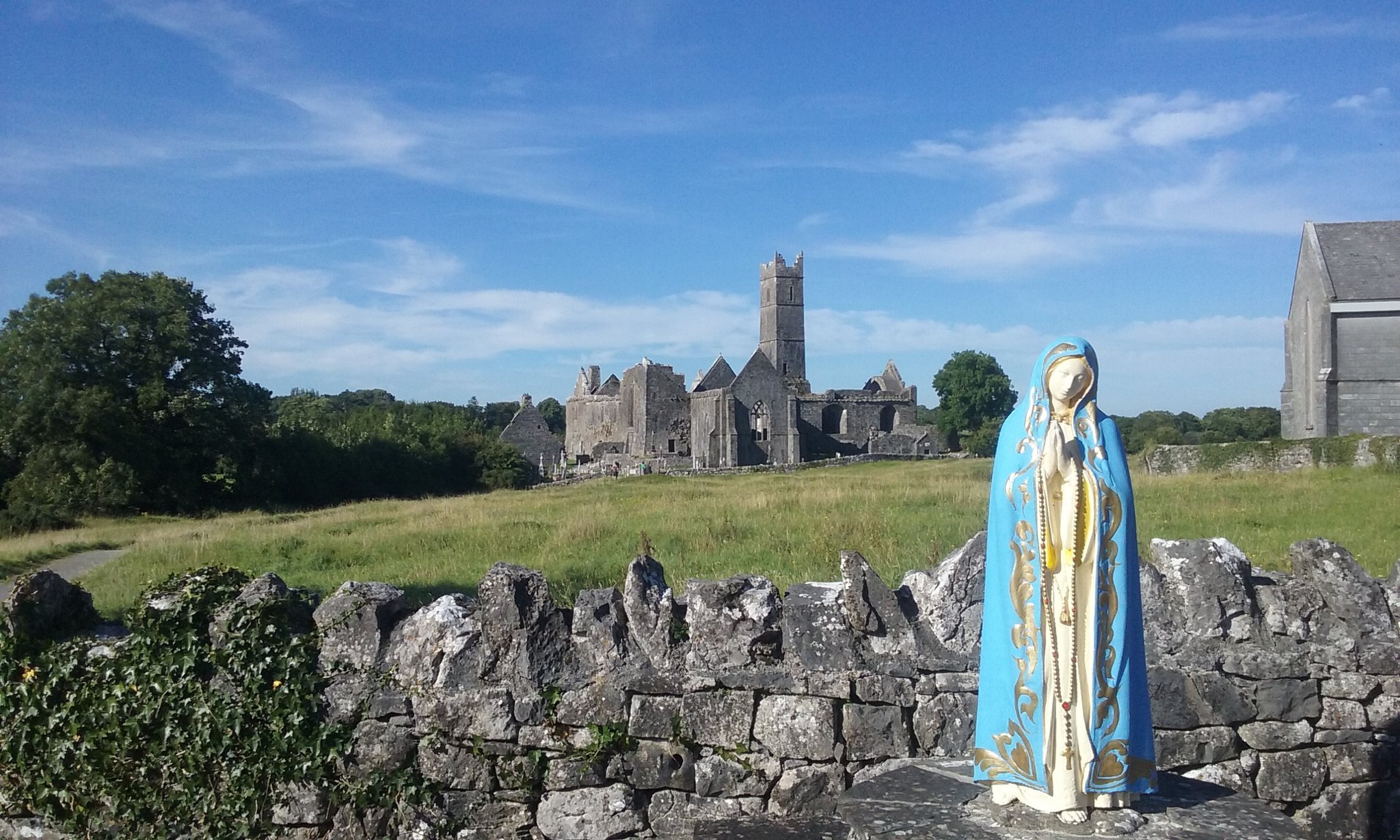
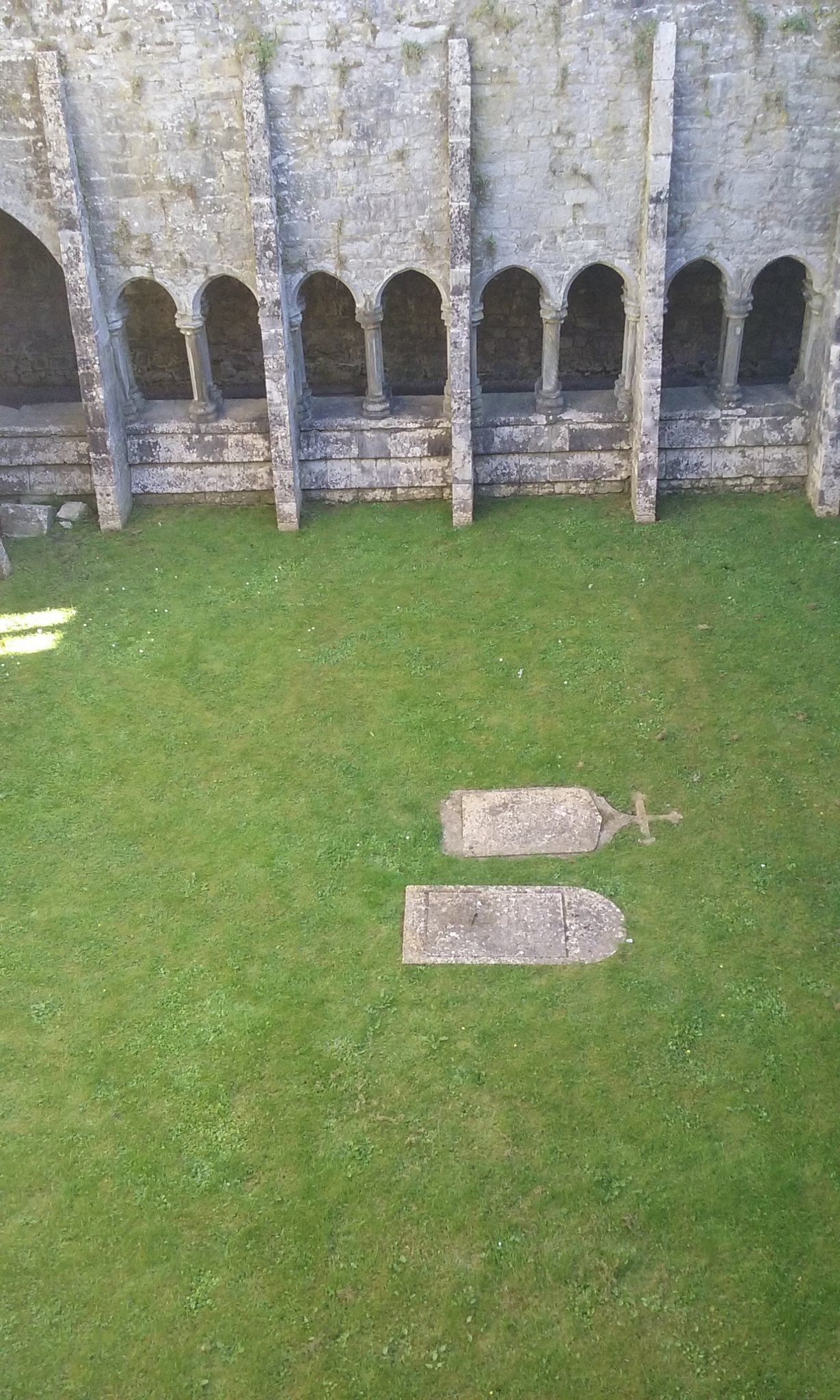
Quin Abbey survives as a largely roofless but relatively well-preserved Gothic complex. The principal church contains a nave, choir, tower, and transept, the part of a church that crosses the nave to create a cross-shaped plan. To the north stand the cloister and other conventual buildings, which served the religious community. The surviving monastery buildings rise to two storeys, and the intact cloister preserves a covered walkway around an open courtyard.
Church and monastic buildings
Church, cloister, and conventual buildings
The church and friary were built using the southern curtain wall of the earlier castle, a continuous defensive wall linking towers or other fortified structures. This relationship gives the surviving complex a direct physical connection with the castle that preceded it. The roofless church retains its principal medieval divisions, while the cloister and adjoining two-storey buildings remain as substantial parts of the monastic layout.
Mary Chapel and detached church
Mahón MacNamara added a bell tower and a chapel dedicated to Mary in 1530. The Mary Chapel contains tombs belonging to members of the MacNamara family, including John Fireball MacNamara, described as the last leader of the MacNamaras. A detached church also survives within the monastic grounds, adding another ecclesiastical structure to the remains of the friary.
Castle remains and surrounding grounds
Earlier castle fabric
The friary incorporates the southern curtain wall of the earlier Norman castle. The foundations of the castle’s large corner towers remain visible. The castle had a large square courtyard and a round tower at each corner. It stood beside the River Rhine and on the trade route between Limerick and Galway, placing the earlier fortified settlement within an important route between the two towns.
Graveyard
The graveyard surrounding the friary remains in use. Together with the family tombs in the Mary Chapel, it preserves the continuing association between the site and the people connected with Quin’s religious and local history.