Tuida: A Late Antique and Medieval Fortress in Bulgaria
Site at a Glance
- Rating
- 4.6
- Popularity
- Low
- Country
- Bulgaria
- Primary era
- Classical
- External website
- Open
- Eras represented
- Classical, Medieval
- Civilizations
- Bulgarian, Byzantine, Roman
- Site type
- Military
- Remains
- Fort
On this page14 sections
History
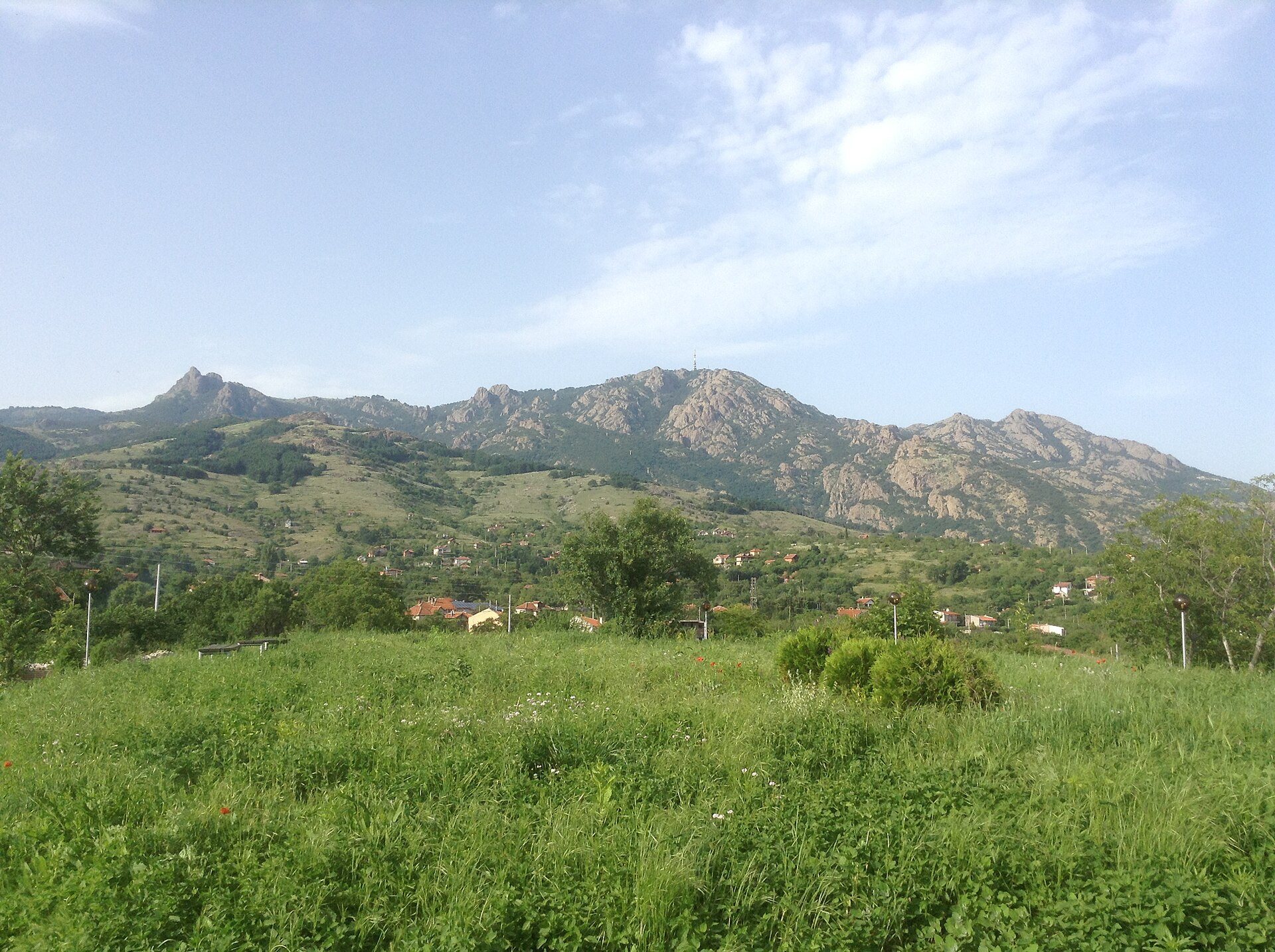
Tuida, also known as Suida or Tsoida, is a late antique and medieval fortress in Bulgaria on Hisarlaka Hill near the city of Sliven. The site formed part of the Balkan mountain fortification system that defended the Roman Empire, the early Byzantine Empire, and medieval Bulgaria. Its earliest known occupation belongs to the Late Iron Age, from the sixth to the first centuries BC, while the fortress developed during the Roman and late antique periods.
Early settlement and the Roman period
The hill was occupied by a settlement during the Late Iron Age, when Thracian communities formed part of the region’s society. The later settlement may have originated as a Thracian foundation in the third century AD, although the meaning of its name remains uncertain. An inscription from the beginning of the third century describes Tuida as a market settlement and probably places it within the territory of Augusta Traiana, the city now known as Stara Zagora.
Tuida occupied an administrative and commercial position in the eastern Balkans. The late Roman geographical writer Hierocles listed it among the four cities of the province of Hemimontus, a province created during the administrative reorganization of the eastern Roman Empire. The other city named in this context was Hadrianopolis, the provincial capital. The sixth-century historian Procopius of Caesarea also mentioned the settlement in On Buildings. A Roman road connected Anchialus with Serdica along the upper Tundzha River and served the city.
Fortification and early Byzantine rule
After Constantinople became the capital of the Roman Empire, a fortress was established on the hill to strengthen the settlement’s defenses. Stratigraphy and excavated finds place the beginning of the fortification probably in the middle of the fourth century. The fortress survived the Gothic invasion of 378 but was destroyed during Hun incursions in the fifth century.
Emperor Anastasius I, a sixth-century ruler of the eastern Roman Empire, ordered the fortress restored between 491 and 518. The rebuilt defenses followed the earlier plan but were considerably strengthened. A Christian cult complex, begun in the middle of the fourth century, was probably destroyed during the Hun attacks and restored under Emperor Justinian I, whose reign was marked by extensive military and building programs.
Tuida or Tsoida was an episcopal seat subordinate to the metropolitan see of Hadrianopolis. The bishop’s seat had earlier been associated with Kabyle, a larger and wealthier ancient city. After Kabyle was abandoned and its population moved to Diospolis, now Yambol, the seat was transferred to Tuida for reasons that remain unknown.
Destruction and medieval Bulgarian occupation
The late antique settlement ceased to exist around 598 or 599, when it was destroyed again, probably during incursions by Avars and Slavs. One interpretation connects this event with a major battle between the Avars and the Byzantine commander Comentius, who was active in the late sixth century.
The Sliven region entered the First Bulgarian Empire around 705 as part of Zagore, a region granted to the Bulgarian ruler Tervel under his treaty with the Byzantine emperor Justinian II Rhinotmetus. A medieval Bulgarian settlement of unknown name was then established at Tuida. It existed before 870, when a lead seal belonging to Prince Boris-Michael was found at the site. The Bulgarians repaired the fortress walls and the water conduit at the northern gate, and constructed new buildings inside the enclosure. Some of these buildings incorporated marble slabs made in stoneworking workshops at Preslav.
Excavation and preservation
Regular archaeological excavations began in 1982 under the Historical Museum in Sliven and the National Archaeological Institute and Museum of the Bulgarian Academy of Sciences. Work resumed in 2004 after an interruption, with the aims of completing the investigation and conserving and presenting the remains. The fortress is designated an archaeological reserve, preserving the architectural and archaeological evidence of its long history.
Remains
Fortress layout and defenses
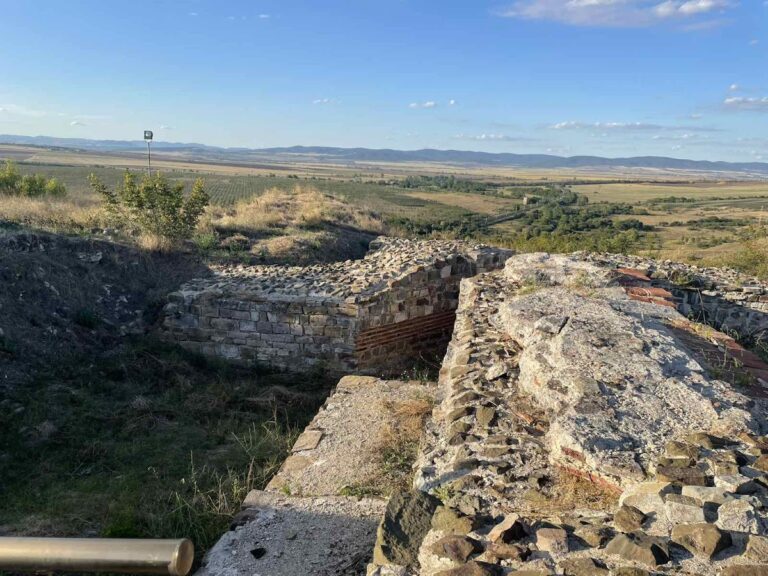
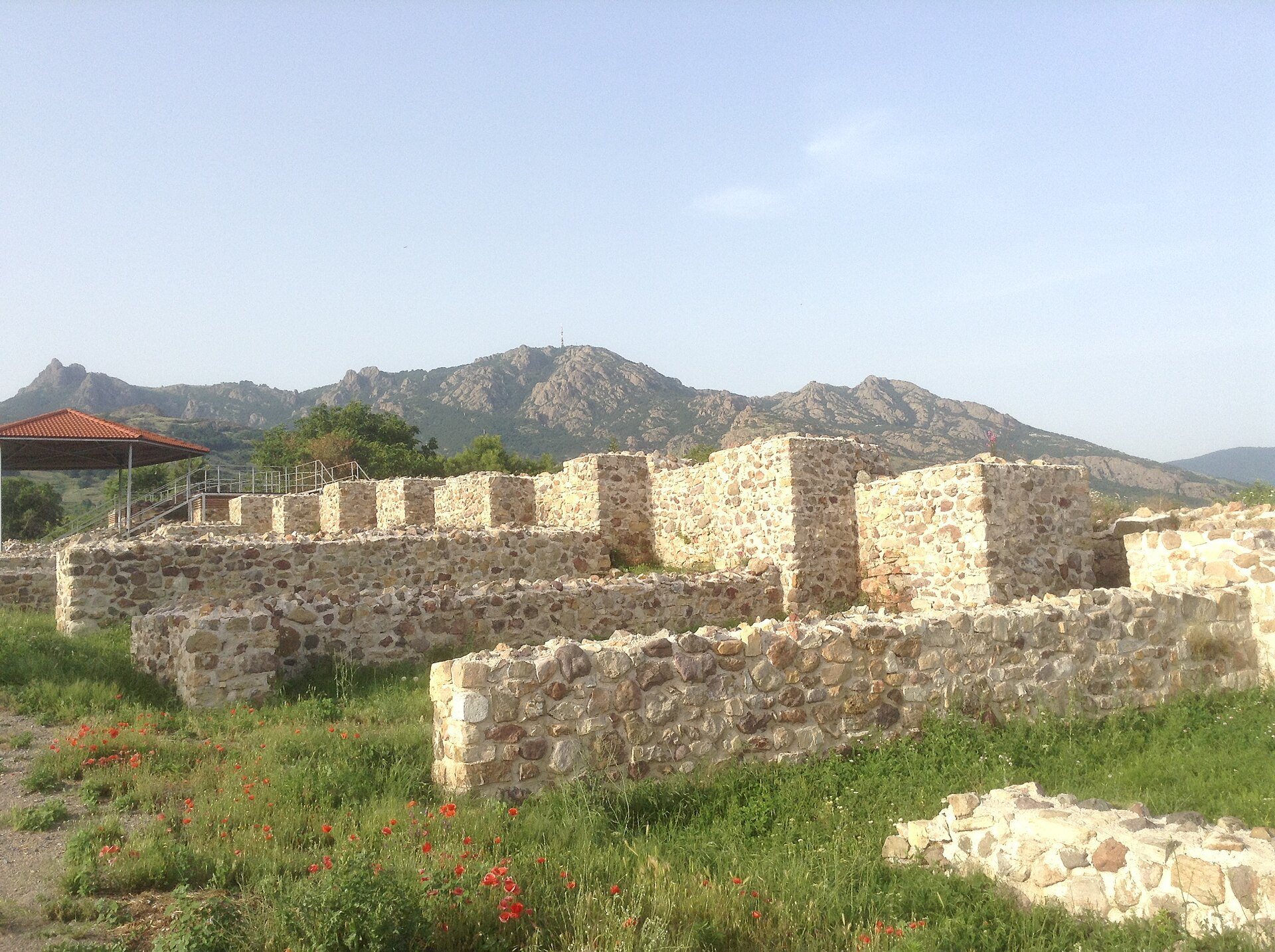
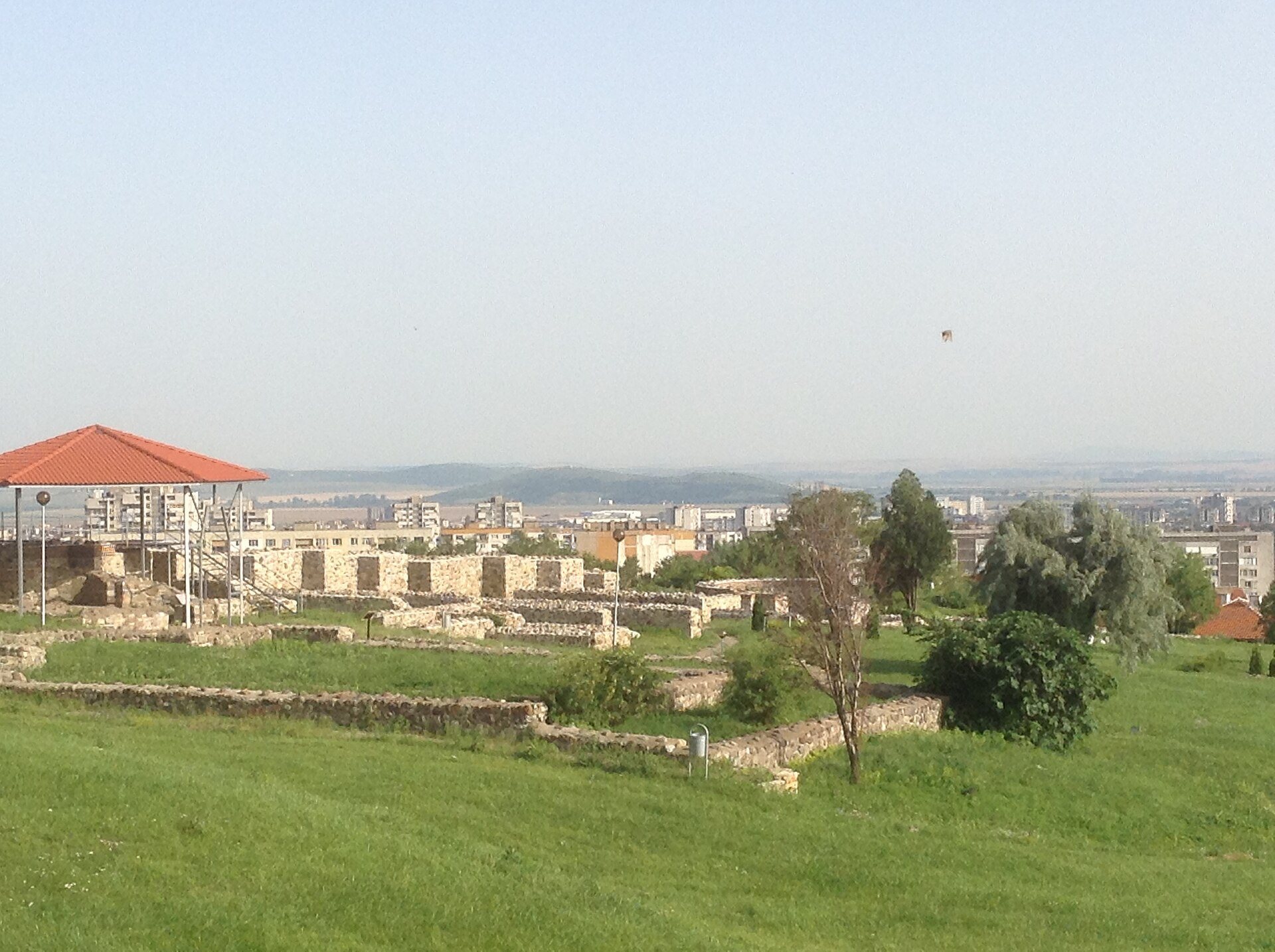
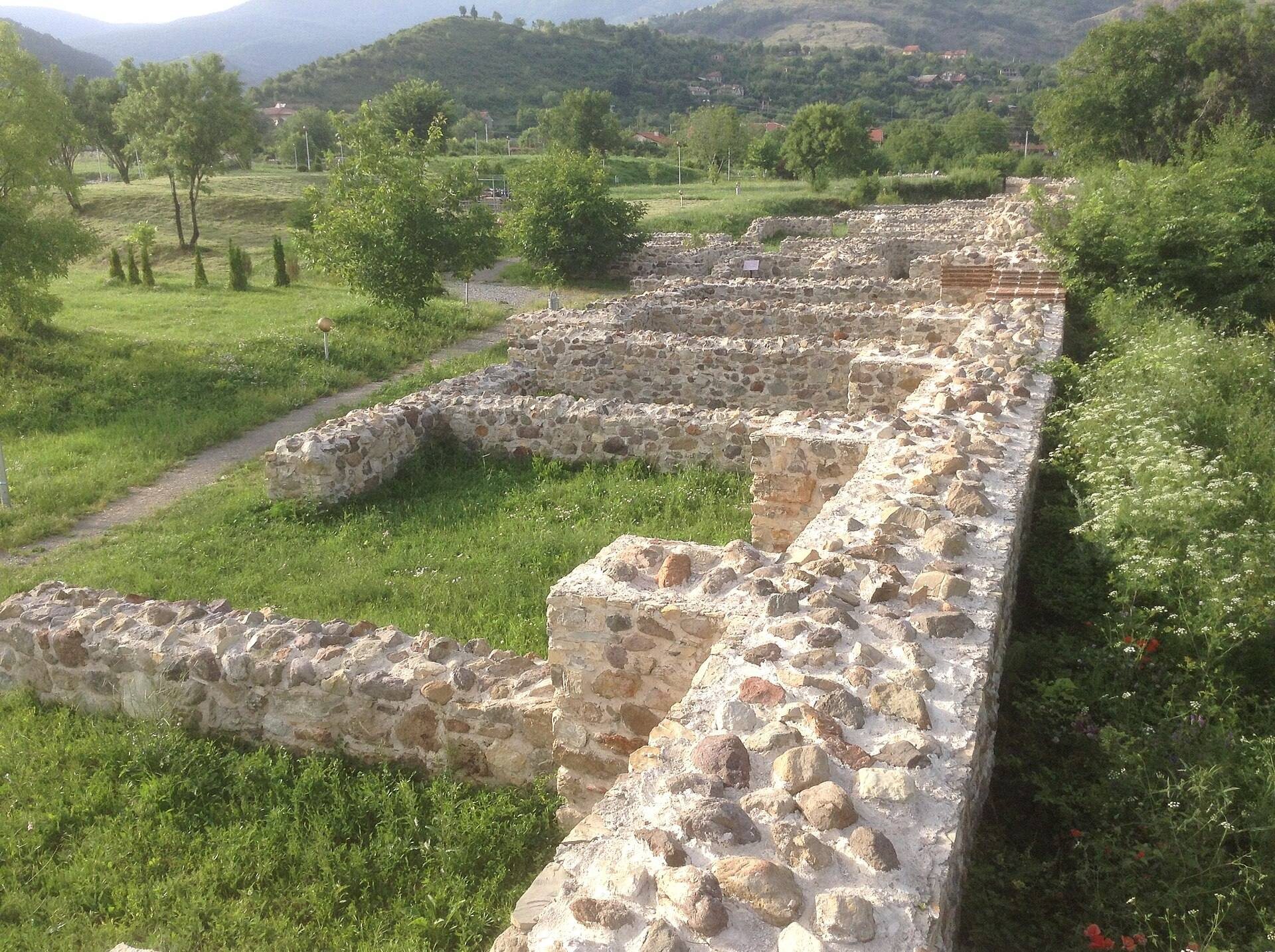
The remains occupy Hisarlaka Hill near Novo Selo in Sliven, overlooking the Blue Stones and the city. The fortified area covered approximately 40 decares, while the settlement extended beyond the enclosure into the surrounding area. Excavated remains include the defensive walls, corner towers, northern and southern gates, and the foundations of residential, agricultural, and military buildings. Slavic dwellings also formed part of the excavated settlement.
The original walls were built with opus incertum mixtum, a Roman masonry technique combining irregular stonework with regularly spaced horizontal brick bands. These walls had three brick bands and wall pilasters ending in brick arches. The rebuilding under Anastasius I added a fifth brick band and further stone stairways along the eastern and southern walls. A second defensive wall was begun 1.80 metres outside the main wall, and a concealed passage led westward towards the river.
Gates and interior buildings
Northern gate and water conduit
The northern gate incorporated a water conduit that was repaired during the Bulgarian period. This work formed part of the wider medieval rebuilding of the fortress, which also included new structures within the enclosure. Several of those buildings were faced with marble slabs produced in workshops at Preslav.
Residential, agricultural, and military buildings
Foundations of residential, agricultural, and military buildings survive inside the fortified area. Their remains represent successive phases of occupation, including the medieval Bulgarian settlement and the Slavic dwellings found through excavation.
Christian buildings
Eastern cult complex
The eastern part of the fortress contained a Christian cult complex with a large three-aisled basilica and a single apse. Beside it stood a distinctive six-conched baptistery, whose six apsidal recesses surrounded a central space. Its piscina, the basin used for baptism, was richly decorated with wall painting and mosaic. The complex originated in the middle of the fourth century and was later restored under Justinian I.
Southern basilica
A larger basilica stood south of the fortress. Its position demonstrates that the settlement continued beyond the fortified enclosure and included substantial religious architecture outside the defensive walls.
Inscriptions, objects, and archaeological finds
Two marble epigraphic bases dedicated to Apollo and Zeus were found at the site. The inscriptions helped identify the fortress with Tuida or Suida and with the early Byzantine fortress of Tsoida mentioned in written records. Apollo and Zeus were major Greco-Roman deities, so the bases also indicate a Roman-period religious cult at the settlement.
Several bricks carry an engraved Bulgar sign formed by an upsilon-like shape between two vertical strokes. Other excavated finds include the lead seal of Prince Boris I, a collective deposit of iron tools, large quantities of pottery, bone objects, ornaments, and numerous coins. Animal remains include bones from 14 species of wild and domestic birds, among them Bonelli’s eagle and capercaillie, as well as the great bustard and Caucasian pheasant, species that later became extinct in Bulgaria.