Matara Star Fort: A Dutch Defensive Outwork in Sri Lanka
Site at a Glance
- Rating
- 4.4
- Popularity
- Low
- Country
- Sri Lanka
- Primary era
- Early Modern
- External website
- Open
- Eras represented
- Early Modern
- Civilizations
- Dutch
- Site type
- Military
- Remains
- Fort
On this page11 sections
History
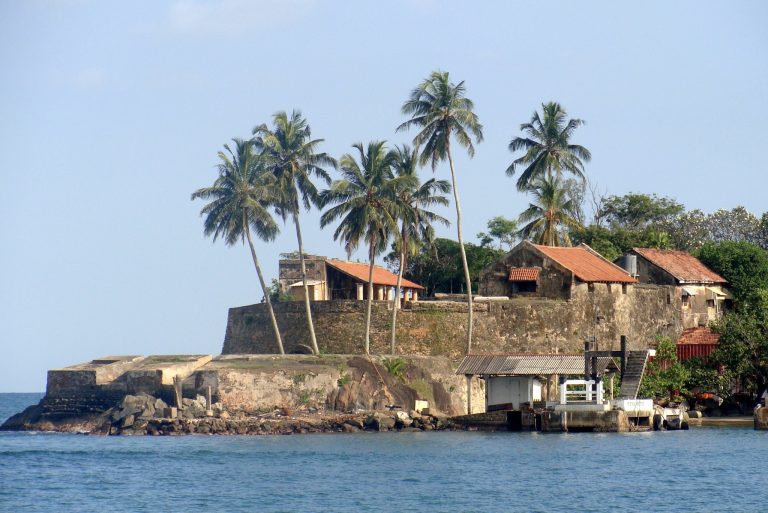
Matara Star Fort is a Dutch East India Company redoubt in Sri Lanka, built between 1763 and about 1765 in the Italian system of fortification. Originally called Redoute Van Eck, it strengthened Matara Fort after the Dutch recovered the town and rebuilt its coastal defences following the Matara Rebellion.
Rebellion and Dutch reconstruction
Matara Fort, completed by the Dutch in 1640, was vulnerable to attack from the landward side. During the Matara Rebellion of 1760–61, Sinhalese forces supported by the Kandyan Kingdom, the independent kingdom in Sri Lanka’s mountainous interior, captured the fort and forced the Dutch to withdraw to Galle. Matara was subsequently devastated. The Dutch regained the town and began rebuilding it, while the new outwork on the eastern bank of the Nilwala River protected the main fort against attacks from inland and across the river.
Lubbert Jan baron van Eck, governor of Dutch Ceylon from 1762, ordered the construction. Ceylon was the historical name used for Sri Lanka during Dutch and later British colonial rule. The fort’s position covered much of the landward approach to Matara, making it difficult for an army advancing from the interior to reach the town without first neutralizing the outwork.
Military purpose and later colonial use
The Italian system of fortification used low, thick ramparts and projecting bastions so defenders could fire along adjoining walls. Matara Star Fort was intended to hold a small garrison, provisions, and ammunition until reinforcements could arrive from Matara Fort. It formed part of the Dutch defensive network along coastal Ceylon, which protected Dutch control of the coast and the cinnamon trade. The 1760 rebellion had exposed the weakness of Matara Fort and directly prompted the new work. Although designed for defence, the Star Fort never had to prove its effectiveness in battle.
Van Eck led a Dutch campaign against the Kandyan Kingdom in 1765 and died in Colombo about a month after the capture of Kandy, probably from malaria contracted during the campaign. His name remained associated with the fort through its original title and the inscription above the entrance.
After the Dutch surrendered their Sri Lankan territories in 1796, the fort passed to the British. It was later used as an administrative office and as quarters for the district engineer of the Public Works Department. An attempt to transfer it to the Department of Archaeology in 1941 did not take effect. From 1965 to 1975, the Matara Urban Council used the fort as a public library, after which the Department of Archaeology acquired it.
Restoration and present role
Restoration between 1986 and 1990 removed modern additions, restored the moat, and brought the fort closer to its original appearance. A later restoration of a drawbridge took place in 2012 with assistance from the Dutch Government. The fort now houses an archaeological museum devoted to the history of Matara and remains under the control of the Government of Sri Lanka.
Remains
Layout and defensive works
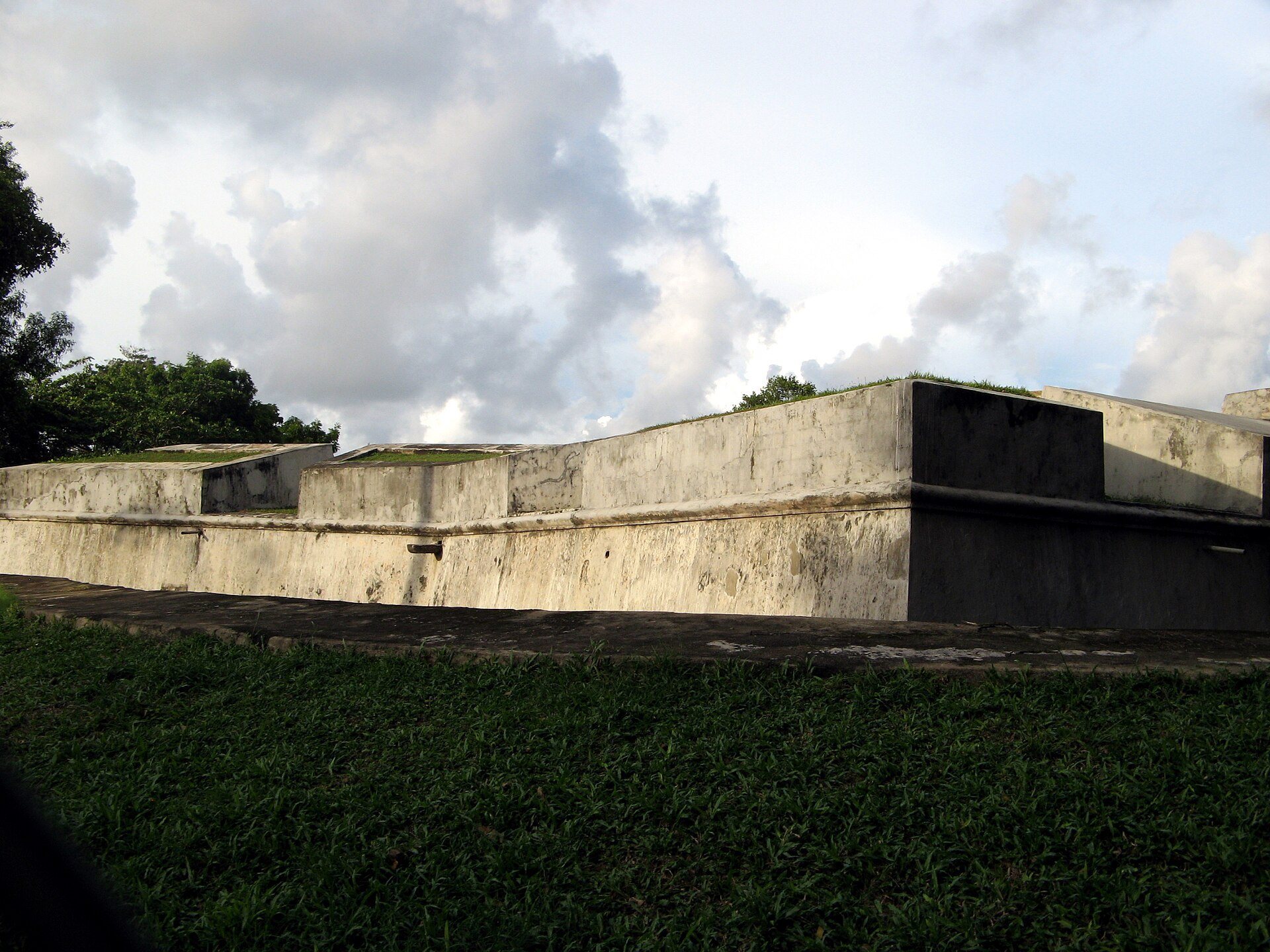
Matara Star Fort stands on the eastern bank of the Nilwala River, about 350 metres from the gate of Matara Fort. Its plan is a six-pointed star-shaped redoubt, approximately 120 metres in overall diameter. Six arrow-shaped bastions projected from the fortification, allowing fire along the connecting curtain walls and toward adjoining bastions. Together, the positions accommodated twelve large cannons and covered approaches from all directions.
Ramparts and moat
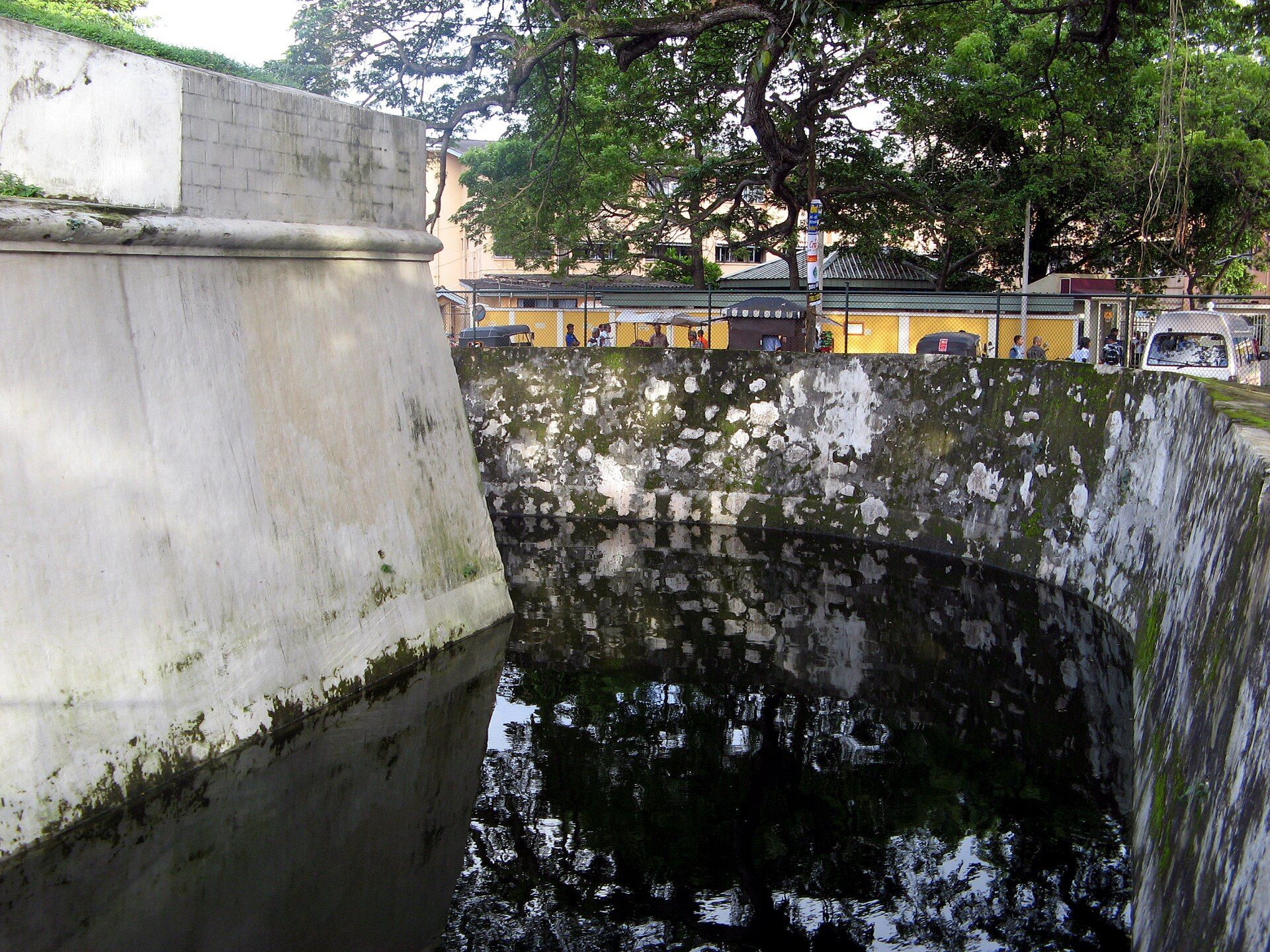
The rampart walls are more than four metres thick and were built with granite and coral stone. A moat approximately six metres wide surrounds the fort, and it was formerly about 3.1 metres deep. Lower defensive walls stood behind a glacis, a sloping earthen bank about 7.5 metres wide that shielded the walls and helped deflect incoming shot.
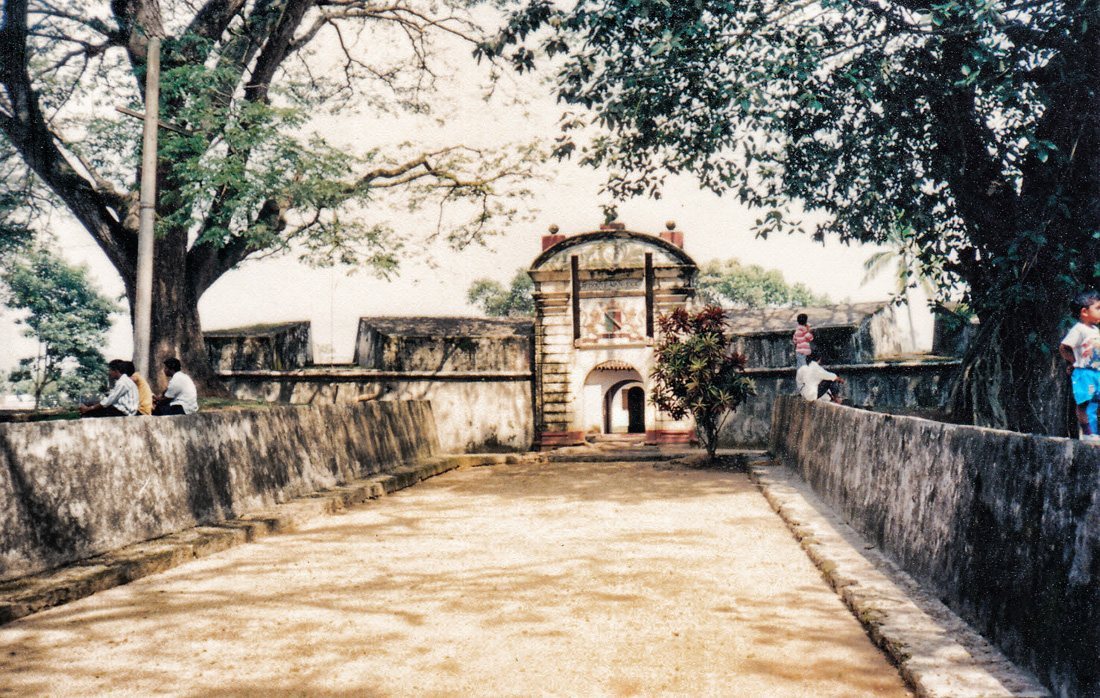
The earthen ramparts were later dug down, with some of the soil used to fill the moat. The moat was re-excavated during modern restoration. Two original drawbridges once crossed it and no longer survive, while a later wooden bridge now leads to the entrance. A drawbridge was restored in 2012.
Entrance and inscriptions
The entrance gate is faced with coral and carries the Dutch East India Company insignia, the construction date 1763, and the coat of arms of Governor Lubbert Jan baron van Eck. Two rampart lions flank the arms, while the gate bears the inscription “Redoute Van Eck 1763.” Beneath Van Eck’s arms, in the gate arch, a stone commemorates Arnoldus de Ly, identified as chief merchant and second-in-command of the Galle command and as dessave, a senior territorial official, in 1765. De Ly was then dessave of Matara and later commanded Galle from 1766 to 1784.
Courtyard and internal structures
Courtyard and garrison rooms
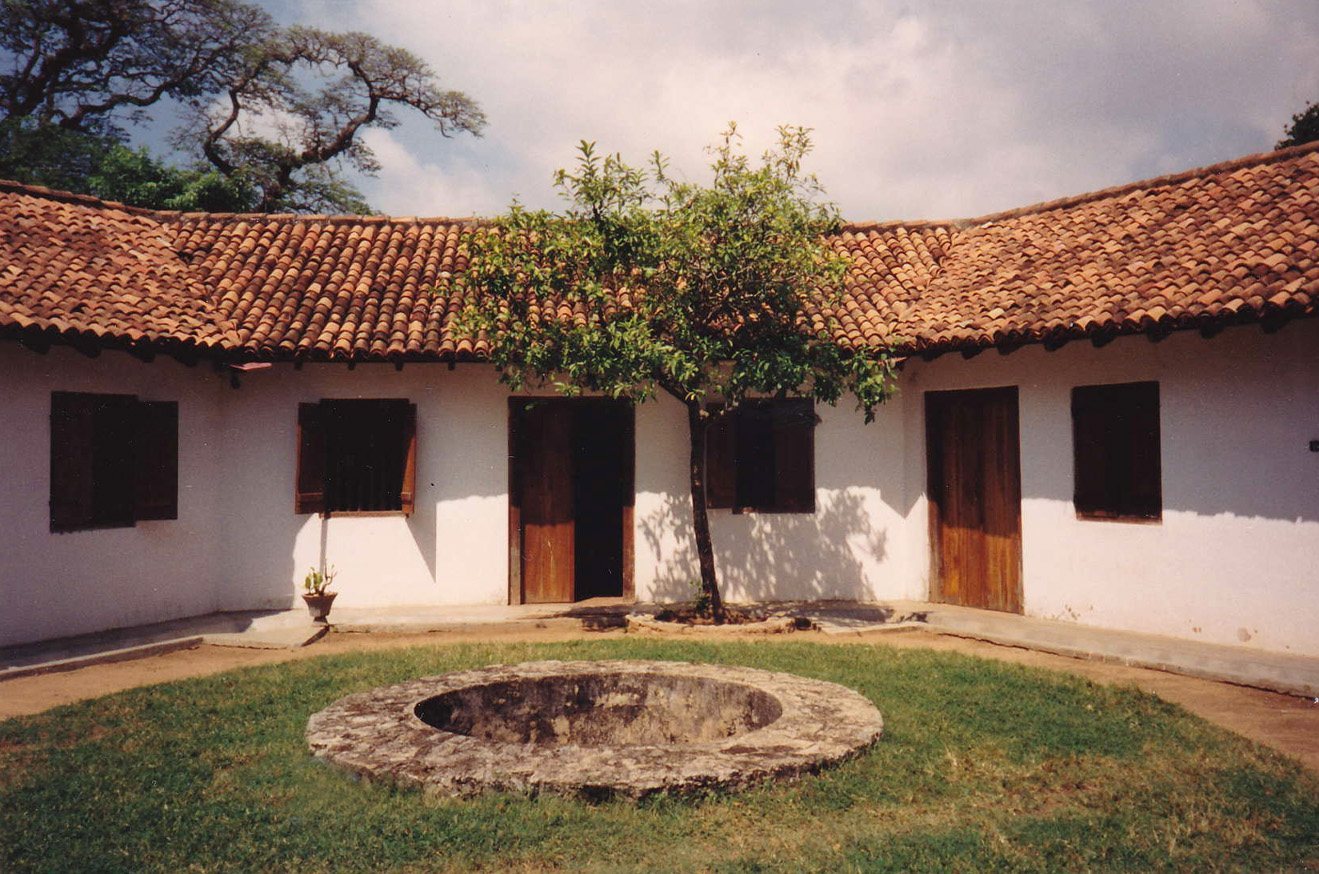
Stairs beyond the gate lead directly to the walls on both sides. Straight ahead, a small courtyard contains a central well and is surrounded by rooms for soldiers, ammunition, and provisions. A house and other modern additions once occupied the courtyard; their removal during restoration made the original layout more clearly visible.
Water supply and prison cells
The central well is approximately 2.75 metres in diameter and supplied water to the garrison. The fort also contained two prison cells. An internal drainage system carried rainwater gathered during the monsoon to the moat.
The roofs were originally covered with cadjan leaves, a traditional palm-leaf roofing material, and were later replaced with clay tiles. These surviving arrangements, together with the thick ramparts, moat, bastions, and central courtyard, express the fort’s planned role as a compact defensive work supporting Matara Fort.