Kabutozuka Kofun (Sendai): A Fifth-Century Elite Burial Mound
Site at a Glance
- Rating
- 3.5
- Popularity
- Very Low
- Country
- Japan
- Primary era
- Classical
- External website
- Open
- Eras represented
- Classical
- Civilizations
- Unclassified
- Site type
- Burial
- Remains
- Burial Mound
On this page8 sections
History
Kabutozuka Kofun is a Japanese elite burial mound in Sendai, Japan, built during the latter half of the fifth century during the Kofun period, an era from roughly the third to the sixth centuries when powerful regional chiefly groups constructed monumental graves. It is considered one of the larger kofun of its period on the Sendai Plain.
Chiefly Burial in the Fifth Century
The people buried in Kabutozuka Kofun and other large mounds in the area are thought to have belonged to a chiefly elite. Their status appears to have been above that of the people buried in the smaller, more closely grouped mounds of the nearby Onoda Kofun Group. Kabutozuka therefore formed part of a wider burial landscape that reflected differences within the region’s ruling society.
Names and Local Tradition
The mound was long connected with a local tradition that victims of the Kobito Disturbance of 1601 had been buried there. By the seventeenth century, it was also called Kobitozuka, or “Kobito Mound,” and this name remained known in Sendai until the Meiji period. Several historical maps use it.
By the Meiji period, archaeologists had identified the mound as a kofun, although they disagreed about its original form. Some regarded it as circular, while others believed it had once been keyhole-shaped and that its front section had been destroyed. In 1959, the alumni association of the agricultural school that had formerly occupied the site installed a bust of Kichibei Numakura on the mound. Numakura was credited with creating Sendai cabbage.
Archaeological Investigations
The Miyagi Prefectural Board of Education excavated the eastern side in 1977 and found a horseshoe-shaped section of the surrounding ditch. This led to the interpretation that Kabutozuka was a scallop-shaped kofun with an unusually small front section. A further investigation took place on the south side in 1988. The mound now stands within the grounds of Miyagi Sendai Minami High School. The agricultural school that previously occupied the land later became Miyagi Agricultural High School and moved to Natori.
Remains
Scallop-Shaped Layout
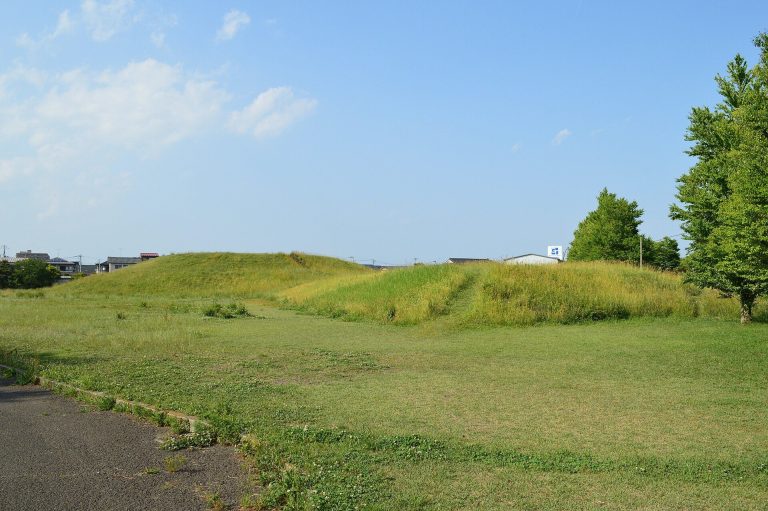
Kabutozuka Kofun has an estimated total axial length of about 75 metres. Its original plan consisted of a large circular rear mound and a much smaller projecting front section, the form known as a scallop-shaped kofun. The rear section measures about 62.4 metres across, while the front section is estimated at about 15 metres long and about 30 metres wide at its forward end. Its rear section rises approximately 6.8 metres, and the surrounding ditch is about 13 metres wide beside the circular mound.
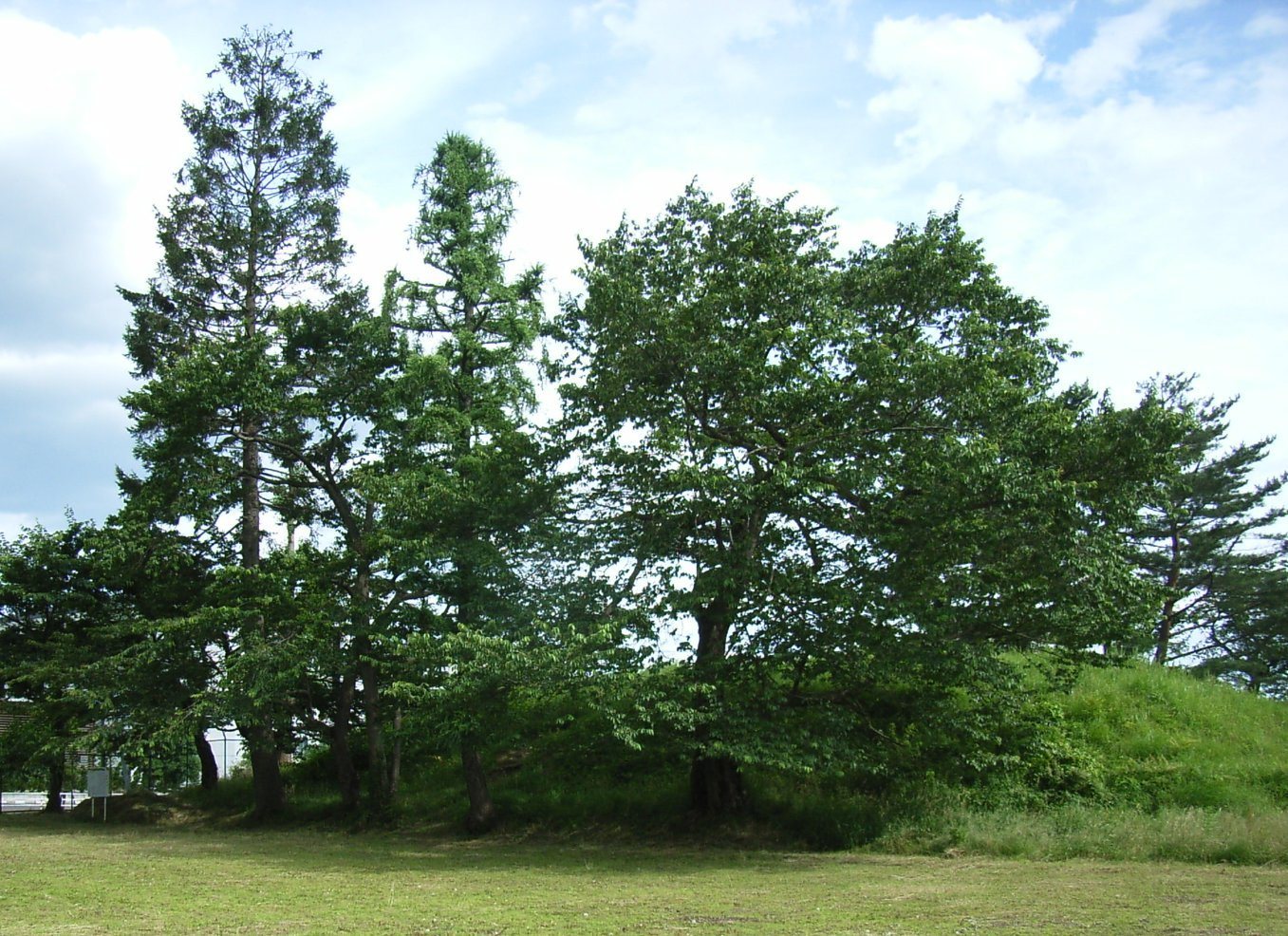
The mound now appears circular, measuring approximately 50 metres in diameter, because the front section was cut away by the municipal Kabutozuka Line. The front section was exceptionally small in relation to the rear mound, giving the original monument its distinctive scallop-like outline. Two tiers remain clearly visible on the rear section, with traces that may indicate at least a third. The tiered profile is thought to resemble an overturned helmet, providing the basis for the name Kabutozuka, meaning “Helmet Mound.”
Stone Covering and Haniwa
Fukiishi, stones laid over the sloping sides of a burial mound, covered the mound’s surfaces. Cylindrical haniwa, clay objects arranged around burial mounds, and trumpet-flower-shaped haniwa were placed around it. Investigations recovered numerous rounded river stones used as fukiishi, together with a small number of fragments from both haniwa forms. The fragments resemble material excavated at the nearby Tomizawa Kiln Site.
River Plain Setting
The mound stands on the south, or right, bank of the Hirose River, on the alluvial plain at the eastern foot of Mount Dainenji. The nearby Ichizuka, Futazuka, and Uramachi kofun occupy comparable settings, while the Onoda Kofun Group consists of smaller and more closely spaced mounds. Investigations have so far concentrated on areas around Kabutozuka, and the central burial facility remains unexamined.