Tōshō-ji Temple: A Rinzai Zen Temple in Sendai


Site at a Glance
- Rating
- 4
- Popularity
- Very Low
- Country
- Japan
- Primary era
- Modern
- External website
- Open
- Eras represented
- Modern
- Civilizations
- Japanese
- Site type
- Religious
- Remains
- Monastery
On this page9 sections
History
Tōshō-ji Temple is a Rinzai Zen temple in Sendai, Japan, belonging to the Tōfukuji branch and traditionally established in 1283. It was founded by Date Masayori at Koori in Date District, Mutsu Province, and is dedicated to Shakyamuni Buddha, the historical Buddha traditionally regarded as the founder of Buddhism.
Foundation and medieval status
Tōshō-ji was established as one of five temples that later became known collectively as the Five Date Mountains. Its founding monk was a Rinzai priest. The temple’s mountain name is Mui-zan, a traditional Buddhist honorific that does not necessarily identify the site’s physical location.
During the early Muromachi period, the era of the Ashikaga shogunate from the fourteenth to the sixteenth century, Tōshō-ji became the Ankokuji for Mutsu Province. Ankokuji temples formed part of a network associated with Ashikaga Takauji and his brother Ashikaga Tadayoshi, intended to promote peace and Buddhist merit after periods of warfare. Tōshō-ji and Zuiganji were the only temples in the Tōhoku region classified as Shosan, a category for major Zen temples.
Relocations and Date family protection
In 1383, Date Munetō moved Tōshō-ji to Natsugari in the Yonezawa area, in what is now northwestern Takahata in Yamagata Prefecture. The temple later moved to Iwadeyama when Date Masamune was transferred there. In 1600, it was relocated to the northern hills of Sendai in connection with the construction of Sendai Castle.
The Date family continued to protect the temple. In 1643, Tōshō-ji received an estate producing 300 koku of rice, a historical measure of agricultural production conventionally linked to the amount needed to support one person for a year. The Sendai domain also assigned it the highest Ichimon temple rank, one of the highest categories in the domain’s institutional hierarchy. Five attached subtemples had been established by 1612.
Meiji-period losses and rebuilding
During the Meiji period, Tōshō-ji lost the protection of the domain and its estate, while its subtemples were successively abolished. In 1873, it ceded the western half of its precinct to the newly established Aoba Shrine and concentrated its buildings on the eastern side.
A fire on April 18, 1876, destroyed the principal buildings. A temporary hall was erected that June, but the temple hall and priest’s quarters were not completed again until March 1900. The assembly hall and priest’s quarters were rebuilt in 1997. The temple’s nutmeg-yew tree received designation as a national natural monument on March 20, 1995.
Remains
Tōshō-ji occupies the northern hills of Sendai in Aoba Ward. Its former precinct included the present temple grounds and the land immediately to the west, where Aoba Shrine now stands. Following the 1873 transfer, the temple buildings were concentrated on the eastern side. The surviving complex therefore reflects both the earlier extent of the precinct and its later reduction.
Temple buildings and features
Temple hall and priest’s quarters
The principal buildings were destroyed by the fire of 1876 and first replaced with a temporary hall. The temple hall and priest’s quarters were rebuilt in 1900, while the priest’s quarters were rebuilt again with the assembly hall in 1997. These buildings form part of the temple’s reconstructed architectural fabric.
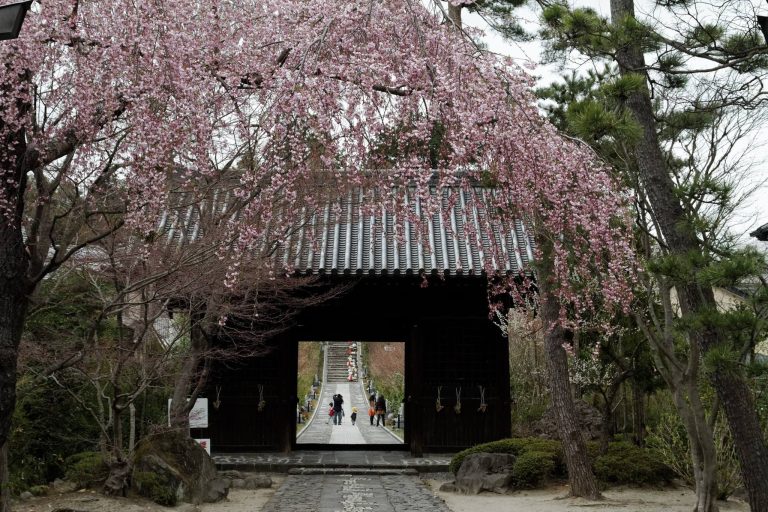
Temple gate
The temple gate was remodeled in 1952. Its present form consequently includes a twentieth-century alteration to one of the complex’s principal entrance structures.
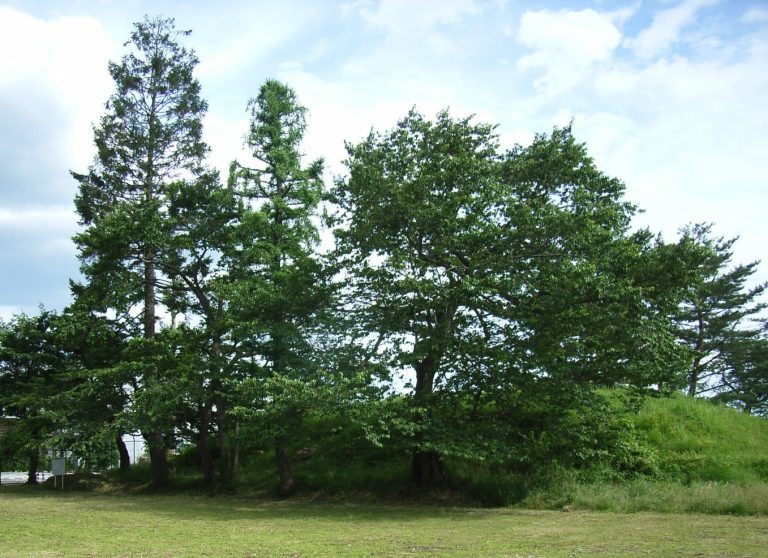
Nutmeg-yew tree
A nutmeg-yew tree stands within the temple grounds. It is protected as a national natural monument, a status granted on March 20, 1995, and remains an important natural feature of the site.