Citânia de Sanfins: A Gallaecian Hillfort in Portugal
Site at a Glance
- Rating
- 4.6
- Popularity
- Low
- Country
- Portugal
- Primary era
- Iron Age
- External website
- Open
- Eras represented
- Iron Age, Medieval
- Civilizations
- Portuguese
- Site type
- Military
- Remains
- Fortified Town
On this page9 sections
History
Citânia de Sanfins is a major Castro culture archaeological site in Portugal, built and developed by pre-Roman communities on a granite hill mainly during the second and first centuries BCE. The Castro culture was the fortified hill-settlement tradition of northwestern Iberia, and the settlement later continued through several phases under Roman occupation.
Origins and Gallaecian development
Traces of occupation date from the fifth century BCE, while the principal Gallaecian settlement emerged during the second and first centuries BCE. The Gallaecians were the pre-Roman peoples of northwestern Iberia, in a territory later known as Gallaecia. The fortified settlement took shape around the first century BCE and covered about 15 hectares in a strategic position between the Douro and Minho regions.
During its major Gallaecian phase, Citânia de Sanfins may have housed about 3,000 people. Its population was strongly associated with ironworking and had a martial character, while agriculture and other economic activities were carried out by dependent hillforts in the surrounding area. The settlement served as the political and military center of a wider region that included the areas of present-day Valongo, Maia, and Penafiel.
Roman occupation and later use
Roman forces reached the settlement a few years before the beginning of the Common Era, encountering substantial difficulty. Roman occupation began in the third century CE, and the settlement was abandoned during the fourth century. Later activity gave the hill a Christian use. A medieval cemetery with approximately 34 graves dates from about the thirteenth century, while a chapel dedicated to Saint Romanus dates from about the fourteenth century.
Excavation and protection
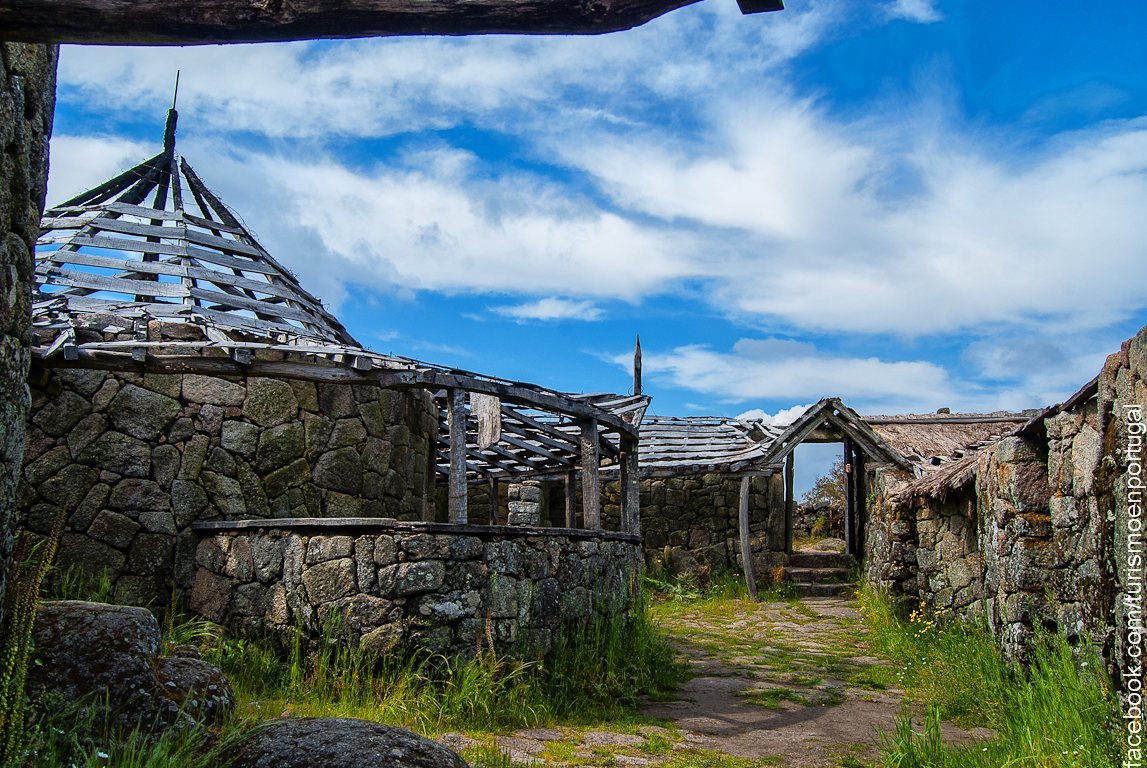
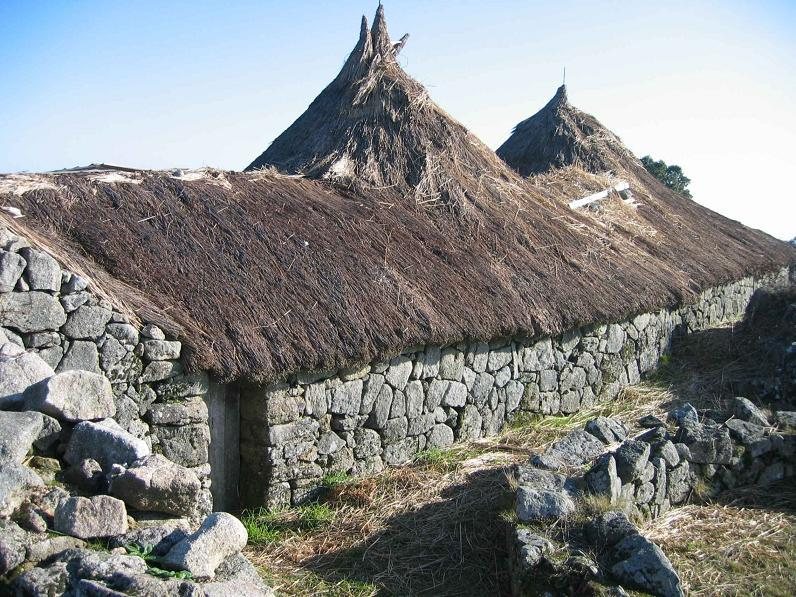
Francisco Martins Sarmento and José Leite de Vasconcelos carried out the first studies of Citânia de Sanfins, and digging took place in 1895. Systematic archaeological excavations began in 1944 and continued for more than fifty years, with the last interventions taking place in 1995. That year, one house was reconstructed and a replica of a warrior statue was installed near the entrance to the second defensive wall. The site has been classified as a National Monument of Portugal since 1946.
Remains
Defenses and street plan
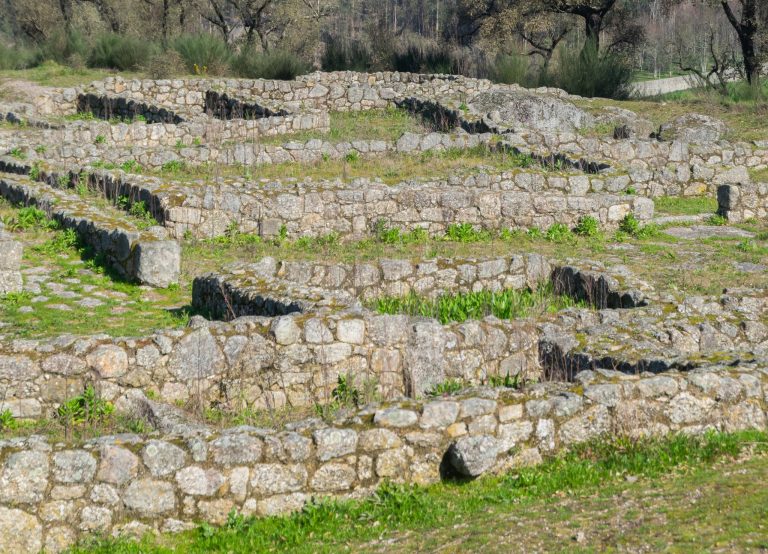
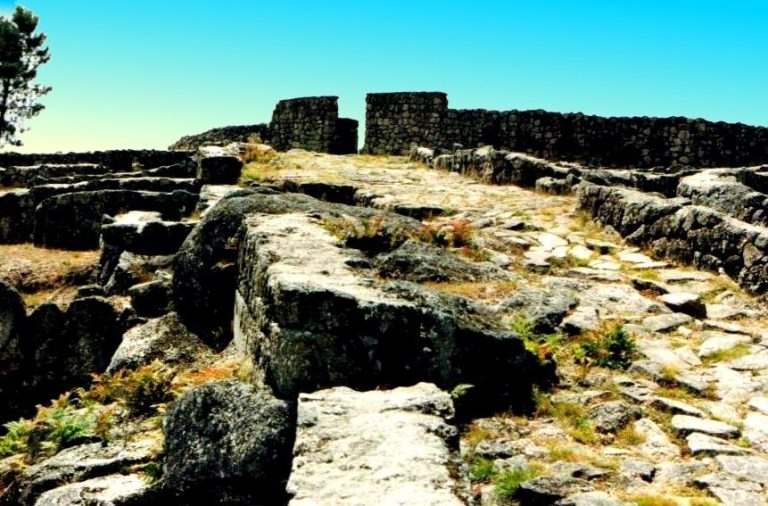
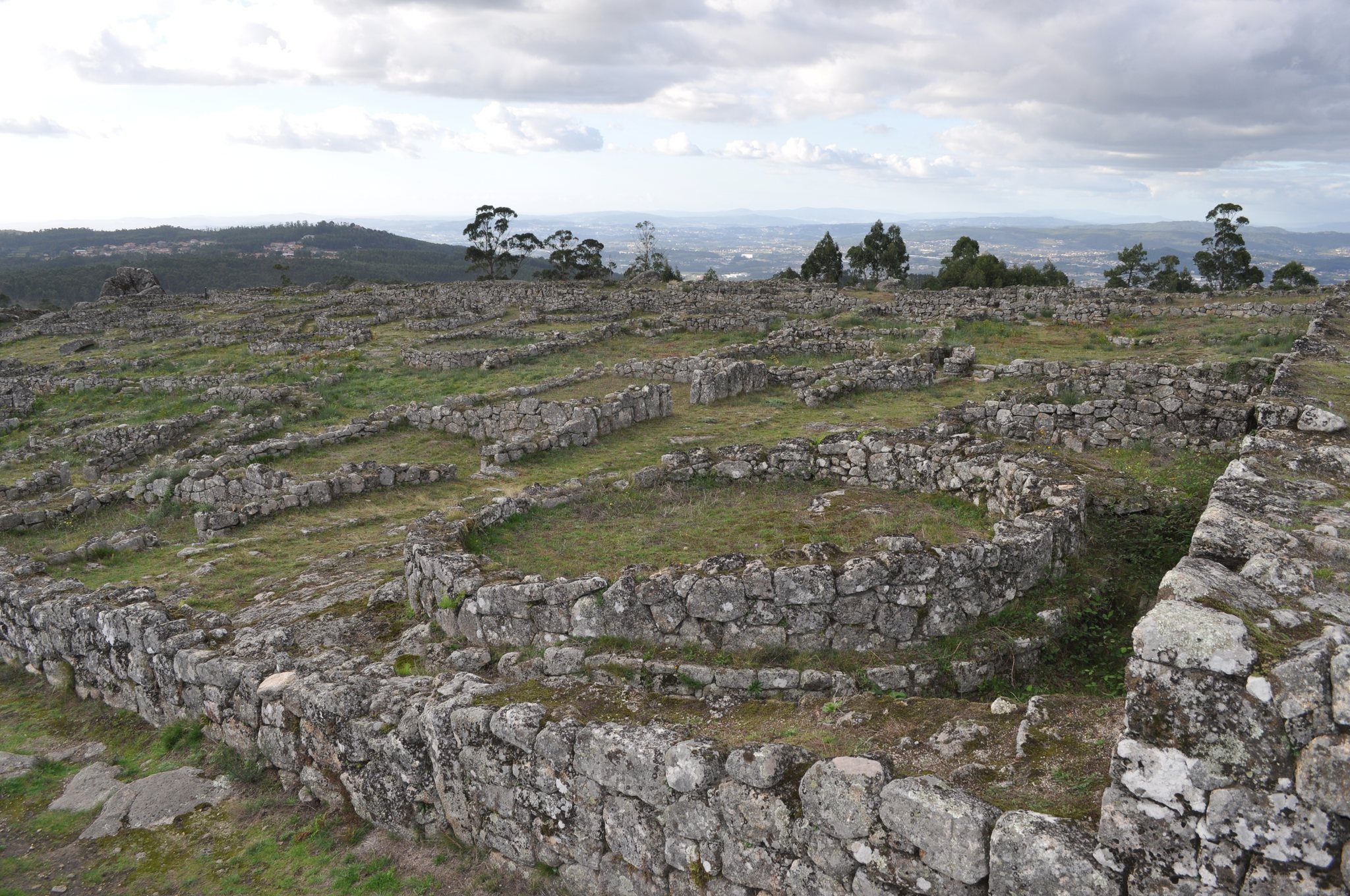
The settlement occupies a granite-strewn hill and was enclosed by three lines of walls. An outer wall protected the western and southern sides, while a moat lay to the north and south. Built from local granite blocks, the walls followed the natural terrain and enclosed a regular plan with orthogonal streets. A principal road ran from north to south, with collateral roads extending from east to west.
Domestic quarters
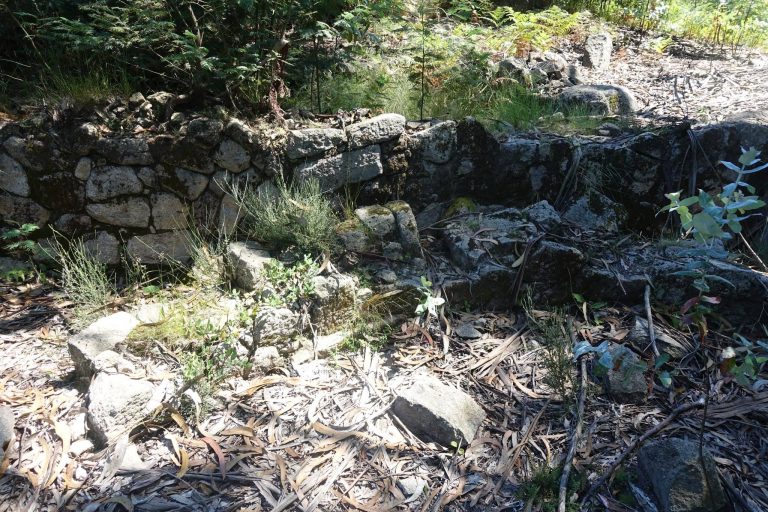
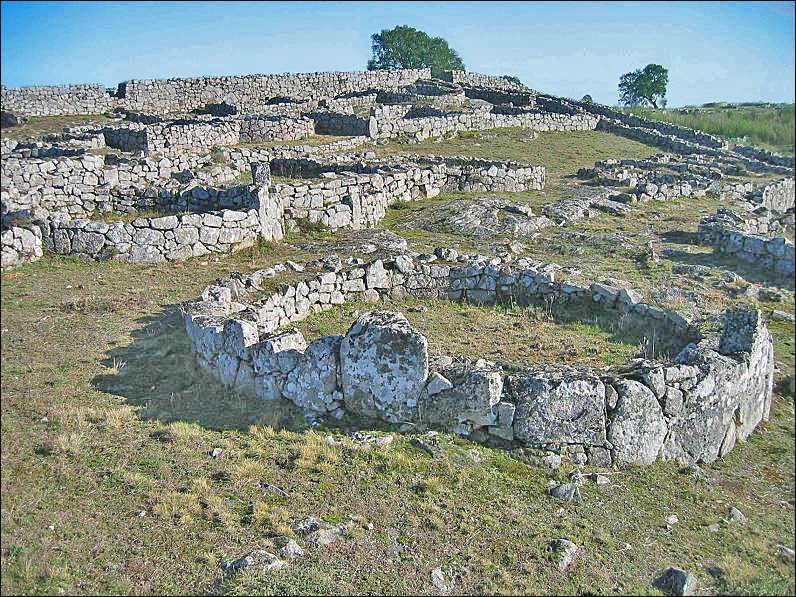
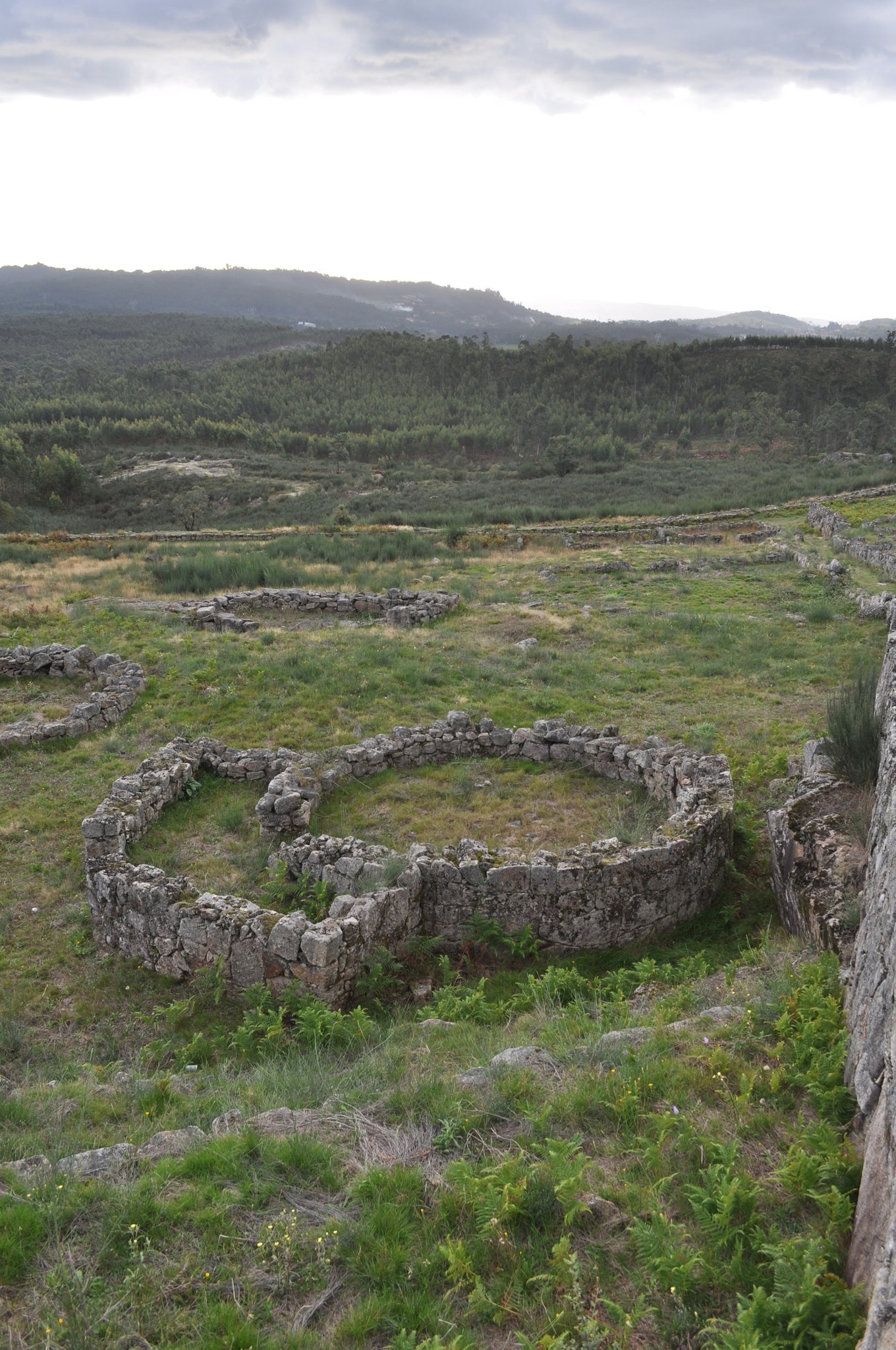
About 160 houses have been identified within the walls. Most were circular, approximately 5 metres in diameter, with granite-stone walls and conical roofs made from perishable materials. Houses generally formed groups of four or five around a shared patio, enclosed by a surrounding wall. These domestic groups covered about 200 to 300 square metres. More than 150 circular and rectangular houses have been arranged into roughly 40 family units, including one restored family unit.
Bathing building and warrior sculptures
A public-bath building stood at the edge of the settlement. Its construction technique and its decorated Pedra Formosa, a distinctive stone element associated with specialized bathing buildings in the Castro tradition, distinguish it within the complex. Warrior statues were also found at Citânia de Sanfins. One was associated with the main entrance, while the replica installed in 1995 stands near the entrance to the second defensive wall.
Cemetery, chapel, and archaeological finds
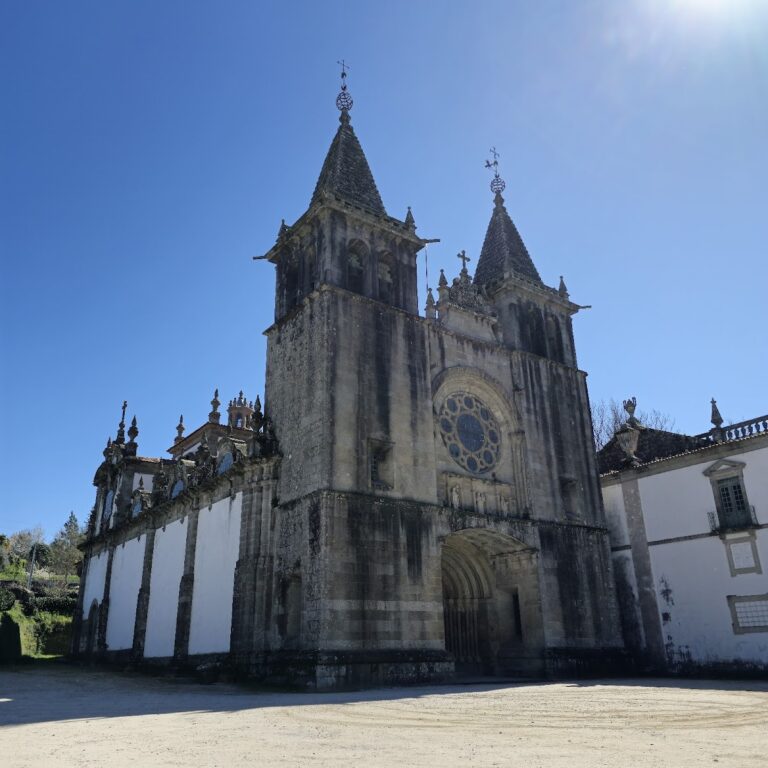
The medieval Christian cemetery contains 34 graves, and the nearby chapel is dedicated to Saint Romanus. Finds from the site include Portuguese coins issued under John I, who ruled from 1385 to 1433, and Sebastian, who ruled from 1557 to 1578. They also include an unidentified fourth-century CE coin, 42 Roman coins ranging from the reign of Tiberius, Roman emperor from 14 to 37 CE, to an unidentified fourth-century emperor, and pottery from the Castro, Roman, and later periods. Many of these finds are displayed at the Archaeological Museum of Citânia de Sanfins in Sanfins de Ferreira.