Dřevohostice Castle: A Moravian Renaissance Water Castle
Site at a Glance
- Rating
- 4.5
- Popularity
- Low
- Country
- Czechia
- Primary era
- Early Modern
- External website
- Open
- Eras represented
- Early Modern
- Civilizations
- Holy Roman Empire, Margraviate of Moravia
- Site type
- Domestic
- Remains
- Castle
On this page8 sections
History
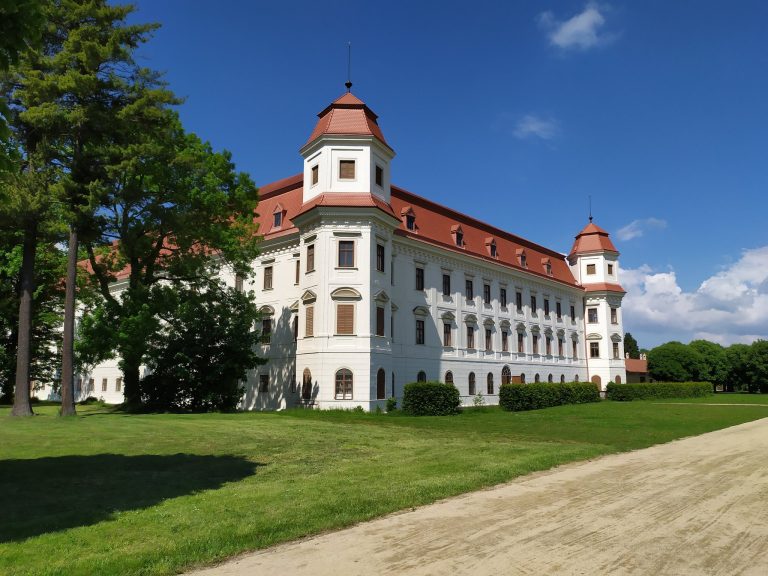
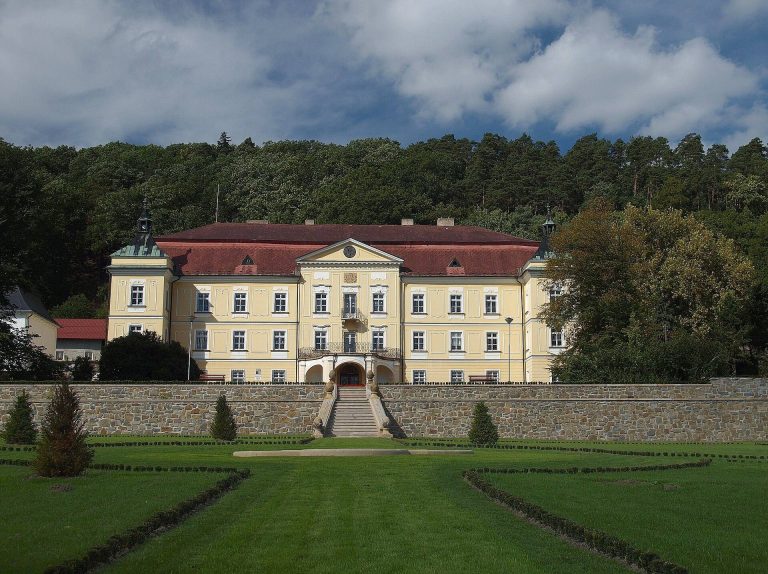
Dřevohostice Castle is a sixteenth-century Renaissance water castle in Czechia, built on the site of an earlier fortified residence. Dřevohostice formed the center of an independent estate, and a water fortress stood here before 1368. The fortress is first explicitly mentioned in 1386. The later castle is regarded as one of the important monuments of Moravian Renaissance architecture.
From Medieval Fortress to Renaissance Castle
The Žerotín family held the estate from 1480 until 1566. After several changes of ownership, the politician Karel the Elder of Žerotín purchased Dřevohostice in 1590. He began constructing the Renaissance castle in 1595 and frequently stayed there. Financial difficulties led him to sell the estate in 1614.
Jan the Elder Skrbenský of Hříště completed the castle’s final interior alterations in 1618 and 1619. As a Protestant, he took an active part in the Bohemian Revolt, the early-seventeenth-century uprising of Bohemian and other Central European estates against Habsburg rule. After the revolt, his property was confiscated.
Seventeenth- and Eighteenth-Century Owners
Prince Zdeněk Vojtěch Popel of Lobkowicz acquired the Dřevohostice estate in 1622 for an assessed price of 80,000 florins. His son, Václav Eusebius Popel of Lobkowicz, later gave up the family’s Moravian possessions because they lay too far from the center of the Lobkowicz domains in Bohemia.
Maximilian of Waldstein owned Dřevohostice briefly between 1646 and 1649. The estate then passed to the Kaltschmied family of Eisenburg. After Jan Kaltschmied died, five heirs held the property jointly until Count Bedřich of Oppersdorf purchased it in 1693. The Oppersdorf family retained the estate for about a century. During the eighteenth century, frescoes were added to the castle interiors.
Demolition, Municipal Ownership, and Later Uses
At the end of the eighteenth century, the estate passed by marriage to the Matuška family of Topolčany. Karel Čejka of Badenfeld, a member of a wealthy entrepreneurial family, bought it in 1839. Under the Matuškas and Čejkas, much of the fortification was demolished during the 1830s and 1840s.
From 1864, the estate belonged to Leonie Čejková, who was married to Baron Filip Skrbenský. Their son, Lev Skrbenský of Hříště, later became Archbishop of Prague and a cardinal, a senior official of the Roman Catholic Church. He spent part of his childhood at the castle. Although Filip Skrbenský is sometimes identified as the owner through his marriage settlement, Leonie remained the independent owner. In 1897, she sold the castle and its land to the municipality of Dřevohostice for 225,000 florins.
In 1902, the castle became an institution for young people described at the time as morally wayward or delinquent. It operated there until 1919. A district civic school opened in the building in 1920, providing practical and general education beyond elementary schooling. From 1961, the local agricultural cooperative, a collective farming institution, used the castle. The Přerov District Institute of Social Services later occupied the building until 2002. It now functions as a cultural center for Dřevohostice.
The castle is protected as a cultural monument under registration number 33083/8-401. Local folklore associates it with a White Lady, a ghostly female apparition traditionally linked with castles and unresolved deaths. One legend describes a cruel woman condemned to wander through the surrounding forests with a key between her teeth. Another tells of a farmer who saw the White Lady and was promised a treasure; after he revealed the encounter, she was condemned to haunt the castle for another hundred years. František Přikryl, a regional priest associated with local historical traditions, published these legends in the first edition of the Záhorská Chronicle in 1891.
Remains
Castle Layout and Defensive Setting
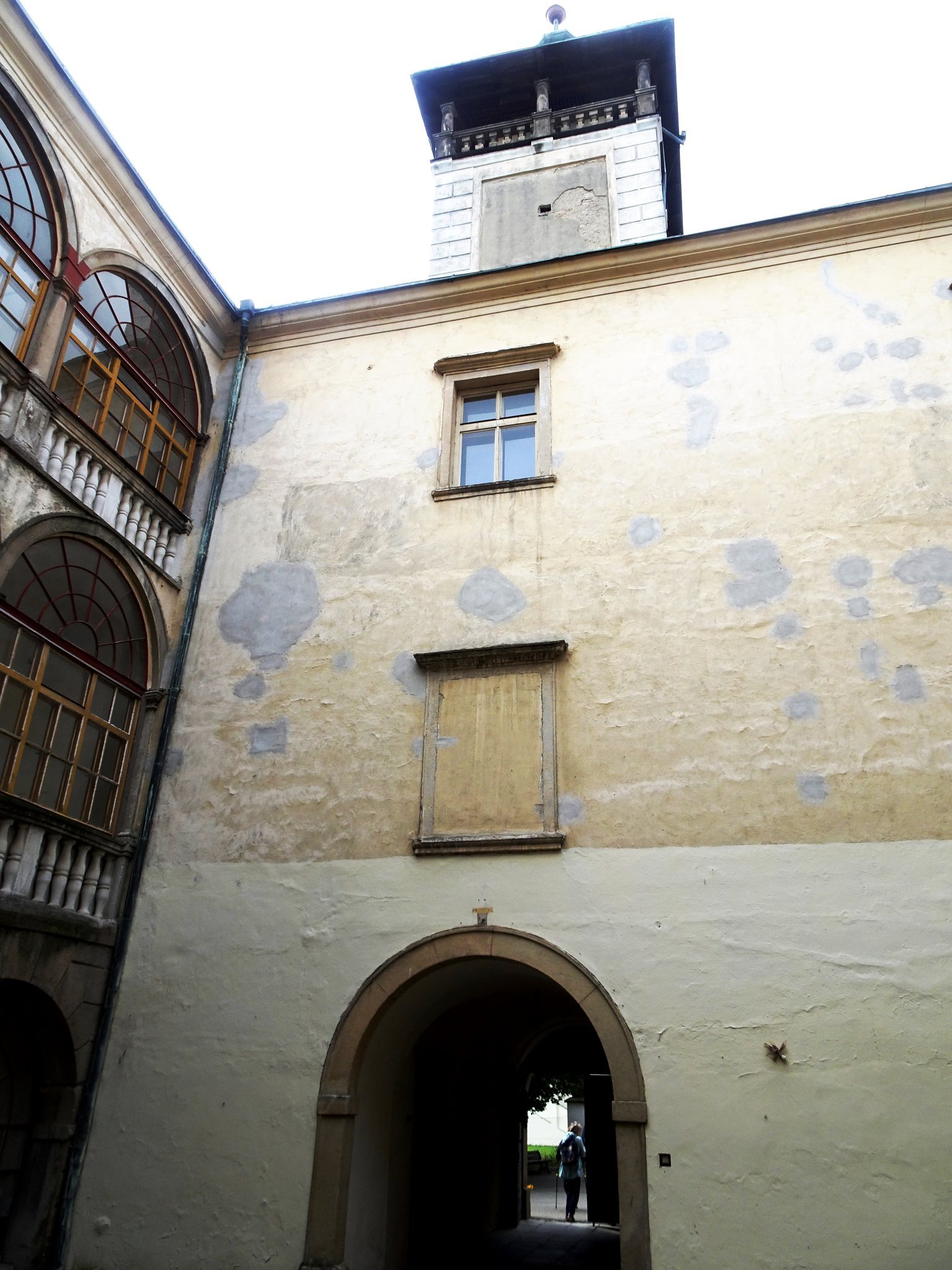
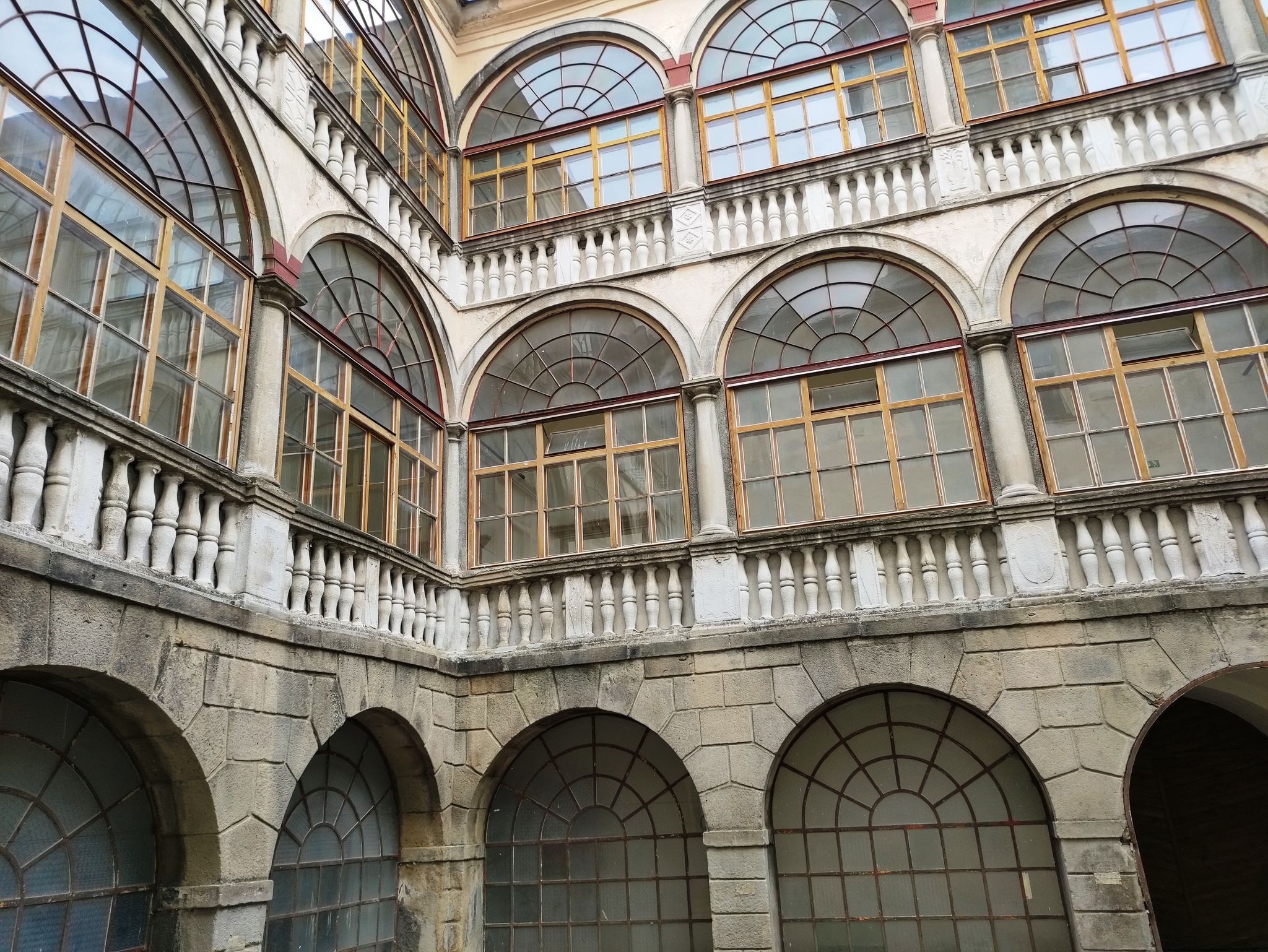
Dřevohostice Castle is a four-winged Renaissance water castle arranged around an enclosed courtyard. Arcades line the courtyard, while a tall entrance tower dominates the west facade. The building stands in the market town of Dřevohostice in the Moravian Záhoří ethnographic region, approximately 11 kilometers southeast of Přerov in the Olomouc region.
The Castle
The sixteenth-century castle was built over the earlier water fortress. Its four wings create a closed courtyard, and the arcades give the interior elevation an ordered Renaissance character. The west side is marked by the tall entrance tower. Eighteenth-century fresco decoration survives as part of the interior history of the building.
The Forecourt
A forecourt was constructed around the castle between 1649 and 1662. It consisted of an enclosing wall strengthened by four cylindrical bastions. Much of the wider fortification was later demolished during the 1830s and 1840s, altering the defensive setting around the Renaissance residence.