Fort Willem II: A Dutch Colonial Fortress in Central Java
Site at a Glance
- Rating
- 4.5
- Popularity
- Medium
- Country
- Indonesia
- Primary era
- Early Modern
- Eras represented
- Early Modern
- Civilizations
- Dutch
- Site type
- Military
- Remains
- Fort
On this page5 sections
History
Fort Willem II is a late-eighteenth-century Dutch colonial fort in Ungaran, Indonesia, whose construction is generally dated to 1786. It was built to help control and maintain peace along the important trade route between Semarang and Yogyakarta. The fort formed part of a wider Dutch defensive network that also included Fort Herstelling in Salatiga and Fort Veldwachter in Boyolali. It is regarded as one of the oldest Dutch colonial fortresses in Java.
Origins and Early Dutch Rule
The date of construction is disputed. Alongside the usual date of 1786, claims place the fort’s construction in 1712 or between 1740 and 1742, when political disorder affected Java. During the events of 1742, Baron Gustaaf van Imhoff was reportedly hospitalized at the fort after an attack by forces from Surakarta. Van Imhoff later served as Governor-General of the Dutch East Indies, the Dutch colonial administration in the Indonesian archipelago.
The fort was originally called Fort de Ontmoeting, meaning “the meeting.” This name referred to the meeting held there on May 11, 1746, between Pakubuwono II, the first Susuhunan, or ruler, of Surakarta, and Gustaaf van Imhoff. At that meeting, the transfer of the Mataram Sultanate’s political center from Kartosuro to Surakarta was agreed. The Mataram Sultanate was the Javanese kingdom whose political center underwent this transfer in the eighteenth century.
Control of the fort changed during the political upheavals that followed in the Netherlands and its colonies. The Batavian Republic, the Dutch state established in 1795, controlled it from 1800 to 1807. French troops occupied it from 1807 to 1811, and British forces held it from 1811 to 1816 before it was returned to the Dutch.
The Java War and Later Military Use
During the Java War, a major anti-Dutch conflict fought from 1825 to 1830, forces commanded by Kyai Mojo attacked the fort from the direction of Rembang in 1826. Kyai Mojo was Prince Diponegoro’s religious adviser and military commander. His troops surrounded the fort for two weeks, bringing it close to capture, but he withdrew before it fell.
After the Java War ended in 1830, Prince Diponegoro was imprisoned at Fort Willem II for three days in August of that year. He was held there while awaiting trial in Batavia and his subsequent exile to Makassar.
British forces captured the fort without resistance in 1849 and used it as a hospital before returning it to the Dutch. The Dutch later used it as a military camp in 1918 and 1919. During the Japanese occupation of Indonesia from 1942 to 1945, the fort served as a prison. Dutch forces reoccupied it in 1945 and used it as police barracks until 1950.
Use After Indonesian Independence
In 1951, the Indonesian National Armed Forces briefly used the fort before it was transferred to the police. Its military or police-related function continued after Indonesian independence. From 1950 to 2006, local police personnel and their families lived there, and it currently serves as a dormitory for the families of 16 police department members.
In 2007, the Semarang Regency government decided to convert Fort Willem II into a museum. The fort was renovated in 2011 in preparation for that change, but land-ownership disputes led to the cancellation of the restoration.
Remains
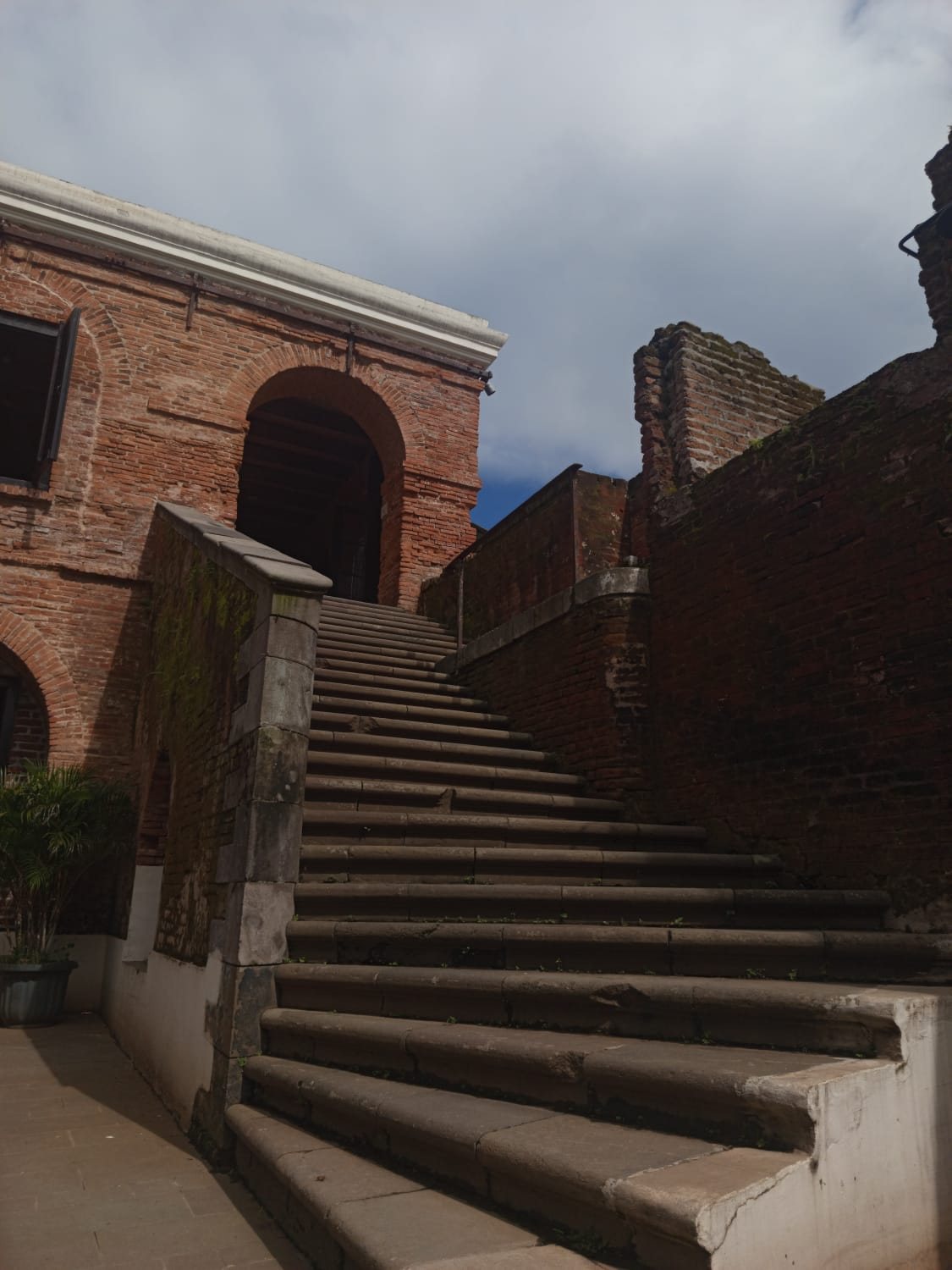
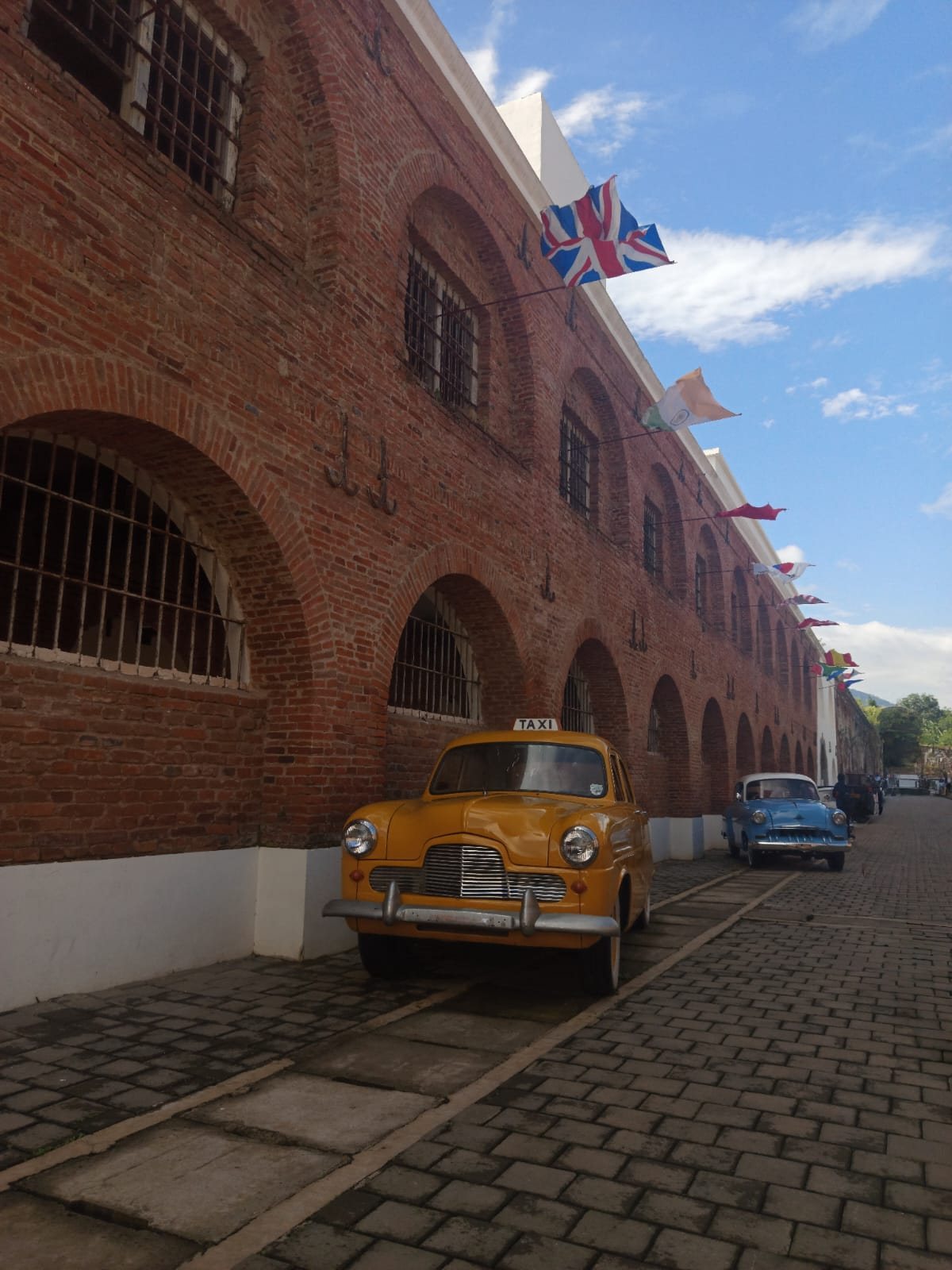
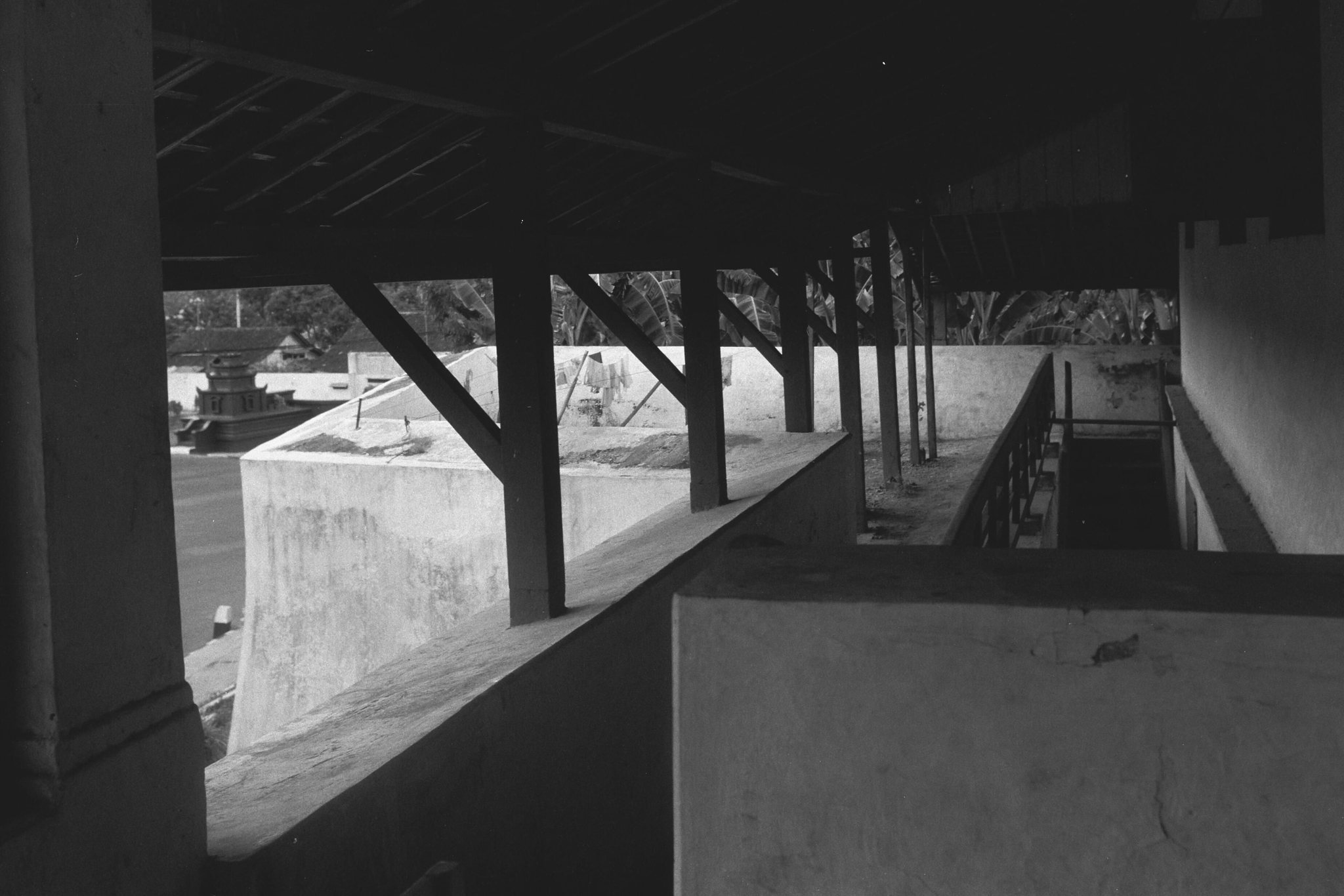
Fort Willem II is a small, square, stone-built barracks fort standing in central Ungaran on the Semarang-Surakarta road. Four half-bastions, projecting fortifications with two faces and one flank, strengthen its outer perimeter. A wall approximately one metre thick encloses the site, while the buildings inside are arranged around an inner courtyard.
A two-story building within the fort provides a vantage point toward the western main entrance and the eastern rear entrance. A moat formerly surrounded the enclosure, but it was filled in during the nineteenth century. The building of the Regional People’s Representative Assembly stands directly in front of the fort.