Clavesana Castle: A Medieval Fortress in Castelvecchio di Rocca Barbena
Site at a Glance
- Rating
- 4.6
- Popularity
- Low
- Country
- Italy
- Primary era
- Medieval
- External website
- Open
- Eras represented
- Medieval, Early Modern, Modern
- Civilizations
- Holy Roman Empire
- Site type
- Military
- Remains
- Castle
On this page12 sections
History
Clavesana Castle is a medieval military complex in Italy, in Castelvecchio di Rocca Barbena, probably built by the marquises of Clavesana during the twelfth century. Its first known reference dates to 1170, when two sons of a marquis divided the territory of the marquisate, a region governed by a marquis. The fortress may have occupied the site of an earlier Byzantine fortification built against the Lombards, although that earlier phase remains uncertain. The settlement grew around the castle, which became an important defensive position in the Ligurian-Piedmontese border region.
From Clavesana to Del Carretto
The castle’s importance declined after the marquises of Del Carretto established a new residence at Zuccarello, farther down the valley, in 1248. Its position nevertheless continued to draw the attention of rival powers. During the medieval conflict between the marquises of Clavesana and the Commune of Albenga, a political power competing for territory and routes in western Liguria, Giorgio il Nano, Marquis of Ceva and an ally of Albenga, attacked the fortress.
In the fourteenth century, Clavesana Castle passed to the Del Carretto family. Genoa subsequently targeted it as part of its attempts to control the marquisate. Gerolamo Giustiniano, a writer who recorded information about the territory, later described the castle as well inhabited and decorated with frescoes, indicating that it served as more than an isolated military post.
The sieges of 1614 and 1625
Savoyard forces besieged the castle for ten days and ten nights in 1614. They used firearms against the fortress, while houses in the settlement were burned and inhabitants were plundered. The Piedmontese, Savoy’s principal mainland territory, planned to bring larger cannon to continue the attack. About one hundred men defended the castle, but the garrison surrendered when eighteen companies arrived to reinforce the besiegers.
An agreement of 6 December 1614 allowed Savoyard troops to pass through Castelvecchio and Zuccarello, which had been conquered on 27 November. The Duke of Savoy promised not to interfere with the weapons stored in the two fortresses and not to station permanent troops there. The marquises ordered the contents of Zuccarello to be moved to the marchioness’s residence in the valley below Clavesana Castle. After Savoy and Spain made peace, the castle returned to the Del Carretto family in 1617. An inventory from that year listed 24 rooms and furnishings that included beds, chairs, mattresses, benches, a bread-making table, and a large walnut chest.
Military concerns returned in 1624. After Marquis Ottavio requested German soldiers to guard the castles, Genoese authorities sent Commissioner Spinola to examine the fortress and its defenses. He found the water tank dry and ordered it to be deepened. The stores included fourteen sacks of flour, seventeen cantari of rice, several firearms, 24 halberds, and seven barrels of gunpowder. A cantaro was a historical Italian unit of weight whose value varied by place and period. Commissioner Piety again noted the difficulty of securing water in May.
Savoyard troops returned in 1625, and the castle surrendered on 6 June. The German troops hired by Genoa may have withdrawn while trying to lower ropes from the walls, and they were later prosecuted in Genoa. From June until November, the fortress remained under French-Piedmontese control. A Genoese attempt to recover it through a ransom negotiated by Magnifico Merello of Albenga failed because Genoa wished to pay only after regaining possession.
A renewed siege began later that year. One Genoese soldier was killed and two were wounded as Genoese forces prepared to bring heavier cannon from Albenga. After about sixty cannon shots, the Savoyard garrison under General Barca agreed to surrender and leave. Because the attackers feared that a mine had been placed, Barca and his lieutenant had to remain for another two or three days. About fifty Genoese soldiers then escorted the departing men to Meriad.
The 1672 campaign and proposed demolition
A later imperial visitor judged the castle open to attack from all sides and regarded its condition as poor. Its dry water supply limited its usefulness, and the fortress was considered capable of sheltering soldiers but of little strategic value. That assessment was tested during the conflict between Savoy and Genoa over the border of the fief of Rezzo, a territory held under a feudal relationship.
In 1672, Piedmontese troops occupied Ceva. On 23 July, troops from Garessio led by Count Catalan entered the Neva Valley and quickly captured Castelvecchio and Zuccarello, advancing as far as Cisano. When Catalan received orders to withdraw toward Garessio on 3 August, Genoese forces attacked near Erli and drove the Savoyards back toward the castle, while Corsican soldiers pursued them.
The defenders obtained water from a fountain near the church, and attempts to reach it under fire caused many deaths. On 4 August, Genoese troops surrounded the fortress. Captain Restori called on the Piedmontese to surrender, but they replied with musket fire. The following morning, the garrison saw Piedmontese reinforcements descending from Rocca.
The defenders planned a sortie in two columns of one hundred soldiers, commanded by Count Catalano Alfieri. Alfieri preferred to die fighting rather than surrender, but he escaped amid the confusion and was later captured with a local man, who was tied with a rope around his neck. The two sortie groups met Genoese troops at Cormumbera, were forced back, and found the encirclement tightened.
During the night of 5 August, the remaining defenders prepared a large mine to destroy the castle. Its fuse was intended to burn for an hour and a half, giving the soldiers time to escape and allowing the explosion to disrupt Genoese positions. Genoese regiments withdrew under Savoyard fire, and both sides suffered casualties. Since some defenders had not escaped, the fuse was extinguished, and the Piedmontese surrendered the next day.
After retaking the castle, Genoese commanders debated whether to destroy it or strengthen nearby Zuccarello. Generals Pallavicino, Gentile, and Zerbi supported demolition. In December 1672, they planned to undermine the fortress from the uphill side and dismantle it with pickaxes from the valley side, thereby limiting damage to the houses below. Local opposition prompted Commissioner Ansaldo de’ Mari to inspect the settlement with officials and the religious figure Teresio Maria Spinola. They concluded that the fortress could still delay an enemy with a garrison of forty or fifty soldiers, even if it could not be made completely impregnable. Apart from an attempted demolition by Giovanni Azzi in 1673, the plan was abandoned.
Later military and residential history
During the eighteenth-century wars of succession, including the War of the Spanish Succession and the War of the Austrian Succession, the castle remained part of the region’s defenses. In 1745, Piedmontese raids caused renewed concern as French troops allied with Genoa withdrew from Bardinelli, and guards were stationed at Castelvecchio, Zuccarello, and Conscente.
In the summer of 1746, 6,000 Piedmontese soldiers advancing from Ceva and Garessio attacked the castle. The assault failed after troops arriving from Lunigiana opened fire, and the fortress resisted. French and Savoyard forces passed through the Neva Valley again in November 1795, when the settlement lay within the battlefield of Loano.
After the period of French rule, the castle became property of the Piedmontese state. Marquis Domenico Del Carretto of Barbestin purchased it and owned it from 1844 to 1879. The Malco family of Castelvecchio later acquired the fortress and continued to use much of it as a residence. An engineer from Savona bought it in 1967, and the del Conte family acquired it at auction in 1995. The family remains its owner and has undertaken restoration work.
Remains
Fortifications and tower
Walls and entrance front
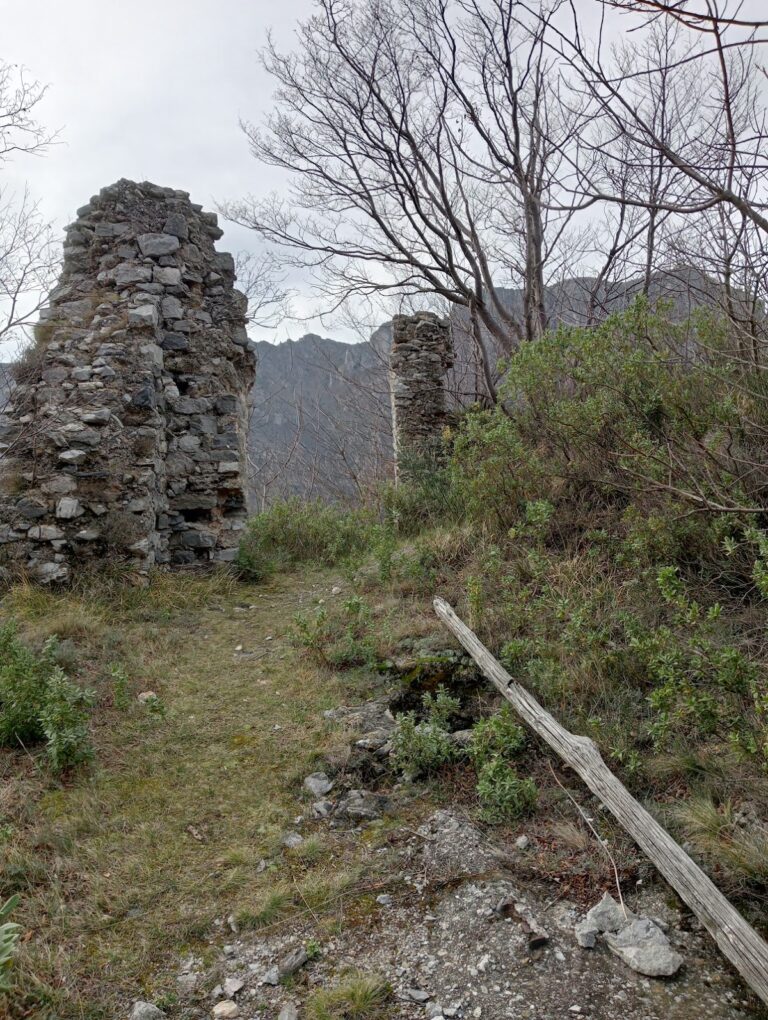
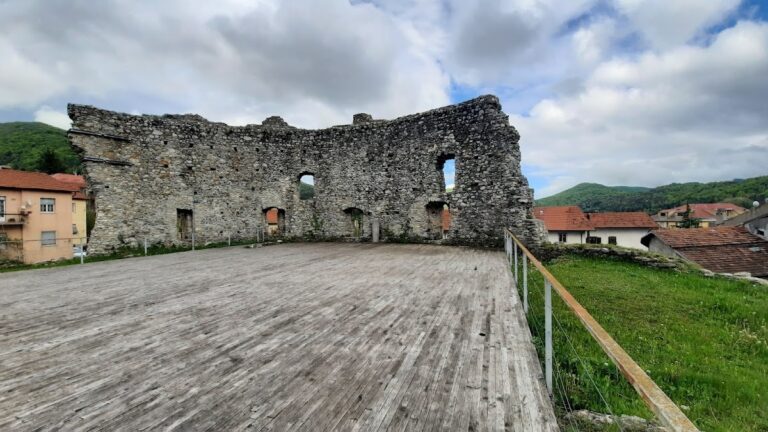
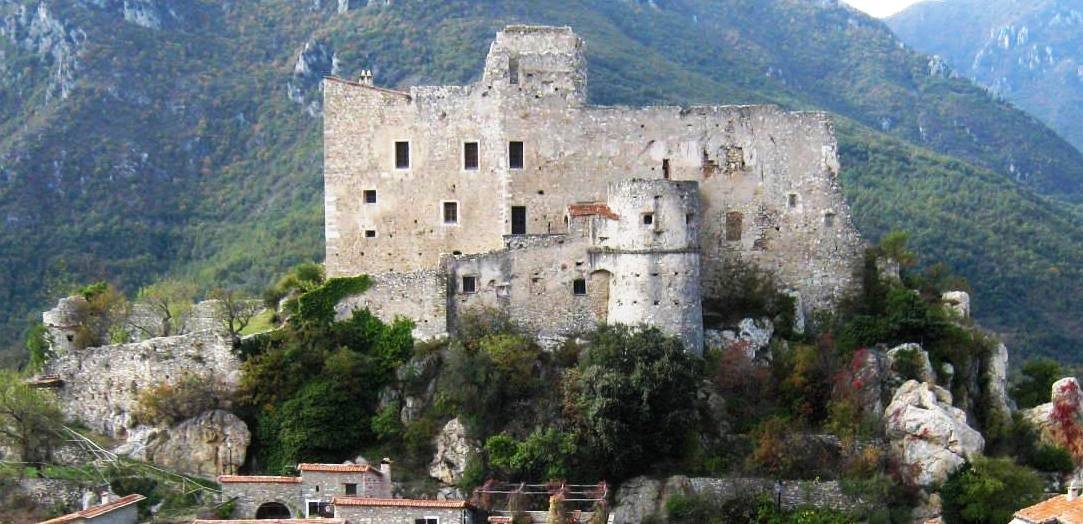
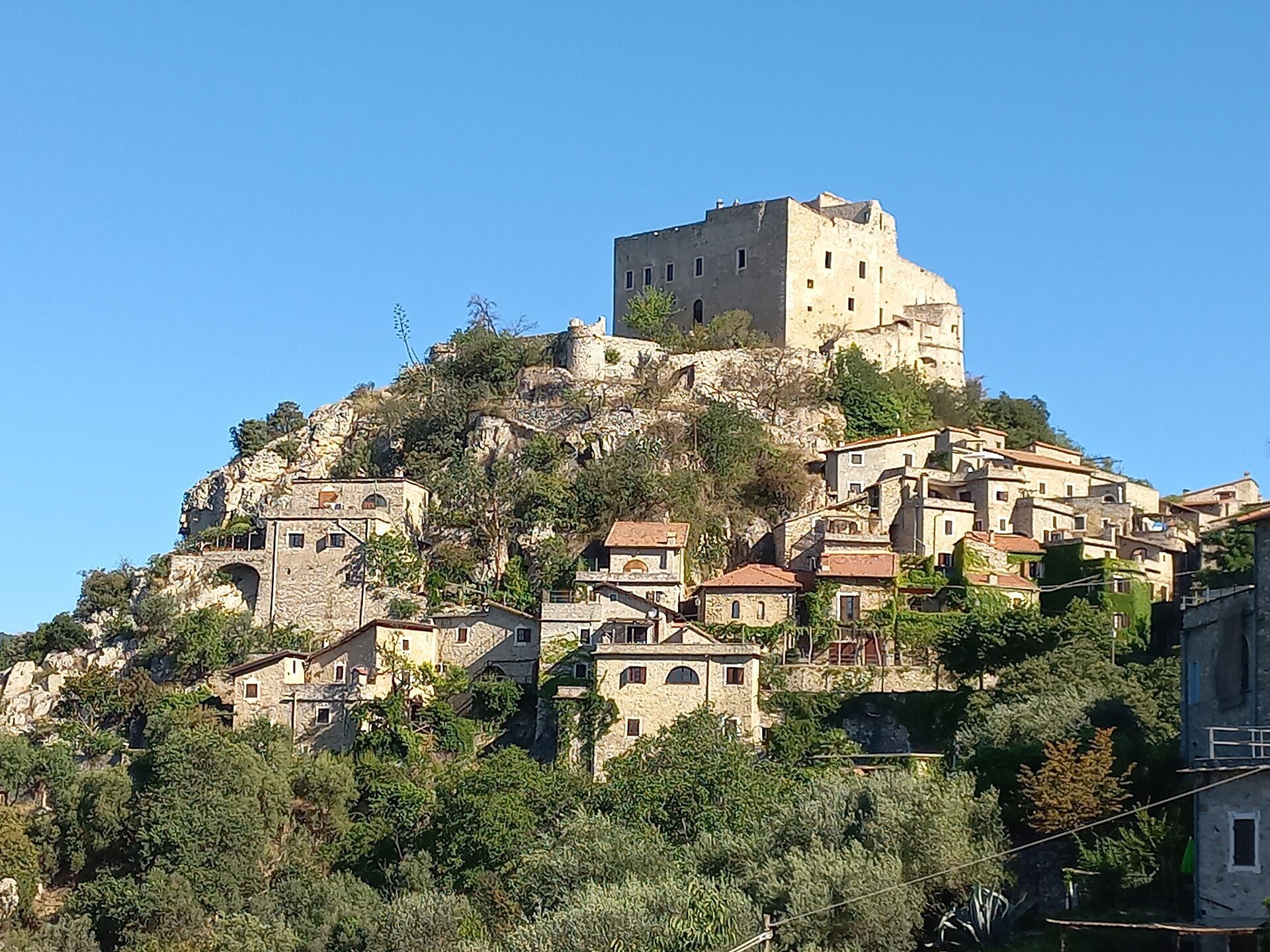
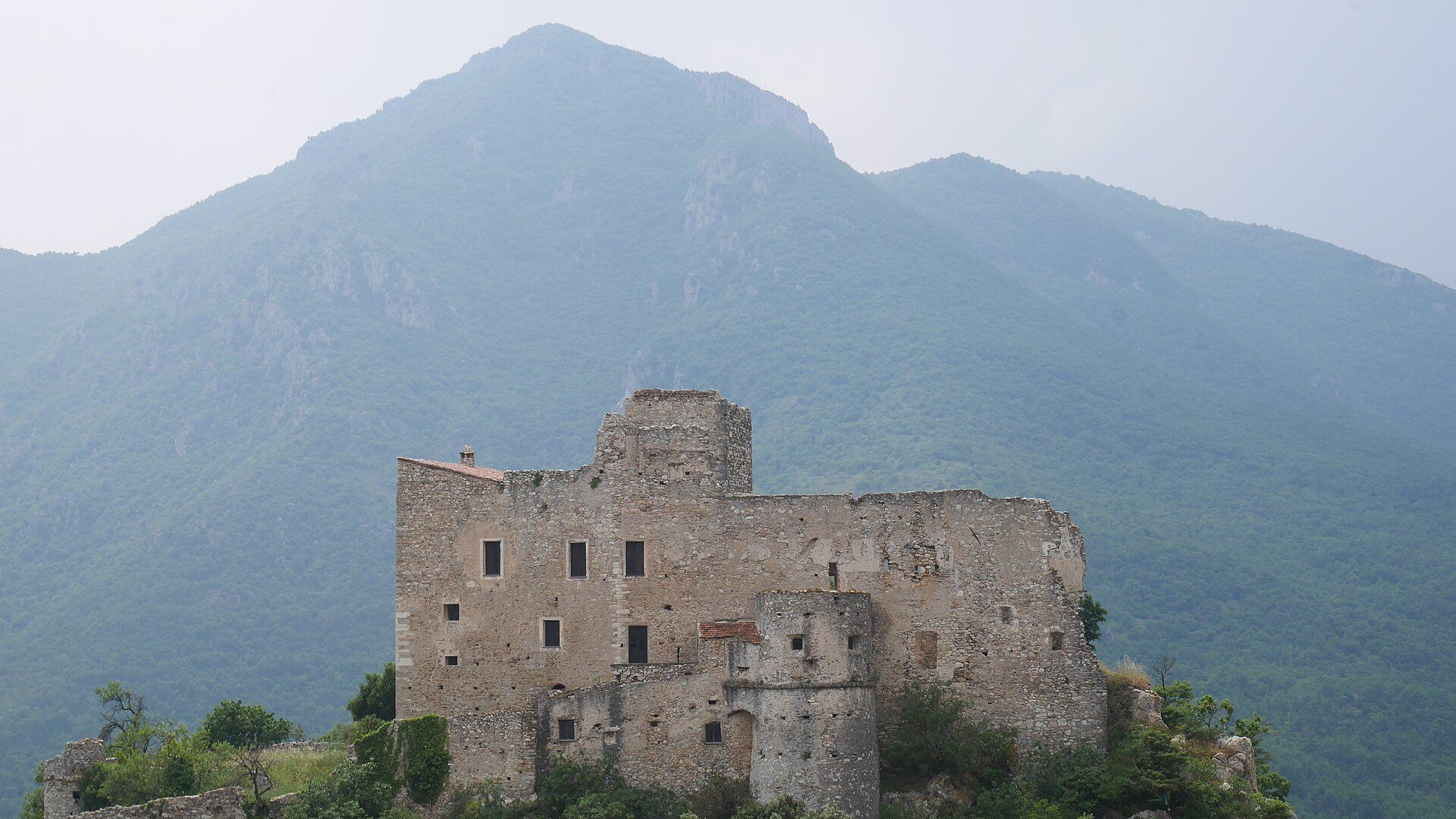
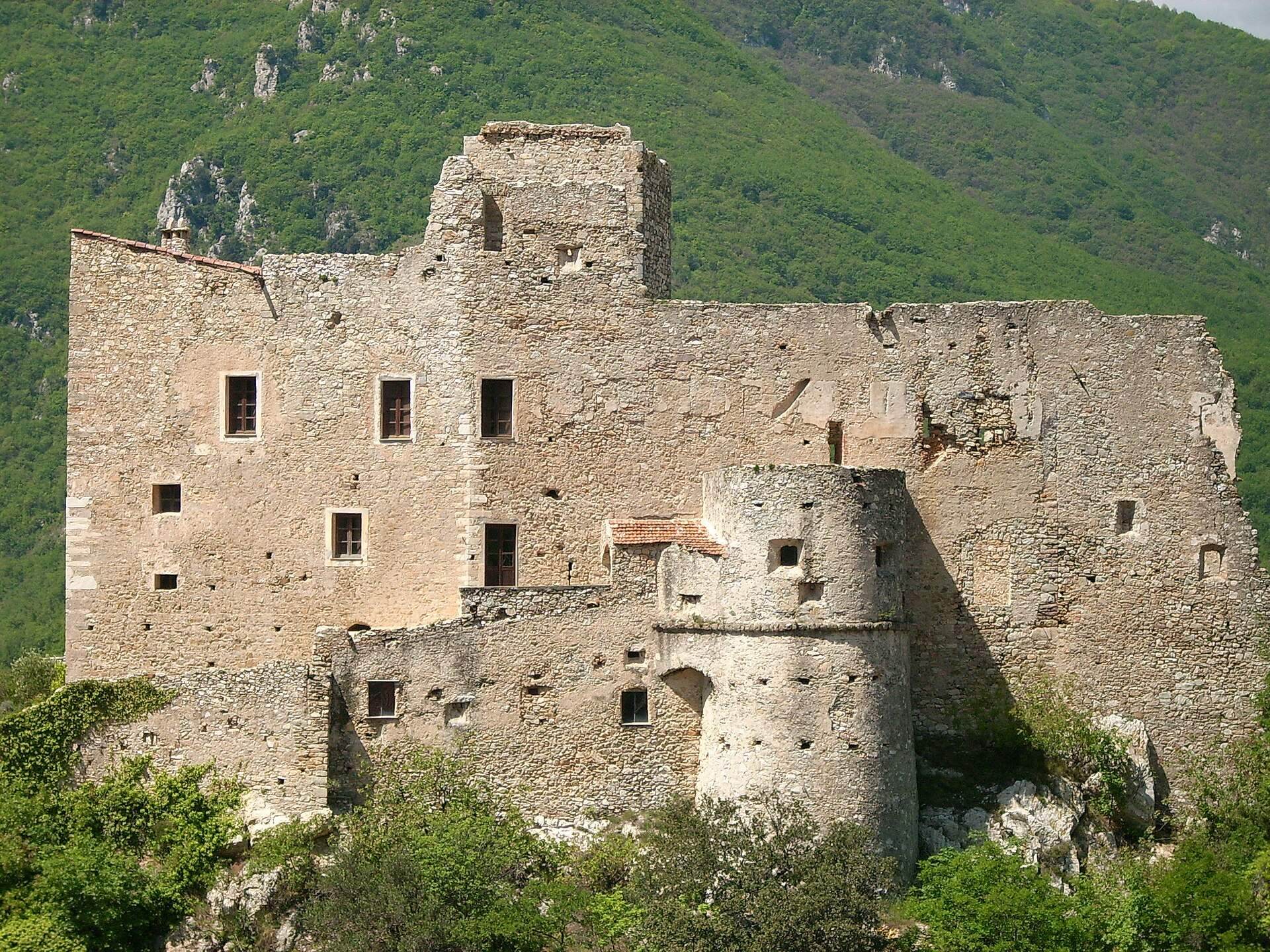
Clavesana Castle occupies the highest part of the settlement and overlooks the valley. It is a medieval stone fortress enclosed by defensive walls. A flight of steps once connected the settlement with the square before the castle. Battle damage has substantially changed the exterior. On one side, only two walls survive, while the lower level retains a single opening, the entrance portal. Five similar loopholes, narrow openings used for observation or firing, occupy the upper level; these are identified as nineteenth-century additions.
Eastern side and round tower
The eastern side has a more complex arrangement, including a round tower and a ruined section destroyed by Genoese cannon fire in 1672. Three loopholes resembling those on the front survive at first-floor level, together with a doorway opening onto a small terrace facing the tower. The tower can also be reached from the opposite side by following the walls toward the Neva Valley. The stairways are incomplete because sections were removed, although their vaulted construction survives.
Interior spaces and painted decoration
Entrance room and circulation
The entrance leads into a large first room covered by a barrel vault, a continuous tunnel-like ceiling. Three stairways begin in this space and run along the front of the castle. Some rooms were cut through to form a corridor leading toward the kitchens and terrace, showing how the interior was adapted to connect its residential and service areas.
Kitchen and frescoes
The kitchen retains a fireplace, a sink, and a bread oven. A partly covered terrace stands against the rear wall beneath a tiled roof supported by wooden beams, and it preserves part of a fresco. The painting probably represented a large Saint Christopher. When a turret was built in 1672 under the direction of the architect Amedeo di Castellamonte, the fresco was incorporated into the structure. Only a section corresponding to the saint’s leg survives, beside a smaller image of Saint Barbara.
Saint Barbara became associated with protection from sudden death and explosions, and her image has encouraged the interpretation that the room may have served as an ammunition store. That proposed function remains uncertain.