Palácio Vila Flor: A Historic Manor House in Lisbon
Site at a Glance
- Rating
- 5
- Popularity
- Very Low
- Country
- Portugal
- Primary era
- Early Modern
- Eras represented
- Early Modern
- Civilizations
- Portuguese
- Site type
- Domestic
- Remains
- Manor House
On this page7 sections
History
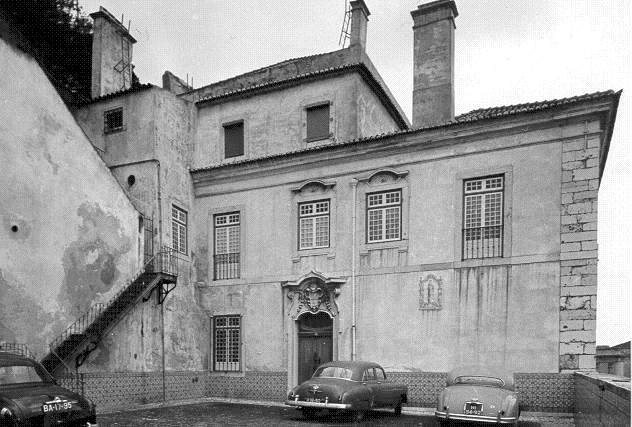
Palácio Vila Flor is a seventeenth- and eighteenth-century manor house in Lisbon, Portugal, built in a formal architectural style. Located in the Mouraria area, it was first known as the Casas da Costa do Castelo, later as the Palácio da Costa, and eventually acquired its present name after the eighth Count of Vila Flor bought it in April 1907 and made it a residence of the Vila Flor family.
The Caparica and Costa do Castelo entail
During the seventeenth century, the property formed part of the Caparica and Costa do Castelo entail. An entail, or morgadio, was an inherited estate legally tied to a family line, generally passing intact to designated heirs. The arrangement was established by deed on 8 January 1615 by Dr. Domingos Ribeiro Cirne, a deputy of the Mesa da Consciência e Ordens, the Portuguese royal institution responsible for religious orders, conscience, and related administration.
The entail brought together family houses on the Lisbon hillside and inherited properties in Almada. The estate passed first to Domingos Ribeiro Cirne’s brother, Lourenço Peixoto Cirne, and then to Lourenço’s eldest son, Cristóvão Peixoto. When Cristóvão died without issue, ownership passed to his brother, Manuel Peixoto Cirne. Older genealogies place the origins of the Caparica entail further back, attributing its foundation to Gaspar da Rua in the sixteenth century. In 1599, because he had no descendants, Gaspar da Rua, also called Gaspar da Rua Magriço, left his property to Domingos Cirne, a relative of his wife. The Caparica property associated with the entail has not been identified with certainty. Tradition has linked it to Quinta da Ladeira at Trafaria or Murfacém, while older Almada tax records mention another property at Murfacém near Trafaria.
From the Paço de Lanheses estate to the Sequeira Pinto family
By the late eighteenth century, the palace had become attached by inheritance to the Paço de Lanheses estate. The judges Sebastião Pereira de Castro and José Ricalde Pereira de Castro, uncle and nephew, lived there. Their family acquired the wider inheritance through the marriage of D. Isabel Josefa de Cirne Peixoto to Colonel José Pereira de Brito e Castro.
In the early nineteenth century, João António Rodrigues Ferreira purchased the palace. He was a councillor of the Overseas Council and voted for the acclamation of King Miguel. Through inheritance, the property later passed to his son-in-law, Councillor Diogo Correia de Sequeira Pinto, a Peer of the Realm. A Peer of the Realm was a member of Portugal’s hereditary or appointed upper parliamentary chamber during the constitutional monarchy.
Diogo Correia de Sequeira Pinto’s daughter, D. Joana Sequeira Pinto, married António Augusto Dias de Freitas, the first Count of Azarujinha. She later lived in the Palácio Pombeiro, now the Embassy of Italy, which belonged to the Count of Azarujinha. Professor Tomás de Mello Breyner, later Count of Mafra, was born at Palácio Vila Flor. His father rented the noble floor, the principal residential storey of an aristocratic urban house, from the Sequeira Pinto family. An episode known as the “tea story” took place there and was later recounted in Tomás de Mello Breyner’s memoirs.
The Vila Flor period
In April 1907, D. Maria Luciana, widow of Diogo Sequeira Pinto’s namesake son and successor as Peer of the Realm, sold the palace to the eighth Count of Vila Flor, D. Tomás de Almeida Manoel de Vilhena. He had previously sold the Palácio de Arroios, one of the Vila Flor family’s former Lisbon residences.
The eighth Count of Vila Flor had served as Civil Governor of Braga and Funchal, belonged to the Orpheu group, and was a senator. The Orpheu group was a Portuguese modernist literary and artistic circle active in the early twentieth century. He also headed the government of King Manuel II during the king’s exile. President Teófilo de Braga frequently visited him at the palace despite their political differences, since both men had been students in Coimbra.
The tenth Countess of Vila Flor and Alpedrinha and Duchess of Terceira, Luísa Manoel de Vilhena, lived on the noble floor. She received intellectuals, politicians, businessmen, members of contemporary society, and members of the former aristocracy there. She later married the Count of Azarujinha. The palace now belongs to the heirs of the eighth Count of Vila Flor. The present representative of the Vila Flor and Azarujinha house also inherits the Sequeira Pinto Peers of the Realm through D. Joana Sequeira Pinto’s marriage, and consequently the inheritance of João António Rodrigues Ferreira.
Palácio Vila Flor is classified as a Property of Municipal Interest and lies within a classified heritage site.
Remains
Manor house and exterior fabric
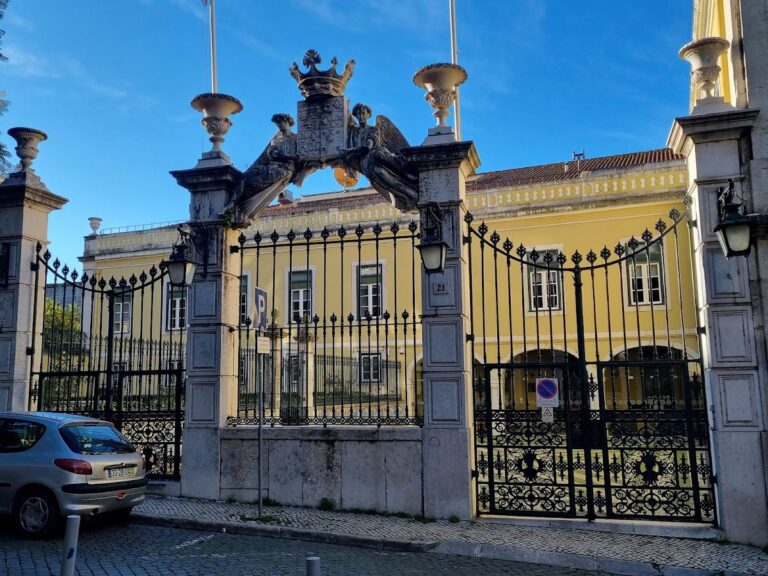
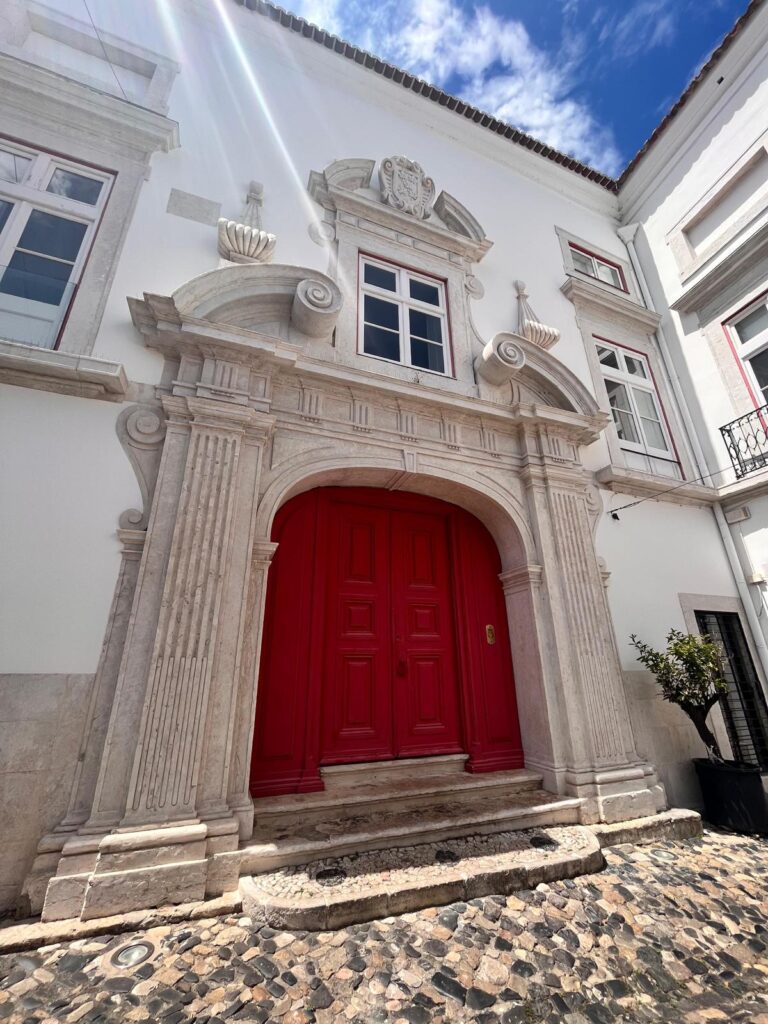
Palácio Vila Flor occupies numbers 30–42 Costa do Castelo in Lisbon’s Mouraria area, within the civil parish of Santa Maria Maior. The seventeenth- and eighteenth-century manor house has formal architecture, with elaborately worked stone surrounds and openings forming its most notable external features. Until the twentieth century, the façade displayed the full coat of arms of the Cirne, or Cyrne, family, reflecting the building’s early connection with that lineage.
Oratory and chapel traditions
The house reportedly contained an oratory with an image of Our Lady of the Conception under the invocation “of the Marvels,” a corrupted form of Marvila. Tradition held that Saint Bernard of Clairvaux, a twelfth-century Cistercian abbot and Catholic theologian, had given the image to the Church of Our Lady of Marvila. Domingos Ribeiro Cirne Peixoto, who served as the church’s prior, was said to have brought it to the palace after claiming that the image had deteriorated and ordering a replacement for the church.
A chapel at the palace later received an image of Our Lady of Ameixial. Tradition associated the image with the Restoration battle commanded by the first Count of Vila Flor. The Portuguese Restoration was the movement that restored Portugal’s independence from the Spanish monarchy in 1640 and led to the Restoration War.