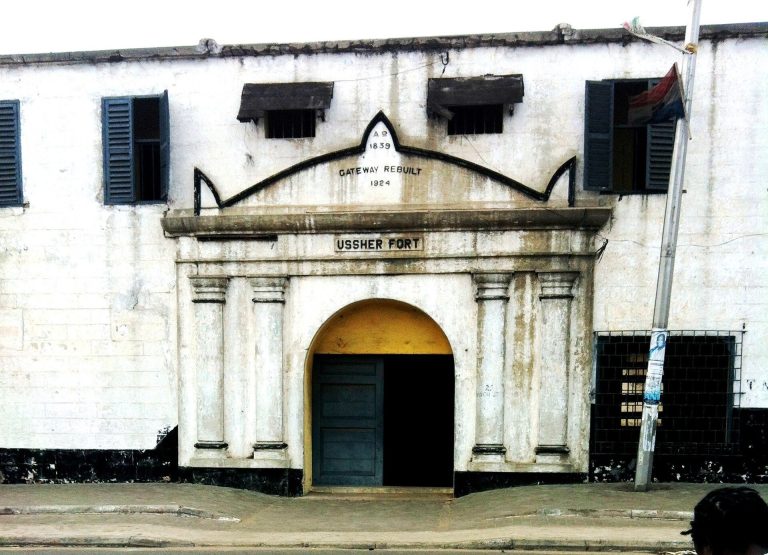
Osu Castle: A Colonial Fort and Government Seat in Ghana
Site at a Glance
- Rating
- 4.4
- Popularity
- Very Low
- Country
- Ghana
- Primary era
- Early Modern
- External website
- Open
- Eras represented
- Early Modern, Modern
- Civilizations
- British, Denmark–Norway, Portuguese
- Site type
- Military
- Remains
- Fort
On this page8 sections
History
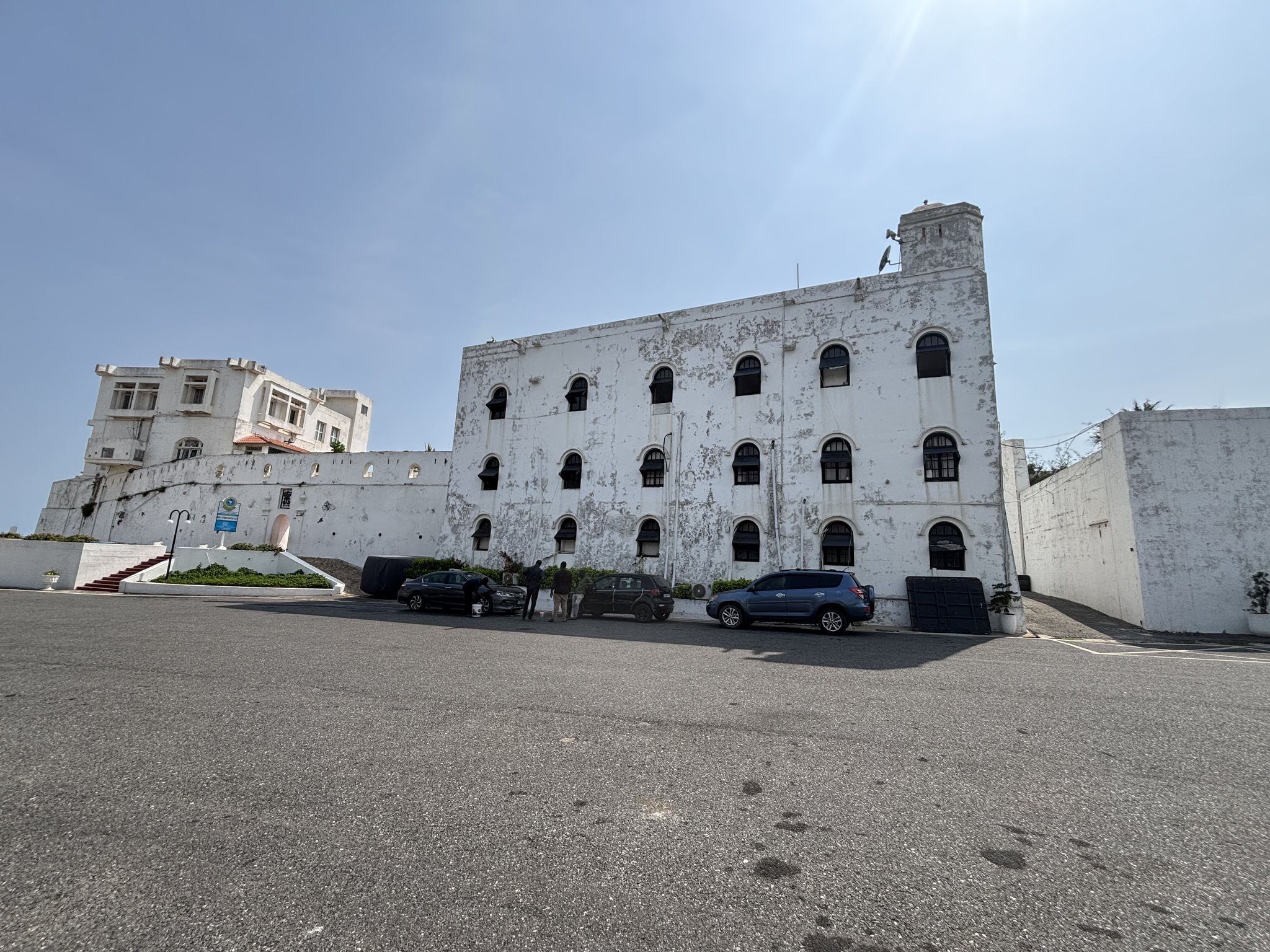
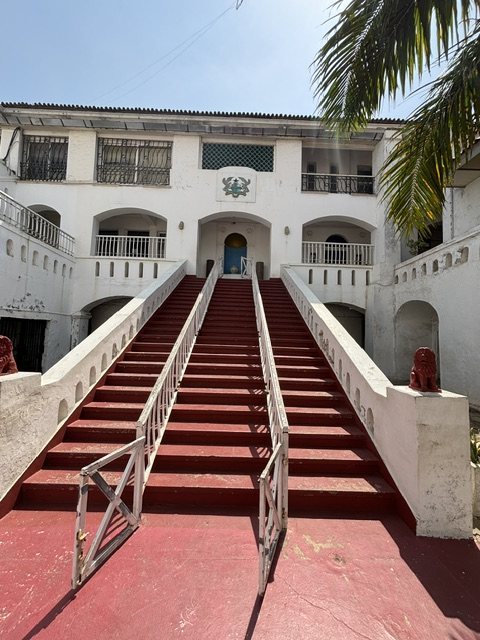
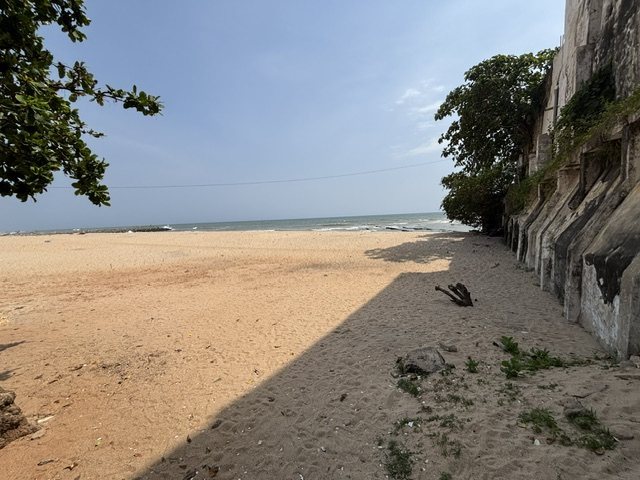
Osu Castle, also known as Fort Christiansborg, is a former Danish, British, and Ghanaian government stronghold in Accra, Ghana, built through successive phases from a seventeenth-century coastal fort into a large colonial castle. Standing on the Gulf of Guinea coast, it reflects European commercial expansion in West Africa and the history of the Atlantic slave trade.
Portuguese and Danish Beginnings
The area was first occupied by the Portuguese in 1550, although Portuguese influence declined during the seventeenth century. In 1652, the German trader Heinrich Carloff received permission from the King of Accra to build a small fortified lodge for the Swedish Africa Company, a Swedish trading company active on the West African coast. Control passed briefly to the Netherlands in 1660 before Denmark–Norway purchased the fort in 1661. The new owners extended it onto adjoining land and named it Fort Christiansborg after Christian V, king of Denmark and Norway from 1670 to 1699.
The fort initially supported commerce in gold and ivory. Under Danish–Norwegian control, it became increasingly involved in the Atlantic slave trade, holding enslaved people for overseas shipment. From 1694 to 1803, it was an important trading post where European goods were exchanged for gold and enslaved people. Denmark’s prohibition of slave trading, enacted in 1792, took effect in 1803. From 1685, the fort served as the capital of the Danish Gold Coast, Denmark–Norway’s network of coastal settlements and forts in present-day Ghana. It stood near the Dutch-controlled Fort Crèvecœur and the British-controlled Fort James.
Changes of Control and Expansion
In 1679 or 1680, the fort’s Greek assistant commander led a mutiny, after which a Portuguese ship commanded by Julião de Campos Barreto purchased it. The Portuguese renamed it Fort São Francisco Xavier, after the Catholic missionary Francis Xavier, added a chapel, and raised the bastions by three feet. Another garrison mutiny resulted in its abandonment on 29 August 1682. Danish forces recovered the fort in February 1683.
The Akwamu, a powerful Akan-speaking polity in parts of southeastern Ghana, seized the fort in 1693 after its weakened occupants were overpowered by men disguised as merchants. The Akwamu leader Assameni controlled it for about a year and traded with merchants from several countries. In 1694, he sold the fort back to Denmark–Norway for 50 marks of gold, equivalent to 400 troy ounces. He retained the keys, which remained in Akwamu possession.
The fort was reported to be in poor condition in 1722. Later eighteenth-century additions and structural improvements made in 1824 enlarged it to approximately four times the size of the original fort. In the 1770s, Danish authorities at Osu became involved in conflict with Dutch-controlled Accra.
British Colonial Government
Britain purchased Denmark’s Gold Coast possessions, including Fort Christiansborg, in 1850 for £10,000. The sale followed the abolition of the slave trade and Denmark–Norway’s growing difficulty in maintaining its coastal outposts. Britain also sought to prevent illegal slave trading and limit further French or Belgian expansion in the region.
An earthquake in 1862 destroyed most of the castle’s upper floors. After reconstruction, the building became the seat of the British colonial government and, from 1873, the residence of the governor of the Gold Coast. The colonial authorities abandoned it between 1890 and 1901. During that period it served first as a constabulary mess and later as a psychiatric asylum. It became the seat of government again in 1902.
Government House and Heritage Site
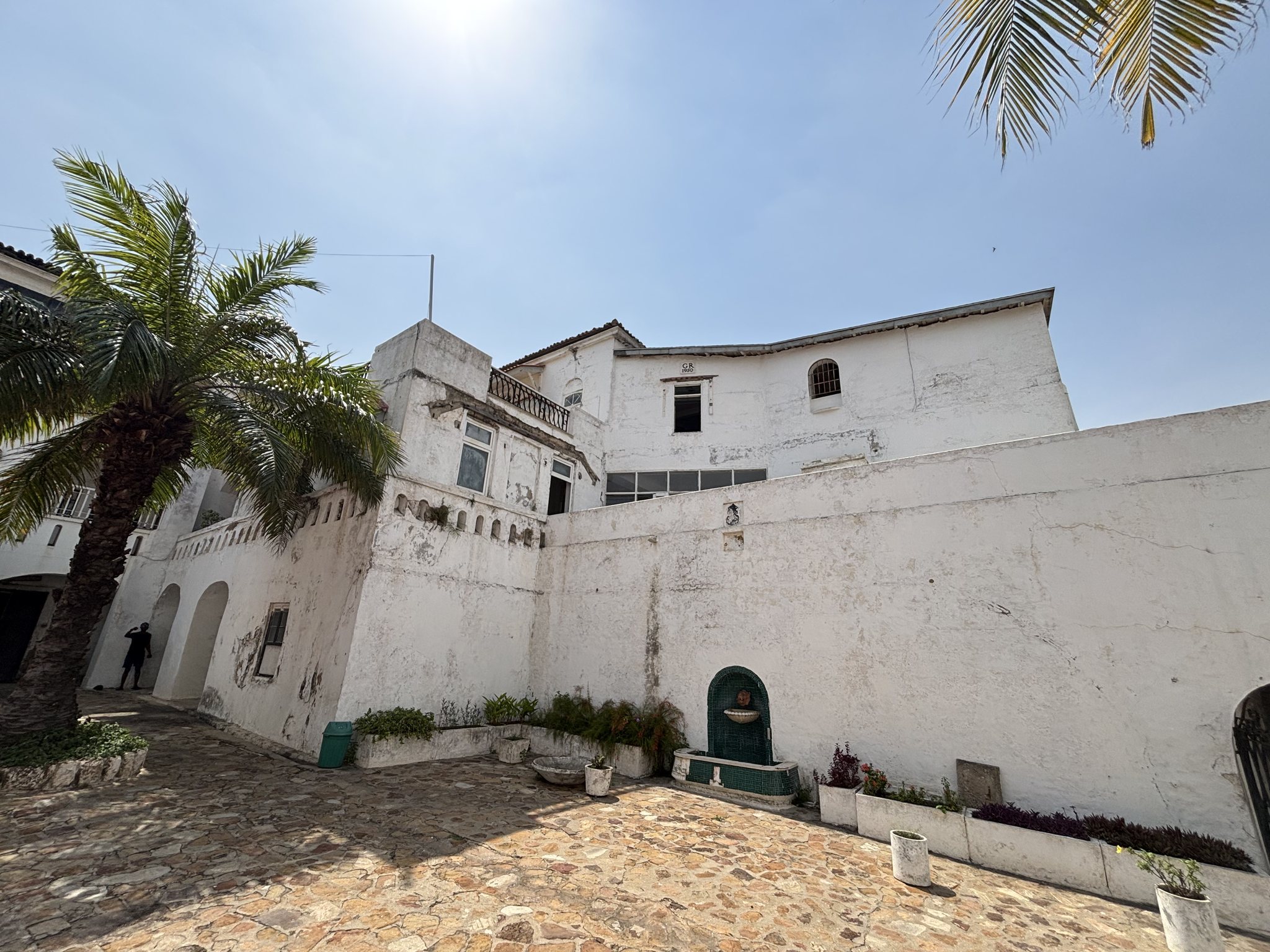
The wooden upper floors were rebuilt in 1950 according to the original Danish plans. After Ghana became independent in 1957, the castle became Government House and the residence of the governor-general. When Ghana became a republic in 1960, it became the residence of the country’s first president, Kwame Nkrumah. Additional rooms were built for Queen Elizabeth II’s visit in 1961. During the twentieth and early twenty-first centuries, the castle also received international dignitaries, including U.S. presidents Richard Nixon, Bill Clinton, and Barack Obama, and German Chancellor Gerhard Schröder.
The castle’s association with slavery and its inadequate facilities led to debate about its continued use as the seat of government. The government moved to Flagstaff House in 2009, returned to Osu Castle in 2010, and moved again in 2013. Ghana’s seat of government is now at Jubilee House, formerly known as Flagstaff House. Political opposition in 2005 and 2007 to a proposed presidential palace costing $50 million argued that the money should instead support economic and social improvements. In 2017, President Nana Akufo-Addo expressed a desire to transform Osu Castle into a museum.
Osu Castle has been protected as a historic monument since 1969. In 1979, it was inscribed as part of the UNESCO World Heritage property “Forts and Castles, Volta, Greater Accra, Central and Western Regions,” under criterion (vi), because it bears witness to European colonial influence in West Africa and the Atlantic slave trade.
Remains
The Fortified Complex
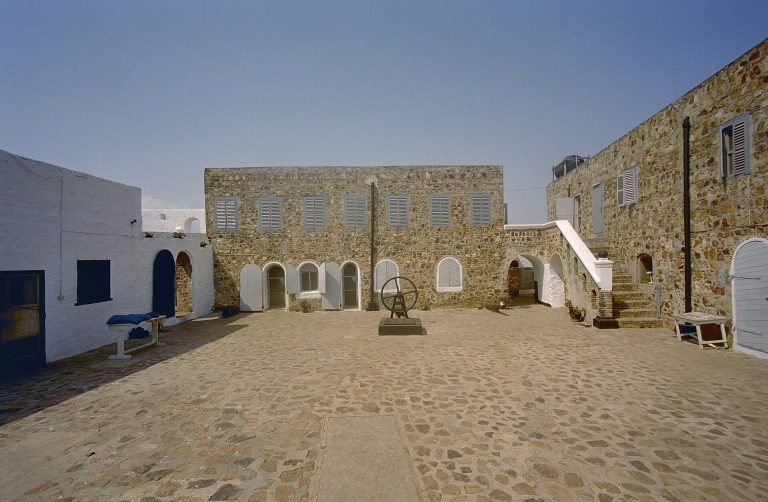
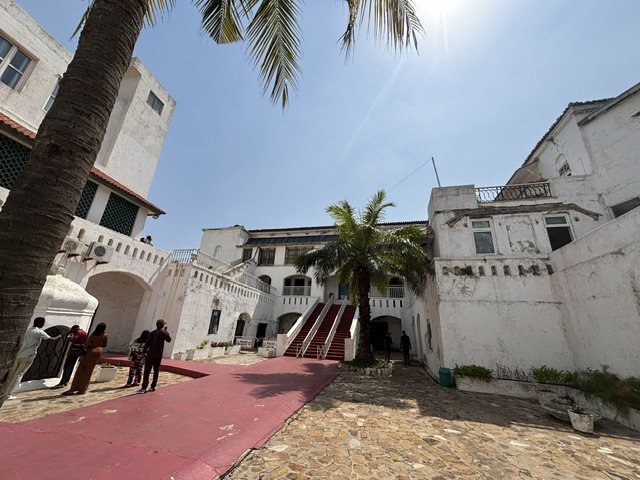
The present castle has an unorthodox plan because successive additions were built around the original fort. Store rooms, garrison quarters, platforms, bastions, and houses expanded the complex to approximately four times its initial size. The Portuguese phase added a chapel and raised the bastions by three feet. The 1862 earthquake destroyed most of the upper floors, which were rebuilt in wood and reconstructed again in 1950 in accordance with the original Danish plans.
The complex includes facilities for its staff, including a clinic, café, shopping centre, and post office, and it continues to accommodate a permanent garrison. Rooms added for Queen Elizabeth II’s 1961 visit form part of the later twentieth-century arrangement of the castle.
Gardens and Grounds
Extensive gardens surround the castle and contain both local and imported plant species. They are used for presidential outdoor receptions and parties, with thirty people employed in their maintenance. Together with the expanded fortifications and later buildings, the gardens form part of the surviving governmental and institutional complex.