Stružná Castle: A Renaissance and Neo-Renaissance Castle in Czechia
Site at a Glance
- Rating
- 4.6
- Popularity
- Very Low
- Country
- Czechia
- Primary era
- Modern
- Eras represented
- Early Modern, Modern
- Civilizations
- Holy Roman Empire, Kingdom of Bohemia
- Site type
- Domestic
- Remains
- Castle
On this page9 sections
History
Stružná Castle is a historic castle in Czechia, founded as a late-sixteenth-century Renaissance residence on the site of an earlier fortress. Its surviving appearance is principally the result of a nineteenth-century Neo-Renaissance rebuilding, while the complex also preserves the effects of major Baroque alterations and later changes in ownership and use.
From Fortress to Renaissance Castle
A fifteenth-century fortress preceded the present castle, and remnants of it survive in the northern part of Stružná. Linhart Colona of Fels, the owner of the Andělská Hora estate, founded the Renaissance castle sometime before 1598. Colona was one of the principal leaders of the Bohemian Estates Revolt, an uprising against Habsburg authority. After the revolt, his property was confiscated in 1621.
The Černín and Hartig Periods
General Heřman Černín of Chudenice acquired Stružná after the confiscation. A military commander and member of the Černín noble family, he began a period of ownership that continued through much of the seventeenth and early eighteenth centuries. His descendants remodelled the castle in the Baroque style, an architectural form known for movement and elaborate decoration. Work was carried out by M. Ceresola in 1666, Francesco Caratti in 1675 and 1676, and Giovanni Battista Alliprandi in 1700 and 1701.
The Černín family sold the castle to Count Leopold Hartig in 1734. Hartig and his son enlarged the building and furnished its interiors, continuing the transformation of the earlier Renaissance residence into a larger aristocratic seat.
Later Owners and Nineteenth-Century Rebuilding
Count Jan Stiebar of Buttenheim acquired Stružná in 1794, followed by the Lesser Town burgher Antonín Hladík in 1810. Count Vilém of Neuberk became the owner in 1829, and the Černín-Morzin counts acquired the castle in 1863. During Hladík’s ownership, a fire damaged the castle in 1811. Leopold Šternberk was the last owner before 1945, when the castle was confiscated.
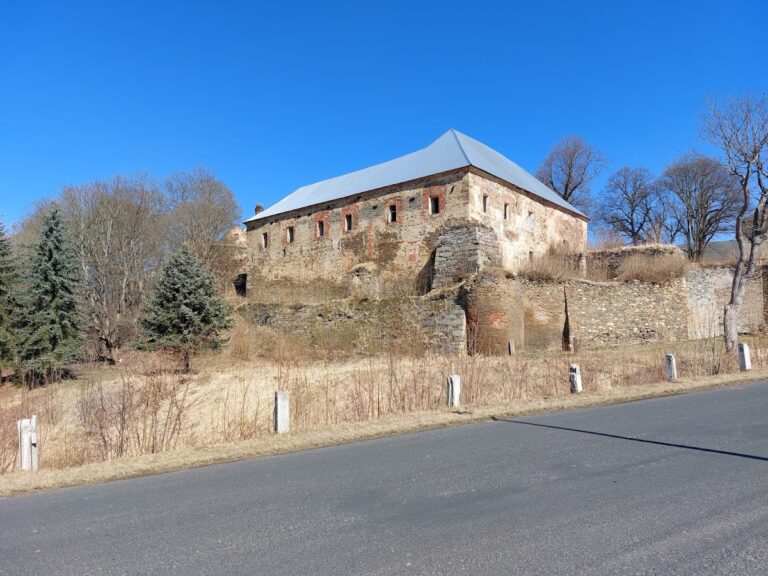
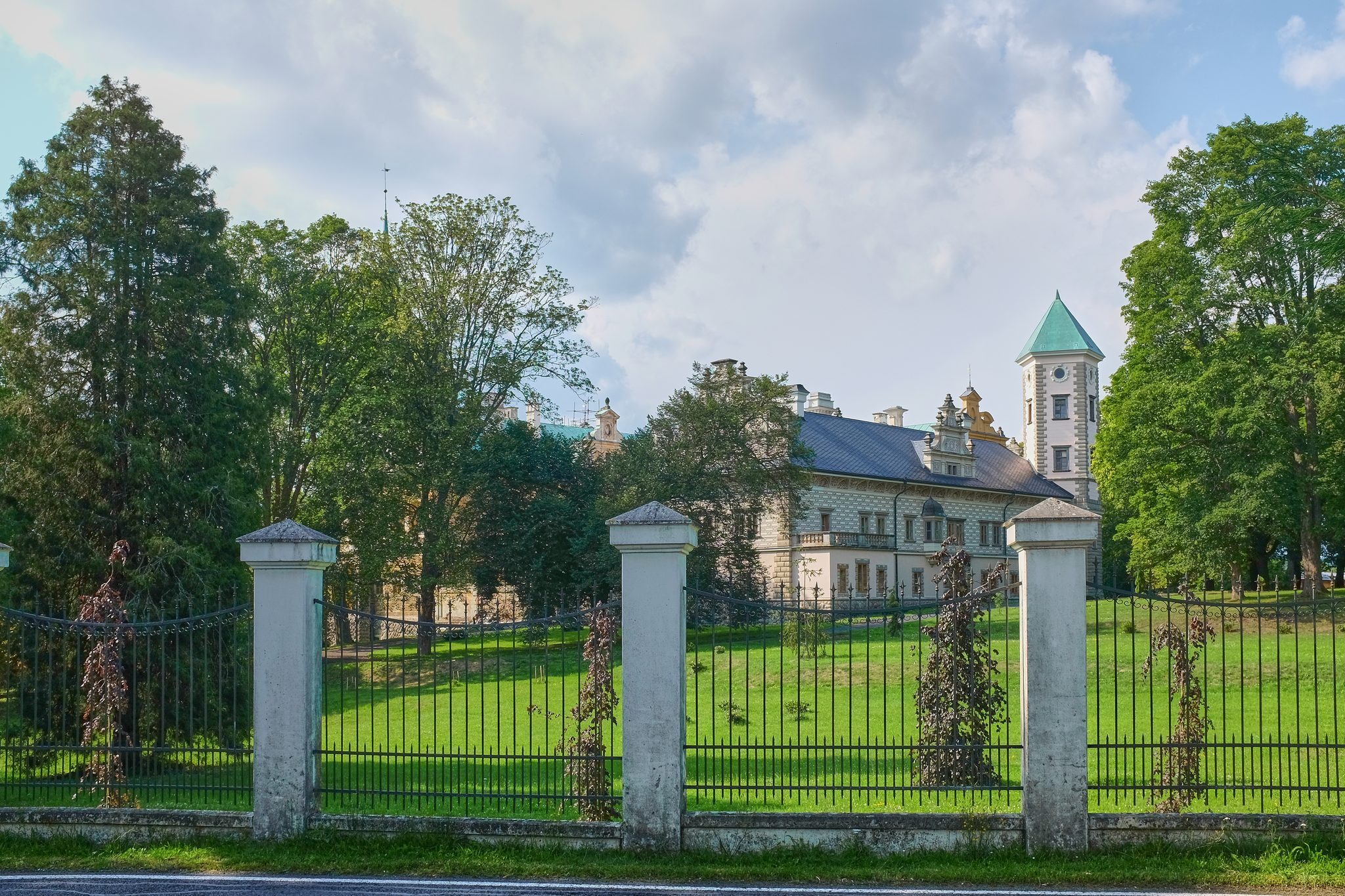
The castle passed to the army in 1948 and was used as barracks. This period severely damaged and devastated the interiors. Several Prague brokers bought the property in the early 1990s and soon resold it to an entrepreneur financed from Belarus. Partial reconstruction followed, including the construction of a new fence around the park to replace the original corrugated-sheet fencing. In 2023, a couple from the Cheb region acquired the castle buildings and park, and reconstruction has continued since then. Stružná Castle has been protected as a cultural monument since 1964.
Remains
Courtyard and Wings
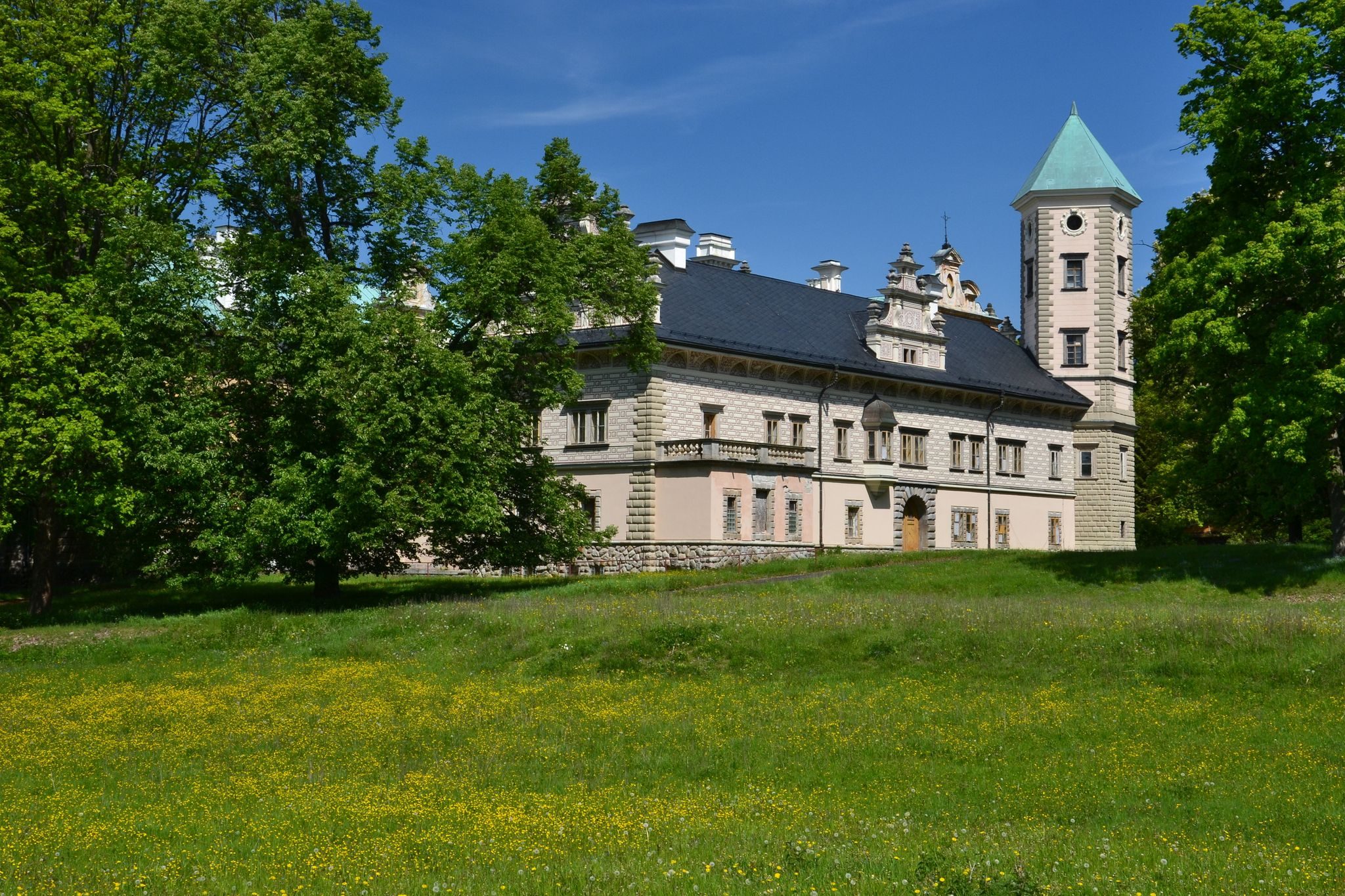
The castle consists of three wings arranged around a courtyard. A Renaissance fountain stands in the courtyard, with a statue of Neptune, the Roman god associated primarily with the sea, carried by bears. The surviving arrangement combines the original late-sixteenth-century foundation with later architectural campaigns that reshaped the complex.
Eastern Wing
The eastern wing has a six-sided corner tower. Its façades carry rustication, a treatment that makes masonry or plaster resemble strongly jointed blocks, together with a horizontal frieze showing hunting scenes and the coat of arms of the Černín family. The main façade includes a portal with a loggia, balcony, and gable.
Towers, Gallery, and Chapel
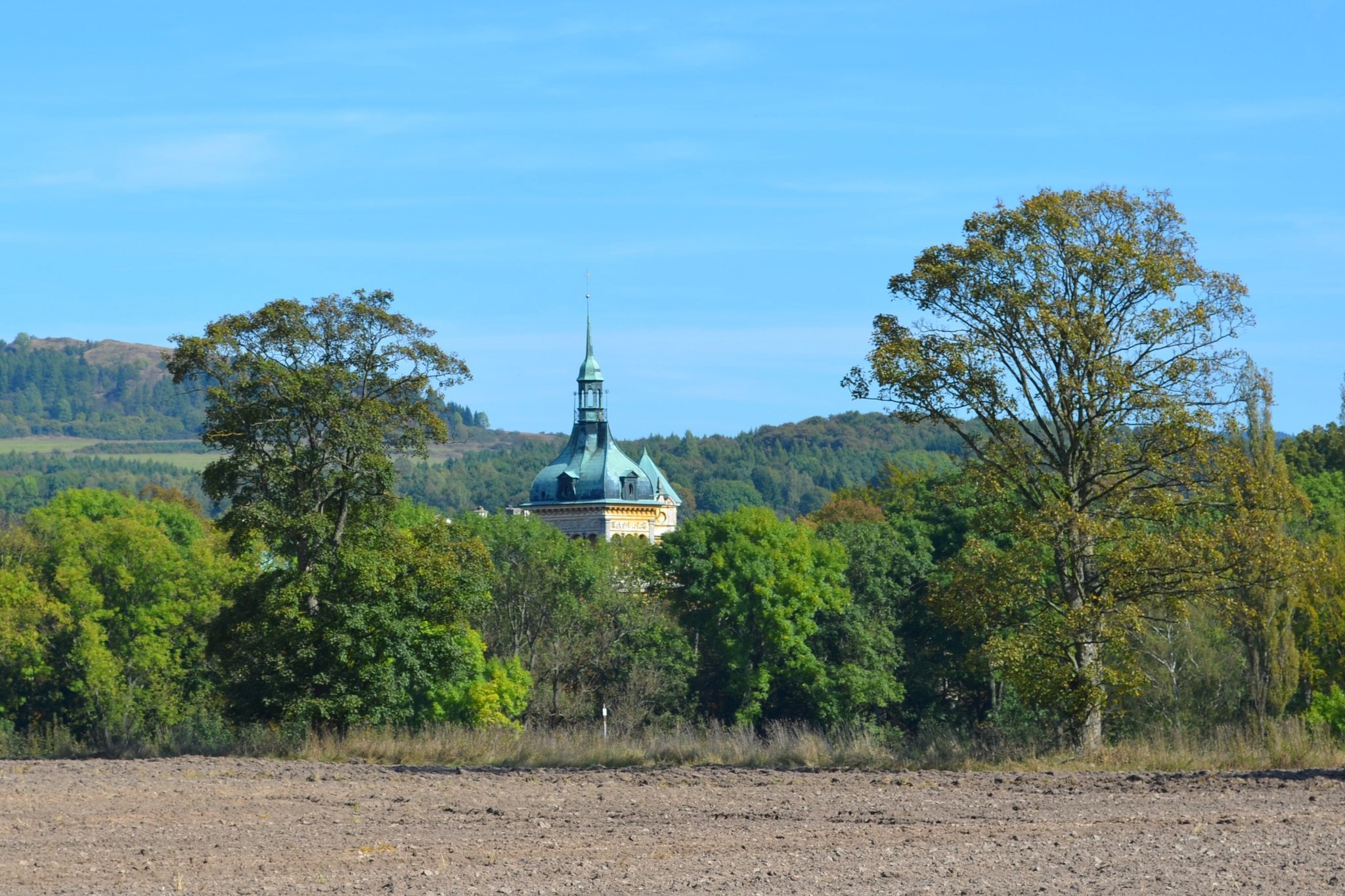
The other two wings are associated with a large prismatic tower, an arcaded gallery formed by a row of arches supported by columns or piers, and a Neo-Gothic chapel. Neo-Gothic architecture revives medieval Gothic forms, while the complex’s broader surviving appearance reflects the later Neo-Renaissance rebuilding.
Interiors and Park Enclosure
The interiors are heavily damaged. Dry rot affected the building, and the army’s barracks use caused further devastation. The surrounding park is enclosed by the newer fence installed during the partial reconstruction, while reconstruction of the castle buildings and park has continued since the 2023 acquisition.